
This is an article I wrote for International Artist Magazine a couple of years ago. A comment on imagining stories to embellish different locations prompted me to upload it. It is amazing what goes through your mind after thirty or forty minutes sketching. Almost subconsciously stories emerge tying up and making sense of all the observed details.
.
.
TELLING A STORY
It is easy to be seduced by spectacular scenery or panoramic landscape, but sometimes it’s the little incidents associated with fairly unspectacular subject matter that can be the catalyst for a successful painting. In these paintings the appeal, for me, lies beyond the immediate visual impact and has more to do with the incidents or atmosphere surrounding what is depicted.
.
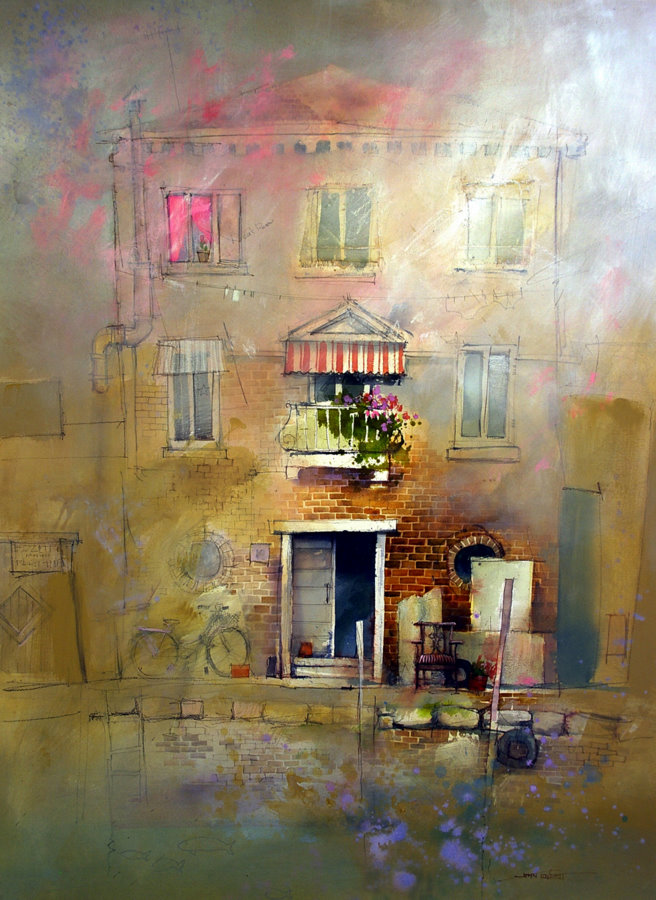
Rosa’s New Pink Curtains
These old Italian waterfront buildings tell wonderful stories about their inhabitants. Pushbikes, fishing gear, potted herbs and flowers, an old comfortable chair in the sun. An hour spent sketching all these details cause all sorts of stories to evolve concerning the day to day life of the building.
.
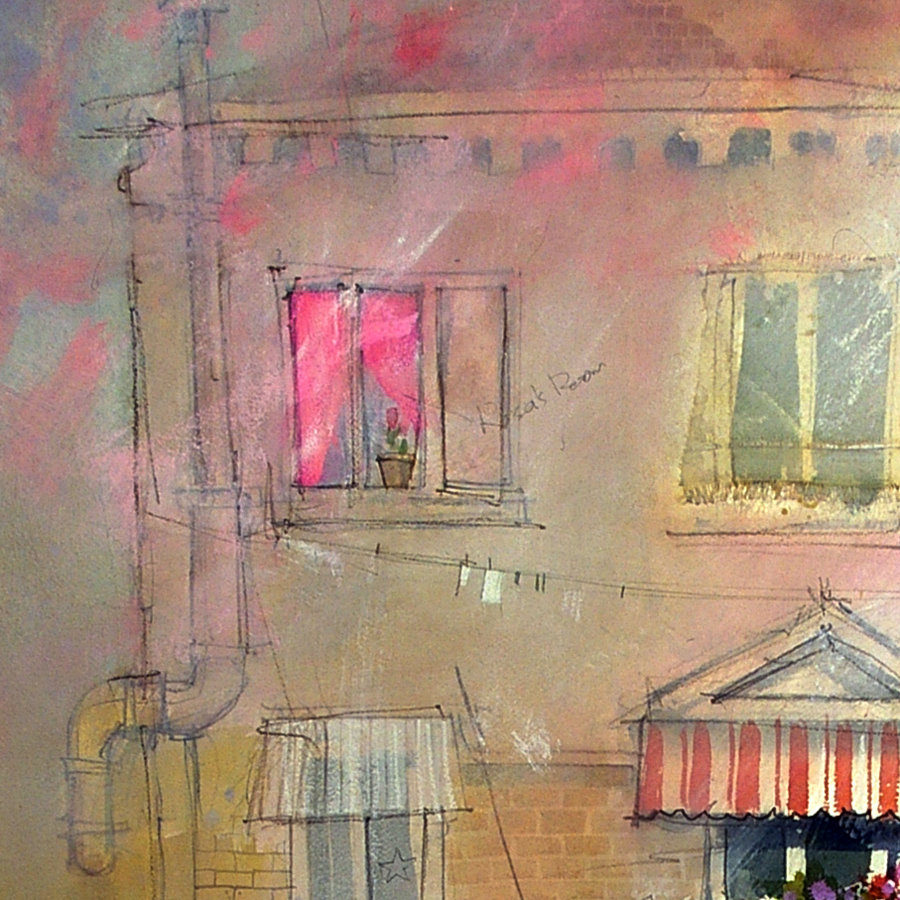
The paintings title is derived from the bright pink curtains in the upper window. To stop this bright color drawing too much attention away from the centre of interest, Permanent Rose was worked over the greys in the top corner of the painting. This eases the impact of the curtains, pushing them back into the painting.
.
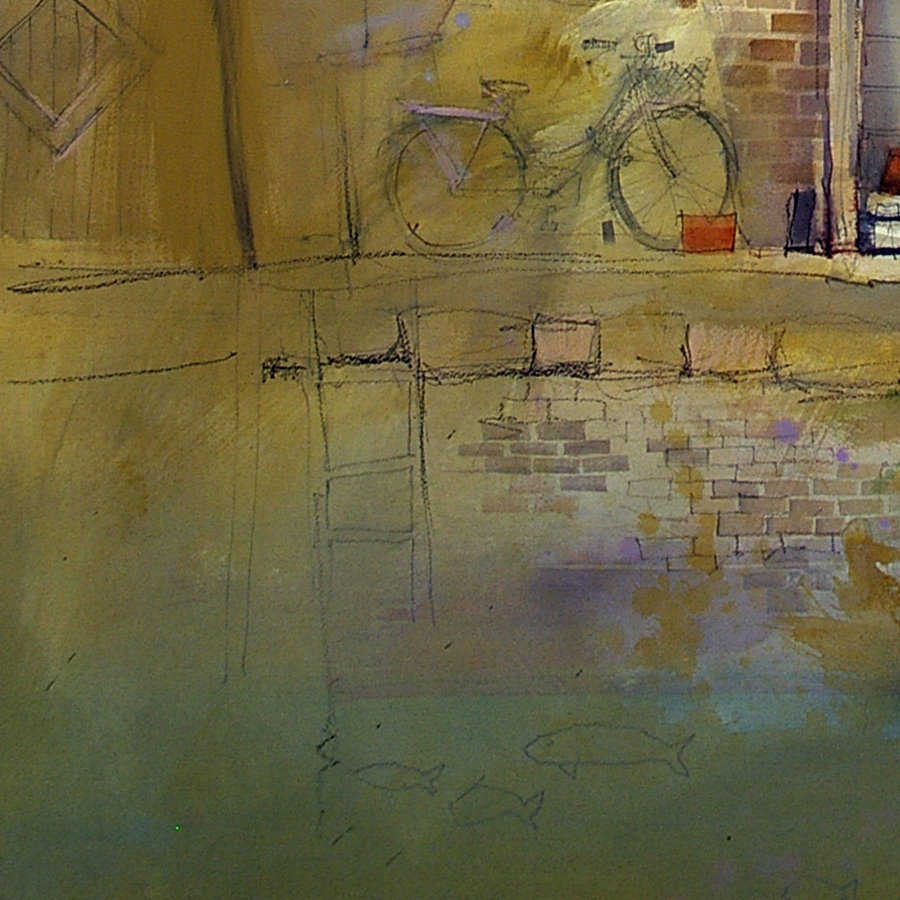
Fine rigger lines and sketchy pencil marks define the detail in the bottom left. This describes what is happening without drawing too much attention.
.
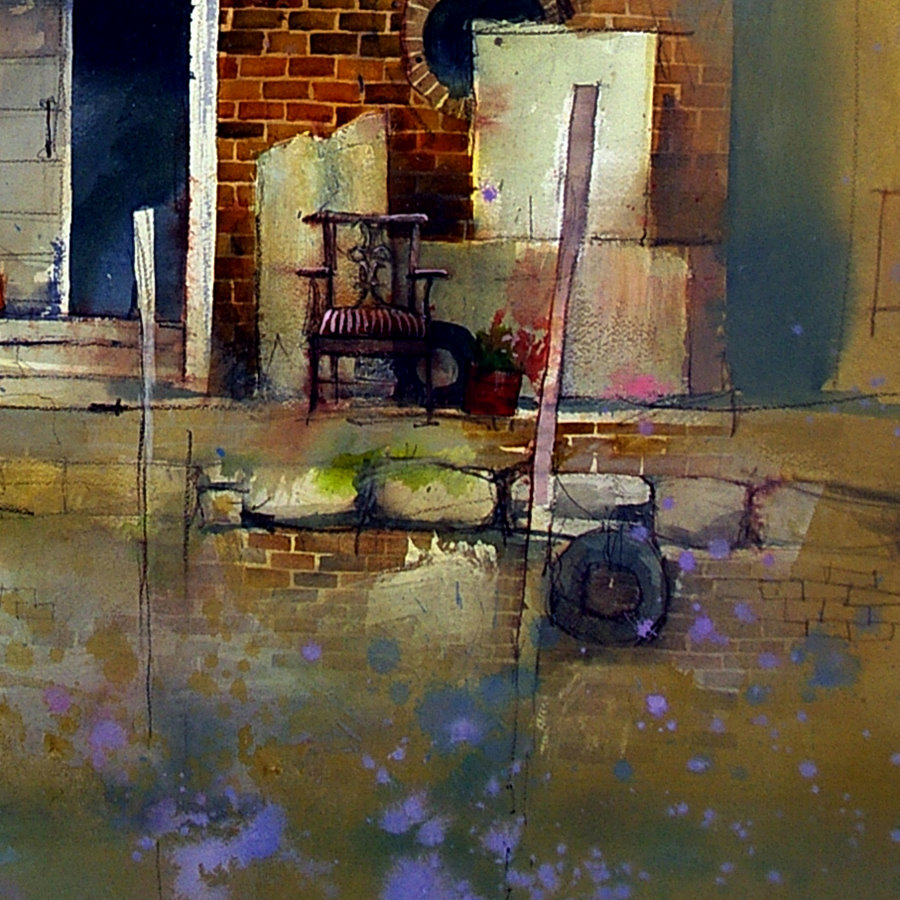
The center of interest is treated with strong contrast and sharp, focused detail to act as a pivot point for the painting. The viewers eye can wander out to other areas of less defined detail, but will always be drawn back to this area.
.
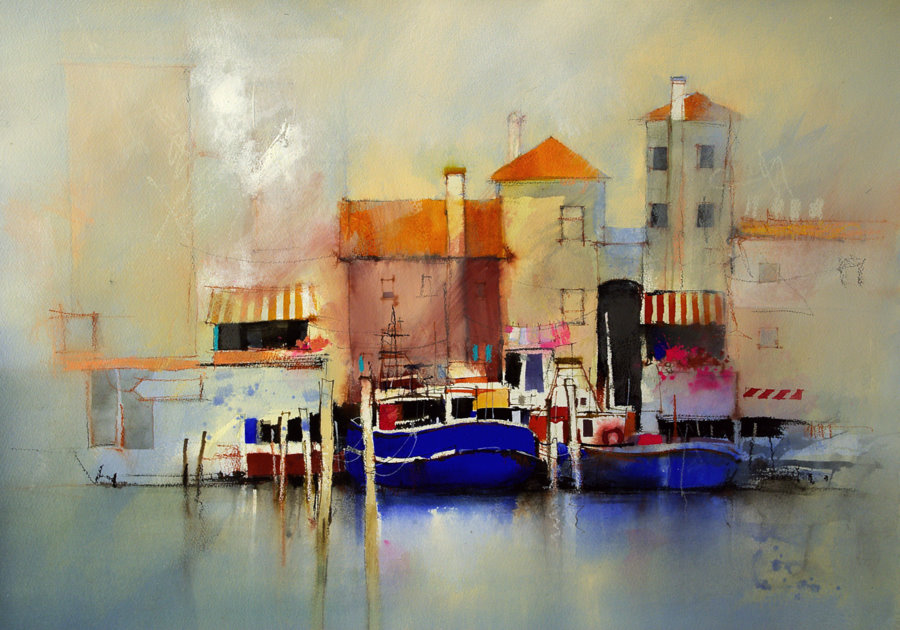
Fishermen Wait – Pelleistrina
The long thin island of Pellestrina protects the Venetian lagoons from the Adriatic Sea. Passing the Island early in the afternoon it struck me that even the fishermen, along with every other inhabitant, observes the afternoon siesta. Tide and fish can wait, food, wine and rest come first, then the fishing. I have used strong horizontal and vertical lines to give the painting a sleepy static feeling. The vertical drift of smoke adds to the calm quiet atmosphere
.
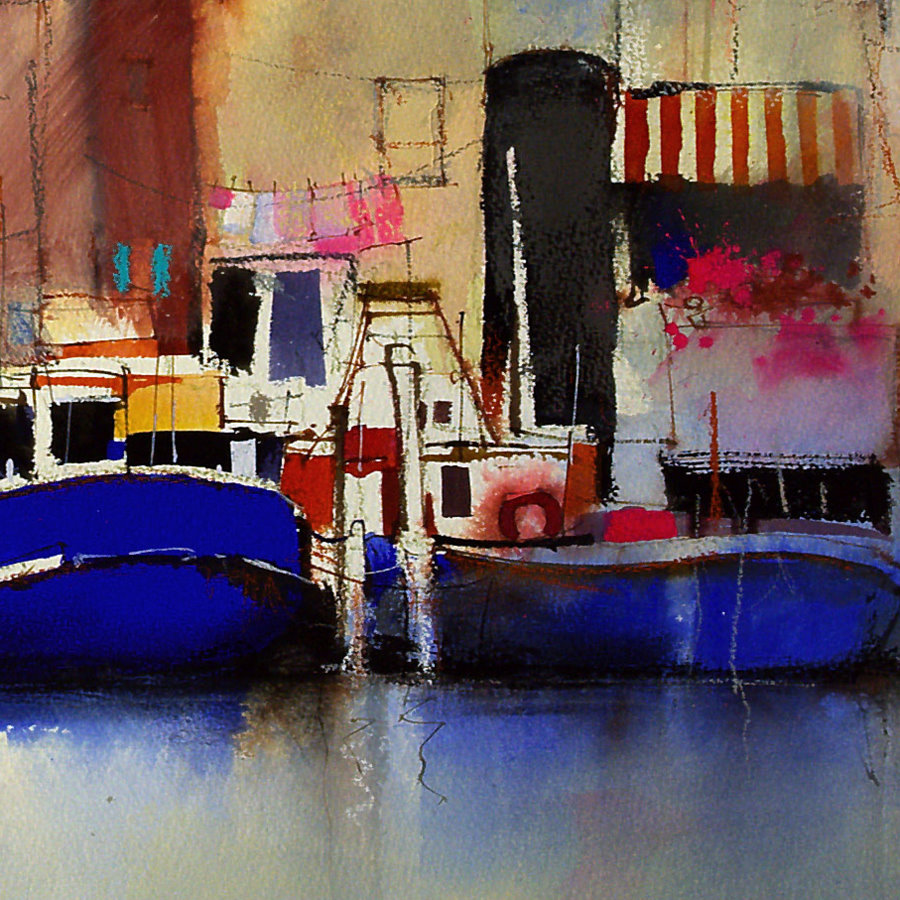
Flowers were splashed in with a mixture of Permanent Rose and White Gouache. I liked the contrast between the dirty, smelly fishing boats, clean washing and fresh flowers. Ultramarine Blue Gouache gives the fishing boats a flat, velvety finish.
.
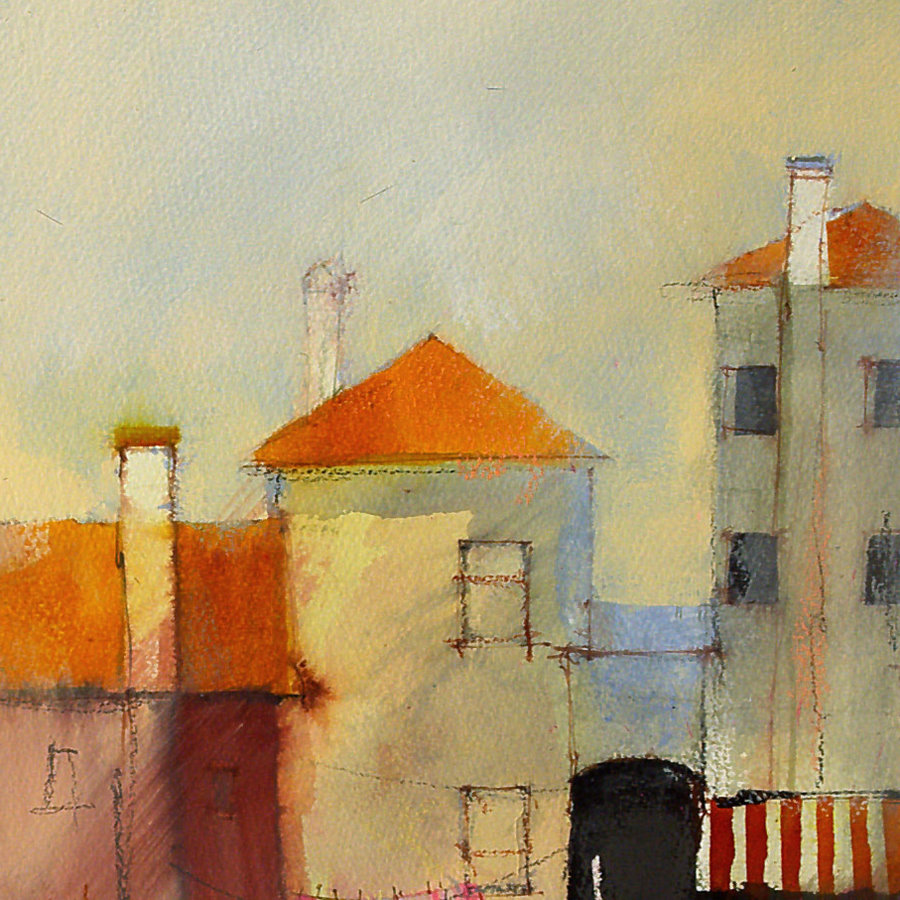
The hazy sky was first washed over with Ultramarine watercolor. After this dried, a glaze of cream tinted Gesso was worked over the surface giving the sky a pearly translucent quality.
.
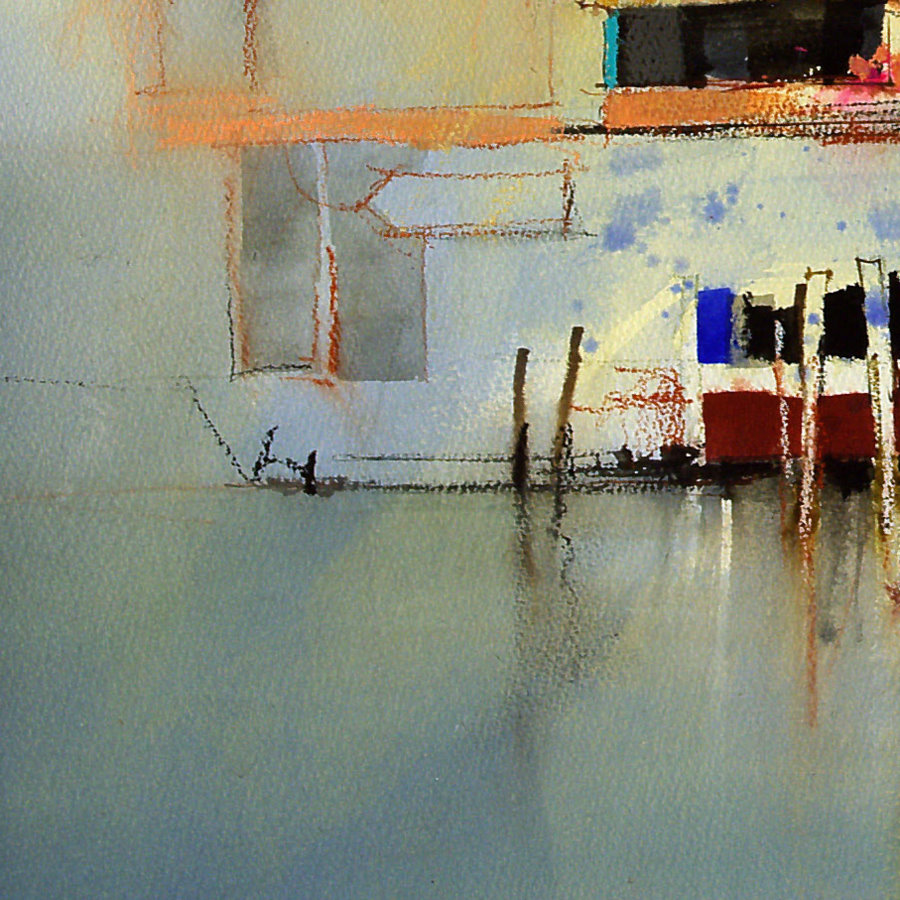
The calm water adds to the sleepy feeling of the painting. The same technique of Gesso over glazing similar to the sky was used. This time the underlying wash was Phthalo blue.
.
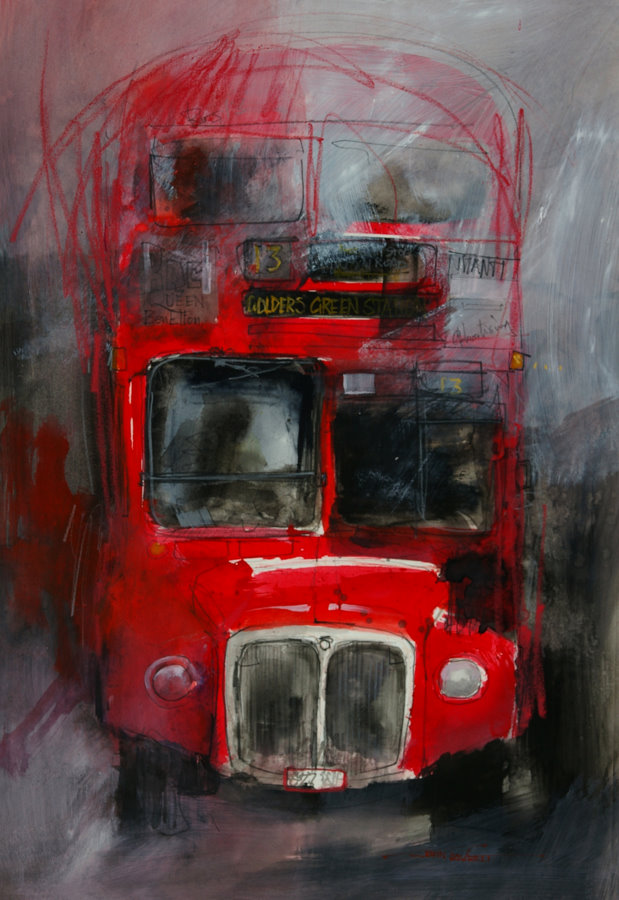
Last Bus Leaving
The frantic pace of down town London is regularly punctuated by the hot diesel clatter of these ancient relics. Huge and shiny, it’s hard to believe these awesome machines form the backbone of a reliable transport system. This painting plays on the contrast between the enormous mass of lovingly polished duco and the machines apparent attempt to self destruct while idling.
.
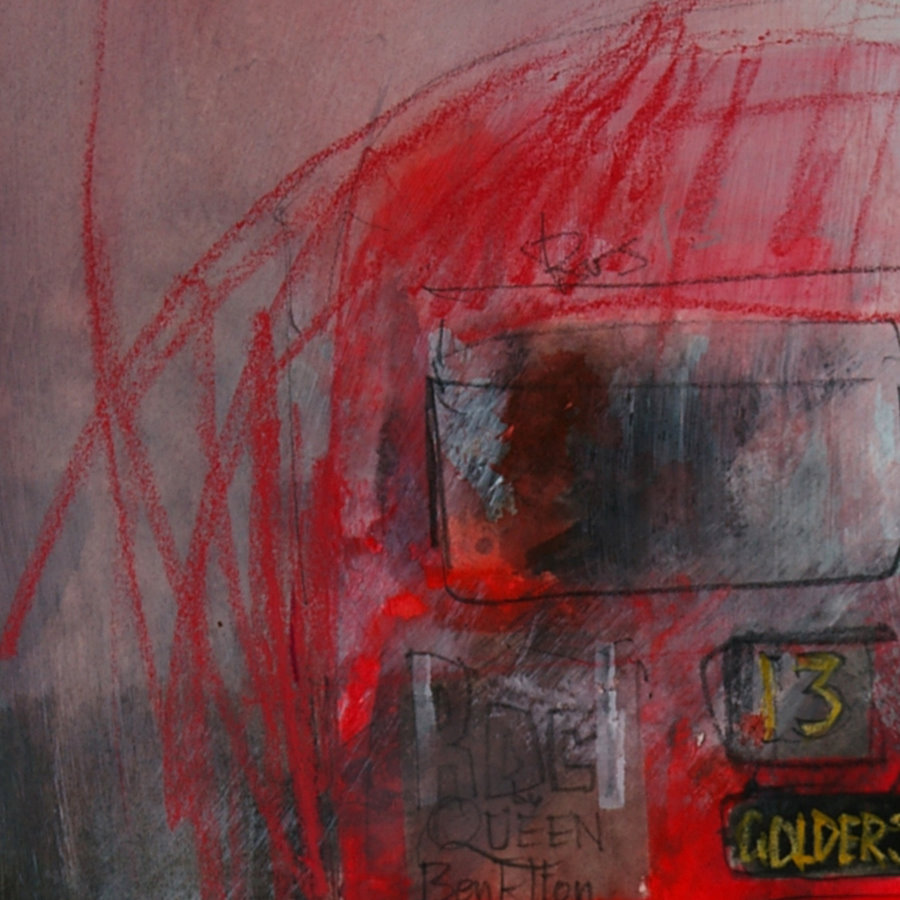
Loose strokes of red pastel suggest the resonating vibration of the engine and contrast with the glossy sheen of the paintings centre of interest.
.
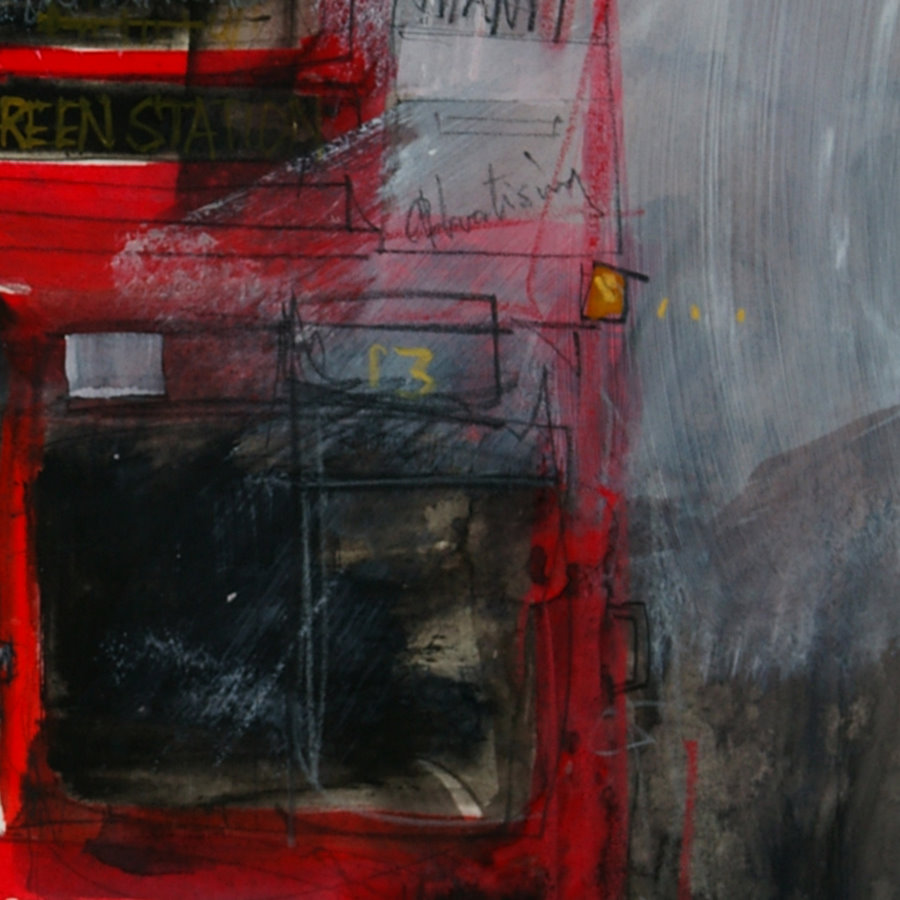
Halfway through the painting a loose scumbling of dilute gesso was scrubbed over the top right hand corner. This obliterated most of the roof and upper detail allowing it to be loosely suggested with pencil lines and red pastel.
.
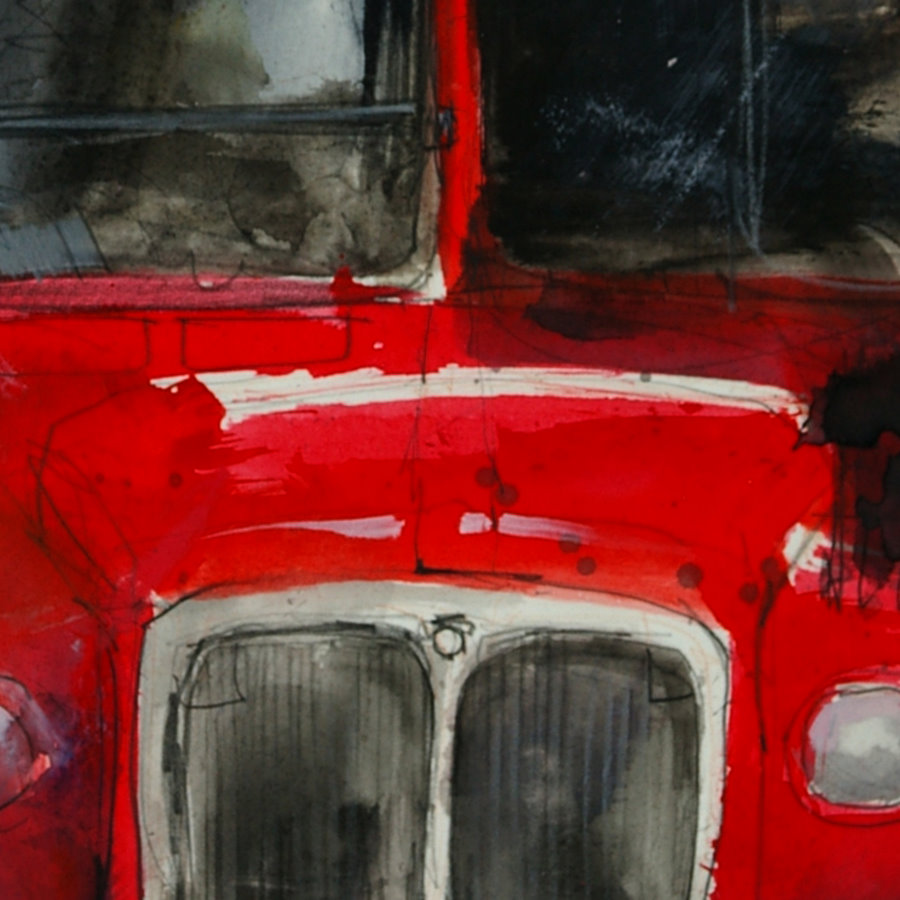
The bonnet and lower section of the bus were treated with more detail to pull attention down to this area of the painting. The bright red bonnet and white highlights make a great contrast with the surrounding black gouache. I normally avoid flat neutral black, but used it in this case to give the feeling of bitumen, soot and diesel oil associated with the bus.
.
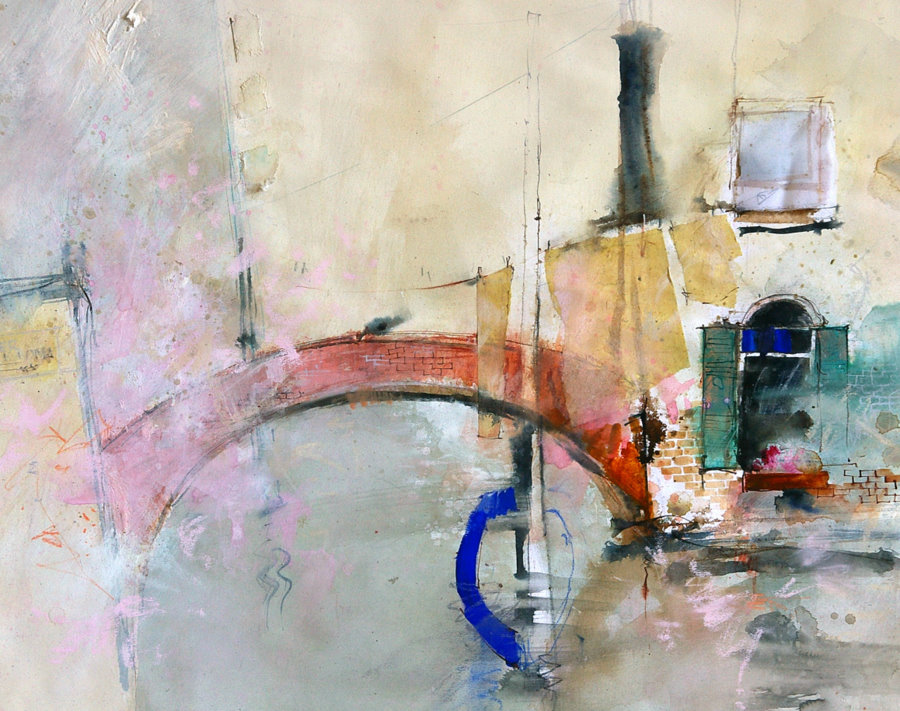
Pass This Way – Venice
This is one of a thousand romantic corners that draw you deeper and deeper into the labyrinth of Venice. Rather than documenting all the details, I have focused on the essential elements and reduced everything else to simple areas of contrasting textures. Lines and angles have been distorted to echo the random chaotic nature of Venice.
.
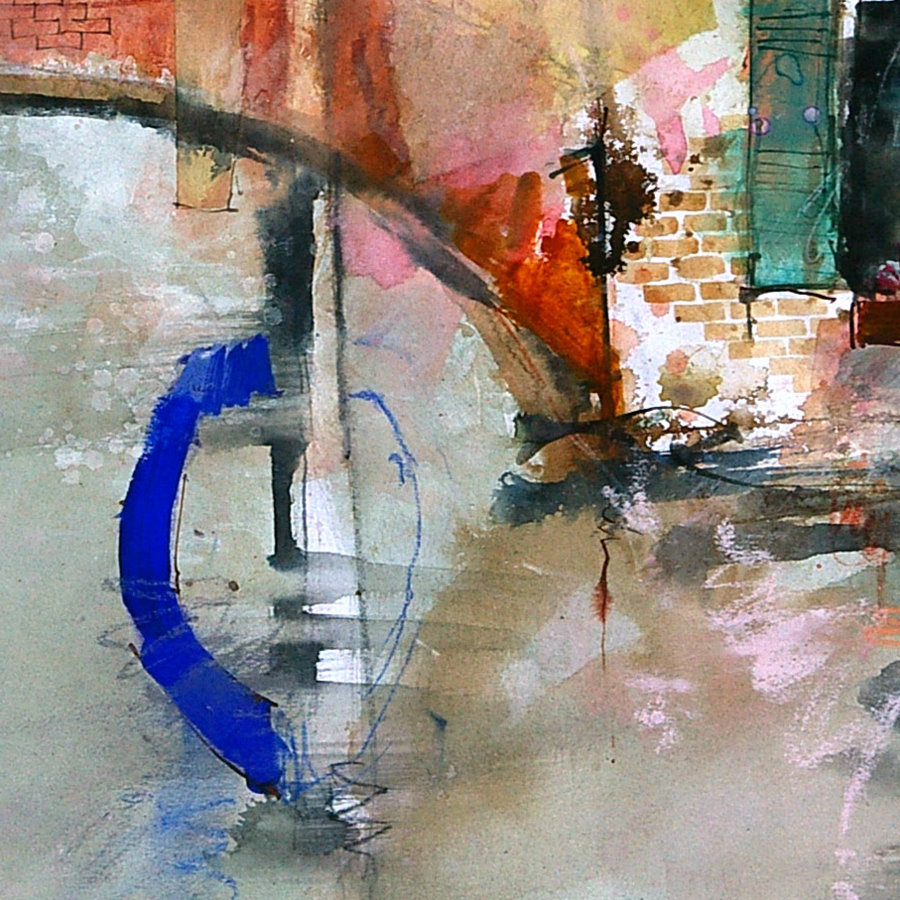
Flat Ultramarine gouache was used to convey the brilliant blue of the canal boat. By contrasting this with the rich terracotta of the bridge, a focal point is established.
.
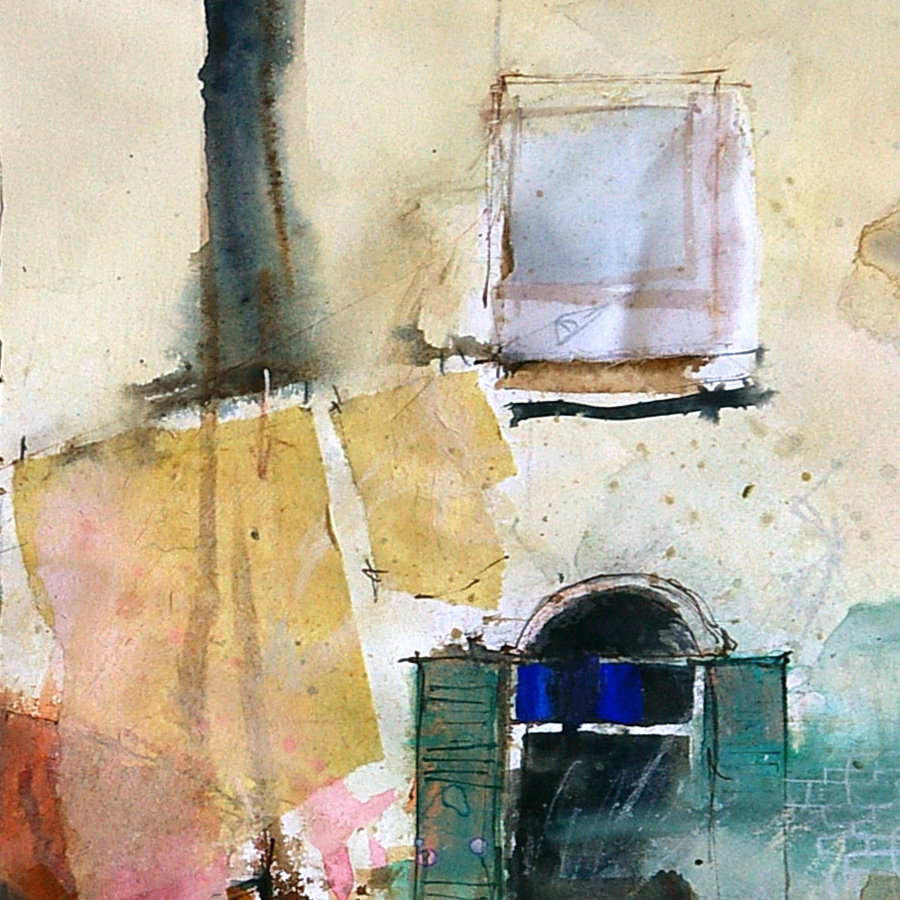
The washing hanging on the line was torn from pieces of Japanese rice paper and stuck to the surface with acrylic matt varnish. The rice paper shapes were softened by splashing them with a mixture of Permanent Rose watercolour mixed with White gouache.
.
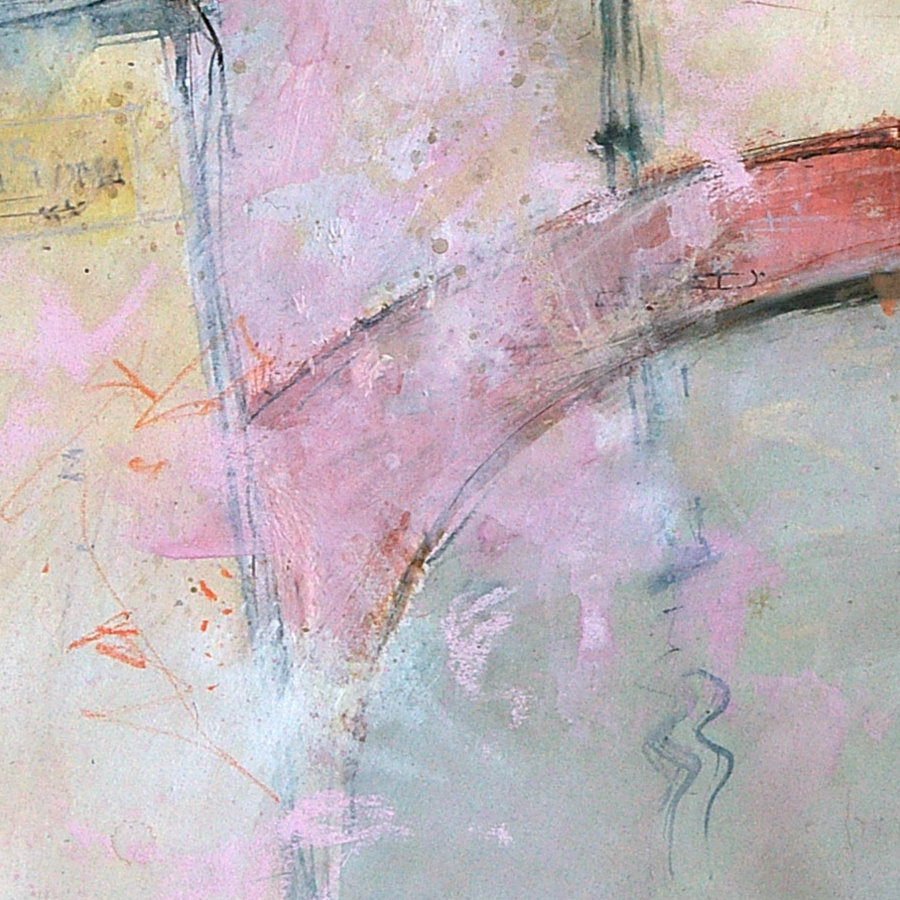
A fine translucent glaze of White gouache and Permanent Rose watercolor softens the far end of the bridge, encouraging the eye back to the centre of interest.
.








 .
.







 Splashing Paint