VENICE WORKSHOP

Venice has to be one of  the most spectacular painting destinations in Italy. Standing on Rialto bridge and looking down the Grand Canal feels more like watching a bizarre movie than experiencing a thriving city.

We arrived in the afternoon and were rapidly transported to our hotel by water taxi.

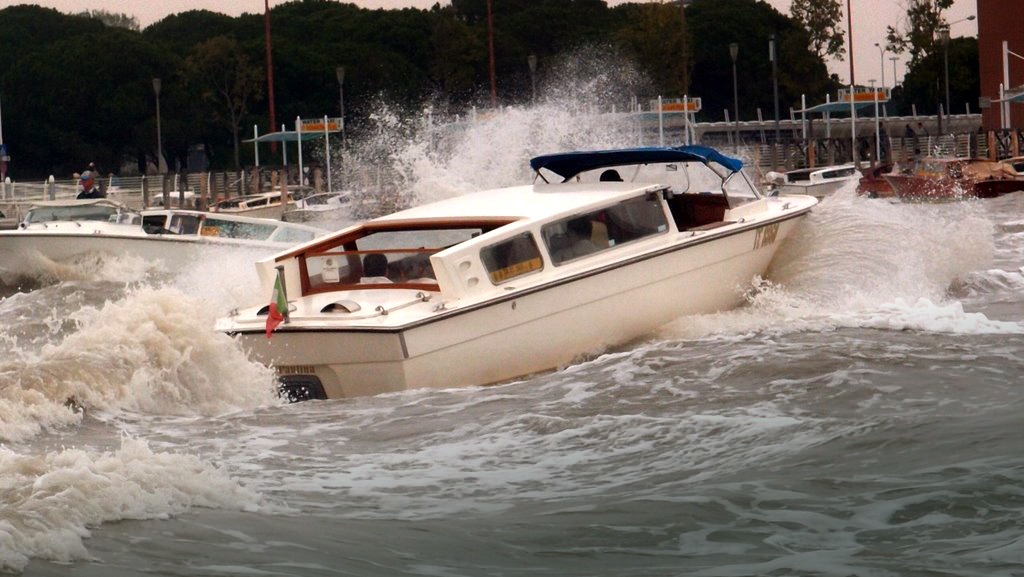
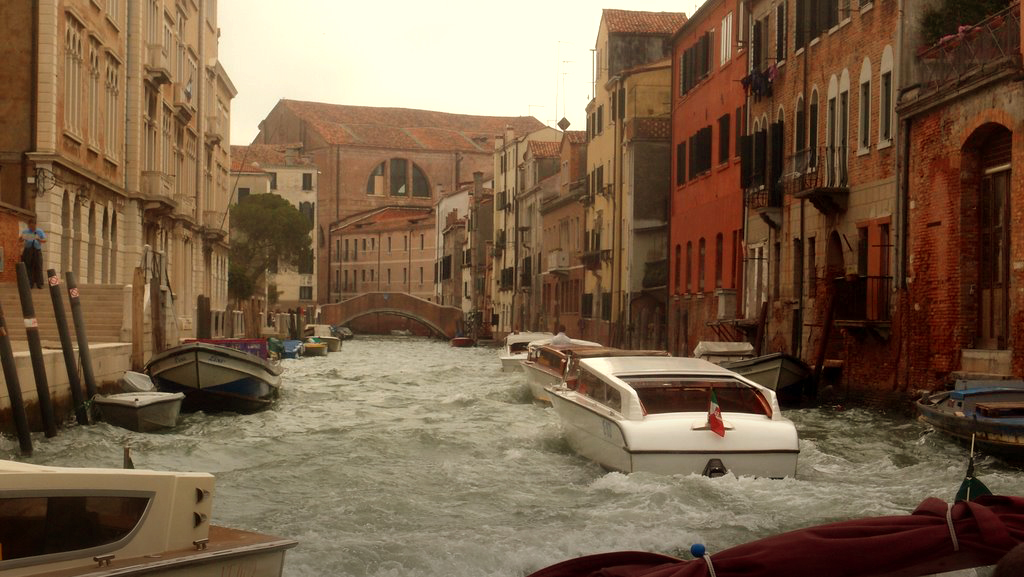
Leaving Marco Polo Airport by water taxi is a chaotic experience. 110 Euro from the airport to the city means the drivers are pretty serious about getting the job done quickly.

Churning through the back alleys en route to Accademia Bridge

Painting on the grand canal.

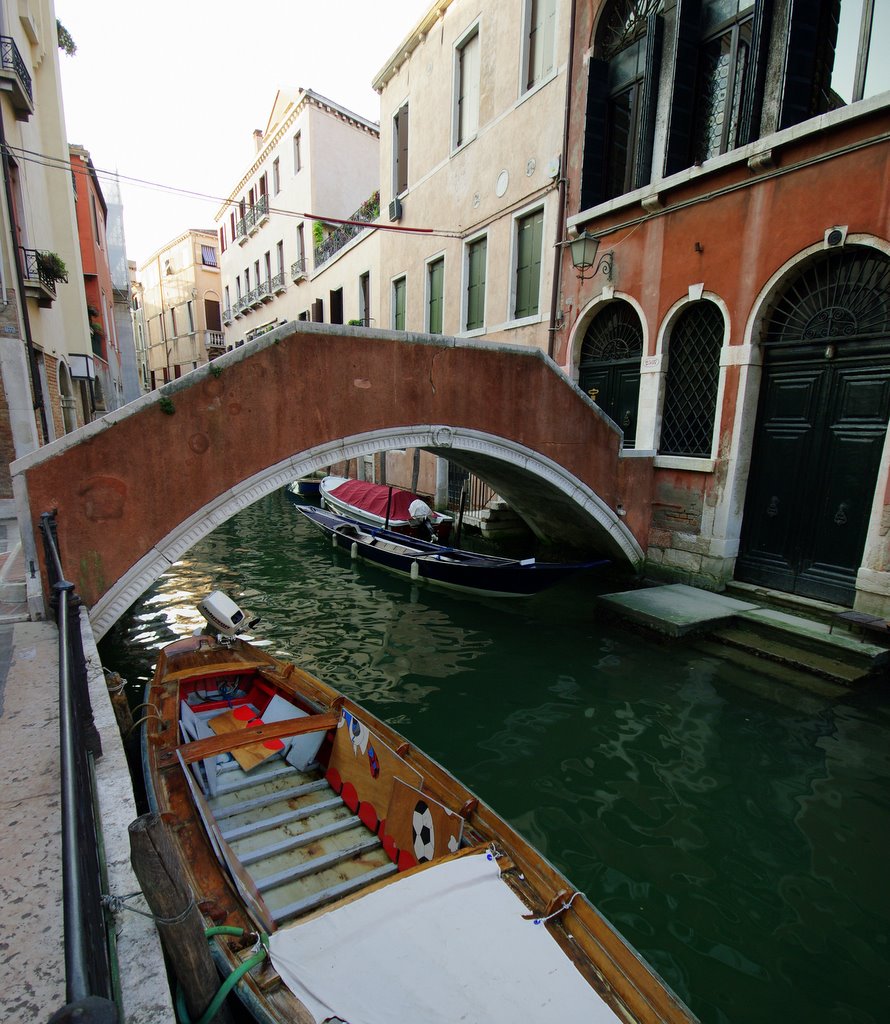
Early morning along the canals

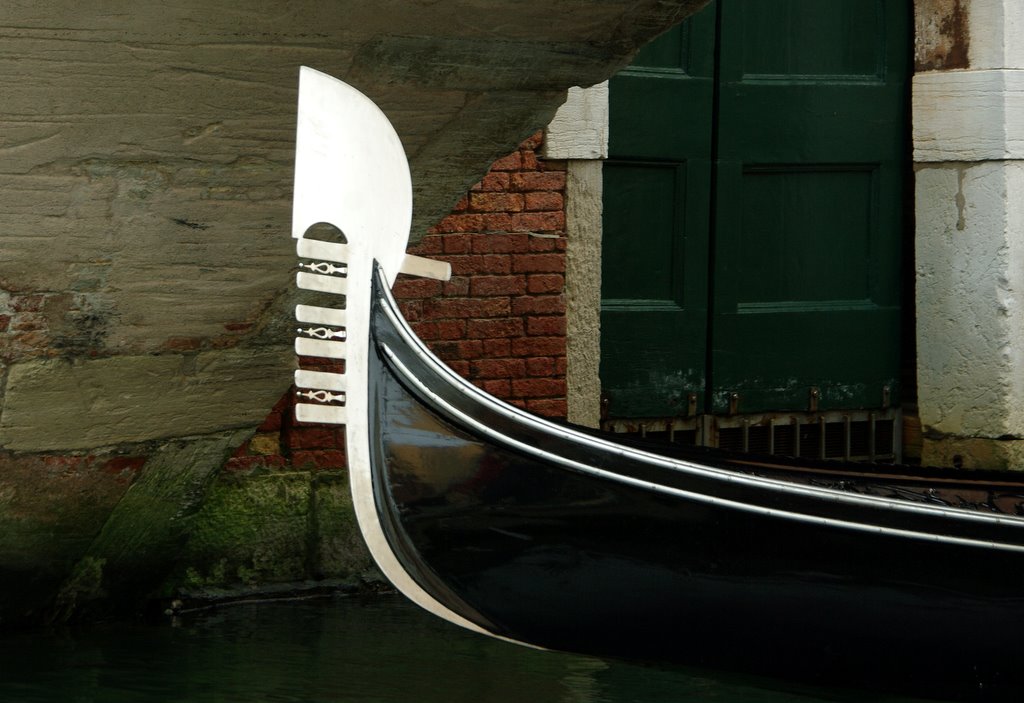
The last gondola workshop in Venice was just around the corner from our hotel … and right opposite a great little bar.

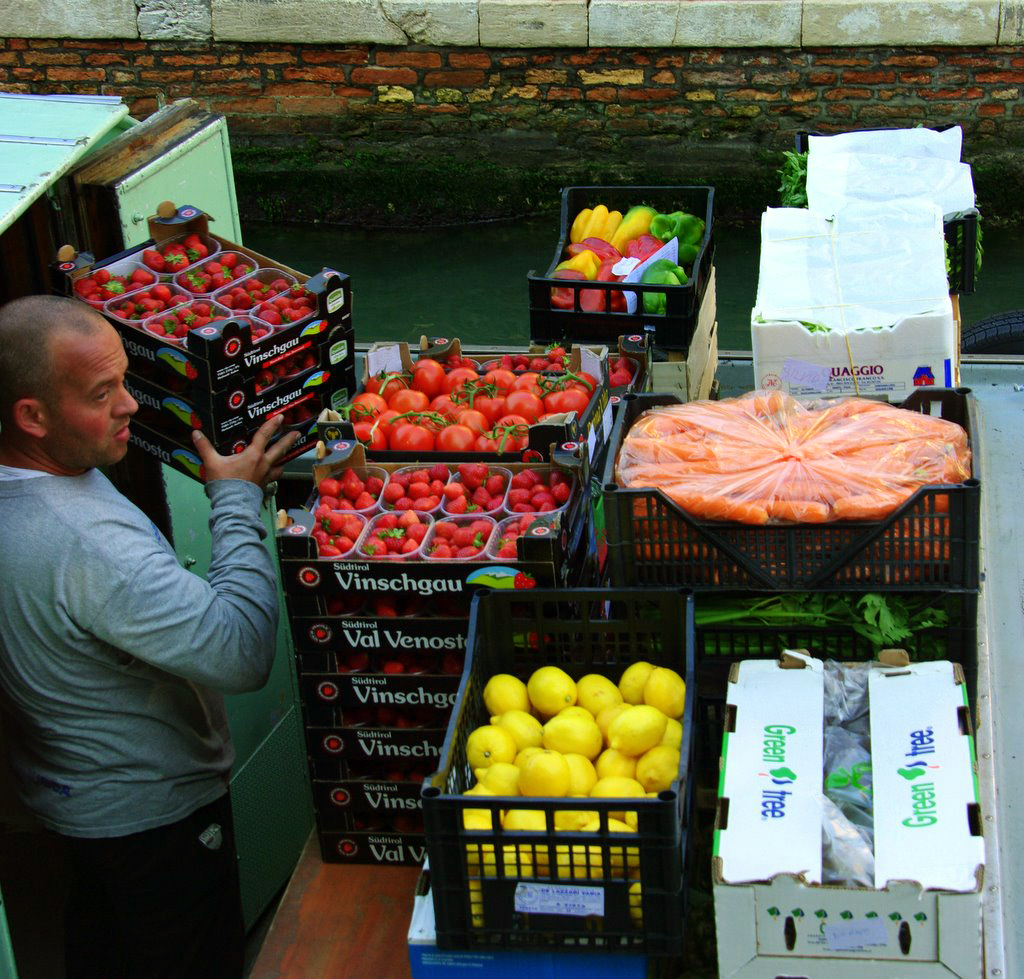
Everything is delivered by barges along the canals

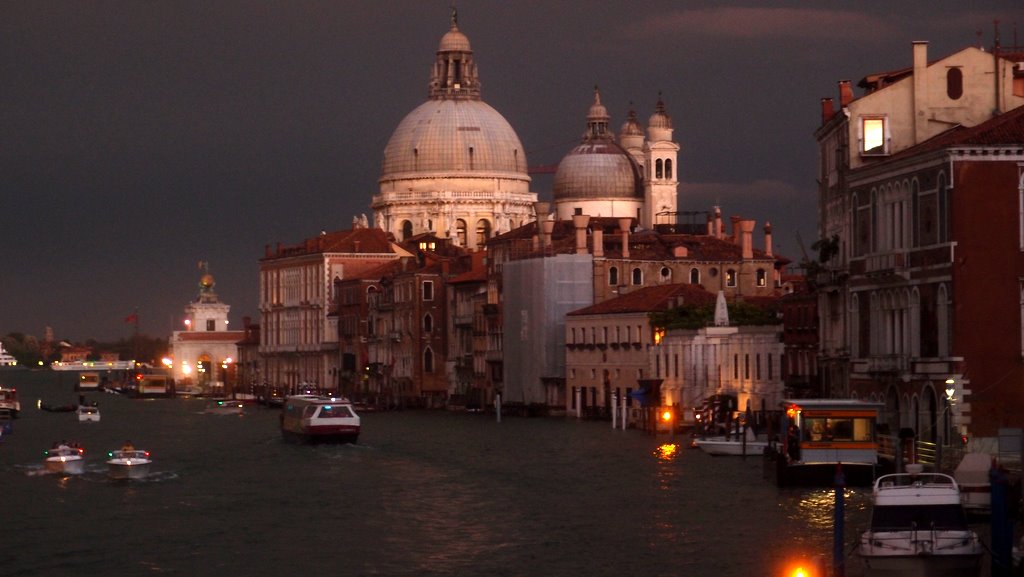
A late afternoon storm blackened the sky behind Santa Maria della Salute making for some great photos.

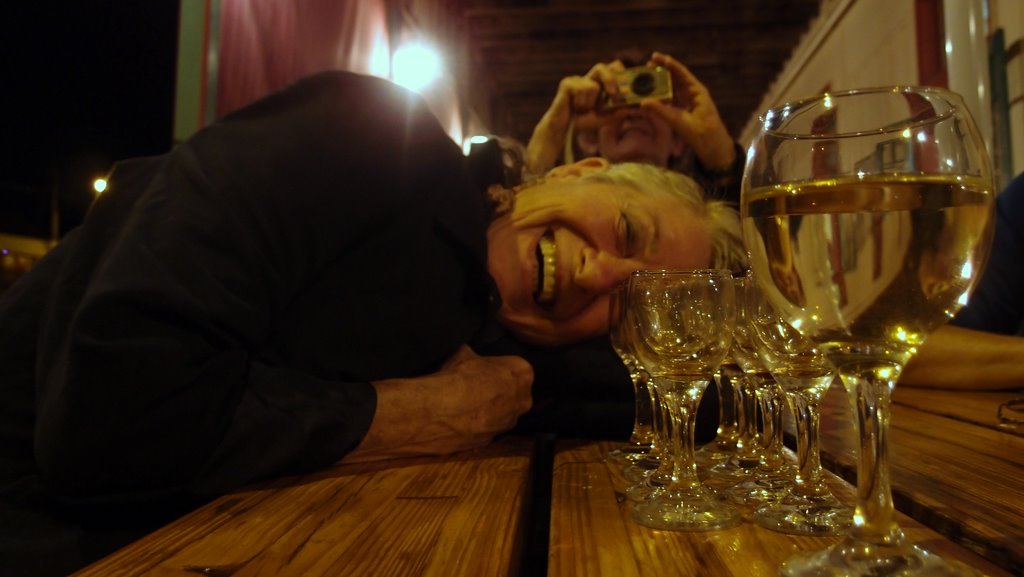
Evening drinks along the waterfront

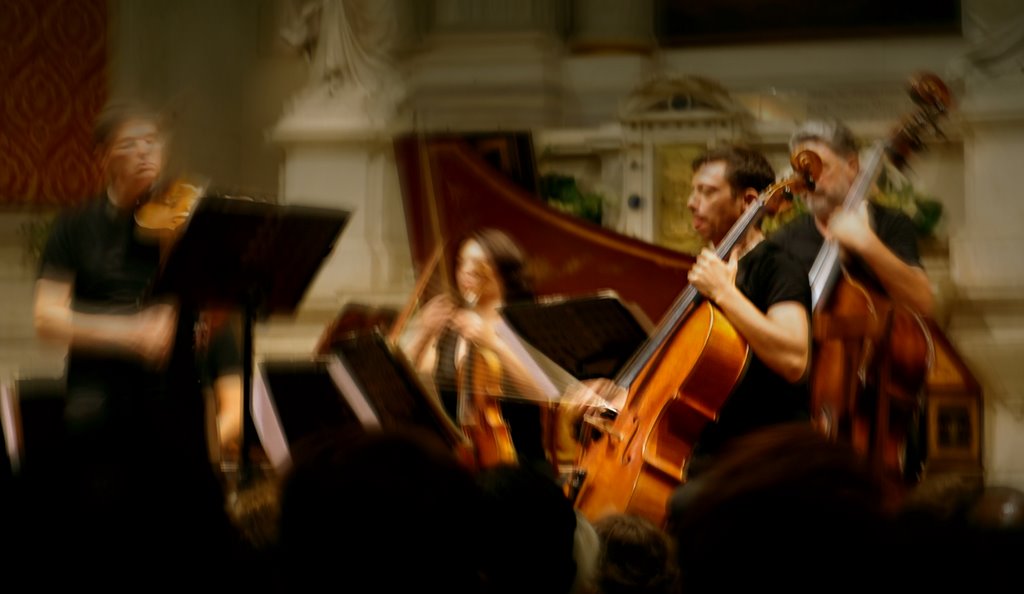
Interpreti Veneziana were performing at the San Vidal Church, 5 minutes from our hotel. Italian Baroque played with passion and enthusiasm – a fantastic night.

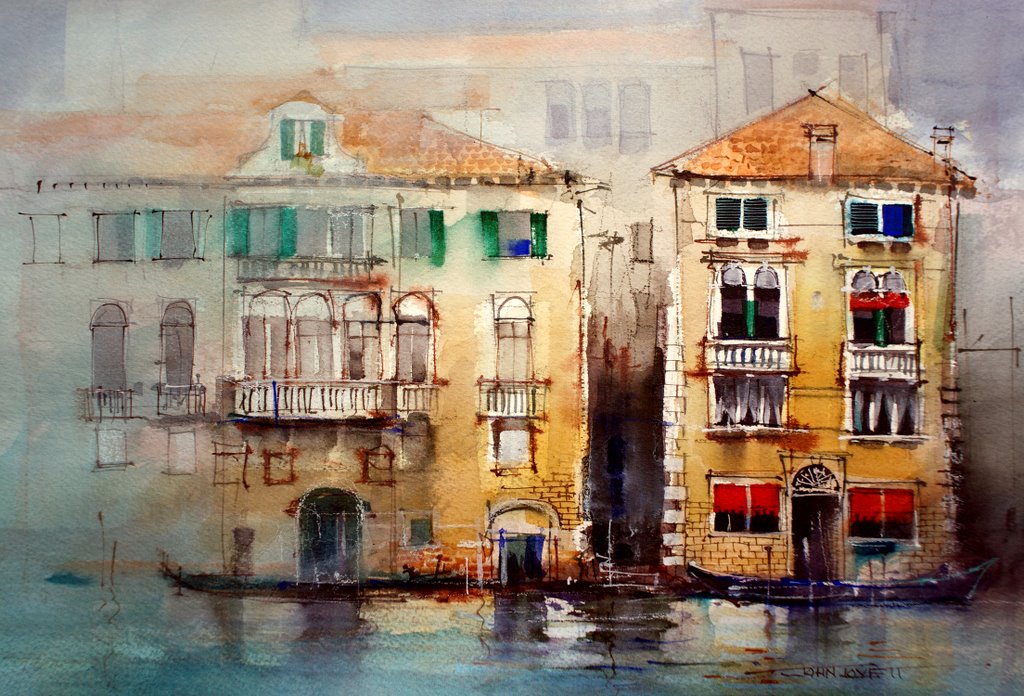
Burano Houses

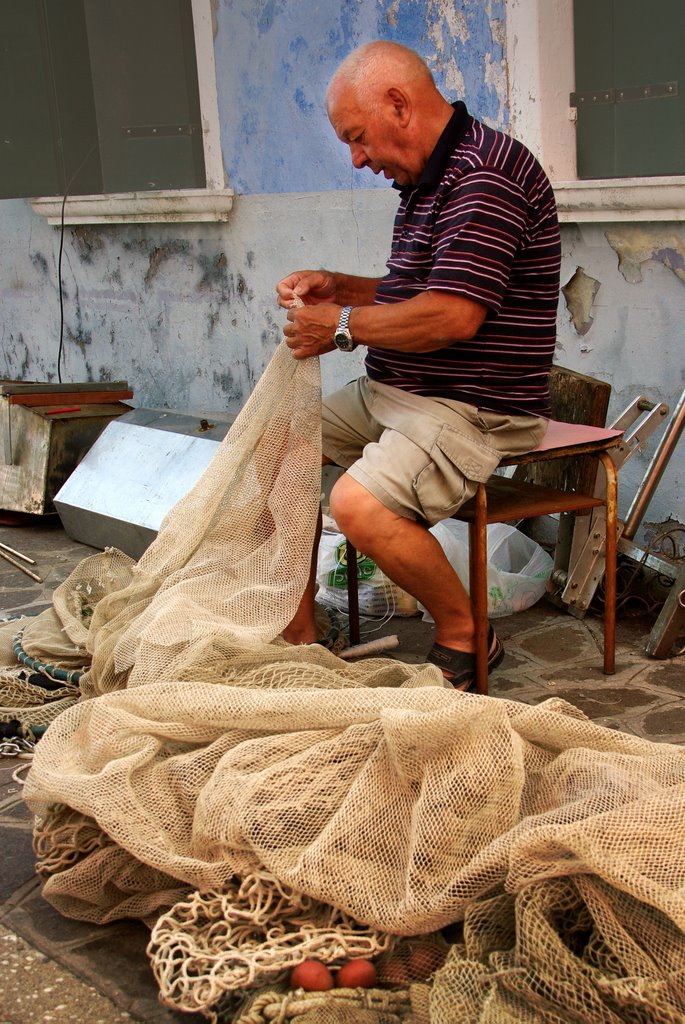
Burano is famous for its lace making, but I think this guy is mending a fishing net.

OLD CORK STATION

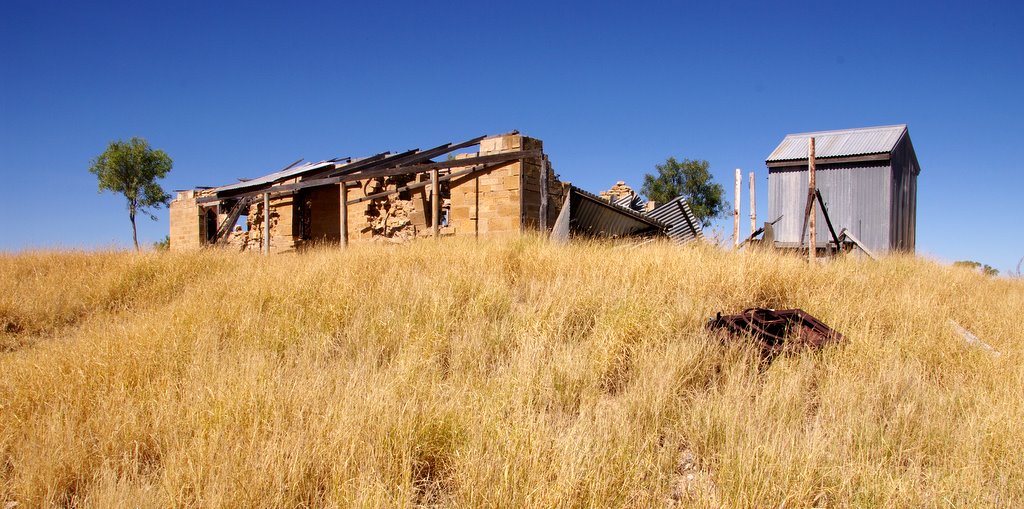
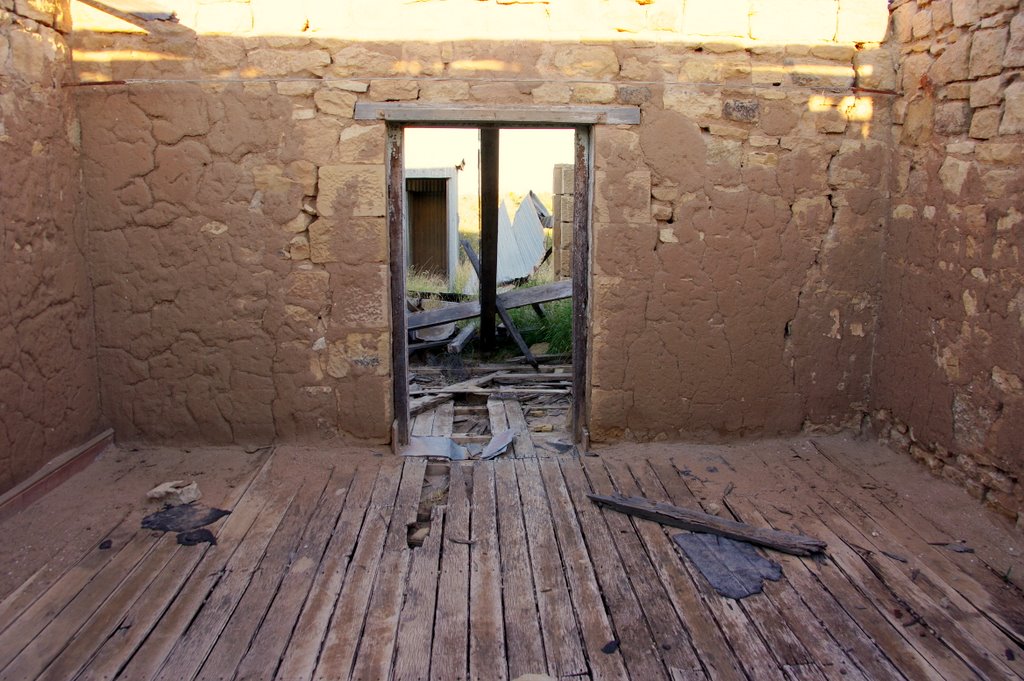
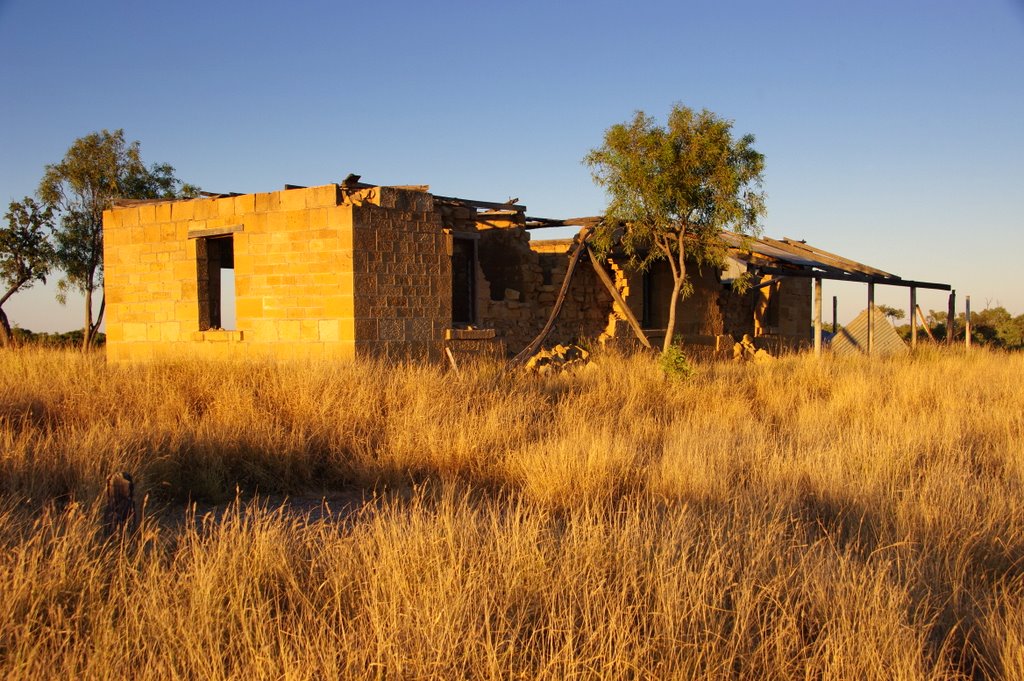
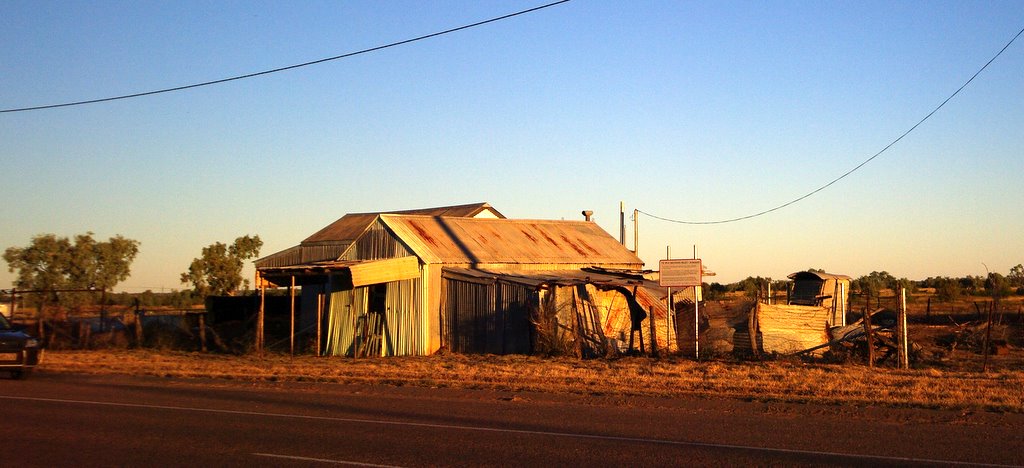
About 120 km south of Winton, on the Diamantina River, are the ruins of Old Cork Station. It was first established in the 1870’s and served as the mail distribution point for the region before the town of Winton existed. It’s a sad sight to see what must have been an impressive sandstone building in such a remote area, slowly crumble into the dust. Unfortunately talk of saving and stablising the building have amounted to nothing. White ants, souvenir gatherers, government inertia and the weather have put an end to saving an impressive  piece of our history

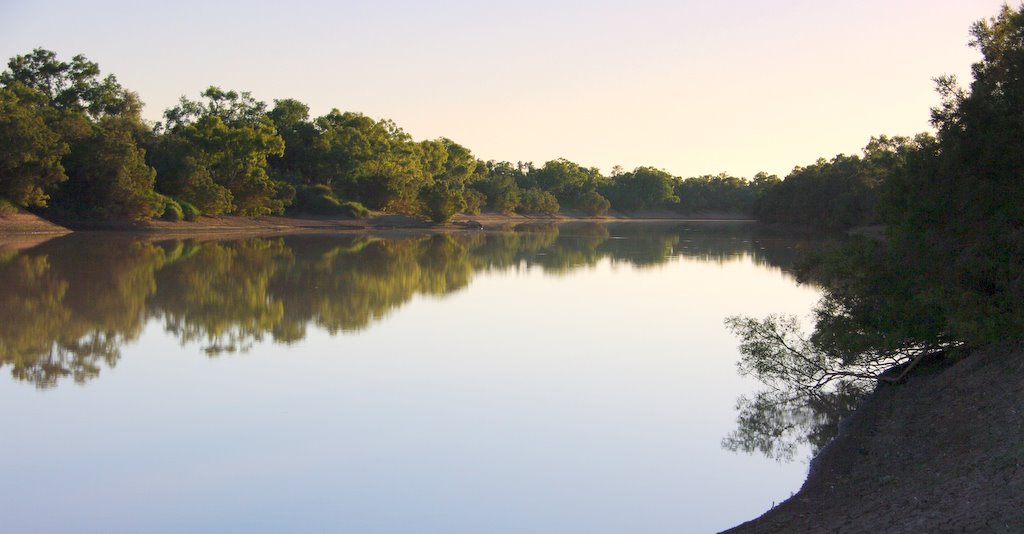
Old Cork Waterhole is part of the Diamantina River. Supposedly full of Yellow Belly.

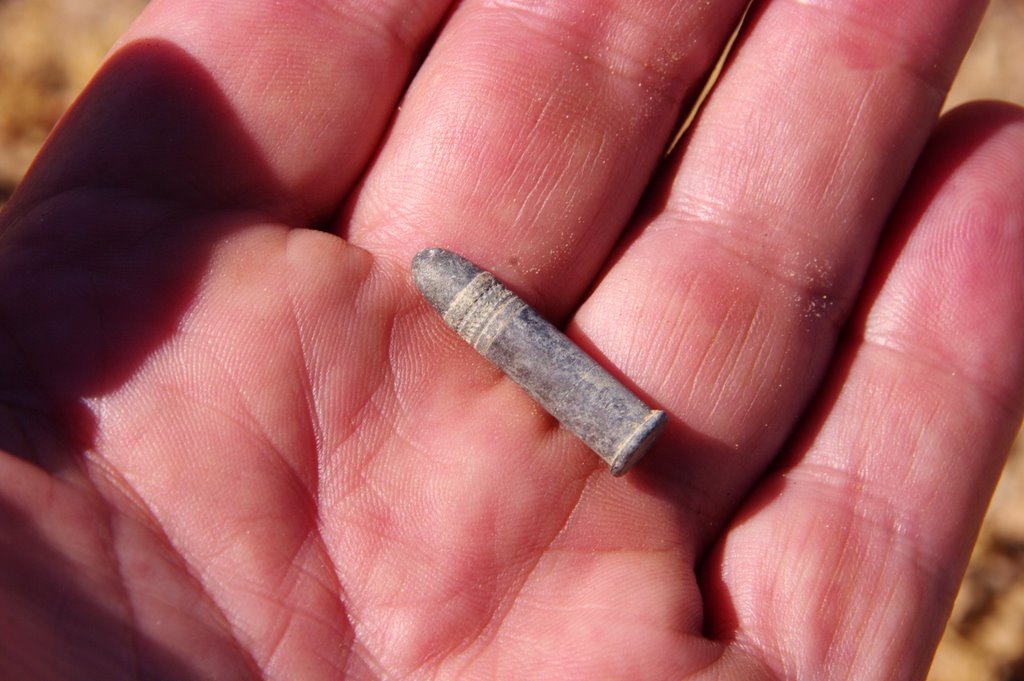
Scattered around the area are remnants of  old station life – broken plates and bottles, buttons,  nails, wire, even unused bullets.

If you remember the Redgum song, Diamantina Drover listen to this version by Christy Moore

WEST TO WINTON

With the Studio to Studio Exhibition finished and a couple of other commitments out of the way, it was time to load up the truck and head west. I have a two day workshop in Winton, and will be judging the 2012 John Villers Winton Art Award. The plan after that is to explore the Diamantina basin before winding our way up to Mt Isa for another two day workshop. If the night time temperatures are still above freezing in Alice Springs we will stock up in Mt. Isa and head to Alice via the Plenty Highway and Eastern Macdonalds.

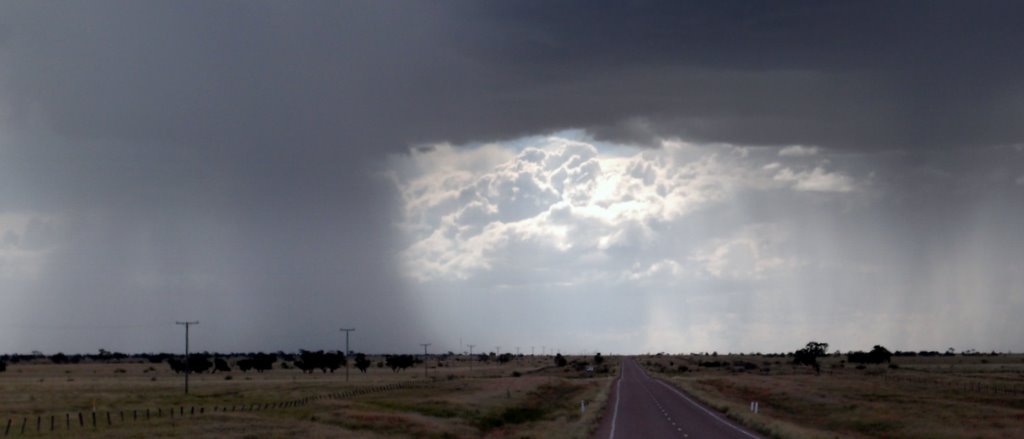
We drove through some incredible storms between Longreach and Winton. After four years of good rain the country is weirdly green, the cattle are fat and plentiful and the station owners are smiling.

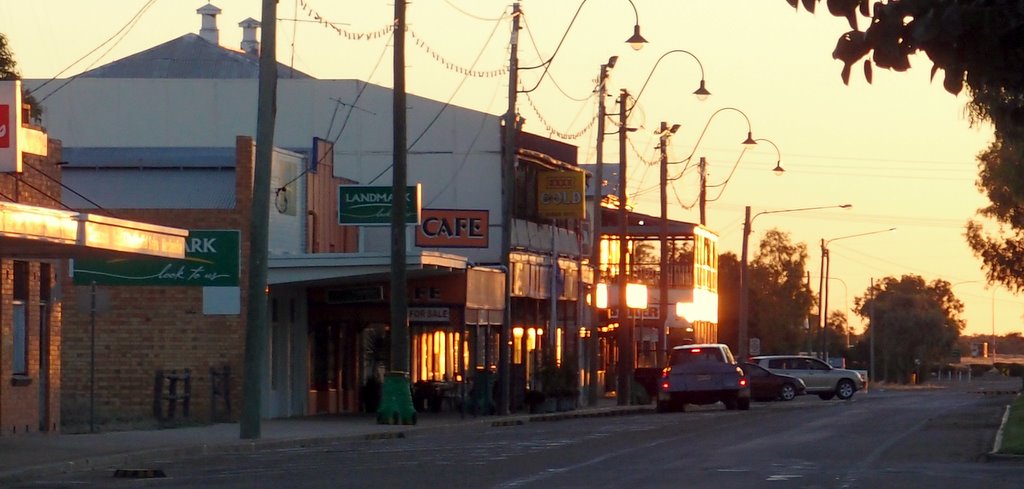
The wild west – Main street Winton

After the workshop we celebrated Sash’s birthday in fine style at the Tatts Hotel

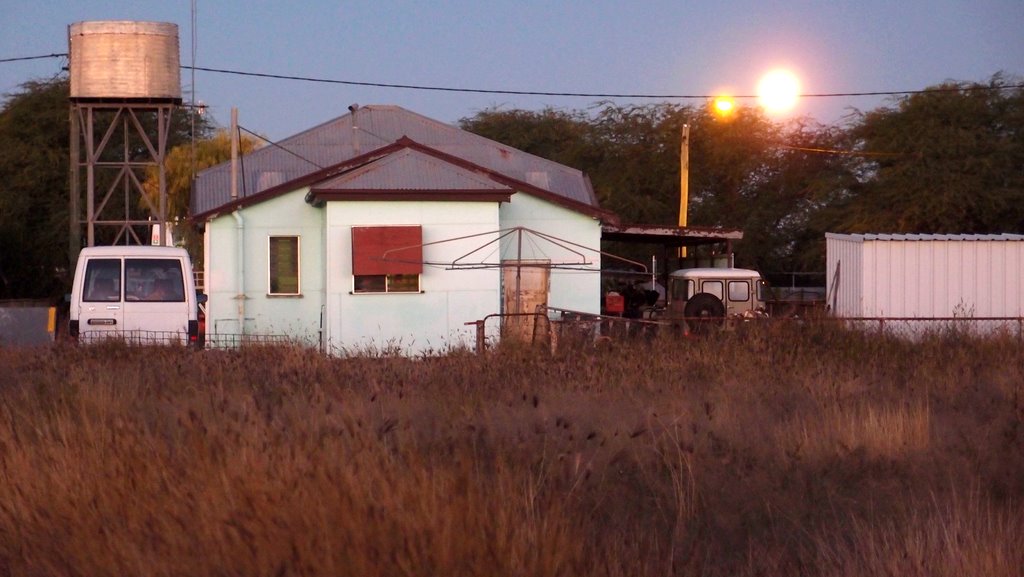
Big moon rising over suburban Winton

Willie Mar’s Chinese market garden operated in Winton from 1923 until it fell victim to the 2000 flood.

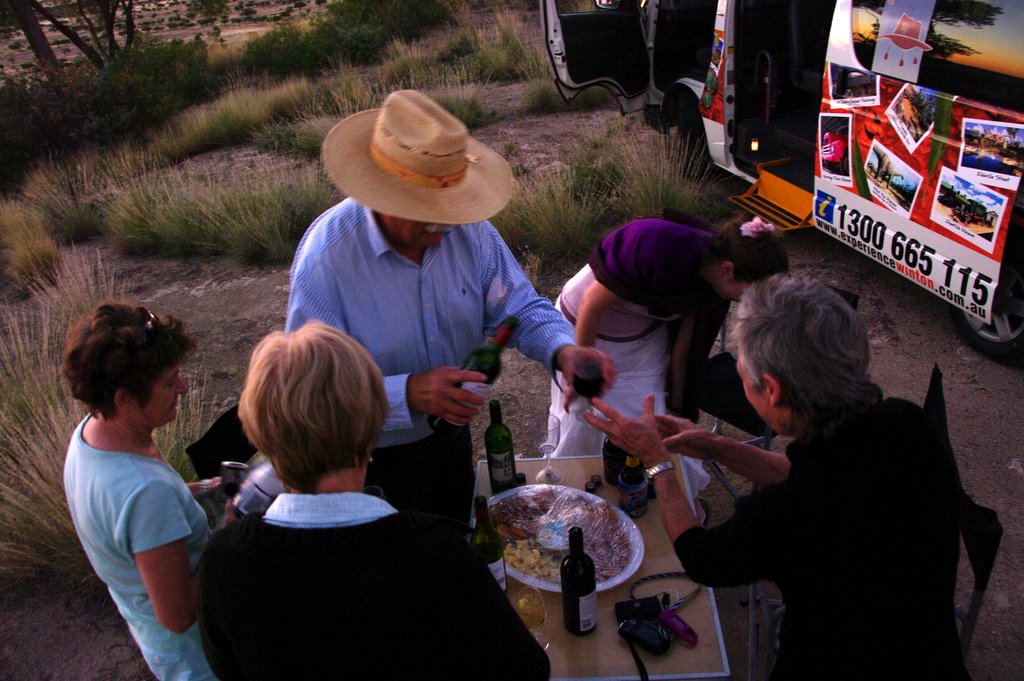
Jessica and Craig , who organised the John Villers Art Exhibition and Workshop in Winton, took us out to the Rangelands Escarpment for drinks as the sun set. What an awsome sight.

Nick Caves story “The Proposition” was filmed here at Ranglands and on nearby Bladensburg National Park

WINT7136

We camped a night looking over Scammy’s Lookout – what a place to watch the sun go down – You can see all the way to India.

From Scammy’s Lookout

Plenty of grass means plenty of kangaroos bouncing through the landscape.

WINT7250

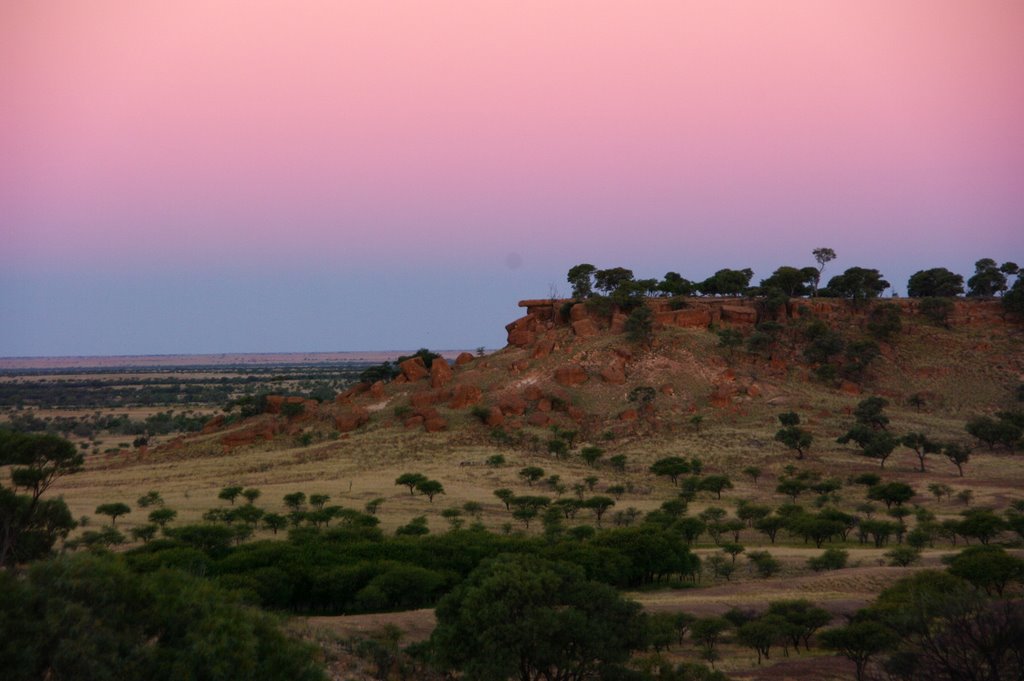
After miles of nothing we stumbled across this water hole on our way down to the Diamantina.

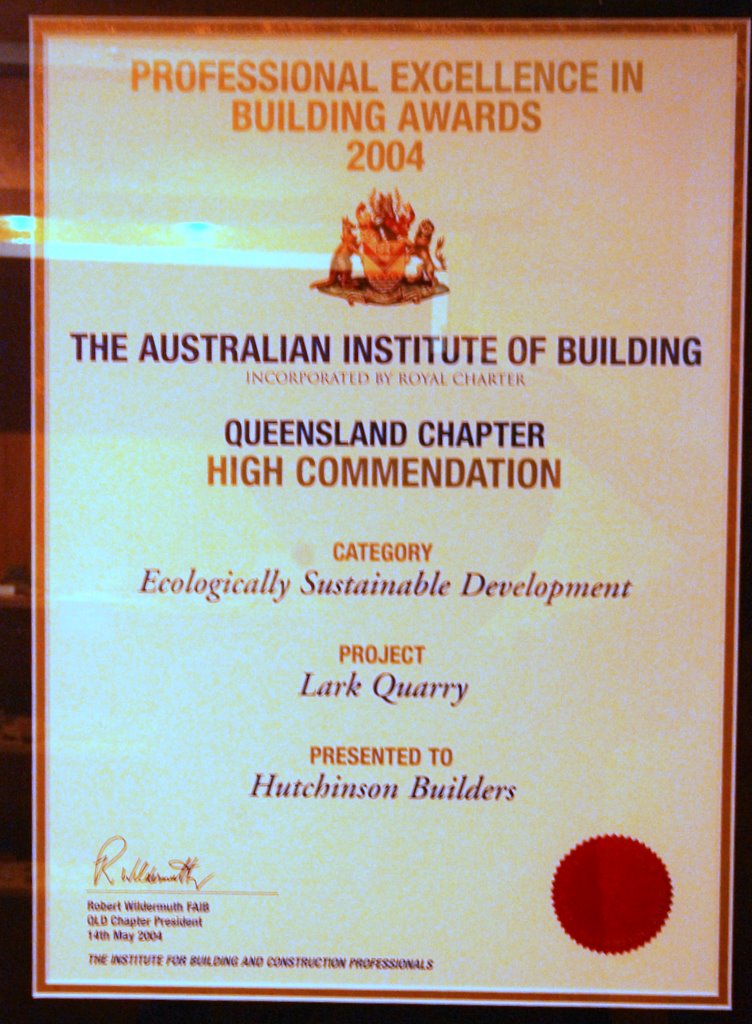
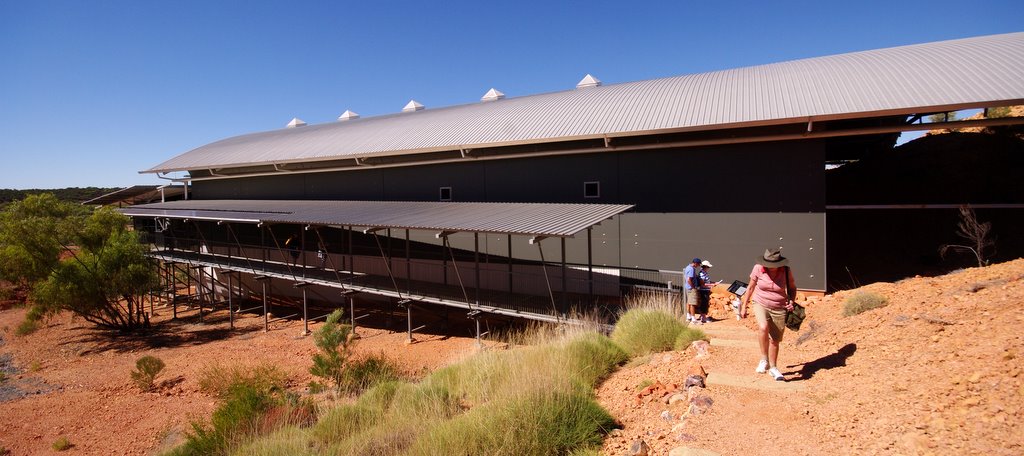
At Larks Quarry an impressive building protects footprints made by stampeding dinosaurs 95 million years ago.

Strangely, the structure won a building award in 2004 but had to be closed in 2012 to demolish unstable rammed earth walls. We were lucky enough to arrive a couple of weeks after the building was re-opened (minus many of the rammed earth walls)

PAINTING NEW YORK

The last couple of weeks I’ve been locked in the studio finishing work on a book to be released early next year.

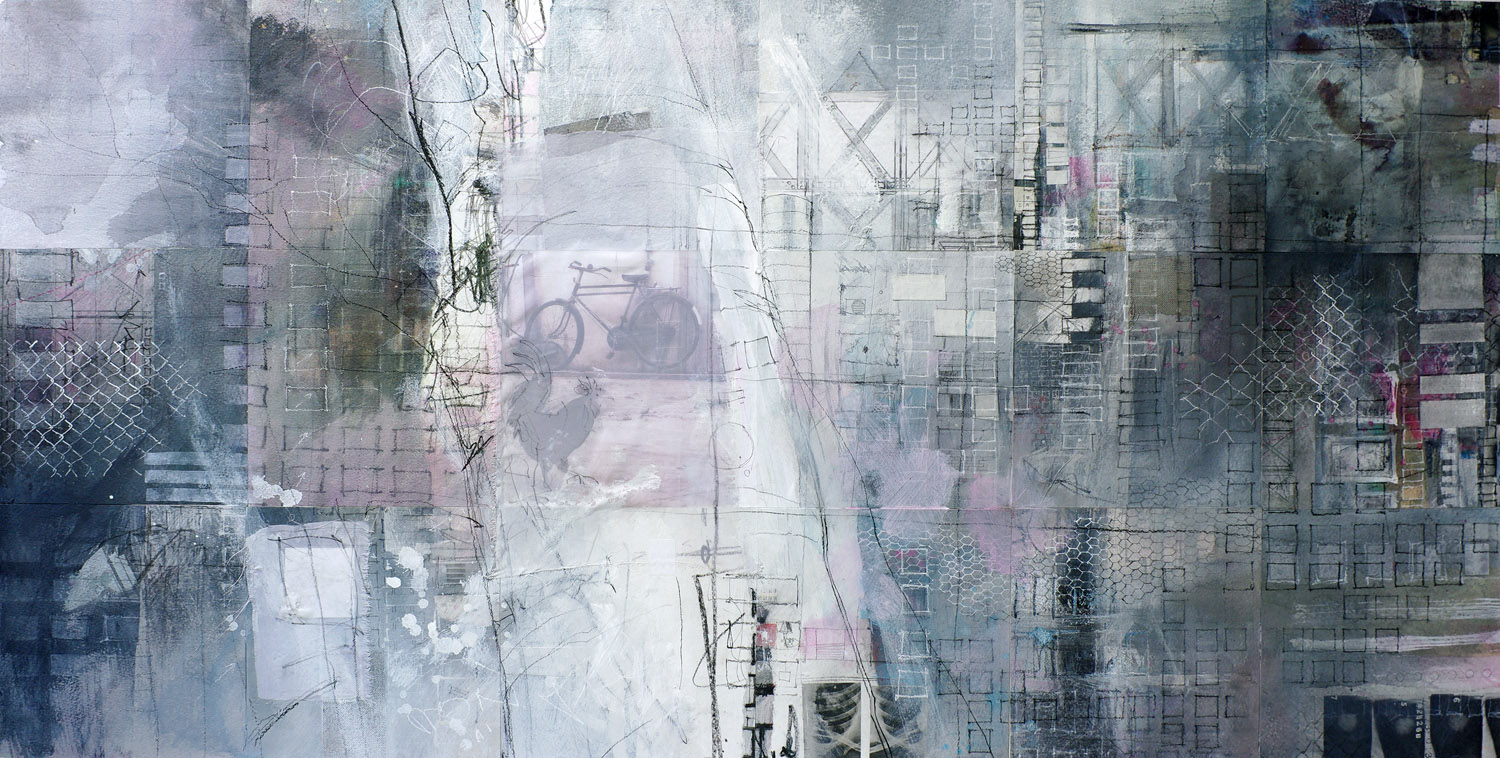
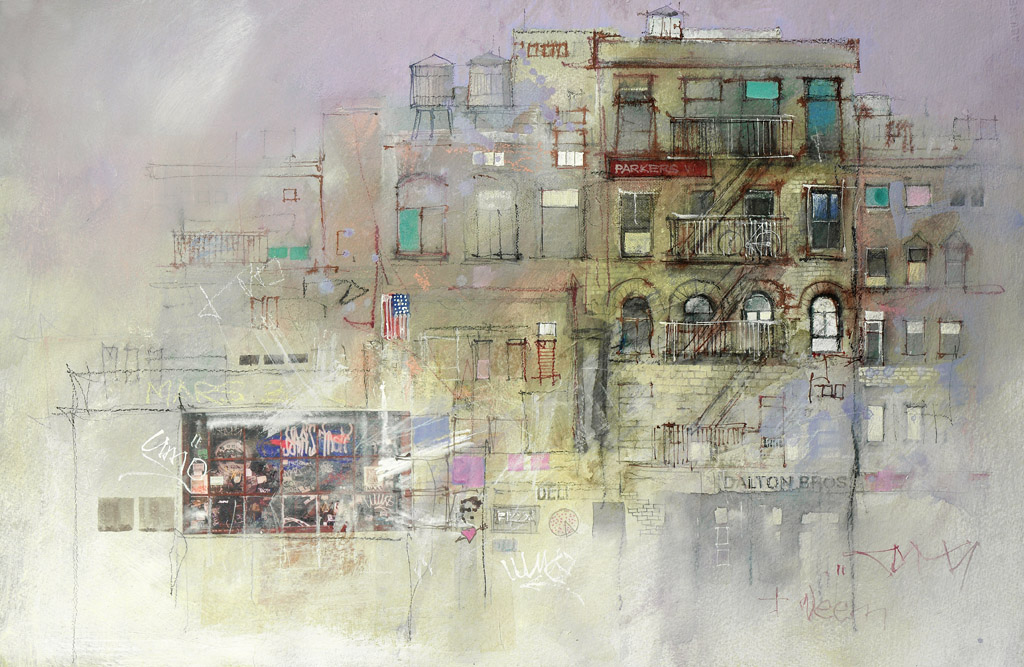
I got started on a couple of urban landscapes based on parts of New York. Early one morning I walked down under Brooklyn bridge. There was a lot of road work going on and huge trailers were lined up along a side street. They appeared to be accommodation for road workers – like a gypsy camp under the bridge. Big sections of road were fenced off and there seemed to be uncoordinated  people and machinery everywhere. So much activity in a city that doesn’t seem to stop, and I’m just rubbing the sleep out of my eyes – that’s where this first painting comes from.

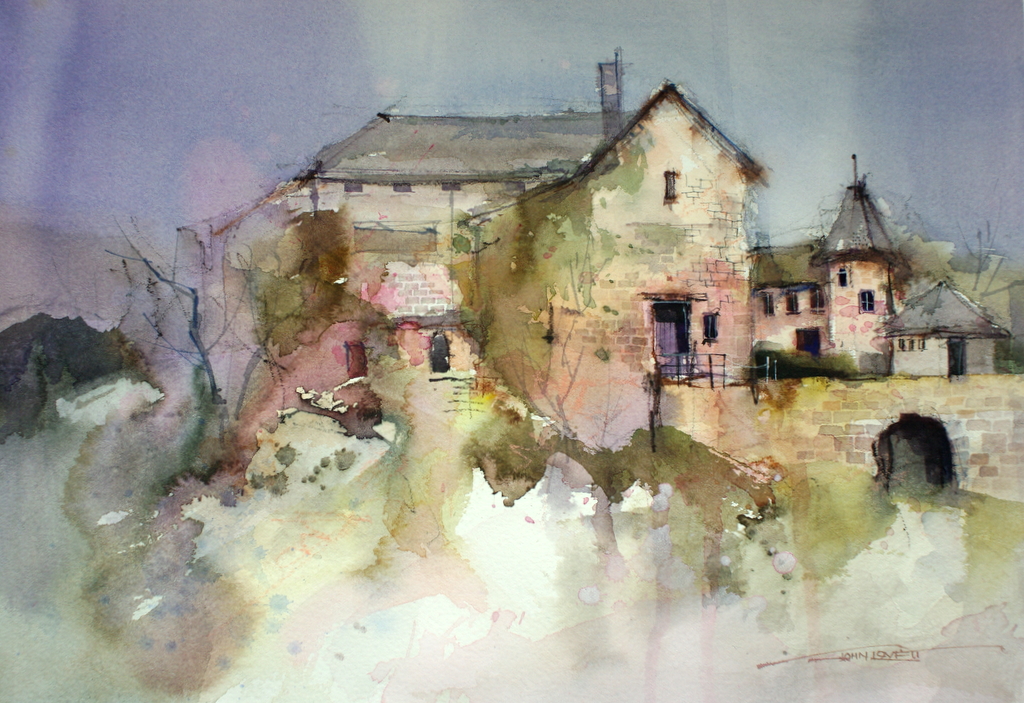
This painting is based on the chaotic textures, bars, buildings and patriotism of East Village. Both paintings are a mix of watercolor, collage, Gouache, Gesso, ink and charcoal, built up in layers like the graffiti that lines many of the city’s walls.

CHATEAU DE LA FLEUNIE

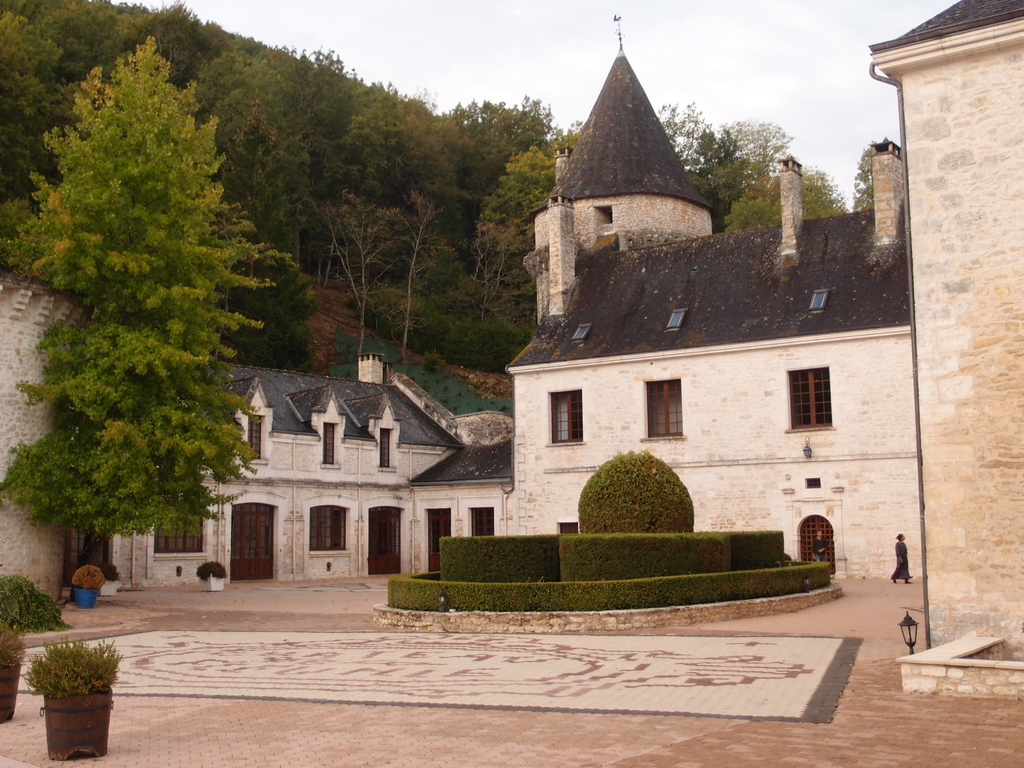
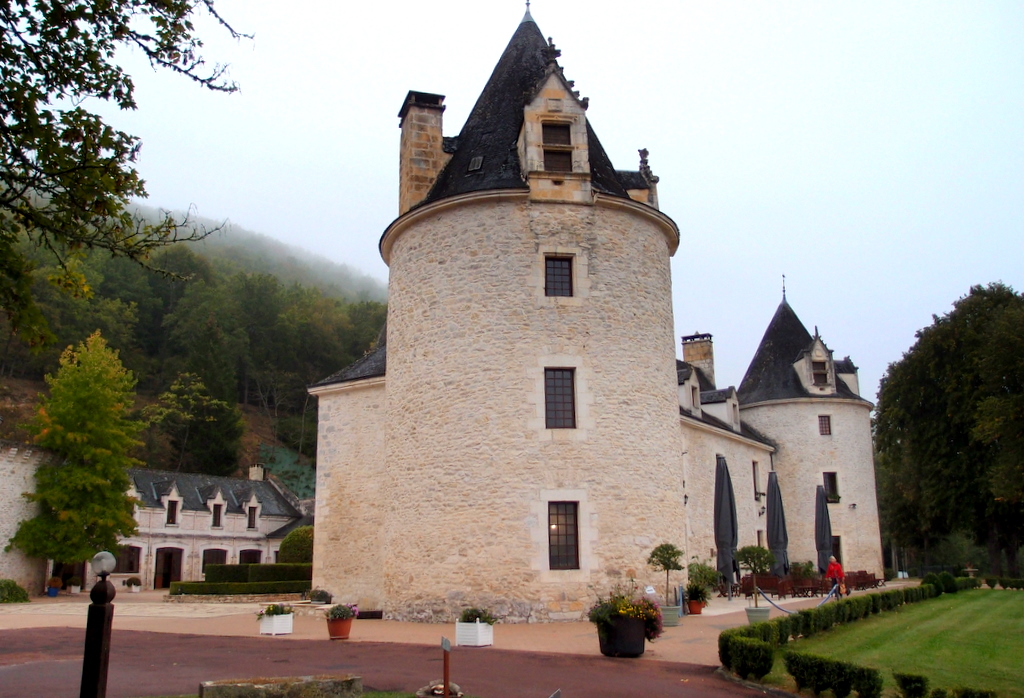
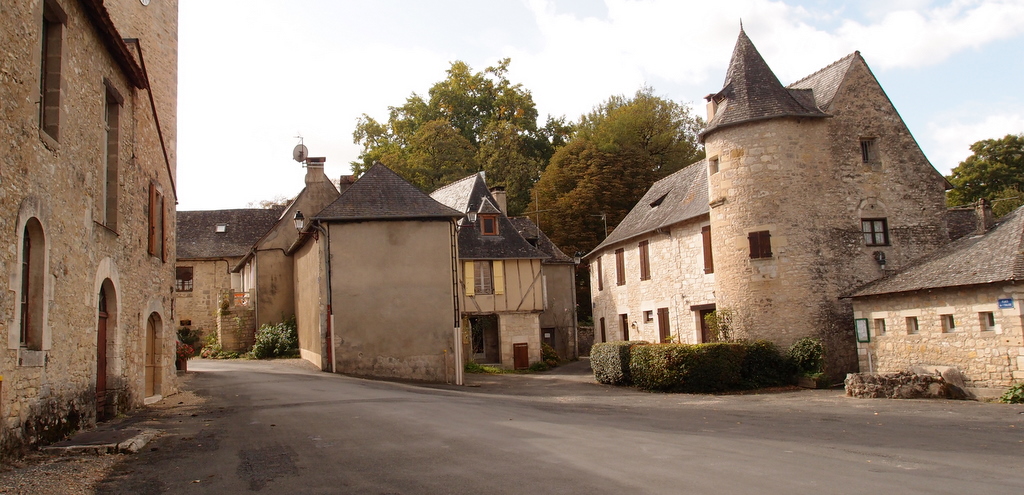
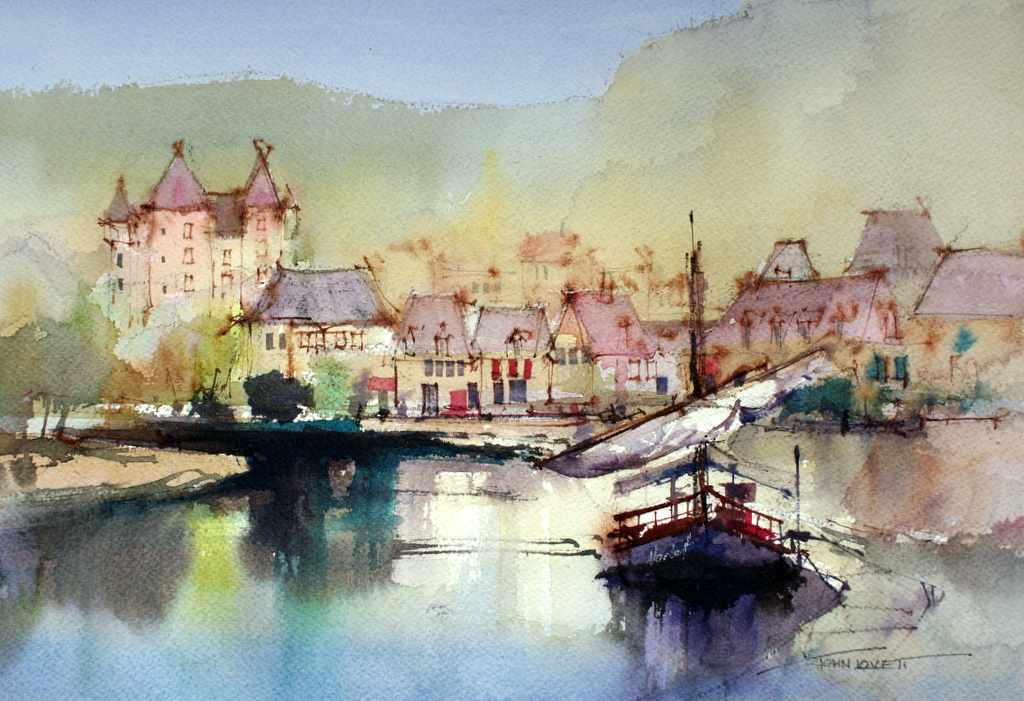
After our stay in Aix en Provence we boarded a coach and made our way through the French country side to Chateau de la Fluenie. The Chateau was built in the 1300’s and extended in the 1600’s. It is a beautiful old building set on manicured, spacious grounds just outside the small village of  Condat in the Dordogne

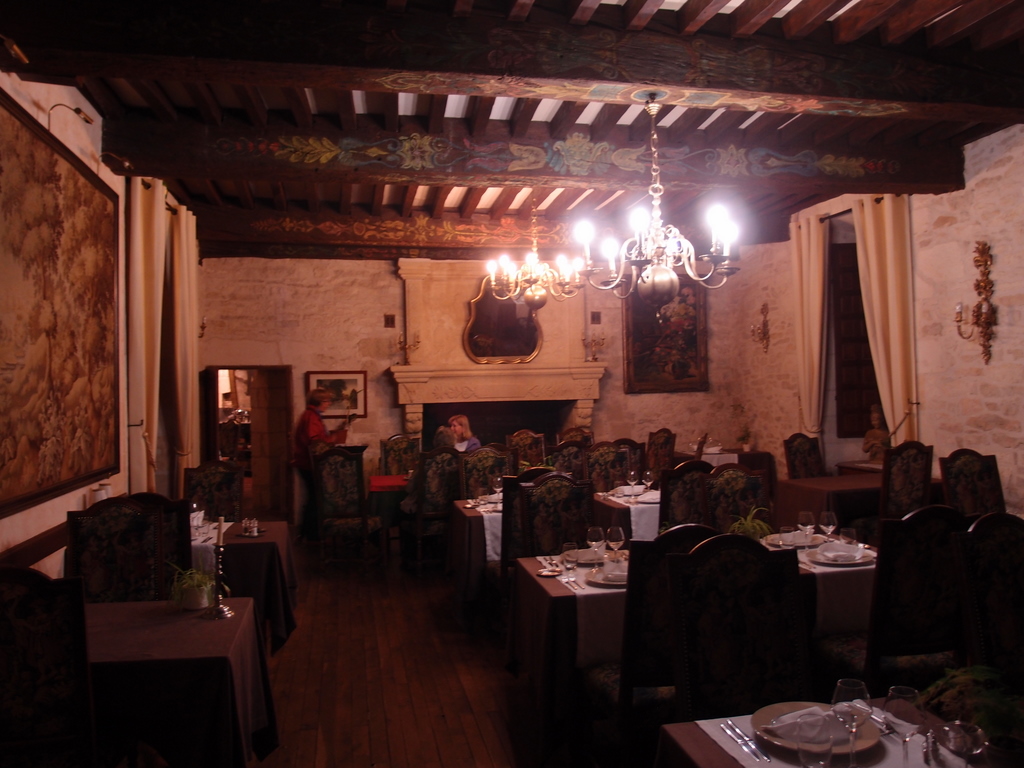
The main dining room

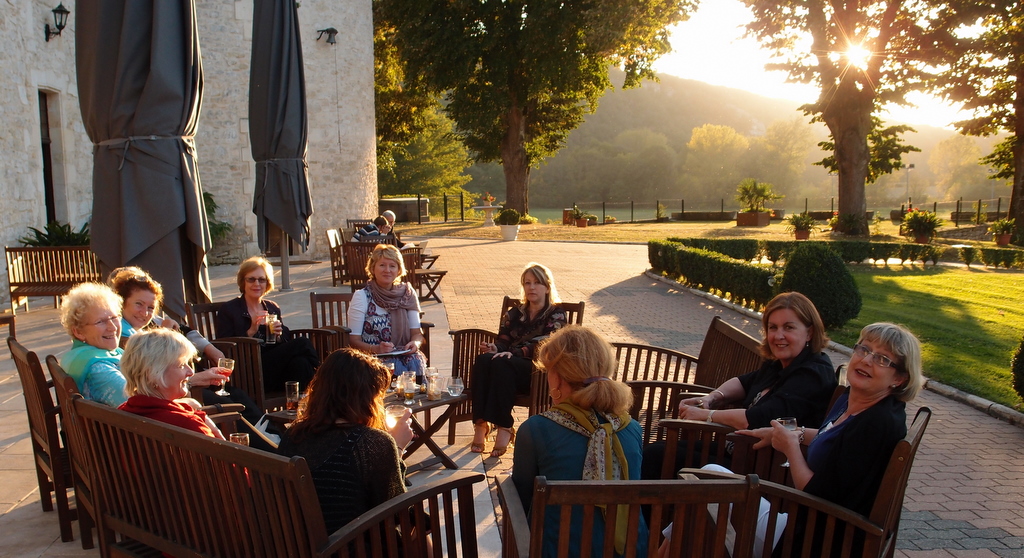
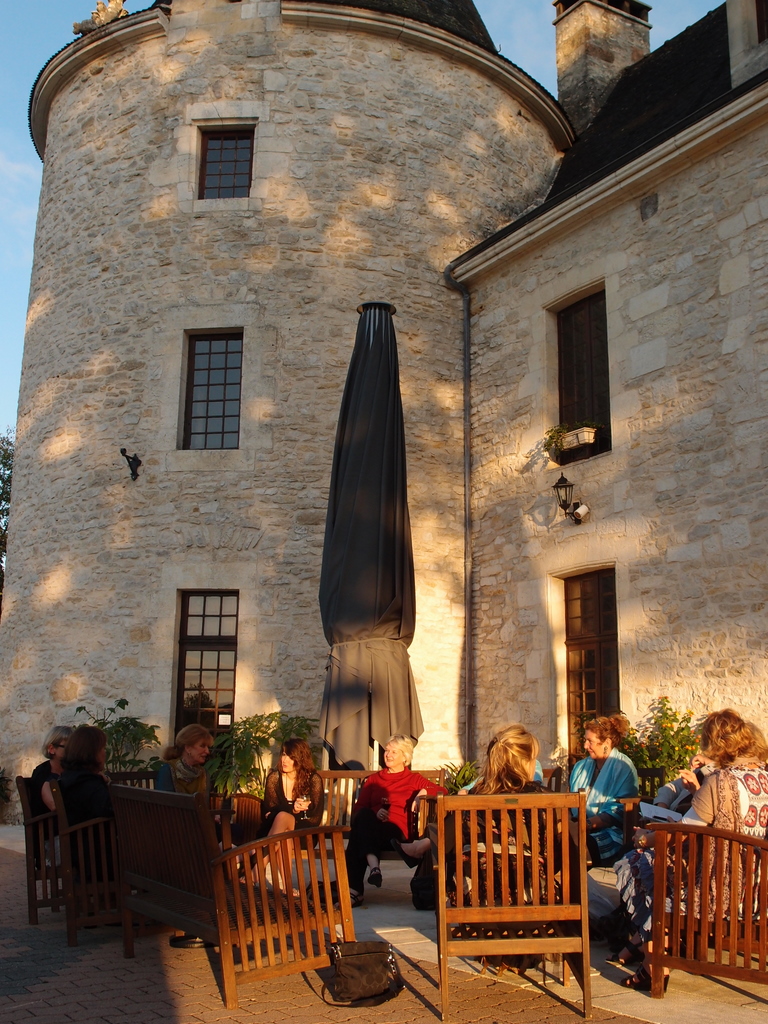
After a hard days painting it was nice to relax and enjoy drinks on the terrace as the sun went down.

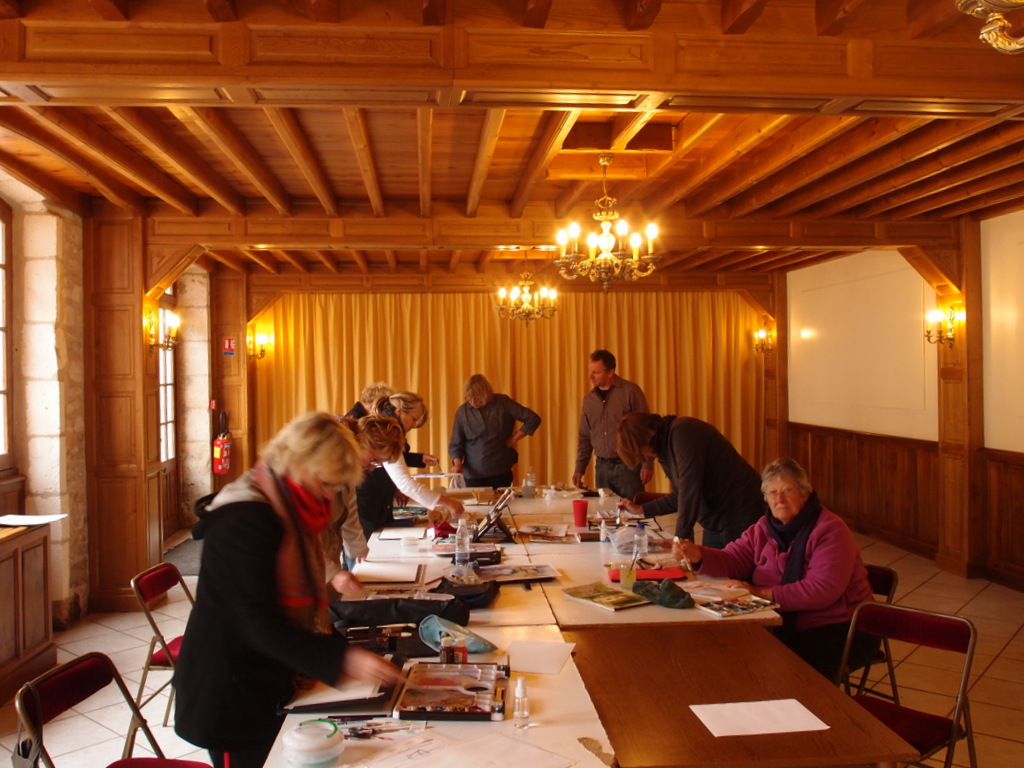
We were fortunate to have access to a large conference room,should the weather turn bad. Fortunately we had only one foggy morning where staying indoors made painting a lot more comfortable.

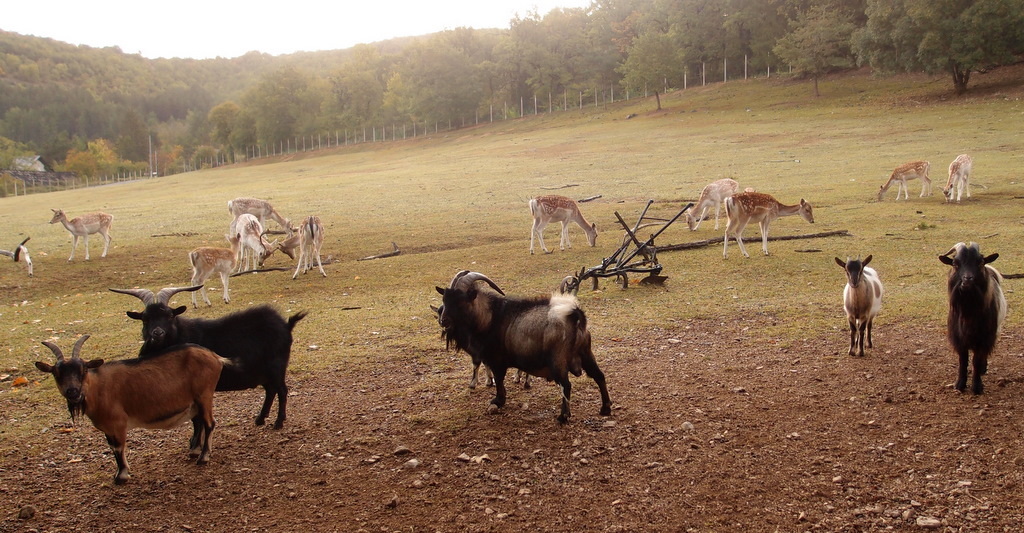
The Chateau had its own heard of deer and a collection of very small goats.

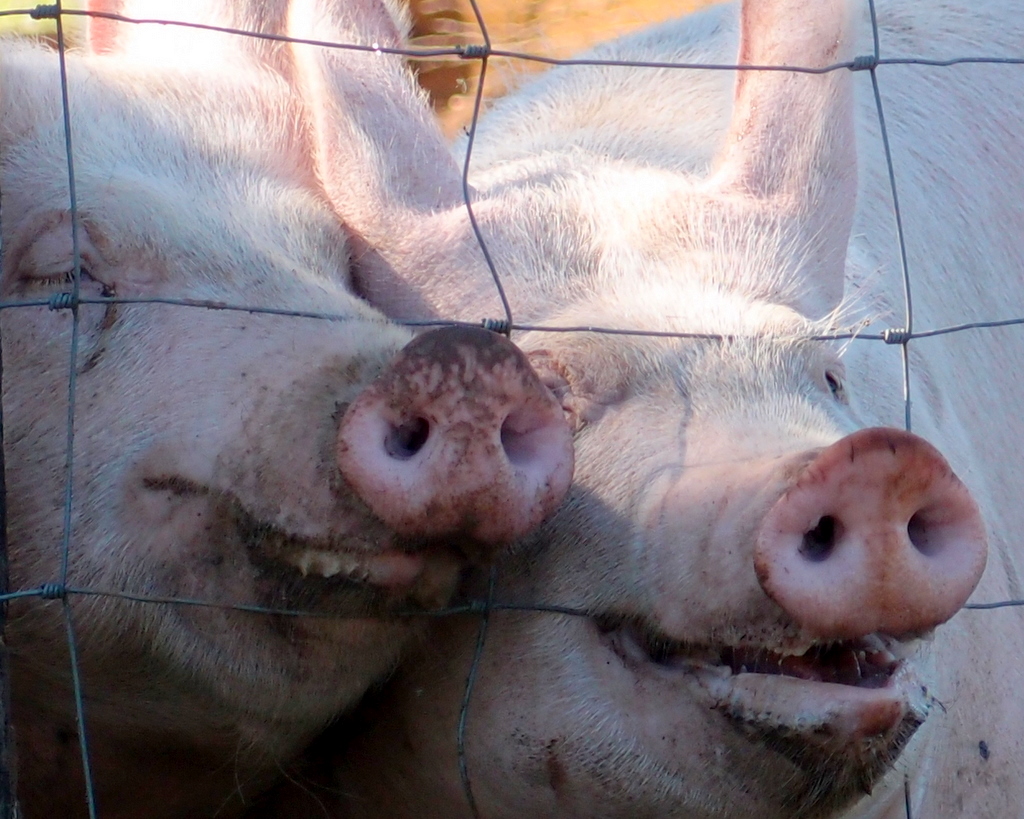
Further down the paddock were a pair of friendly pigs

The small village of Condat, just down the road from La Fleunie, was a great place to paint. There was a bar, coffee shop and restaurant in the village, so we were well looked after.

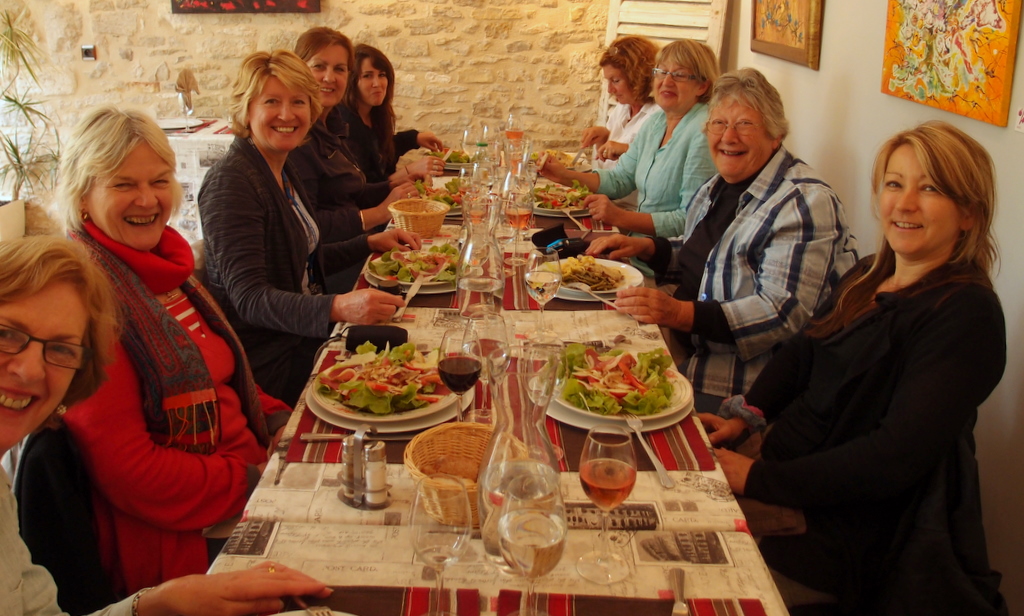
Lunch in Condat

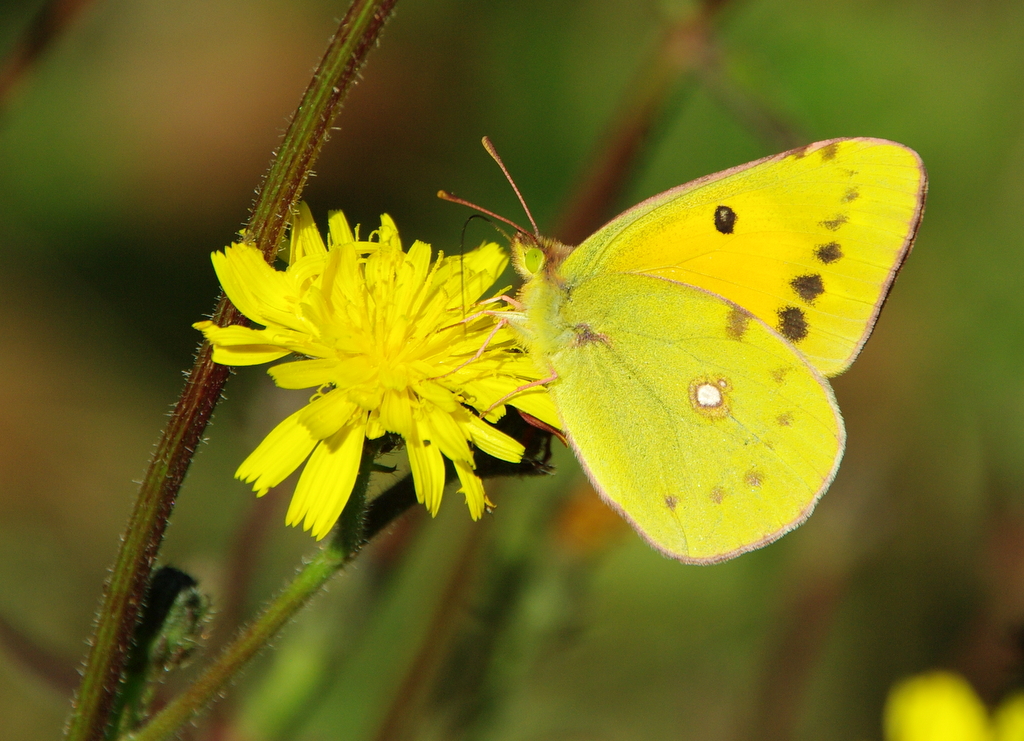
Butterfly disguised as dandelion.

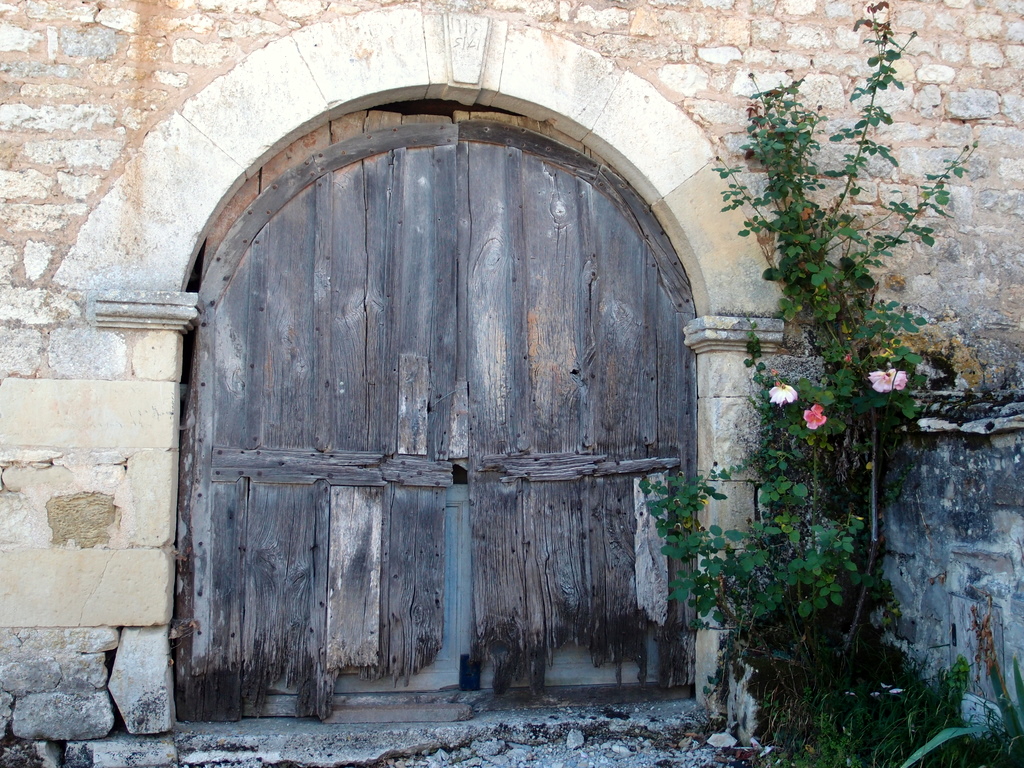
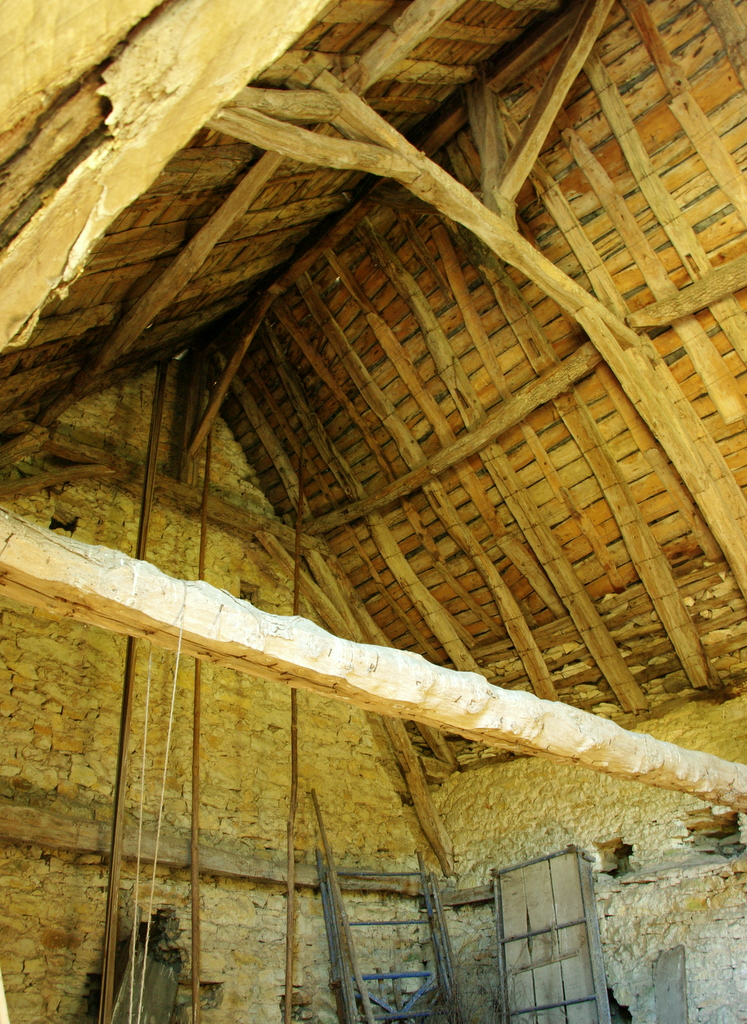
Hand hewn timber in the roof of an ancient Condat farm building.

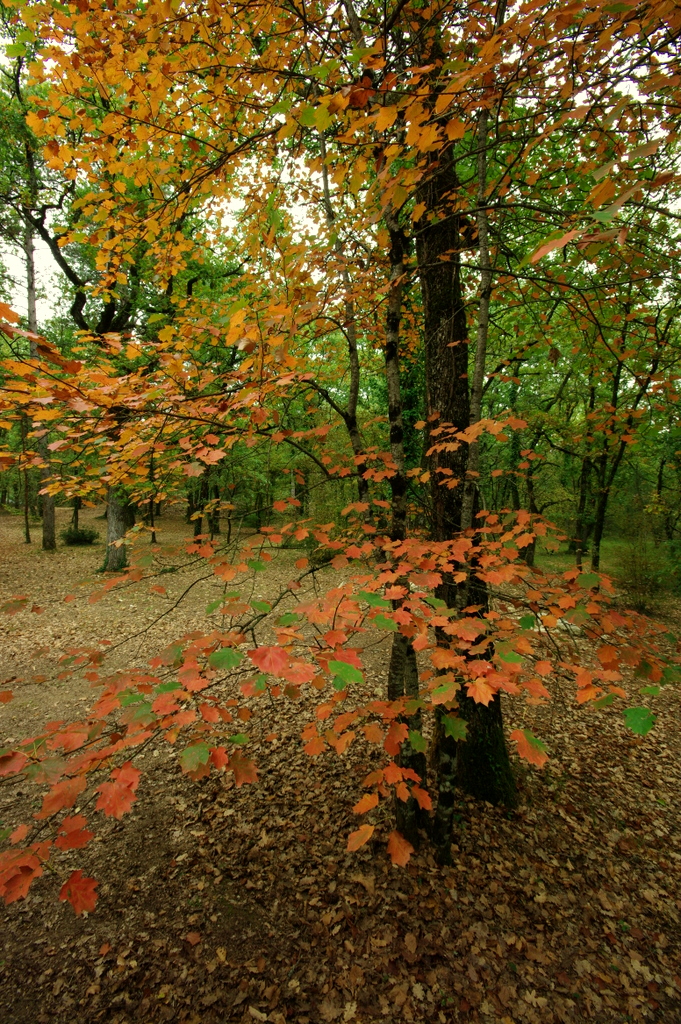
Trees in the region were getting ready to loose their leaves – some were bare, some where still green and some had fantastic colors.

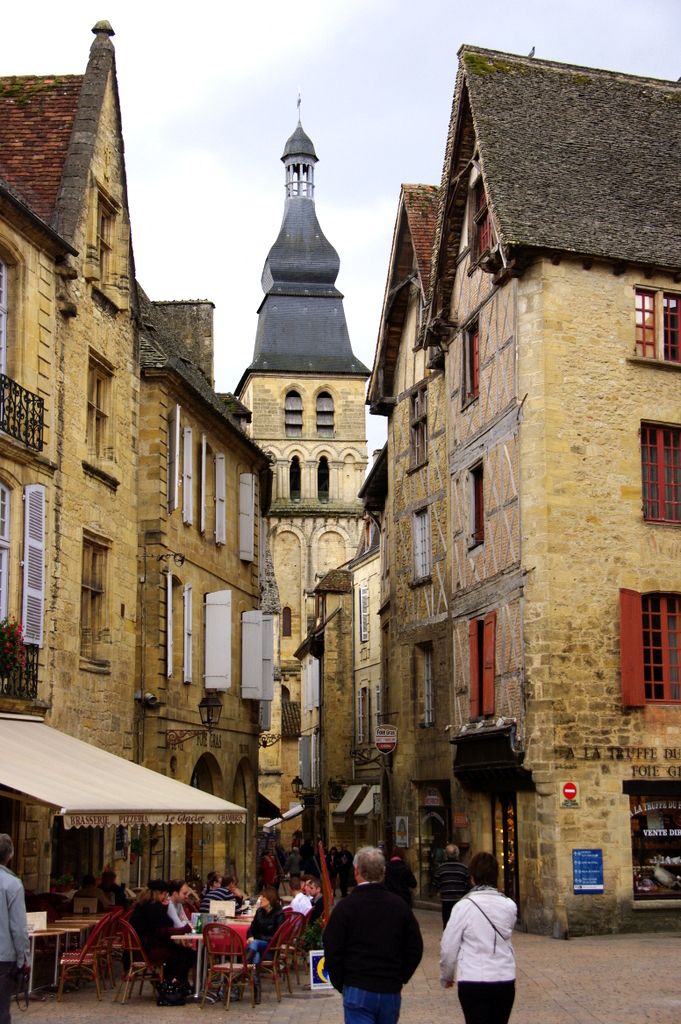
We visited the medieval town of Sarlat – beautiful old buildings, markets, shops and restaurants, plus a wealth of painting subjects. A great place to spend the day.

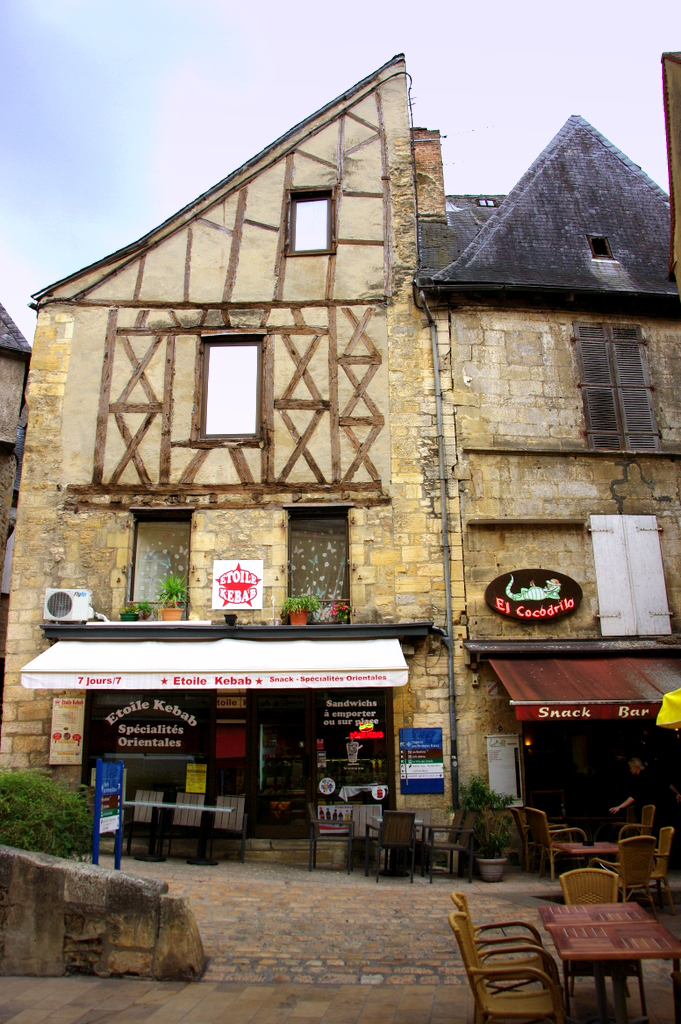
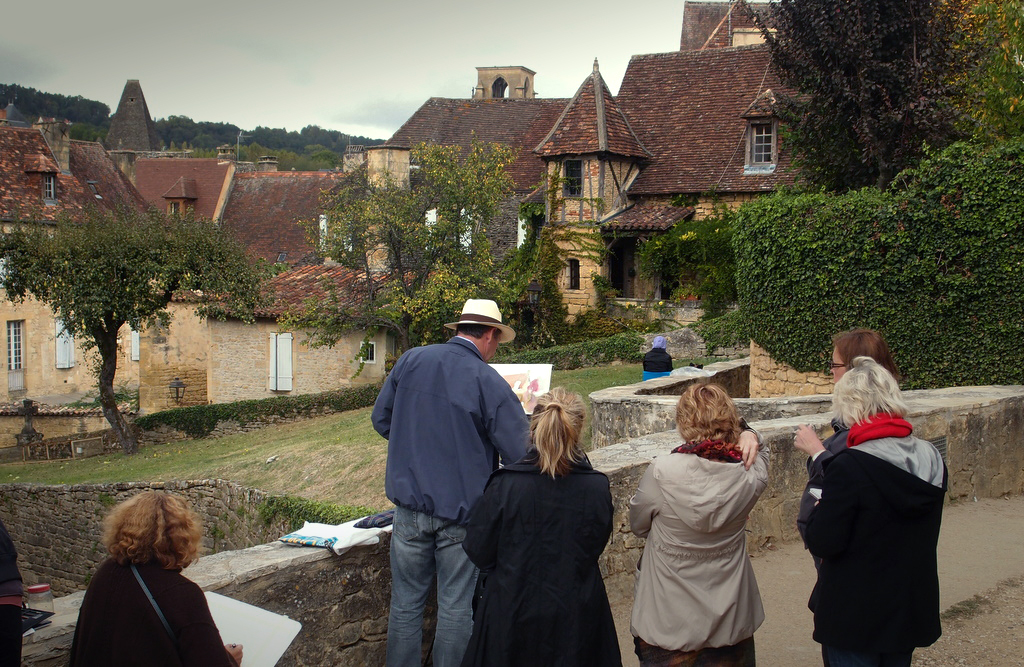
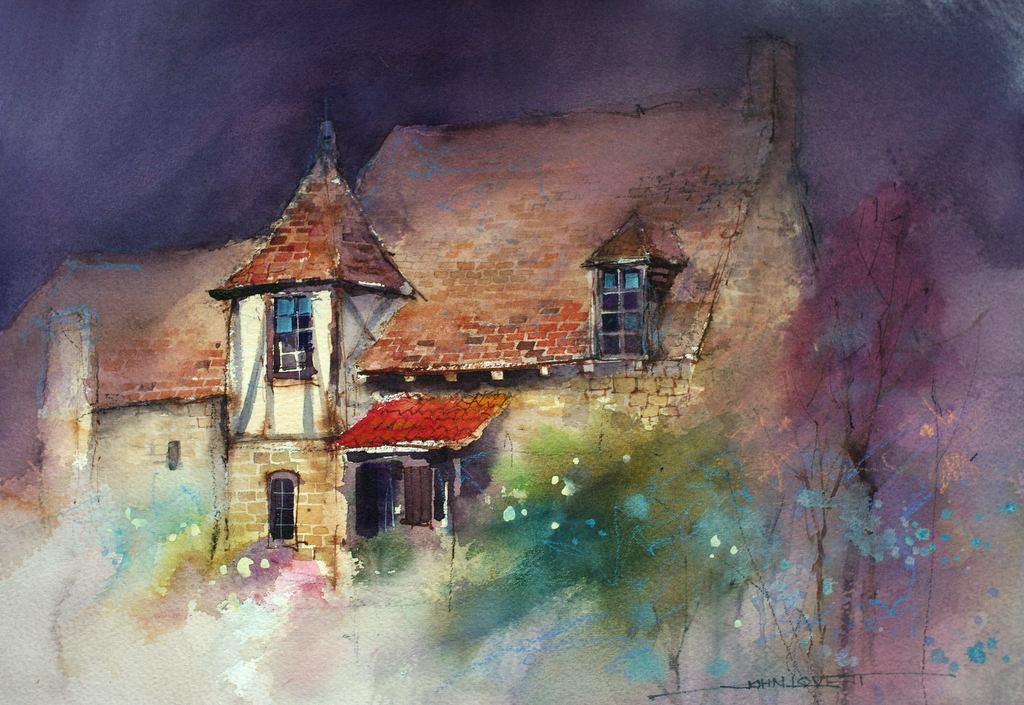
Behind the Cathedral we found a quiet spot with a great view of one of  the towns Medieval houses.

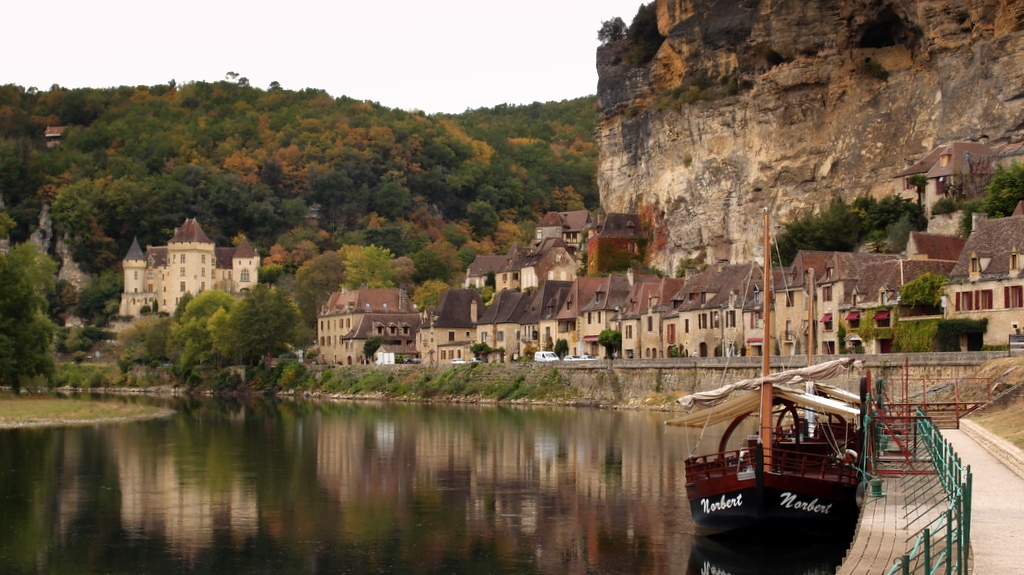
La Roque-Gageac was another medieval town tucked under a cliff on the bend of the Dordogne River. It seemed a strange location for a town, but looked spectacular reflected in the water. We spent most of the day painting there, then went to visit the Lascaux Caves. No photos due to copyright restrictions according to our guide?!

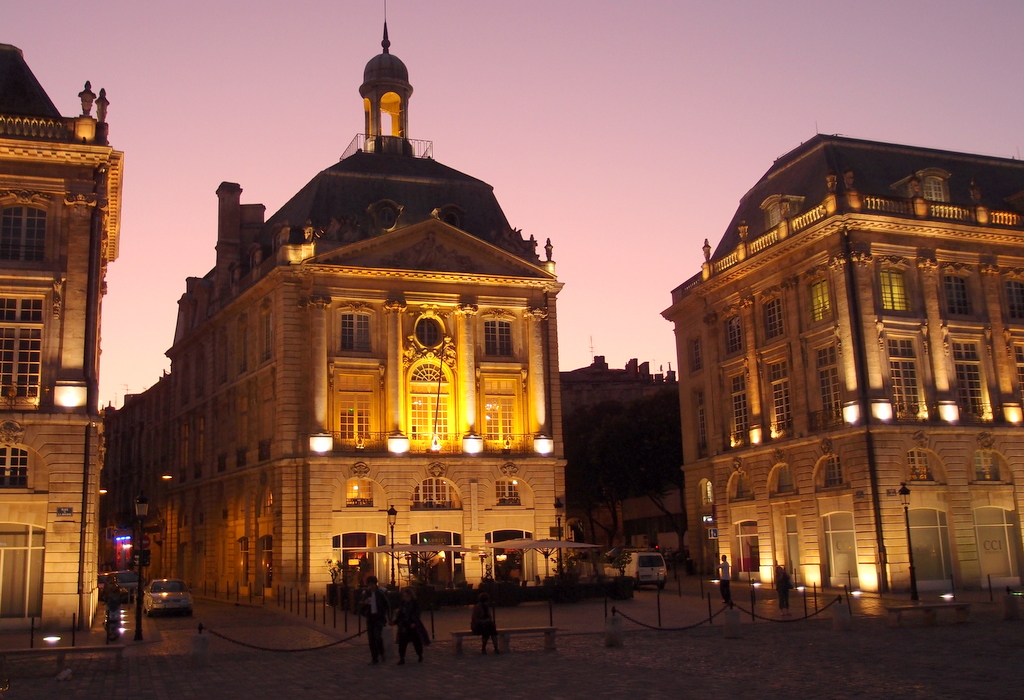
After the workshop we traveled to Bordeaux airport where everyone headed off in different directions.

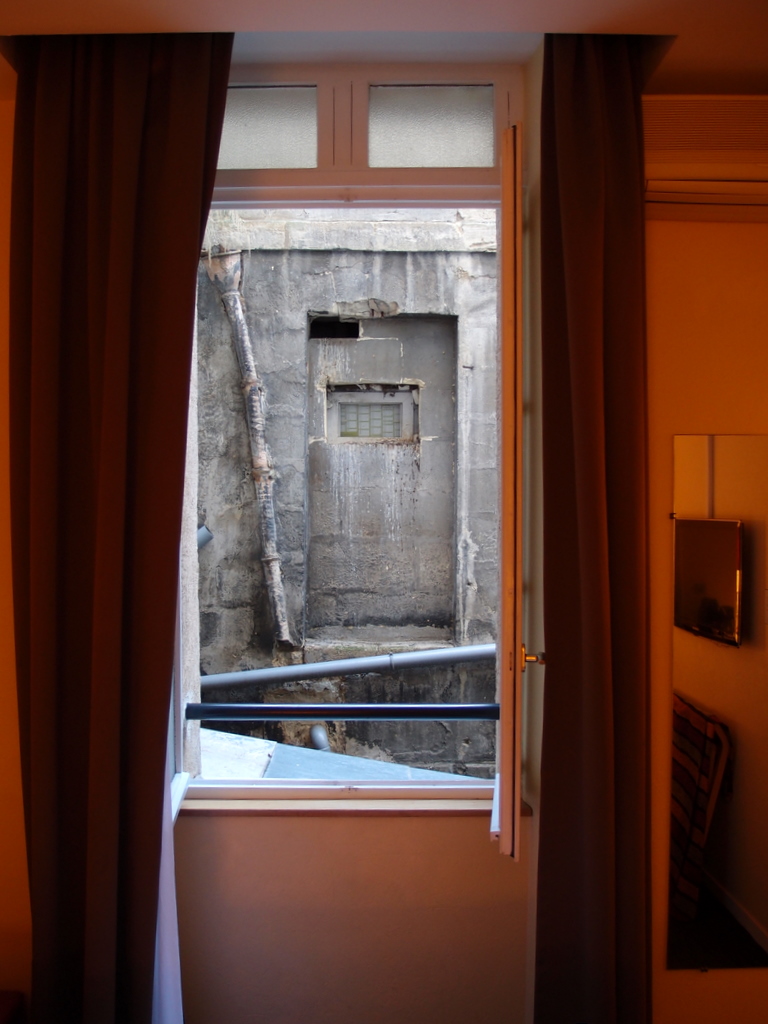
Dianne and I stayed a couple of days in Bordeaux and after the luxurious accommodation we were used to, the view from our room came as a bit of a shock.

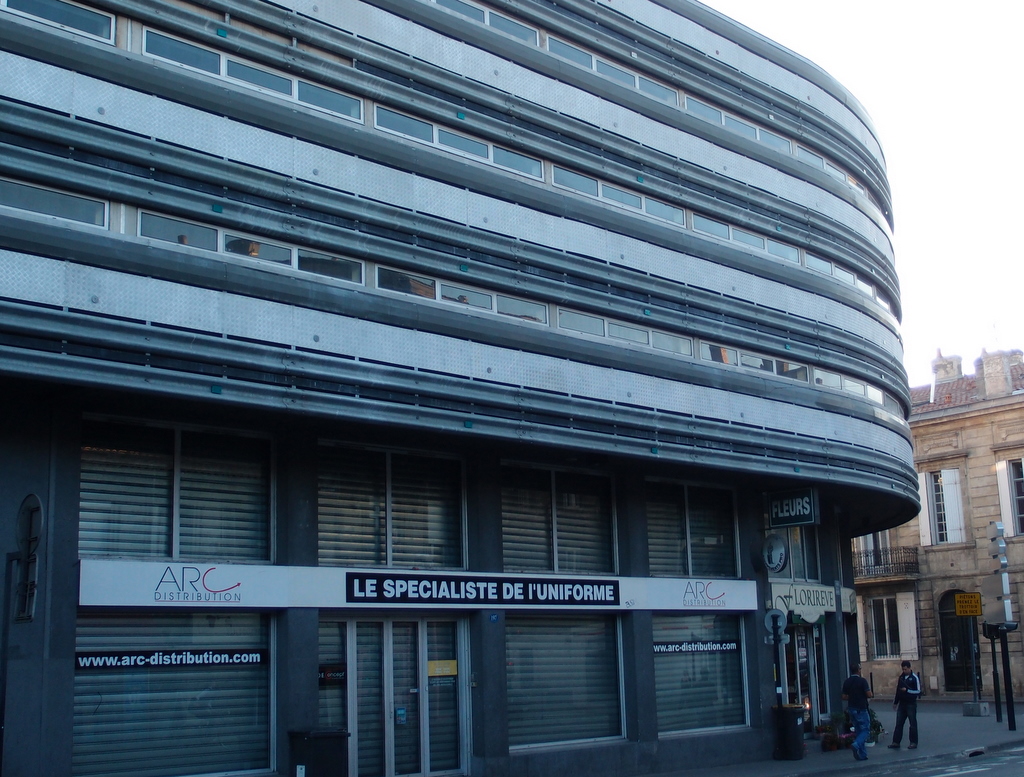
Bordeaux has some beautiful buildings, but not far from where we stayed was the building below. It must be the ugliest building in France, built from checker plate metal, freeway crash barriers and funny little windows.

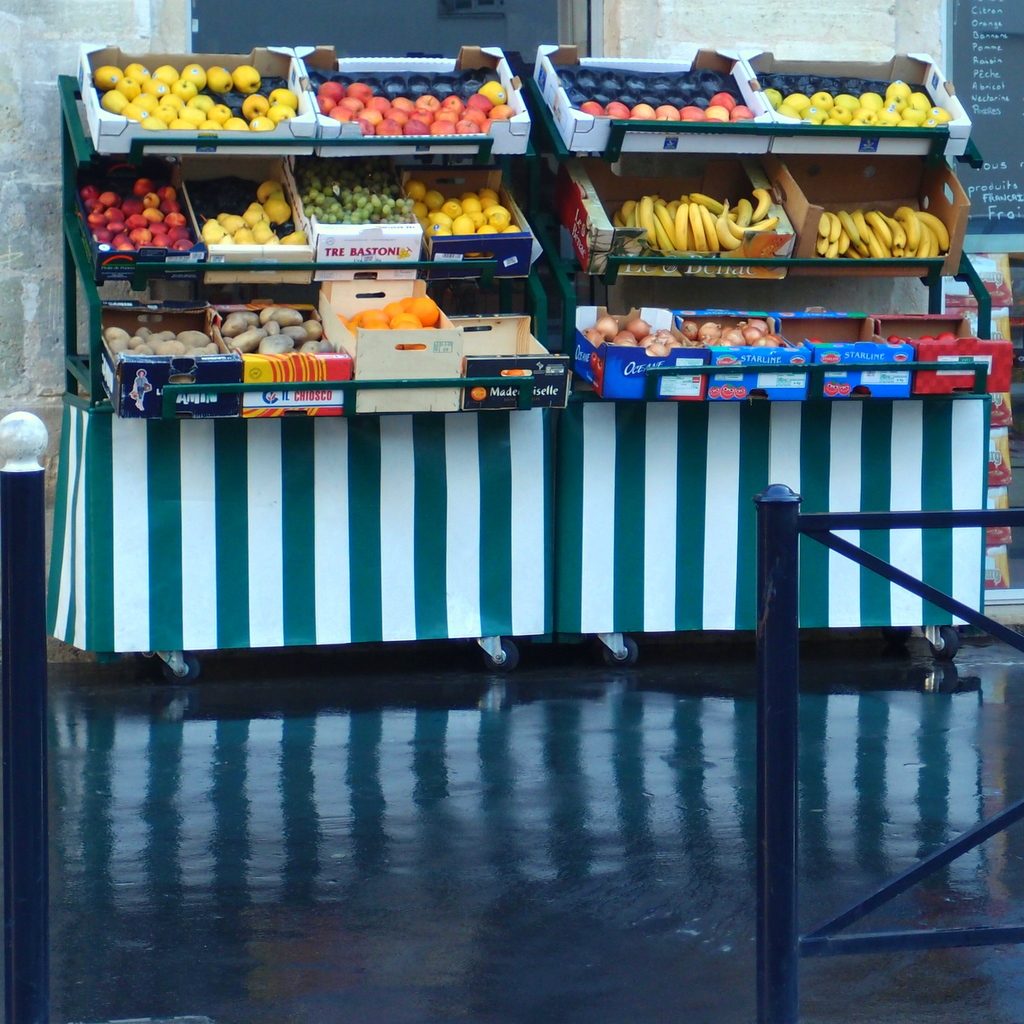
Bordeaux fruit stand

PARIS

We arrived in Paris with a week to explore the city before our workshop starts in Aix en Provence. Our apartment in Montmartre is great – close to some great bars and cafes, and just down the hill from Sacré Cœur.  A 6 day metro pass costs around 25 Euro and makes traveling around the city so easy – it is rare to wait more than a couple of minutes for a metro and the system is well signed and easy to follow – even for a pair of non French speaking Australians.


From a little bar at the top of Rue Tholoze – good beer and great view


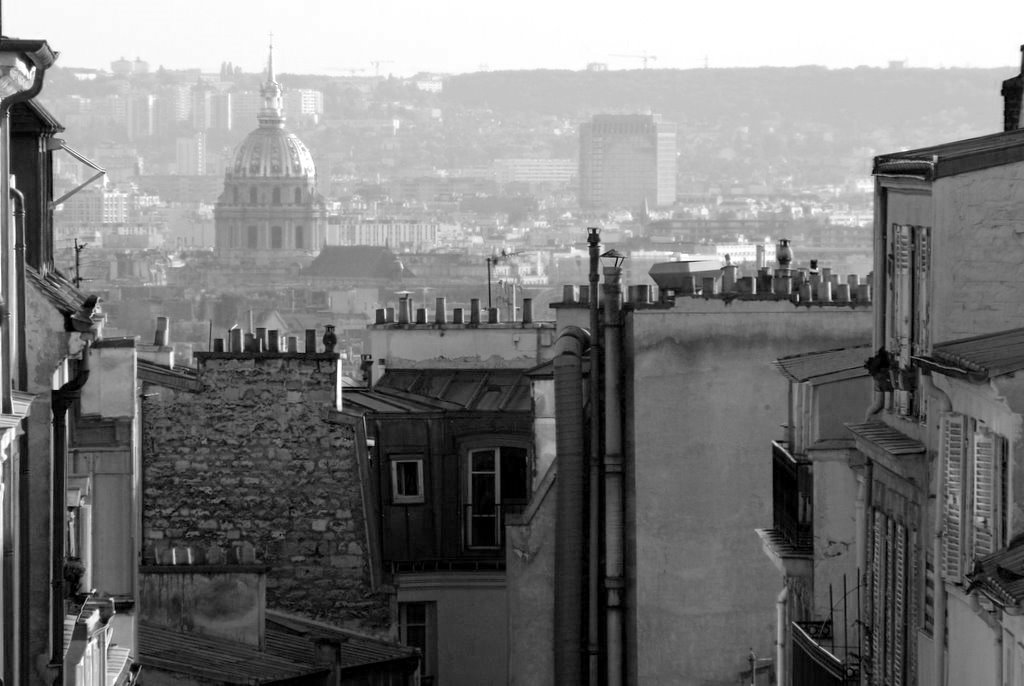
Montmartre rooftops
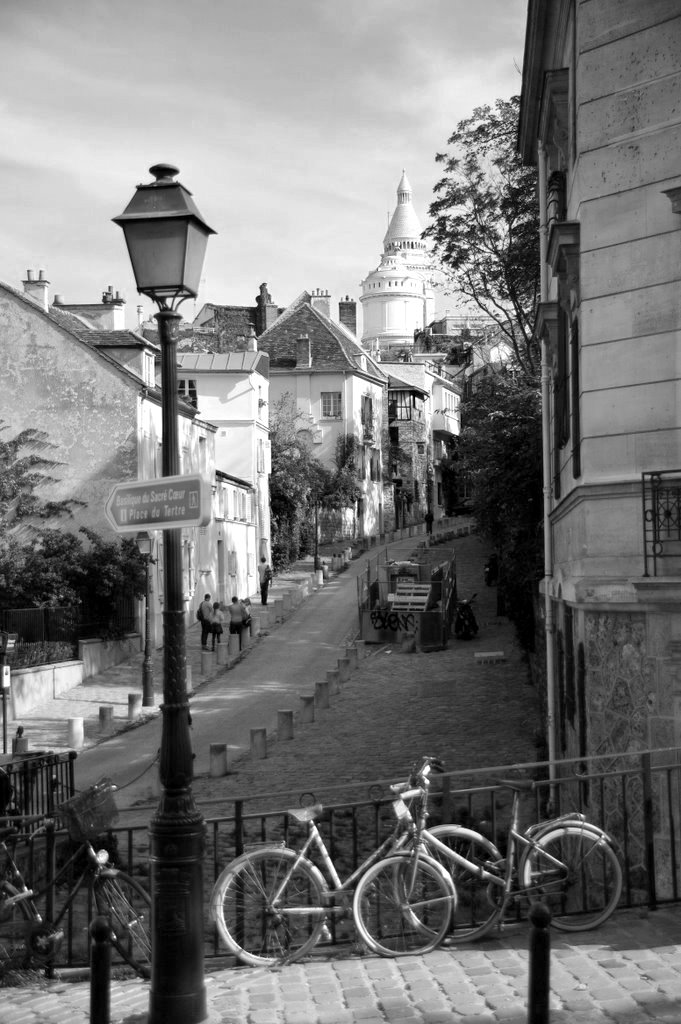

Path to Sacré Cœur
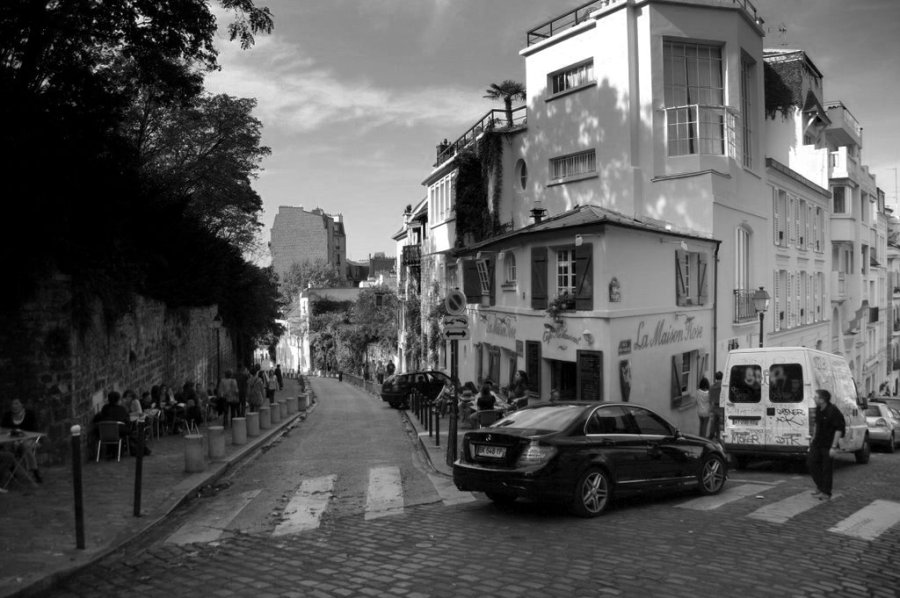

Montmatre backstreets
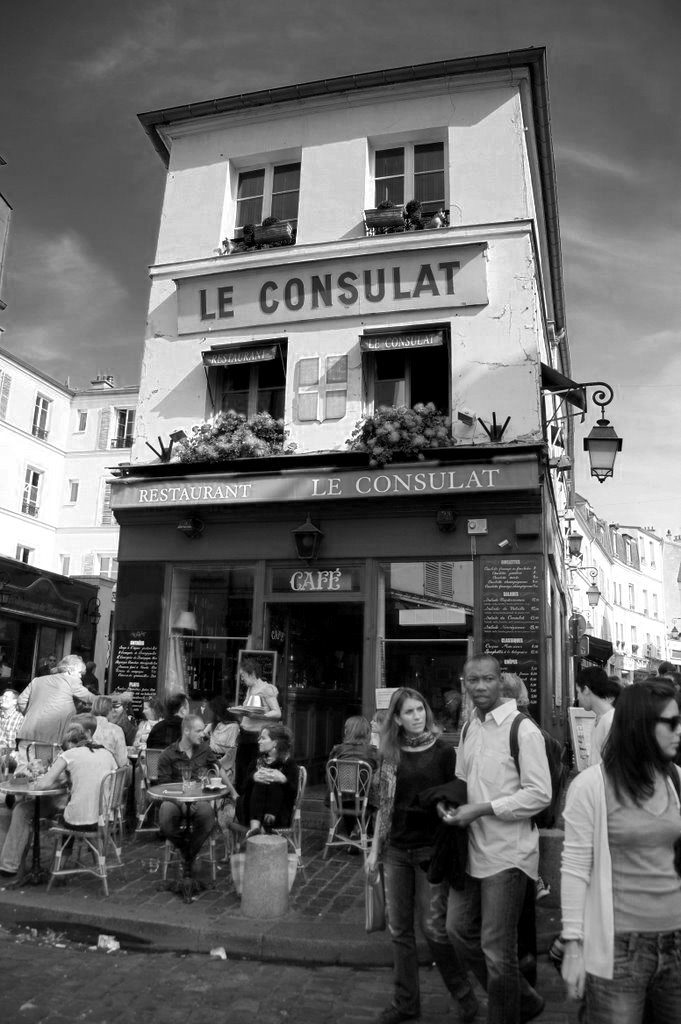

At the top of Montmatre near Sacré Cœur is the busy tourist area where artists crowd the square and sell their wares.
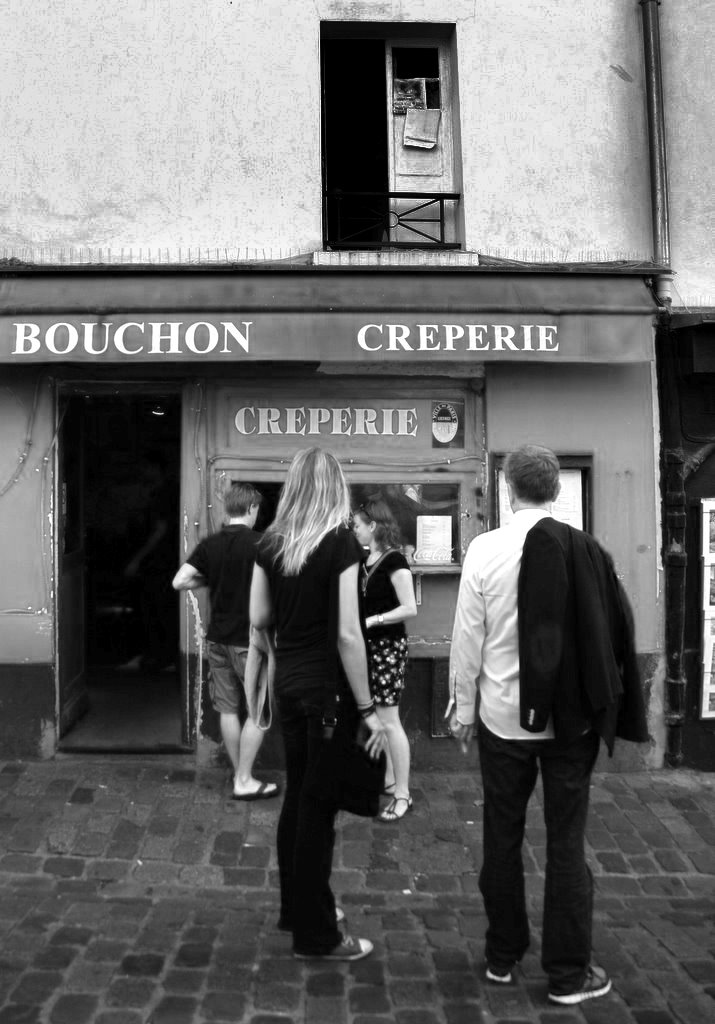

Two people trying to walk past a crepe shop.


Rooftops from Sacré Cœur


Our apartment has a beautiful old oak floor and staircase. when you walk into the building you can smell the linseed oil someone lovingly rubs into it.
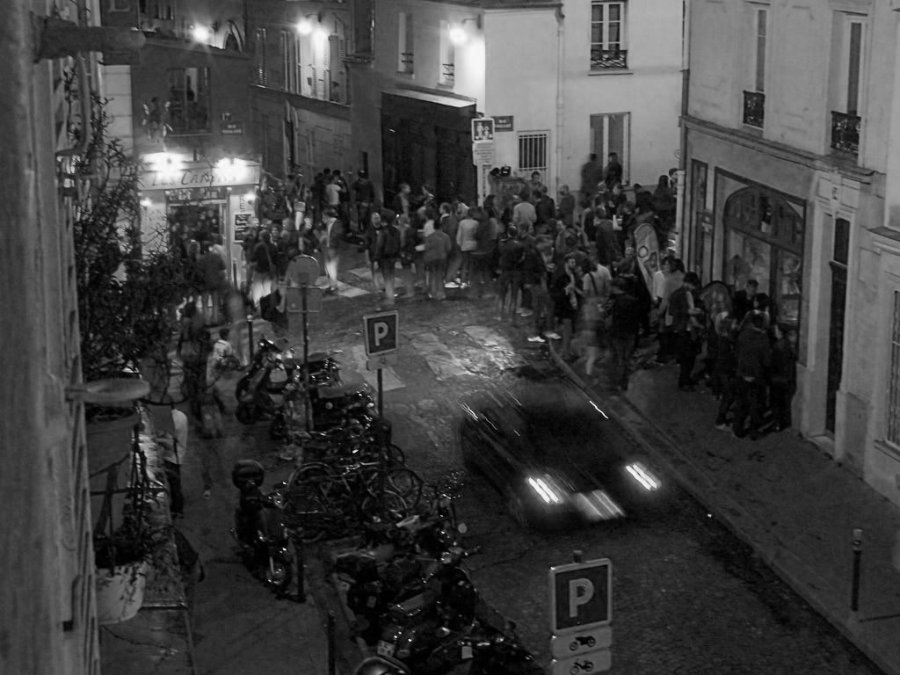

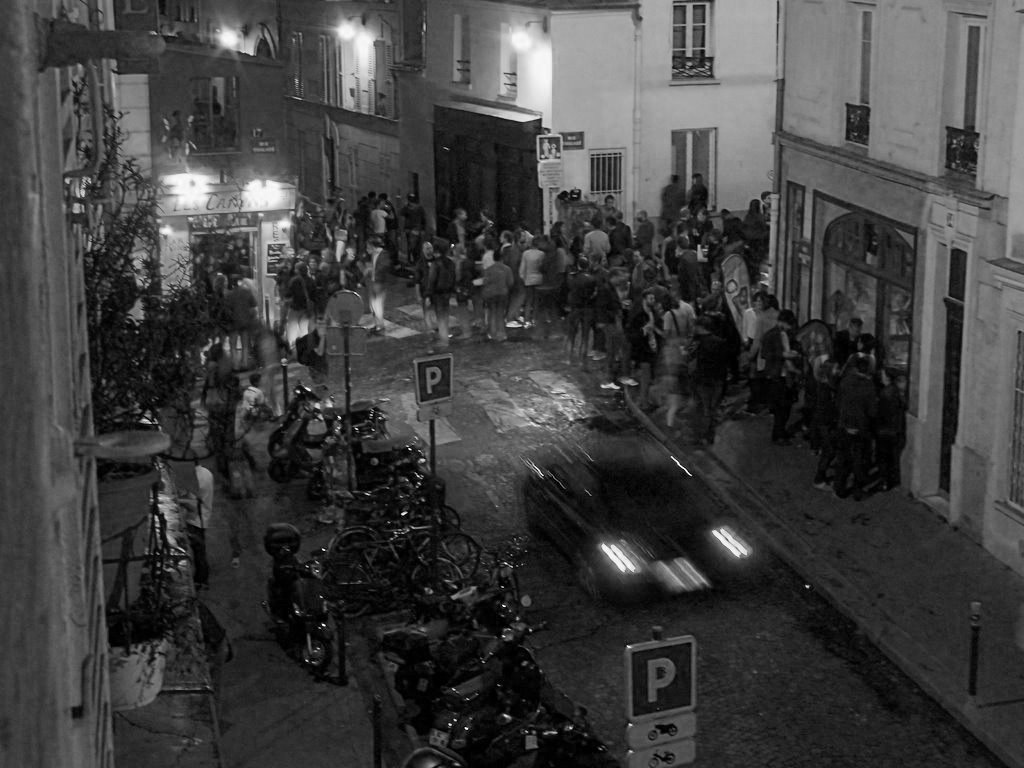
From our apartment window we look down on one of the busiest bars in Montmatre. I’m sure Picasso and Henry Miller and Alfred Jarry all drank here. Every night sees dozens of people spilling out onto the streets.


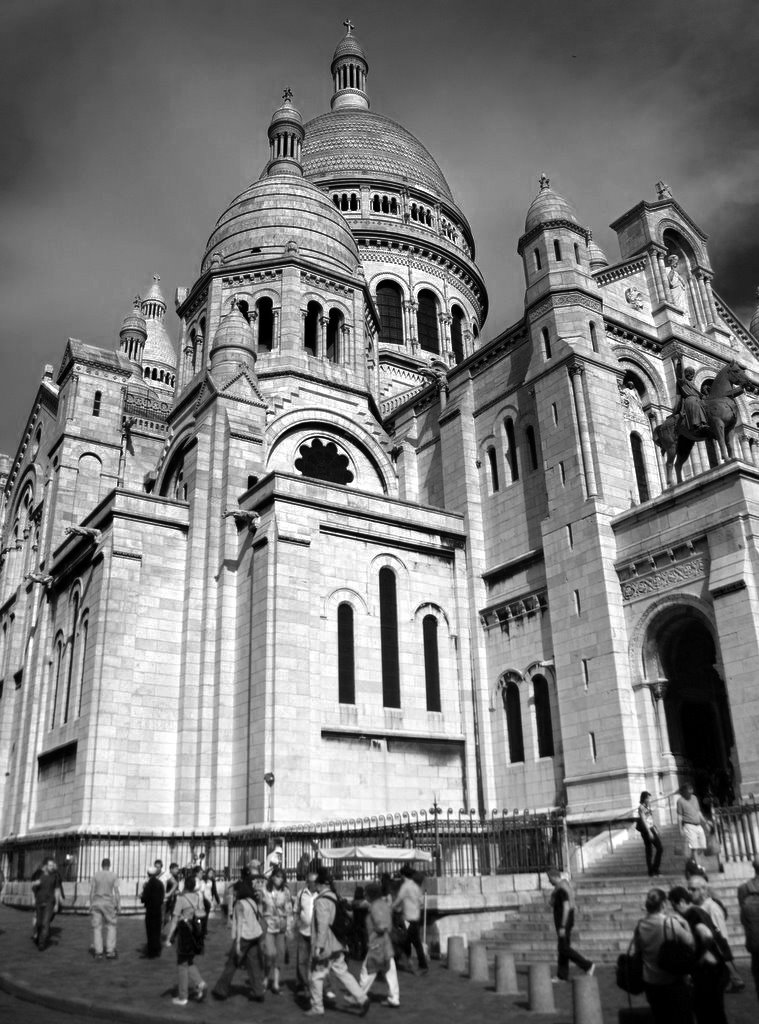
Sacré Cœur
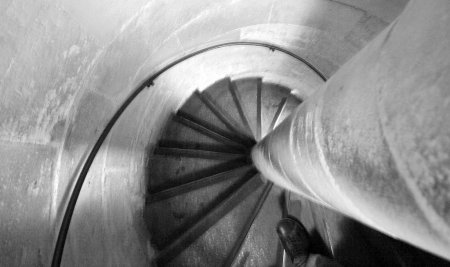
The Romans lay claim to the arch, but I think the French must have invented the spiral staircase. We have been up and down so many in the last few days – thankfully Sacré Cœur has a clockwise one going up and an anti clockwise one coming down.
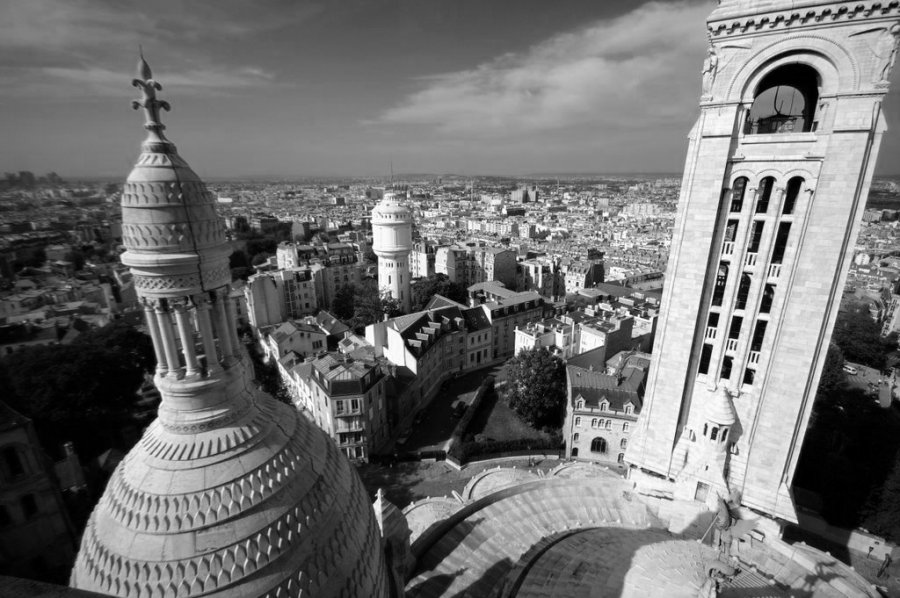

Spectacular views of Paris from the dome of Sacré Cœur
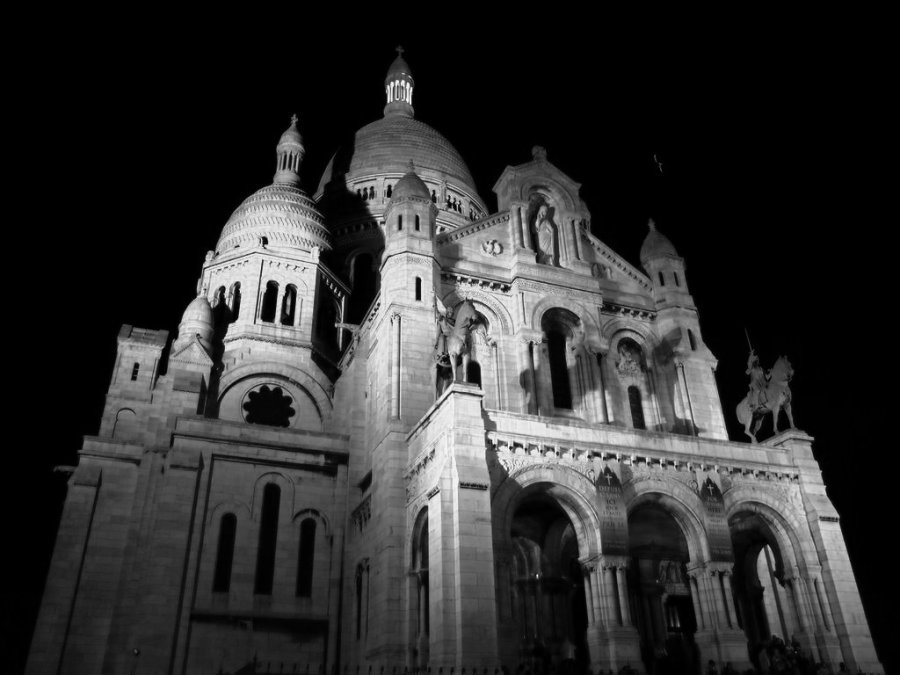

At night Sacré Cœur is a pretty scary sight.


Not near as scary as this strange grave in the Montmatre Cemetry…
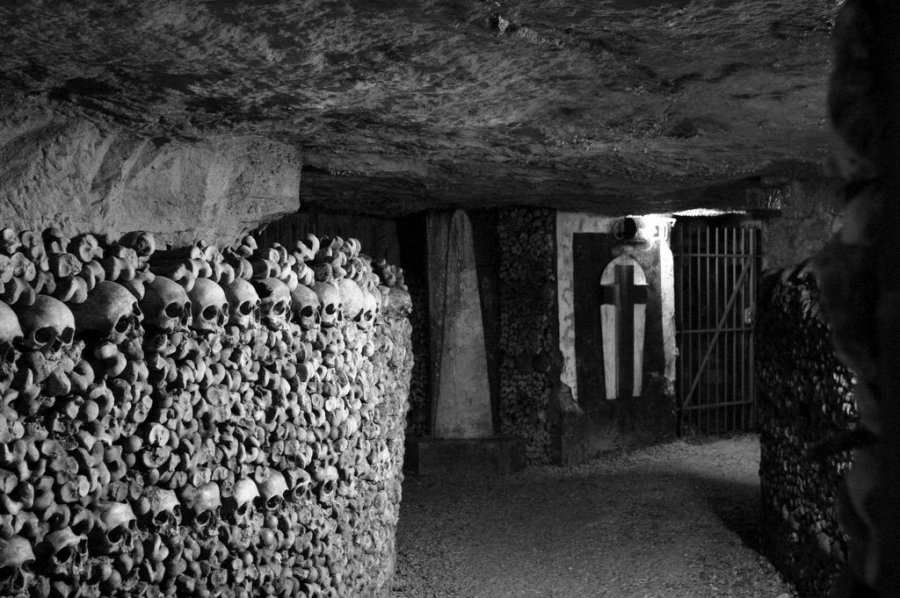

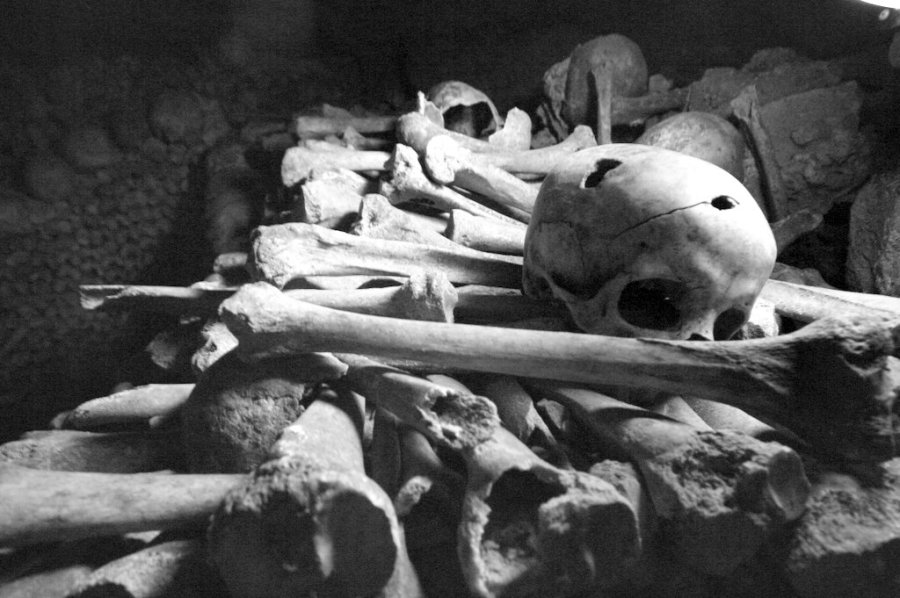
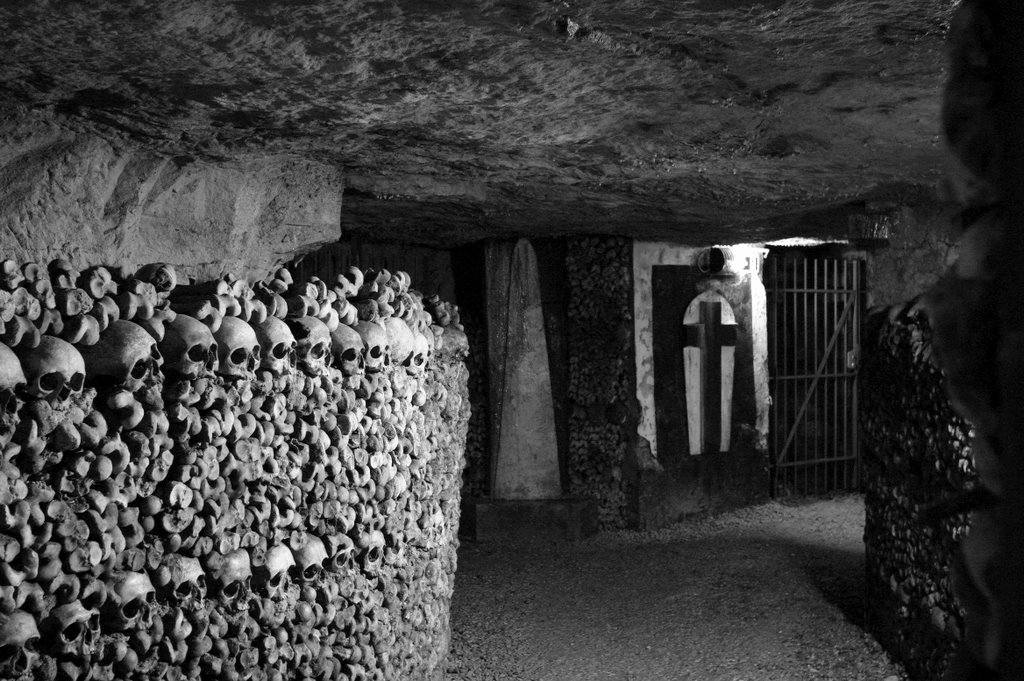
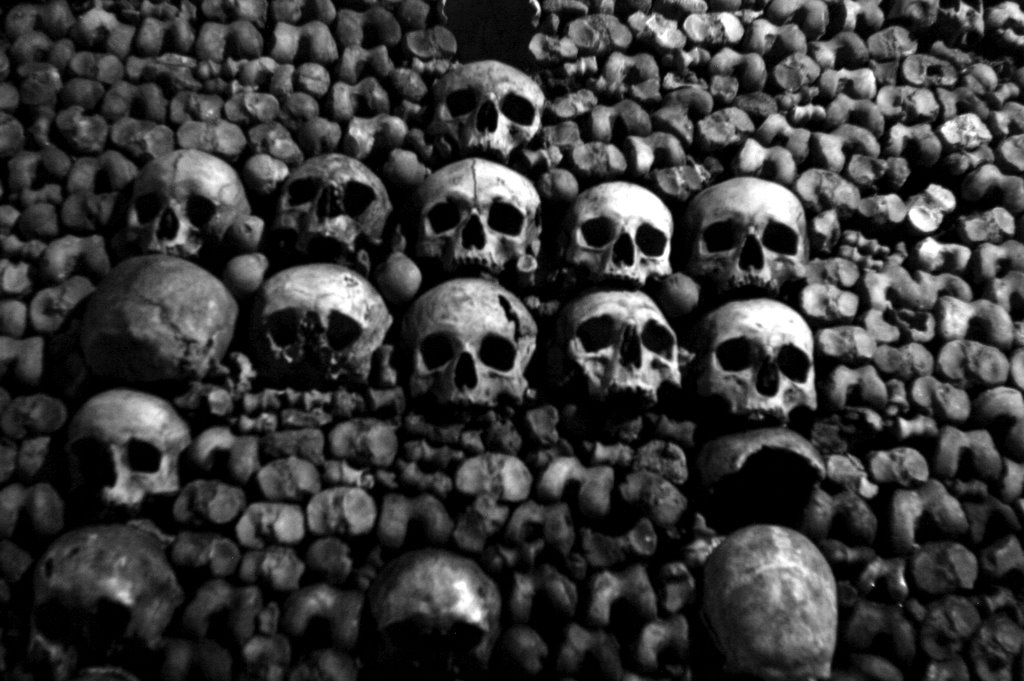
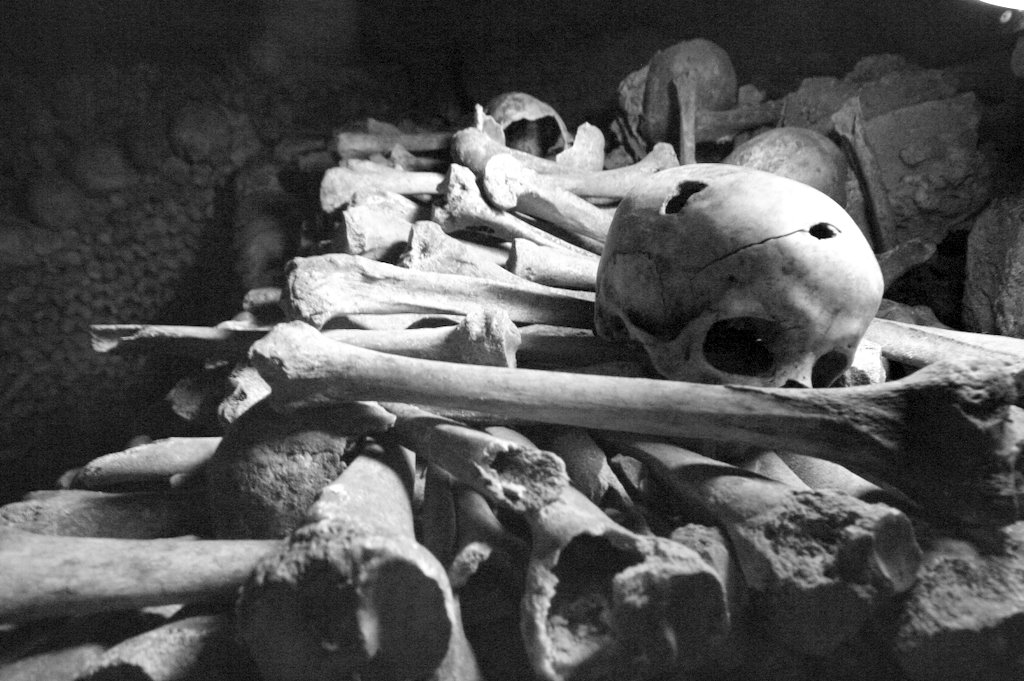
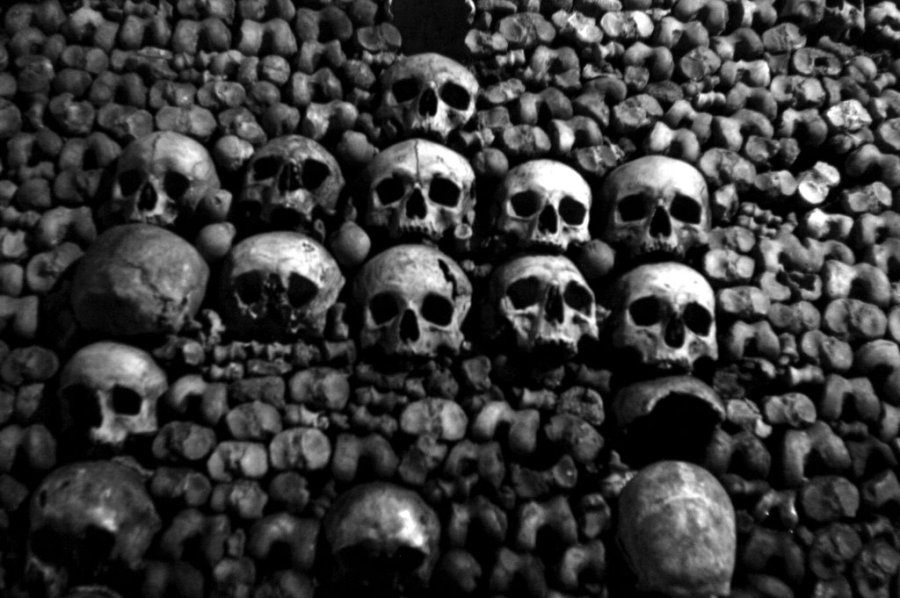
…or the walls of bones lining the catacombs under the streets of Paris
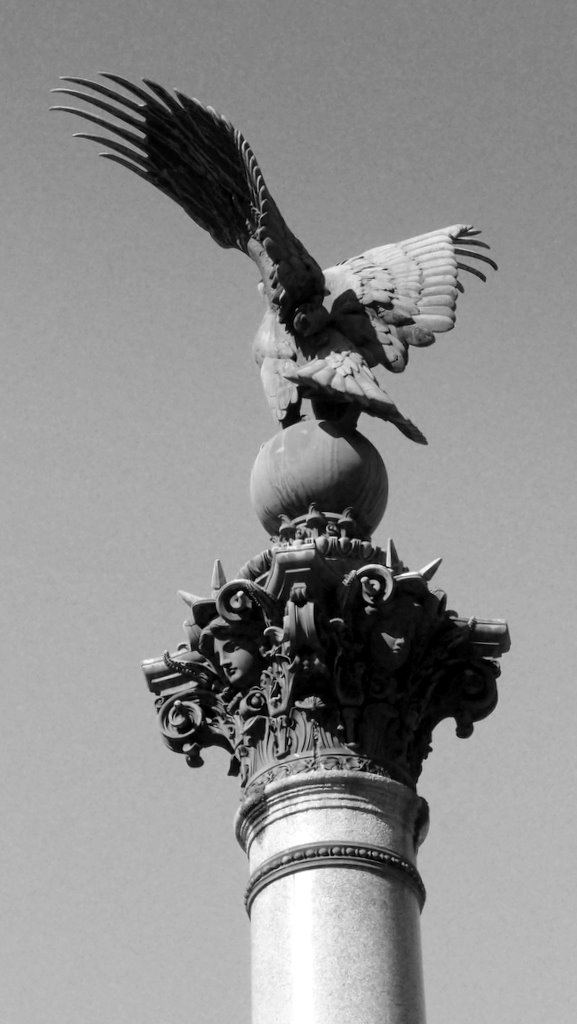
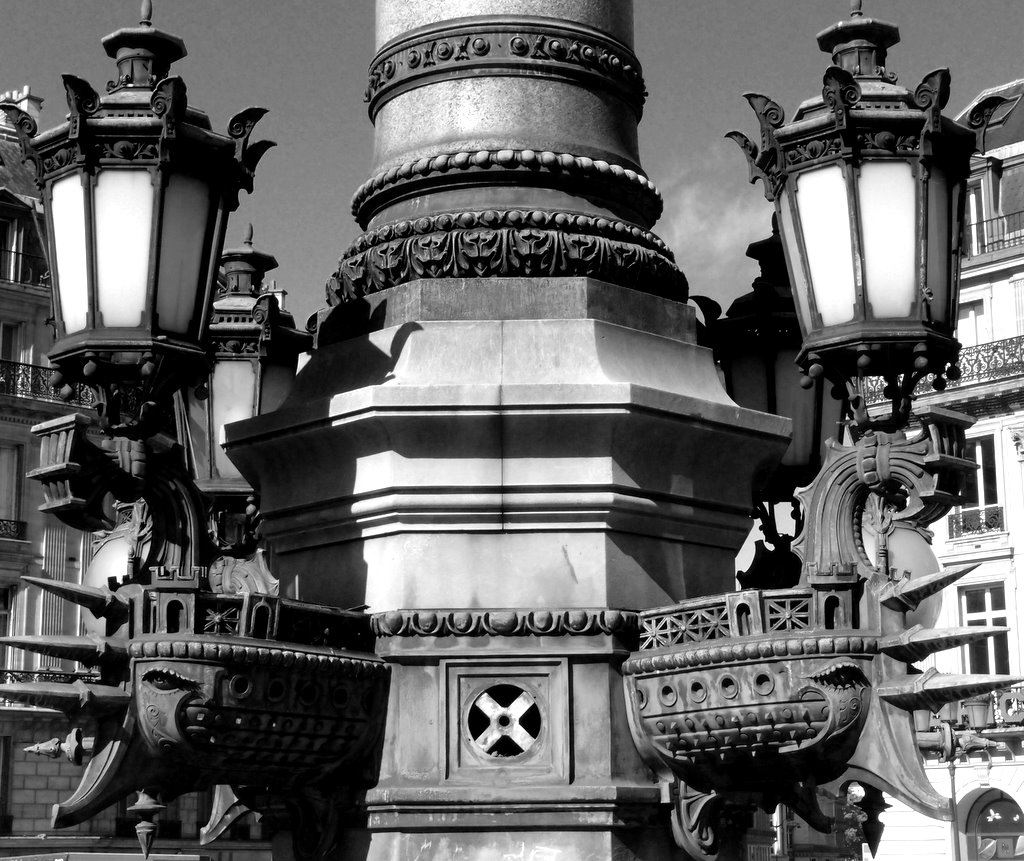
The French are right up there with the Italians when it comes to decorative ornamentation
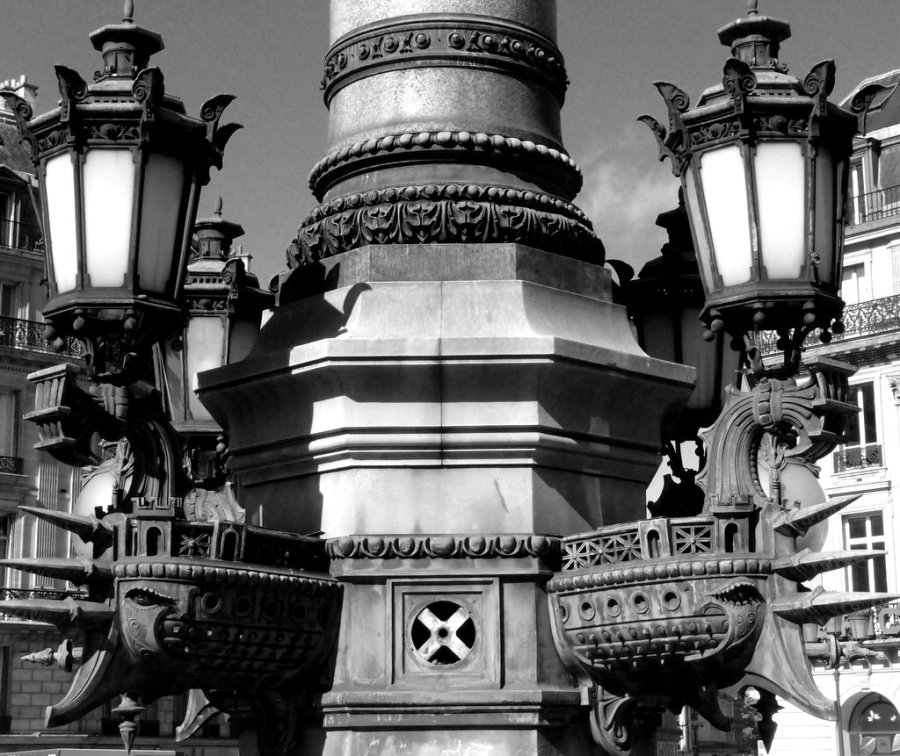
All through Paris are statues, ornamental gates, arches and fences and everywhere you look, beautifully decorated buildings. This all forms a backdrop to some of the most spectacularly presented humans on earth. The whole decoration thing went haywire back in the 1700’s and the Palace of Versailles  is a grand example of decorative excess. Unfortunately it was all carried out with tax payers money, bleeding the country into poverty, so the tax payers revolted and chopped off all the offending heads.
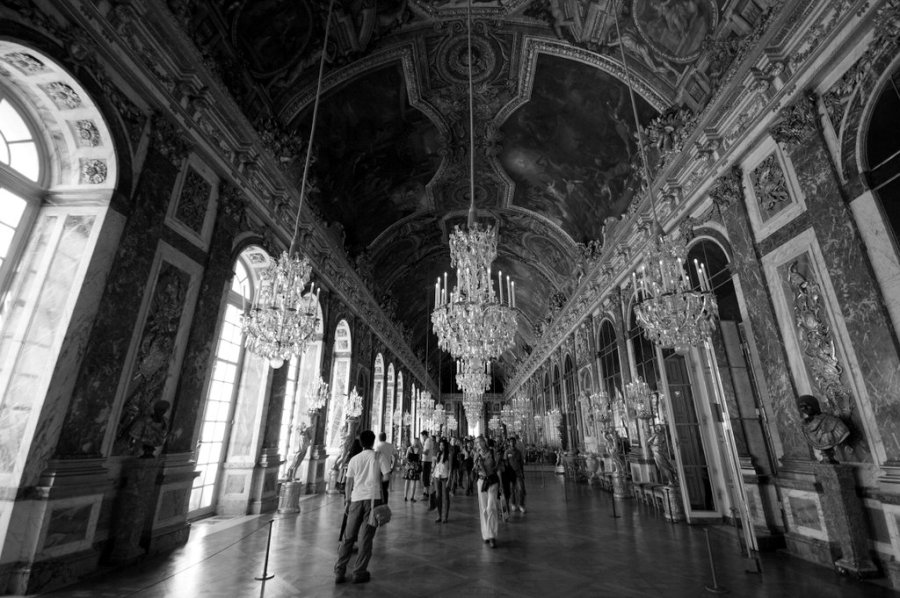

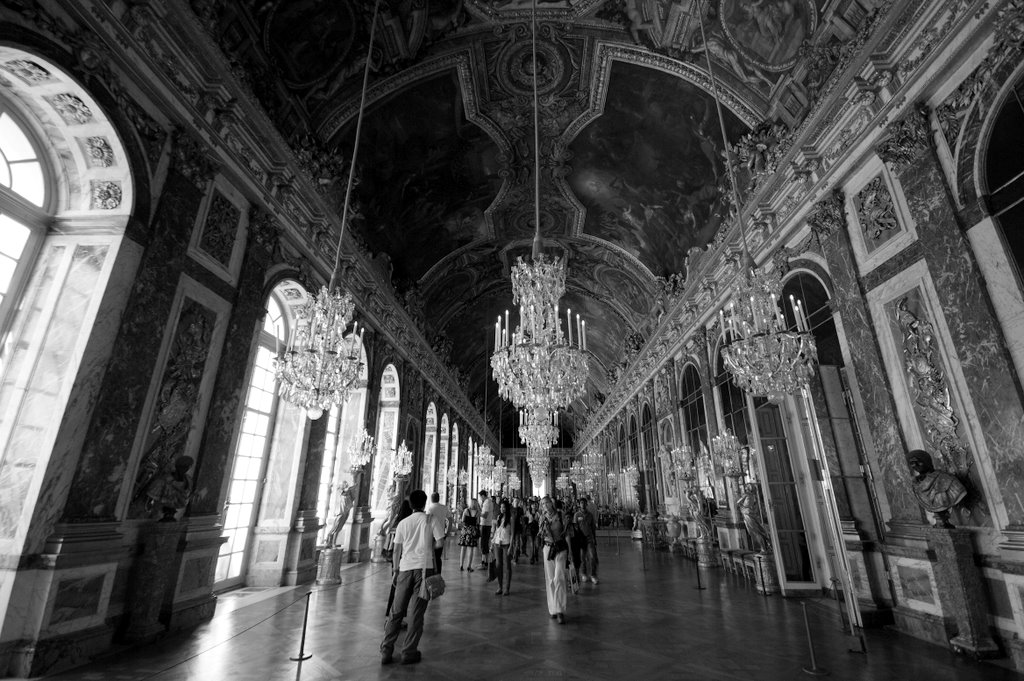
Hall of Mirrors, Palace of Versailles 


Chapel, Palace of Versailles
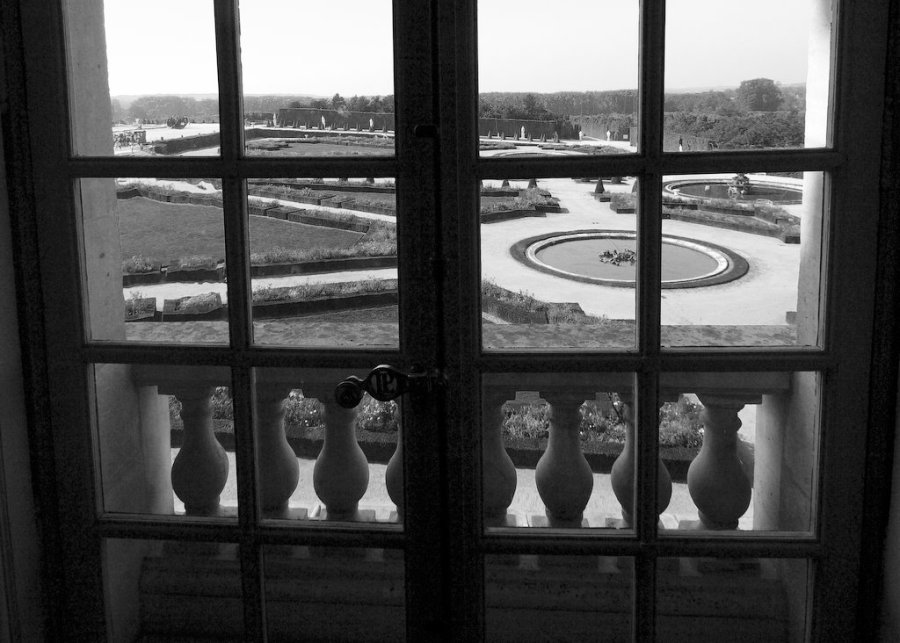

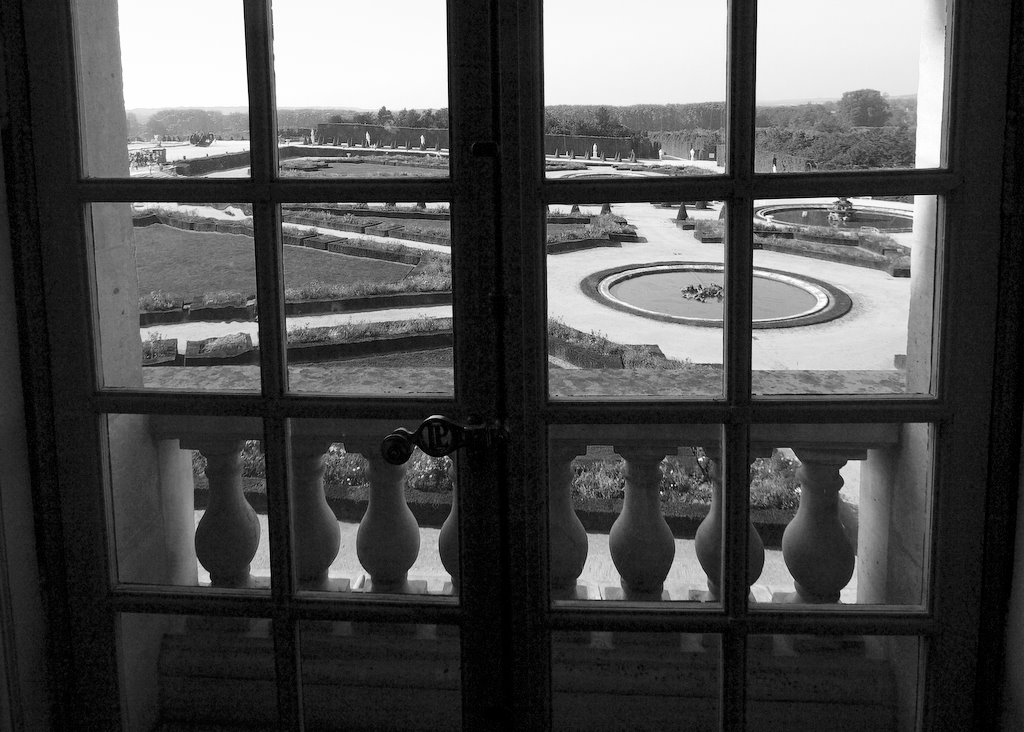
The Palace of Versailles has amazing gardens covering 100’s of hectares. This is the view Louis XIV would have enjoyed as he sat to gaze out his window.
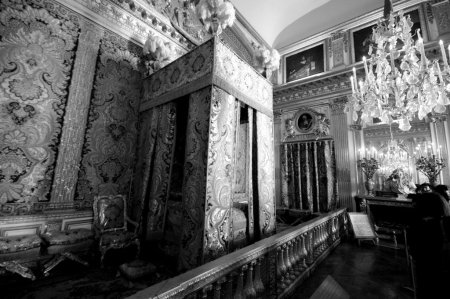

This would have been Louis’ bedroom – complete with everything except a flushing toilet

This room was used by Marie Antoinette when the disgruntled taxpayers came searching for her.

These elegant ladies in all their decorative finery were apparently riddled with nits and lice, had bad breath and didn’t smell too good, as it was believed at the time, that washing with water put germs into the pores of your skin causing nasty diseases.

This little abode was built to house the mistresses of the then rulers.
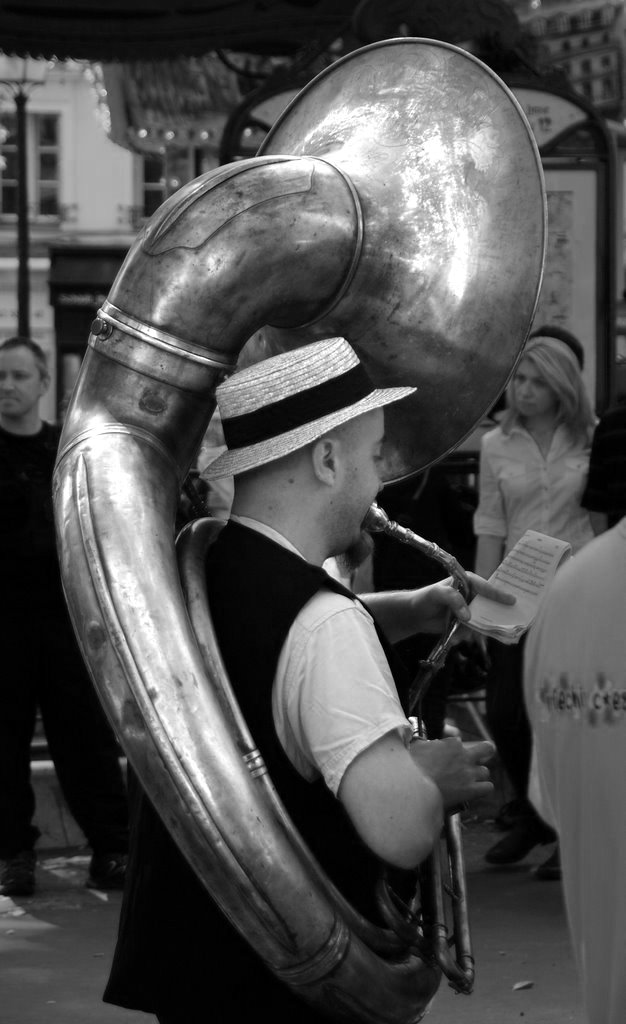

Busking with Tuba

How not to sell glasses

THROUGH THE NORTHWOODS

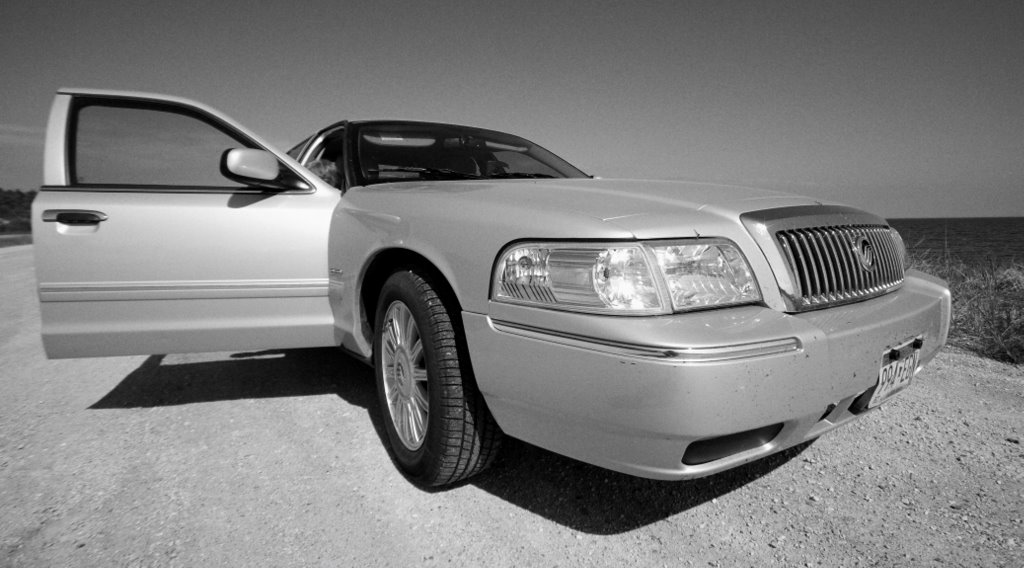
After our workshop at Dillmans in Wisconsin, we picked up a hire car from Rhinelander airport to drive up to Sudbury, in Canada, and visit my brother Wayne and his family. We ordered a mid sized sedan but ended up with a Mercury Grand Marquis  with all the electric fancy bits, a big V8 engine, full leather lounge chairs and shiny wood trim that looks like plastic (or maybe plastic trim that looks like wood). Anyway, it takes up a lot of road, gulps down gasoline and would have looked really ugly, even in the 1980’s.
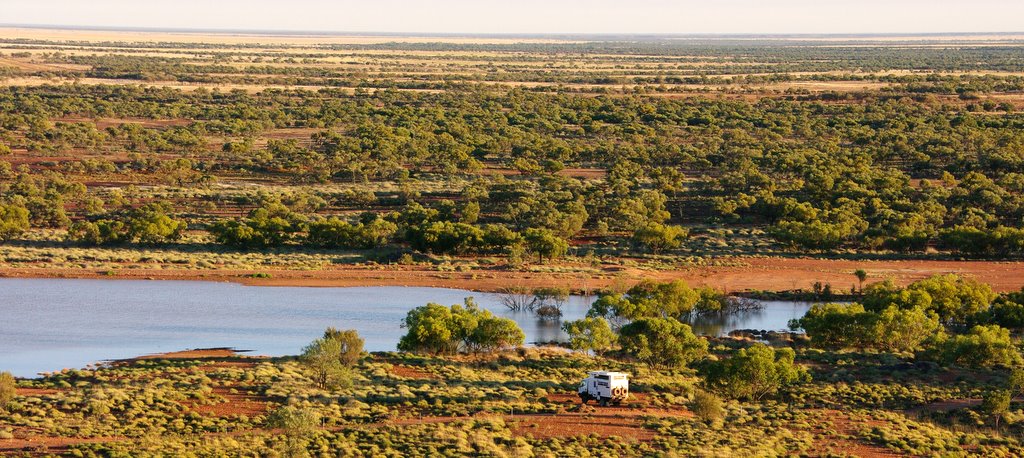
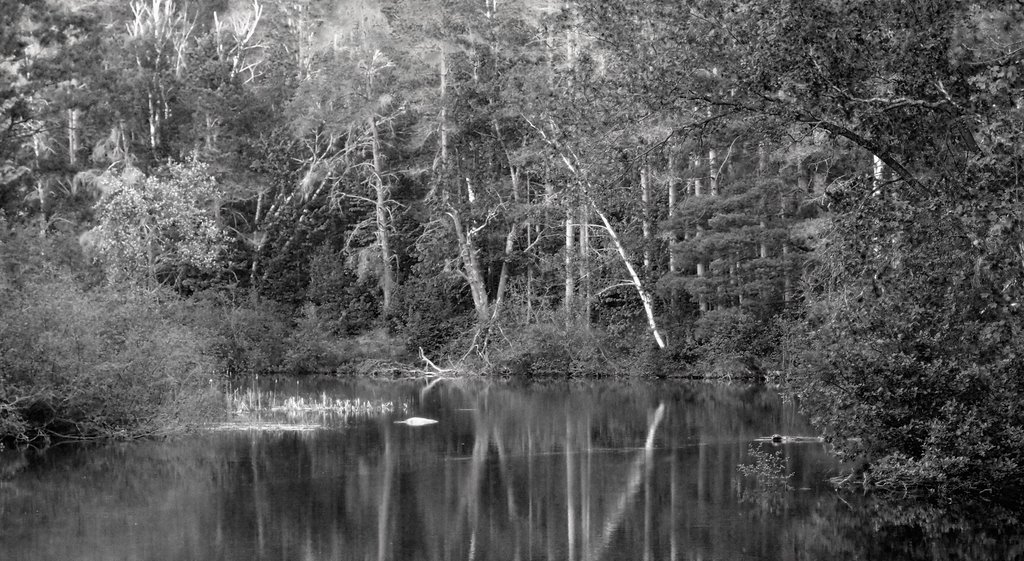
The Northern region of Wisconsin / Michigan  is known as the Northwoods. It is a flat, green maze of lakes and creeks. Much of the country is covered with heavily wooded forests of birch, maple and a variety of conifers. In winter the region is covered with feet of snow and the temperature stays below freezing till spring. The green grass and  dense growth of the woodlands was a surprise in such low temperatures. We managed to spot a coyote, many squirells, chipmonks, deer and loons, but bears and moose have evaded us.

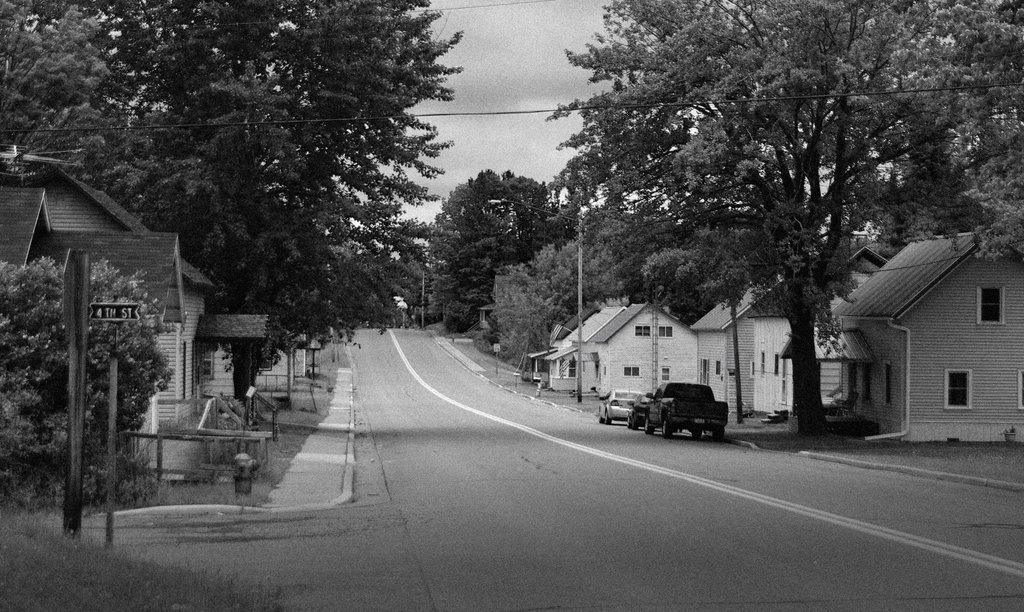
Northwoods towns are quaint and tidy


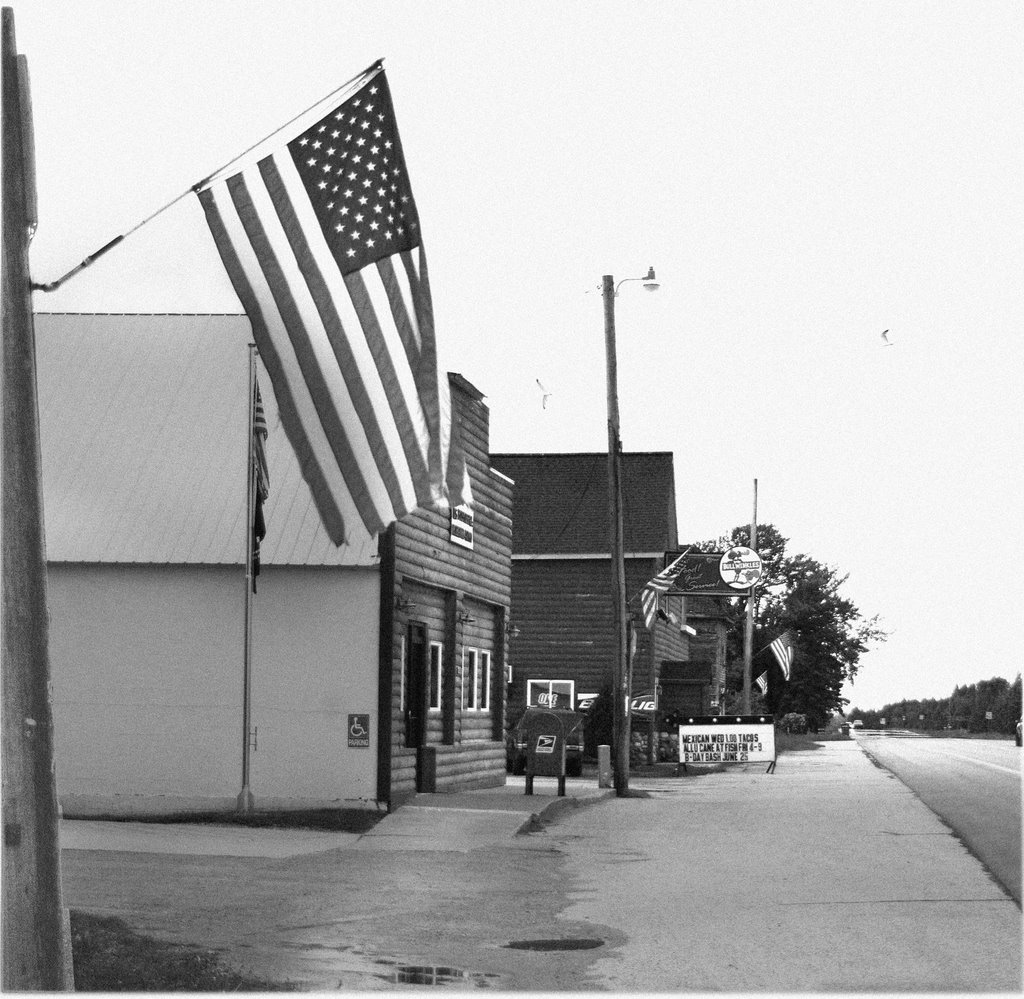
Patriotism is always evident.

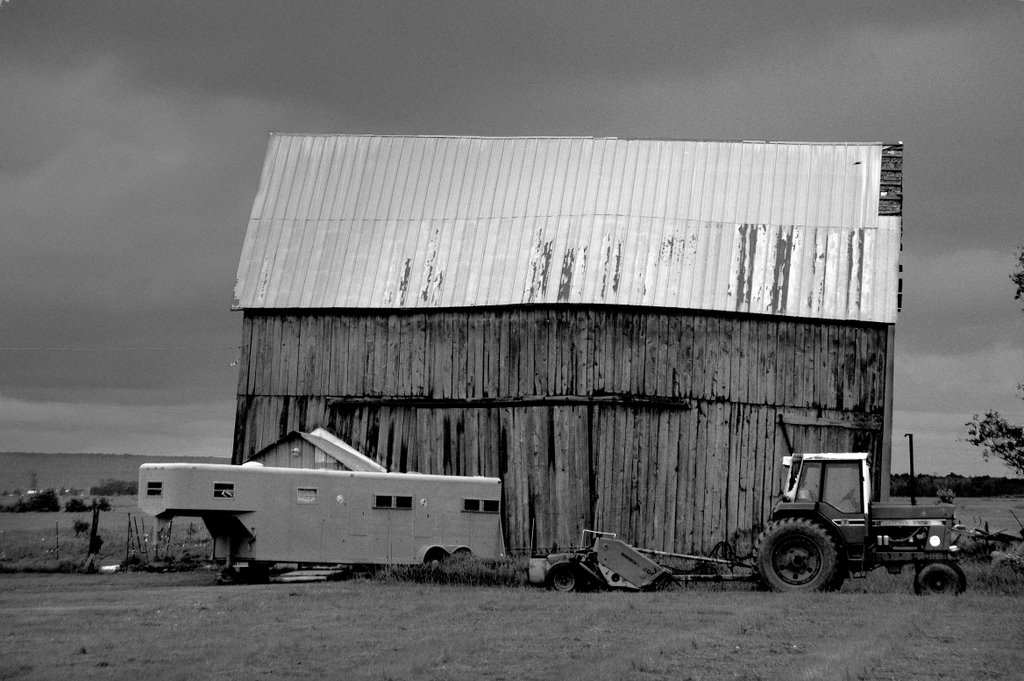
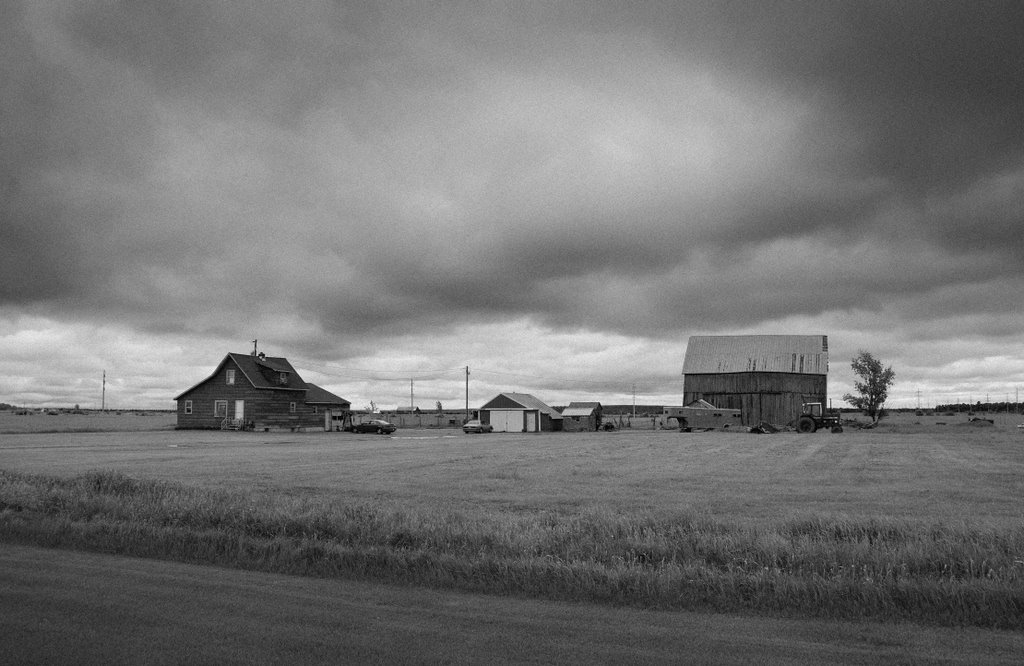
The rural properties try to out barn one another.

Waving Chipmonk