WATERCOLOR CHICKEN

Over the past couple of months I have been busy working on a new book, which means I am madly leaping from one subject to another. Somehow I ended up choosing a chicken to demonstrate the different qualities of watercolor and Gouache. I hope to have the book finished before the end of the year. A step by step guide to painting this chicken will feature in book. It combines clear washes of watercolor and the opaque flatness of gouache to get that fantastic contrast between glowing transparency and flat, velvety gouache.

This type of subject is a lot of fun, I love the contrast between fine detail and loose abstraction. The face of the chicken leaves nothing to the imagination, but as the eye moves down the neck, things get a little out of control – just like a chicken tearing around in a chicken coop.

French Ultramarine Blue, Permanent Alizarin, Windsor Red, and Quinacridone Gold  with White Gouache provided all the necessary colors.

A few one stroke brushes and a rigger took care of the detail and the 1/2 inch bristle brush made all the mess.

The book should be available towards the end of the year. As soon as it’s out I will put a link on my website

SUGGESTING DETAIL

Italian Village
.
When faced with a complex, detailed subject, the temptation is often to try and include every detail. This approach can lead to a confusing overload of information. In this demonstration we will concentrate on simplifying and suggesting detail. Our approach will be to decide on an area of interest to serve as our focal point or centre of interest, then simplify and suggest detail in the rest of the painting.
.
MATERIALS
Paper
1/2 sheet 300gsm (140lbs) Cold Pressed
Colors
Ultramarine Blue
Permanent Alizarin Crimson
Quinacridone Gold
Ink – Burnt Sienna and Dip Pen
Brown Pastel Pencil
Brushes
1″  Bristle Brush
1″ and 1/4″ Flat brushes
No. 2 Rigger Brush
3″ Hake Brush
.
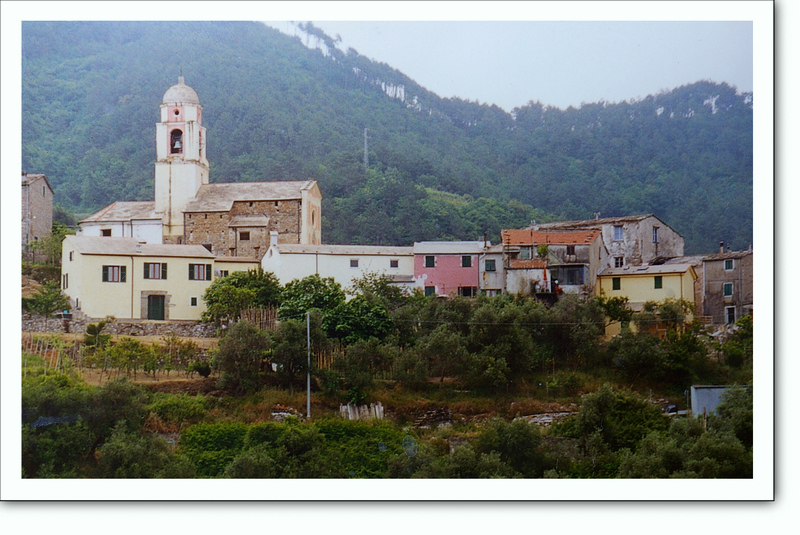
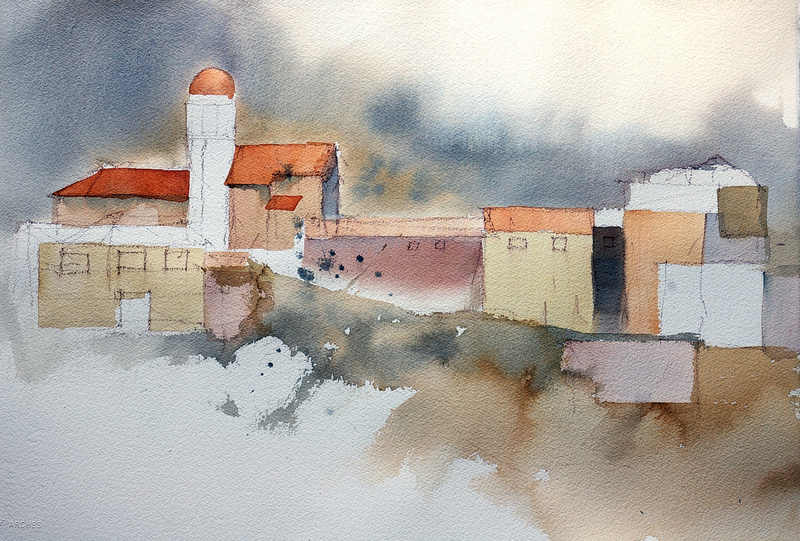
This little village, high above the sea on the coast of Italy makes a wonderful subject. The impact of the weathered textures and subdued colors can be amplified by focusing attention on the area of the bell tower and simply suggesting the detail in the right hand side of the village.
.
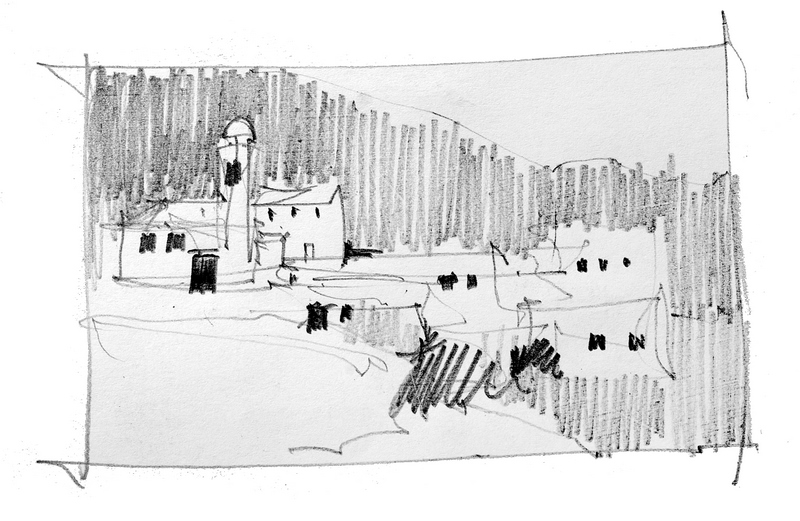
A quick thumbnail sketch will help organise the composition for your painting. I have decided to spread the interest horizontally across the painting then contrast it with a  dark diagonal band from the top left to the bottom right. The top right and lower left areas will be left virtually untouched.
.
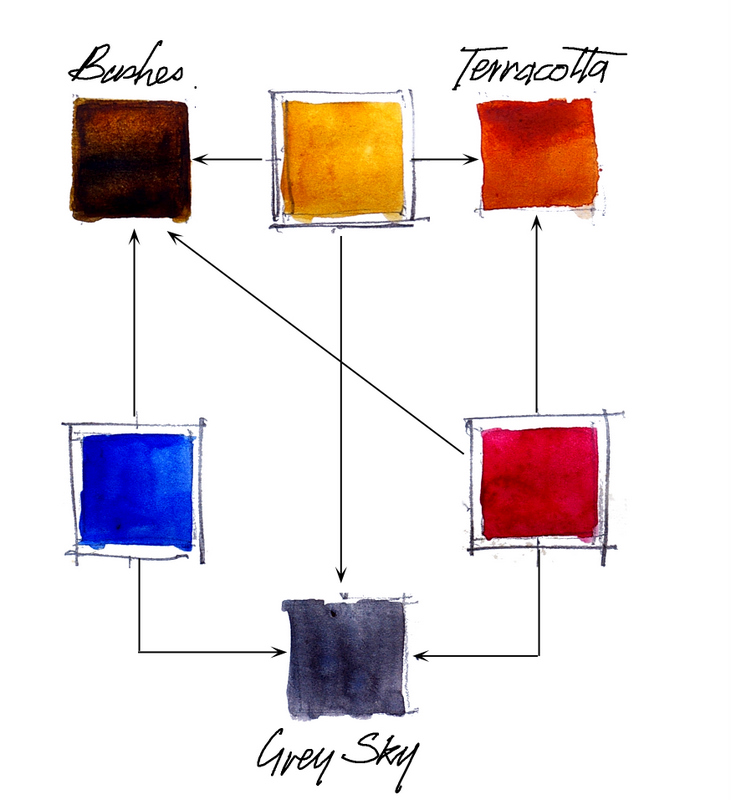
Quinacridone Gold, Ultramarine Blue and Alizarin Crimson are all we need to mix all the colors in this painting
.
DRAWING AND FIRST WASHES
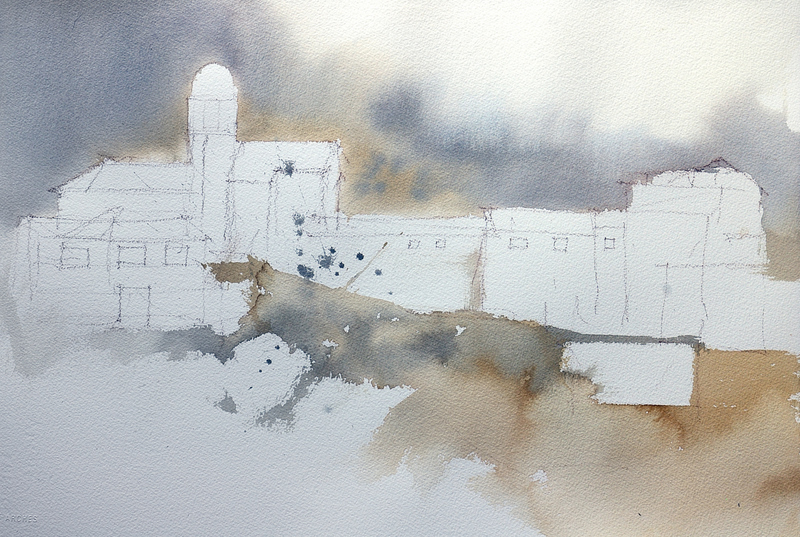
Simply block in the major shapes with a brown pastel pencil. More detail can be drawn in as the painting progresses if necessary. The entire area above the village is first wet with clean water before a wash of Ultramarine Blue, Quinacridone Gold and Alizarin Crimson is worked diagonally through the background. Vary the mixture from a warm, dirty yellow to a cool grey. The same colours can then be roughly washed through the dry paper in the foreground. All these early washes are best applied with an old 1″ bristle brush. (The cheap house painting type are ideal).
A loose soft suggestion of background trees works much better than carefully painting in the line of trees in the photograph.
.
BUILDING SHAPES
Using various combinations of our three colours and a 1″ flat brush, we can suggest the shapes for the various buildings. Keep the tones fairly light at this stage. We can always make them darker but it’s a bit more difficult to make them lighter if we need to.
Vary the size and shape of the buildings to keep them interesting
.
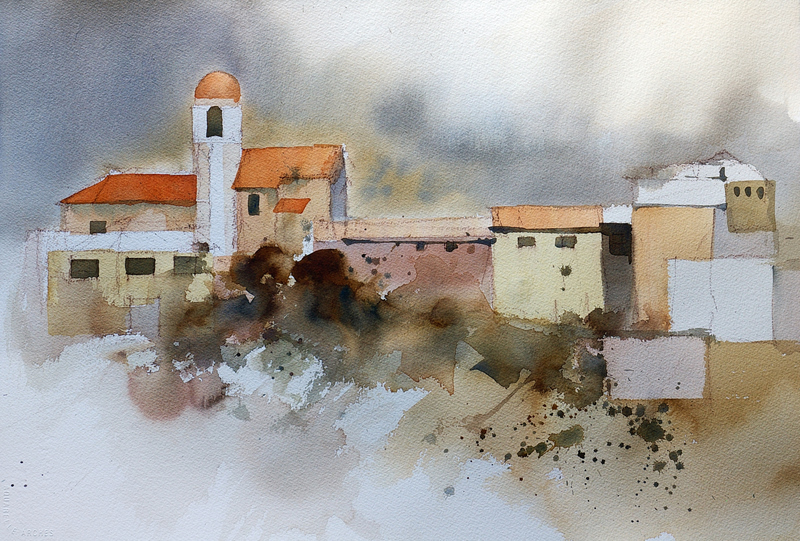
DARKER BUSHES AND WINDOWS
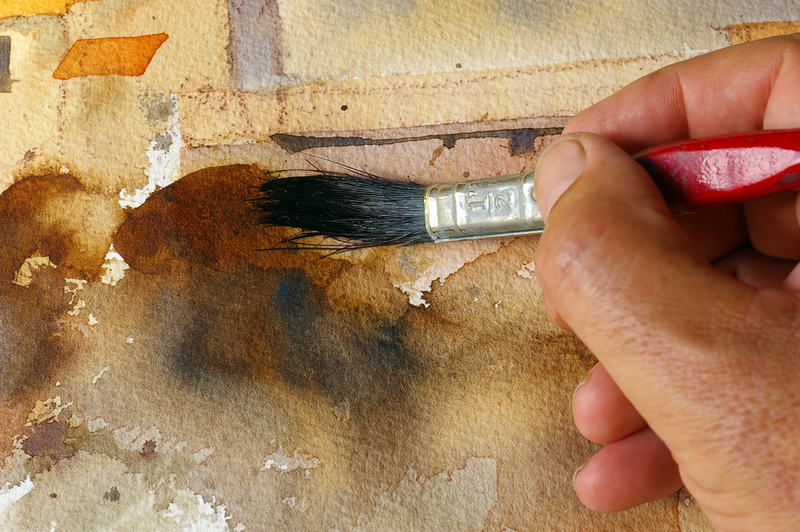
Once all the building shapes are dry we can use our three colors to mix up a nice rich dark – aim for a color something like Burnt Sienna. Splash it on fairly loosely with your old 1″ bristle brush, then quickly rinse out the brush, dry it slightly and run it around the edge of some of the marks you have just made. This will make the edges bleed out and soften, helping tie the shapes to the rest of the painting.
Before these shapes dry, drop a couple of spots of pure Ultramarine into the lower part of the bushes. This gives them a more three dimensional appearance. Use your 1/4″ flat brush to paint in some of the windows. Remember to vary their shape, tone and colour slightly.
When you paint the bushes, try to think of them as shapes that will suggest bushes rather than trying to carefully render a realistic looking bush.
.
Use a clean, damp brush to soften and feather out the top edge of the bush shapes.
.
BUILDING TEXTURES
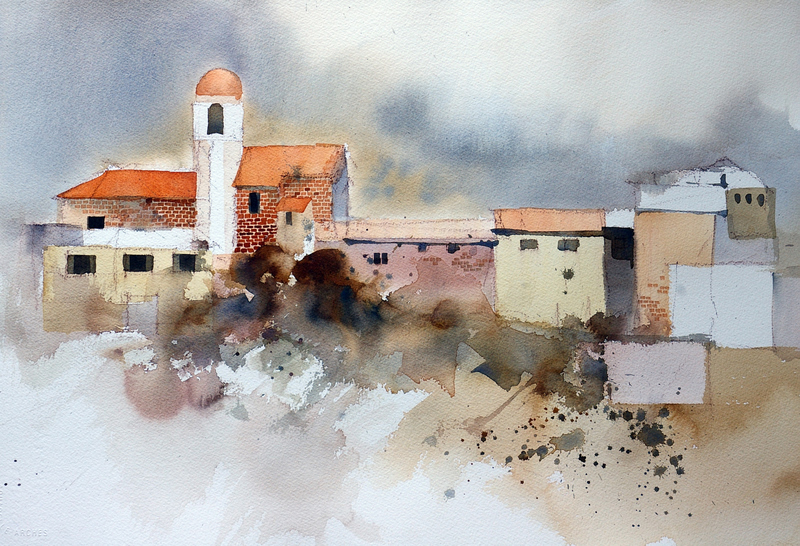
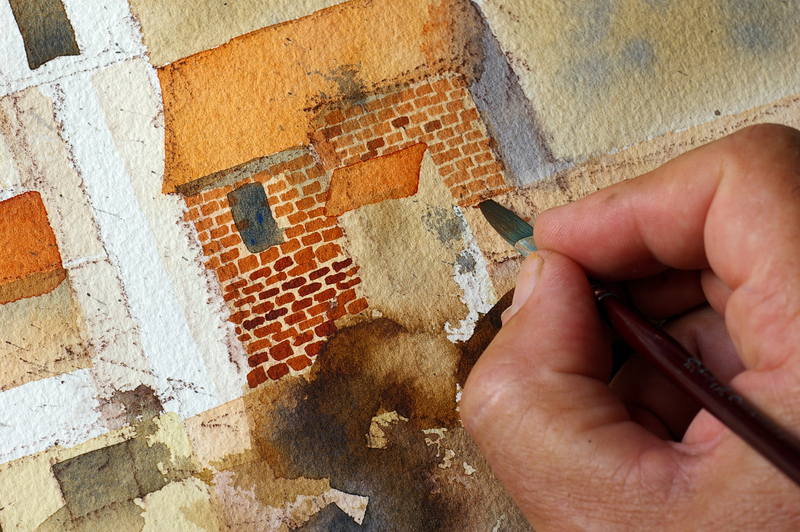
To help reinforce the centre of interest, we will add some brick textures to some of the walls. Spread a few small, less noticeable areas of brick into other parts of the painting, but keep the texture in the centre of interest strong and definite
The detailed brick texture at the centre of interest holds attention in this area. Adding softer, less defined brick textures to a few of the other buildings maintains unity and helps tie the centre of interest to the rest of the painting.
.
A flat 1/4″ brush is perfect for putting brick texture into some of the walls. Keep the lines of bricks roughly horizontal and stager the brick joints.
.
IMPACT THROUGH CONTRAST
The final step is to add some depth and drama to the painting by darkening the background behind the centre of interest and the lower right foreground.
Before we do this though, a few fine pen lines sprayed with a fine mist of water will add some interesting textures to the buildings.
Burnt Sienna ink works well. Spray it as soon as it’s applied and it will produce fantastic spidery lines. Have a tissue or some paper towel handy as the results are a bit unpredictable and you may need to do some quick tidying up.
The dark contrast behind the main building is a combination of our three colours. Wet the area behind the building first so the top edge of the wash feathers out softly. A dry Hake brush can be used to help even out the wash.
Apart from the detail at the centre of interest, most of the painting is fairly loose and suggested. There is enough information there for the viewer to know what is happening but much of the painting requires some sort of viewer interpretation making it much more engaging than an overload of carefully rendered detail.
 

.

TELLING A STORY

This is an article I wrote for International Artist Magazine a couple of years ago. A comment on imagining stories to embellish different locations prompted me to upload it.  It is amazing what goes through your mind after thirty or forty minutes sketching. Almost subconsciously stories emerge tying up and making sense of all the observed details.
.
.
TELLING A STORY
It is easy to be seduced by spectacular scenery or panoramic landscape, but sometimes it’s the little incidents associated with fairly unspectacular subject matter that can be the catalyst for a successful painting. In these paintings the appeal, for me, lies beyond the immediate visual impact and has more to do with the incidents or atmosphere surrounding what is depicted.
.
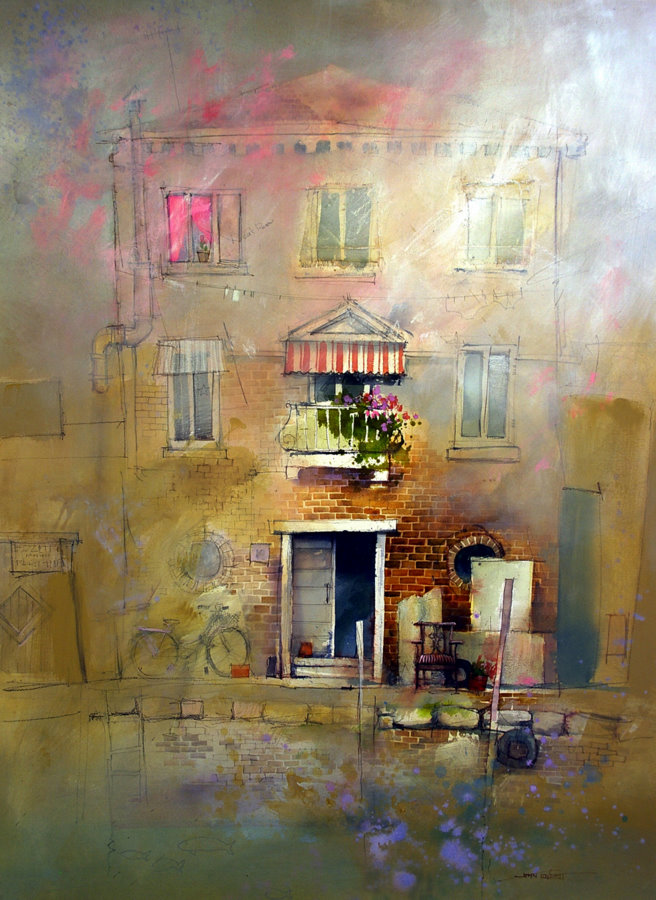
Rosa’s New Pink Curtains
These old Italian waterfront buildings tell wonderful stories about their inhabitants. Pushbikes, fishing gear, potted herbs and flowers, an old comfortable chair in the sun. An hour spent sketching all these details cause all sorts of stories to evolve concerning the day to day life of the building.
.
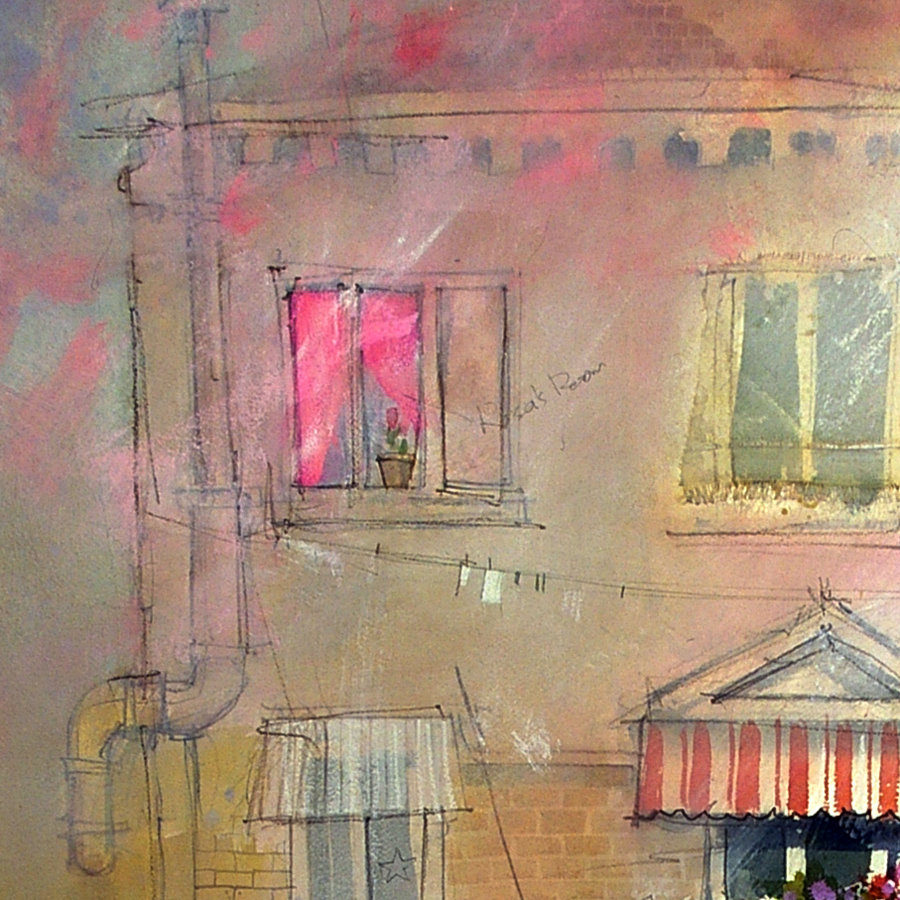
The paintings title is derived from the bright pink curtains in the upper window. To stop this bright color drawing too much attention away from the centre of interest, Permanent Rose was worked over the greys in the top corner of the painting. This eases the impact of the curtains, pushing them back into the painting.
.
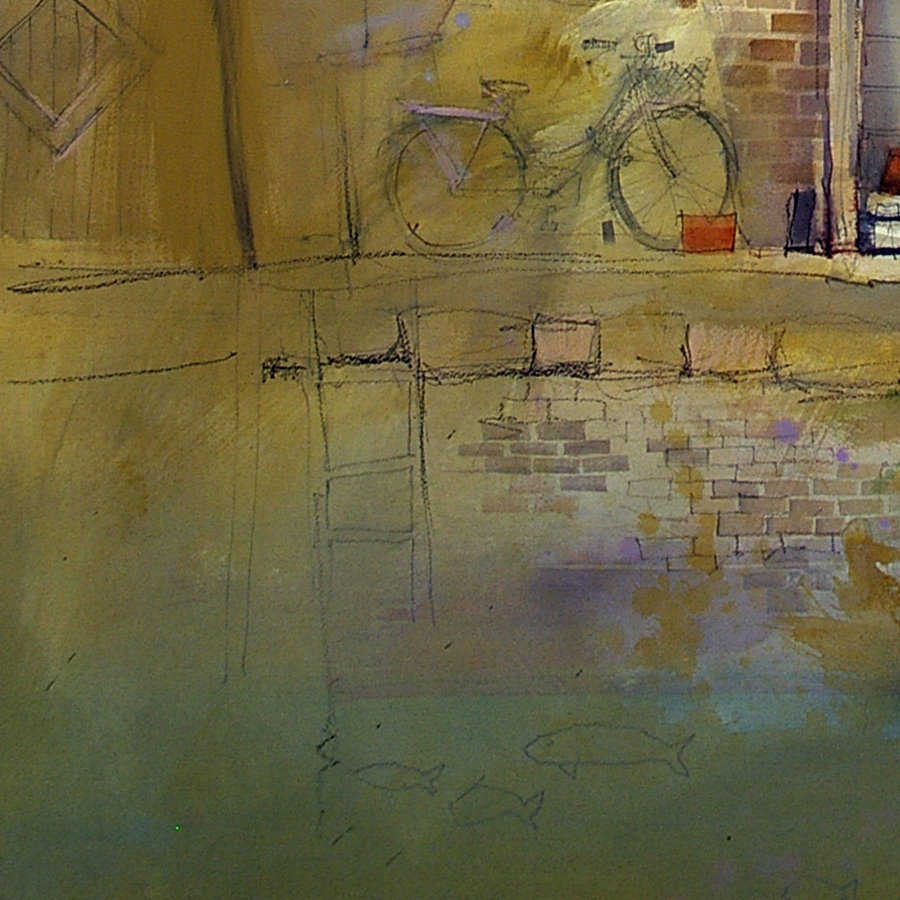
Fine rigger lines and sketchy pencil marks define the detail in the bottom left. This describes what is happening without drawing too much attention.
.
The center of interest is treated with strong contrast and sharp, focused detail to act as a pivot point for the painting. The viewers eye can wander out to other areas of less defined detail, but will always be drawn back to this area.
.
Fishermen Wait – Pelleistrina
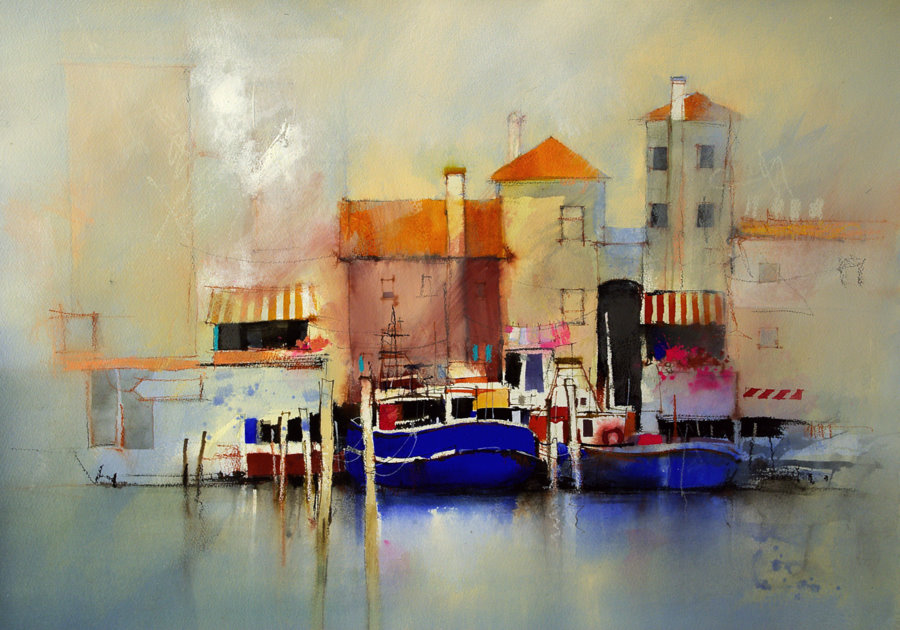
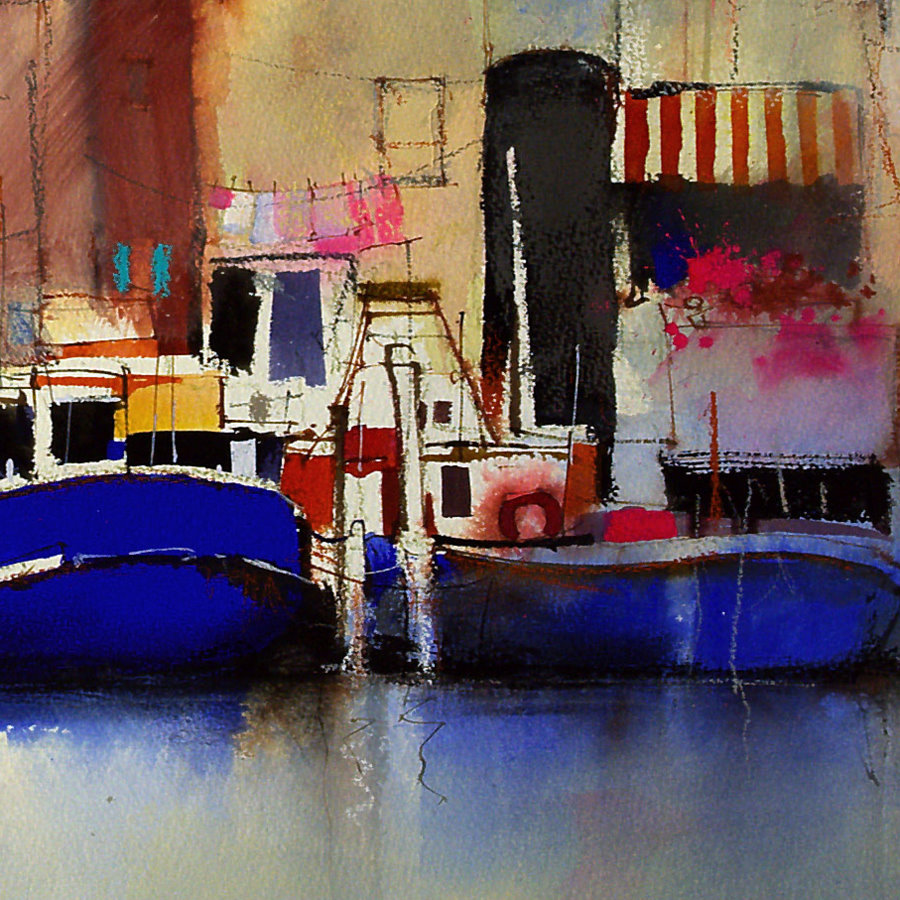
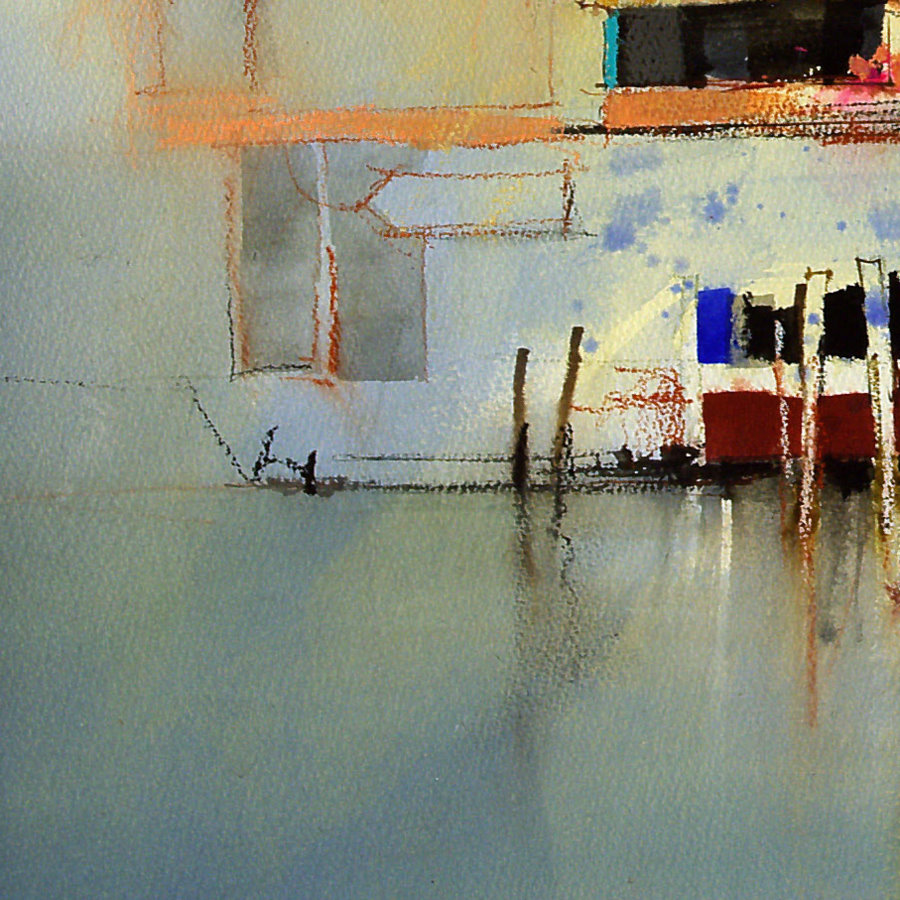
The long thin island of Pellestrina protects the Venetian lagoons from the Adriatic Sea. Passing the Island early in the afternoon it struck me that even the fishermen, along with every other inhabitant, observes the afternoon siesta. Tide and fish can wait, food, wine and rest come first, then the fishing. I have used strong horizontal and vertical lines to give the painting a sleepy static feeling. The vertical drift of smoke adds to the calm quiet atmosphere
.
Flowers were splashed in with a mixture of Permanent Rose and White Gouache. I liked the contrast between the dirty, smelly fishing boats, clean washing and fresh flowers. Ultramarine Blue Gouache gives the fishing boats a flat, velvety finish.
.
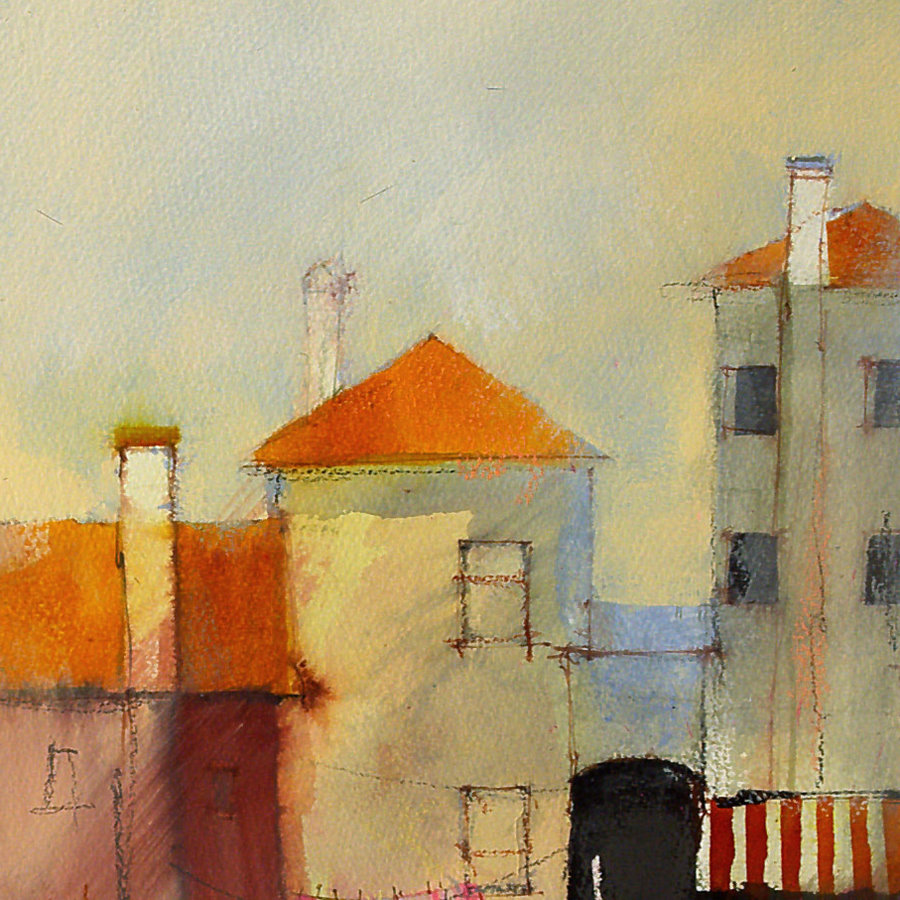
The hazy sky was first washed over with Ultramarine watercolor. After this dried, a glaze of  cream tinted Gesso was worked over the surface giving the sky a pearly translucent quality.
.
The calm water adds to the sleepy feeling of the painting. The same technique of Gesso over glazing similar to the sky was used. This time the underlying wash was Phthalo blue.
.
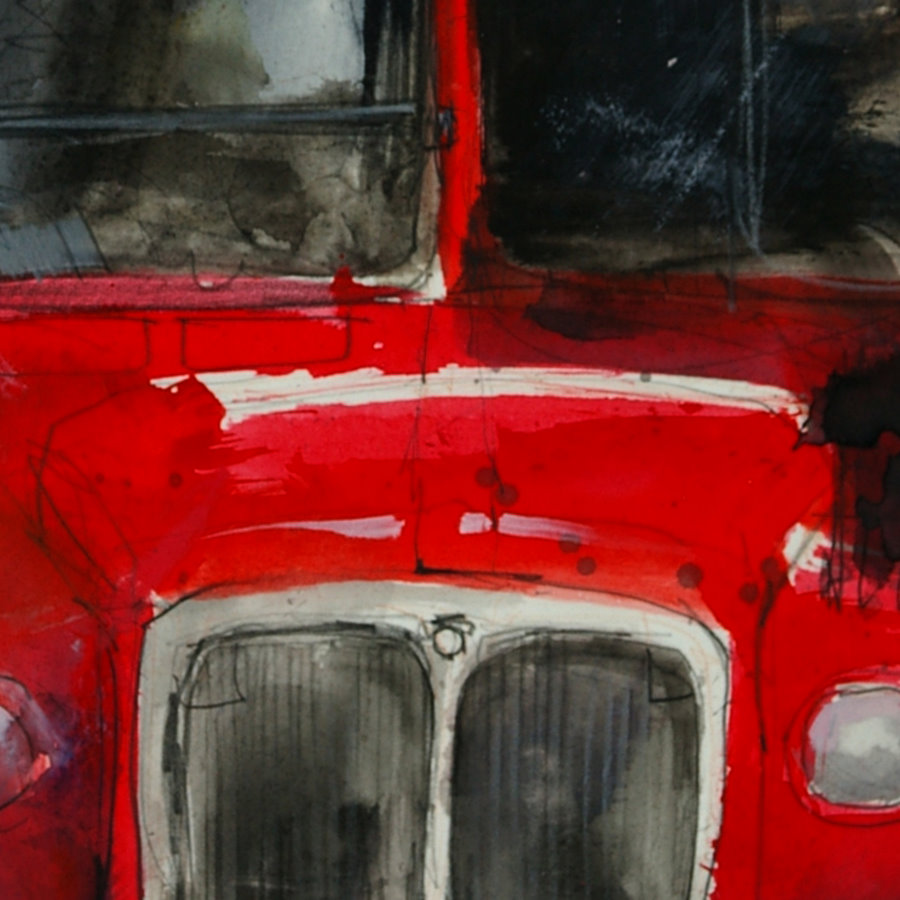
Last Bus Leaving
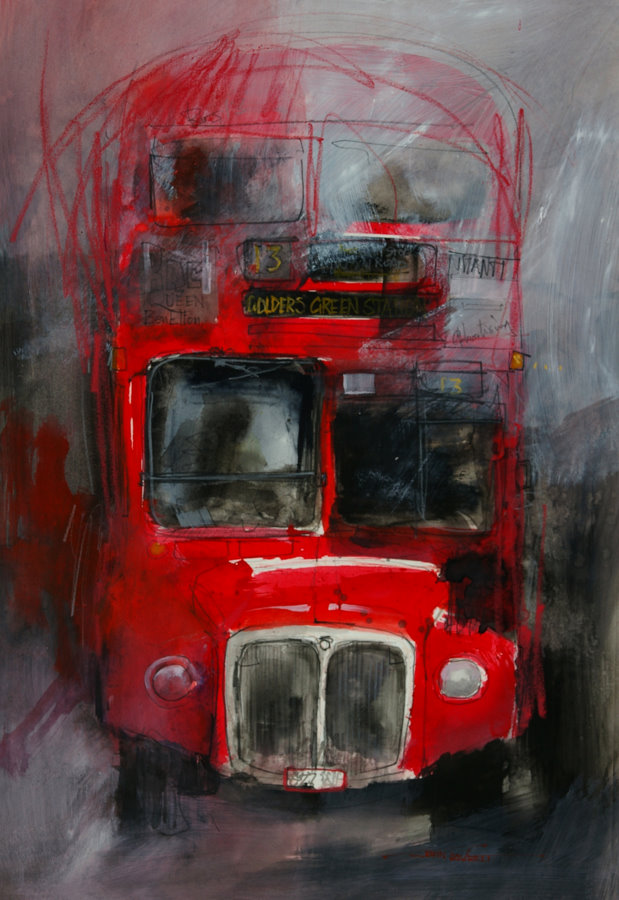
The frantic pace of down town London is regularly punctuated by the hot diesel clatter of these ancient relics. Huge and shiny, it’s hard to believe these  awesome machines form the backbone of a reliable transport system. This painting plays on the contrast between the enormous mass of lovingly polished duco and the machines apparent attempt to self destruct while idling.
.
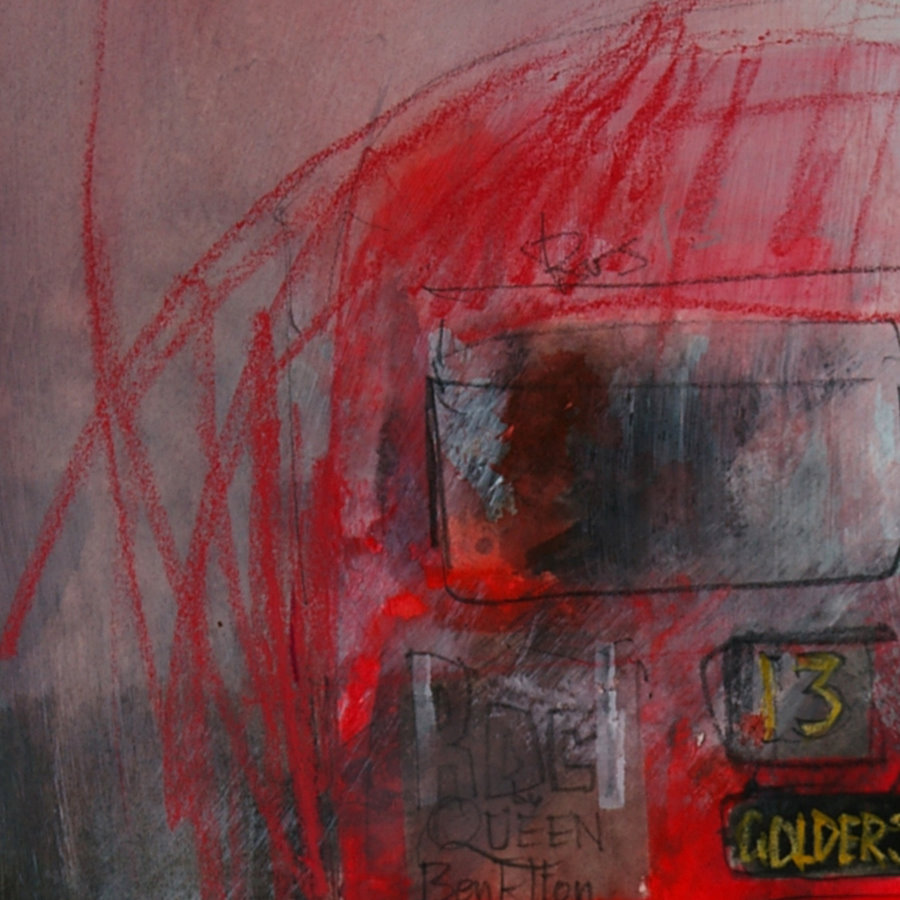
Loose strokes of red pastel suggest the resonating vibration of the engine and contrast with the glossy sheen of the paintings centre of interest.
.

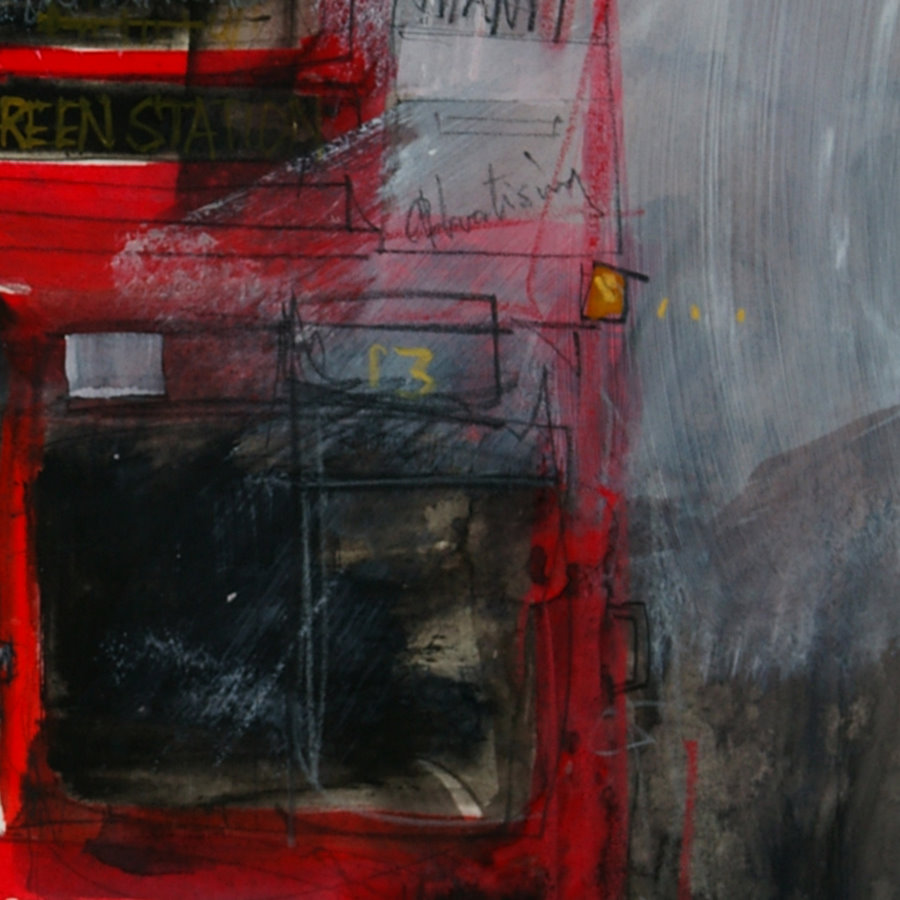
Halfway through the painting  a loose scumbling of dilute gesso was scrubbed over the top right hand corner. This obliterated most of the roof and upper detail allowing it to be loosely suggested with pencil lines and red pastel.
.
The bonnet and lower section of the bus were treated with more detail to pull attention down to this area of the painting. The bright red bonnet and white highlights make a great contrast with the surrounding black gouache. I normally avoid flat neutral black, but used it in this case to give the feeling of bitumen, soot and diesel oil associated with the bus.
.
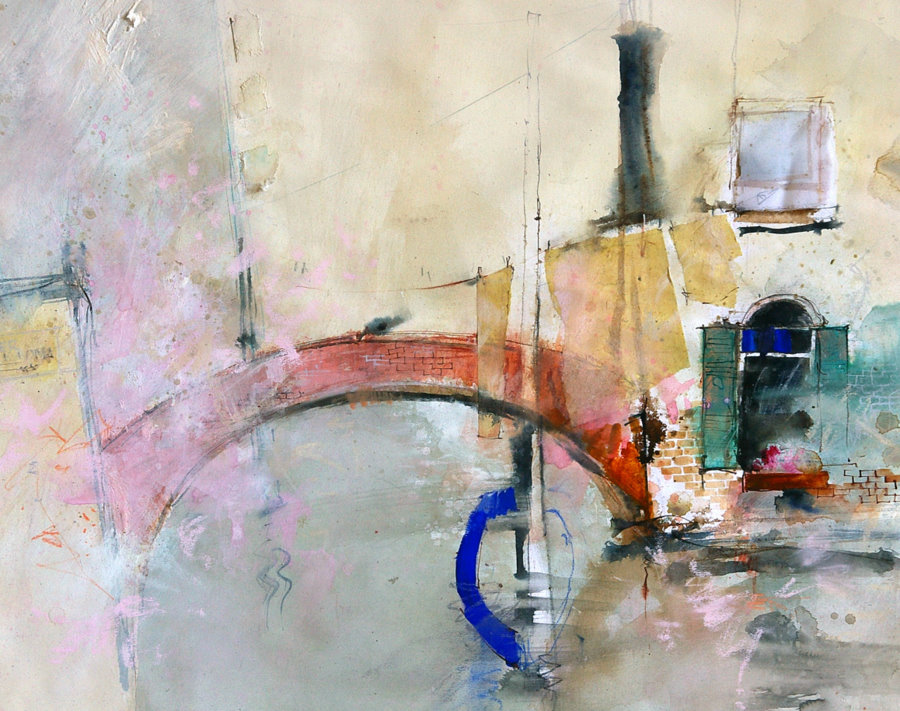
Pass This Way – Venice
This is one of a thousand romantic corners that draw you deeper and deeper into the labyrinth of Venice. Rather than documenting all the details, I have focused on the essential elements and reduced everything else to simple areas of contrasting textures. Lines and angles have been distorted to echo the random chaotic nature of Venice.
.
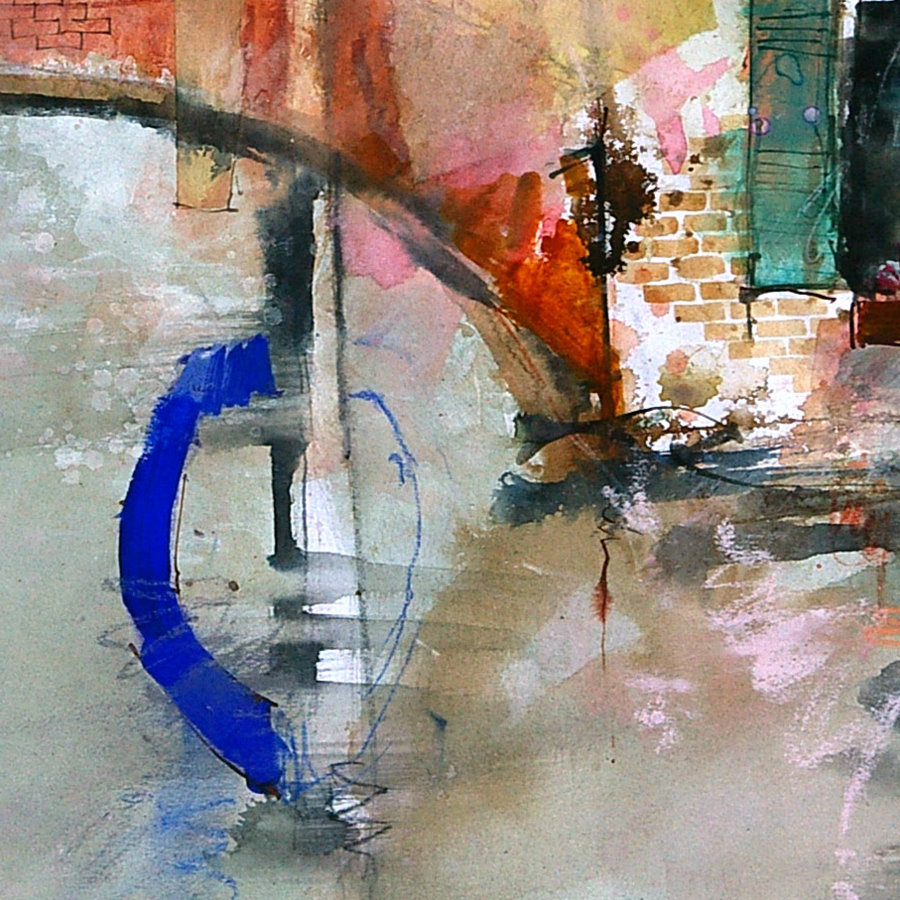
Flat Ultramarine gouache was used to convey the brilliant blue of the canal boat. By contrasting this with the rich terracotta of the bridge, a focal point is established.
.
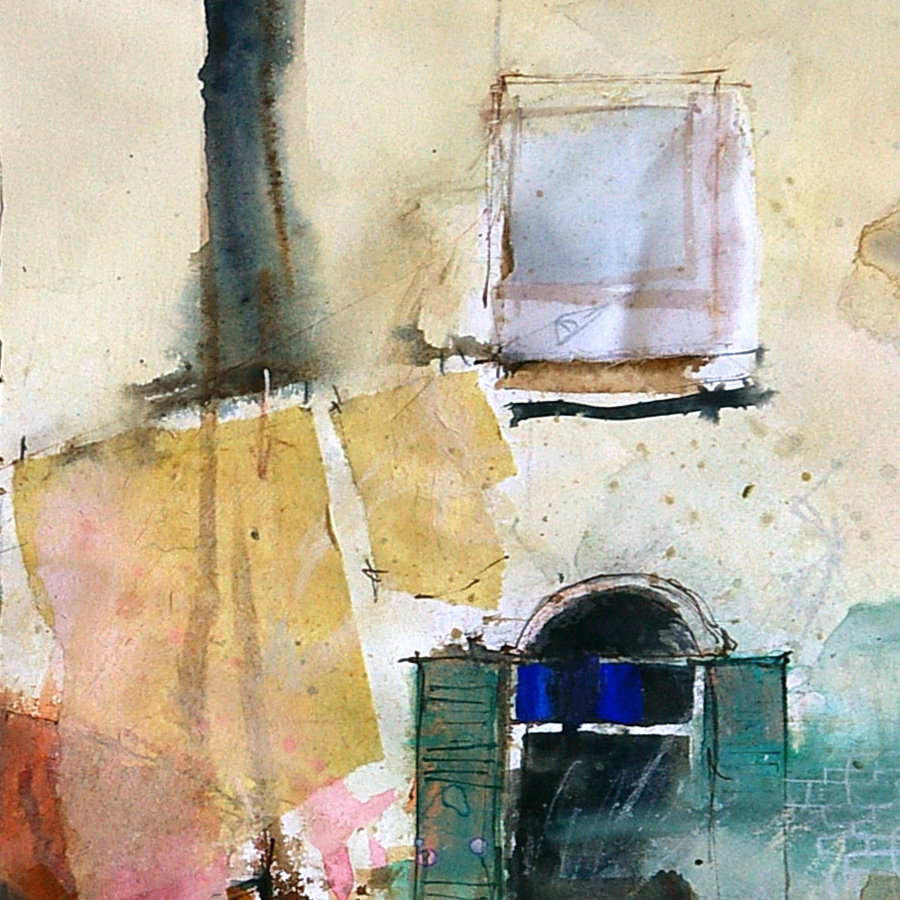
The washing hanging on the line was torn from pieces of Japanese rice paper and stuck to the surface with acrylic matt varnish. The rice paper shapes were softened by splashing them with a mixture of Permanent Rose watercolour mixed with  White gouache.
.
A fine translucent glaze of White gouache and Permanent Rose watercolor softens the far end of the bridge, encouraging the eye back to the centre of interest.
.

LOOKING BACK

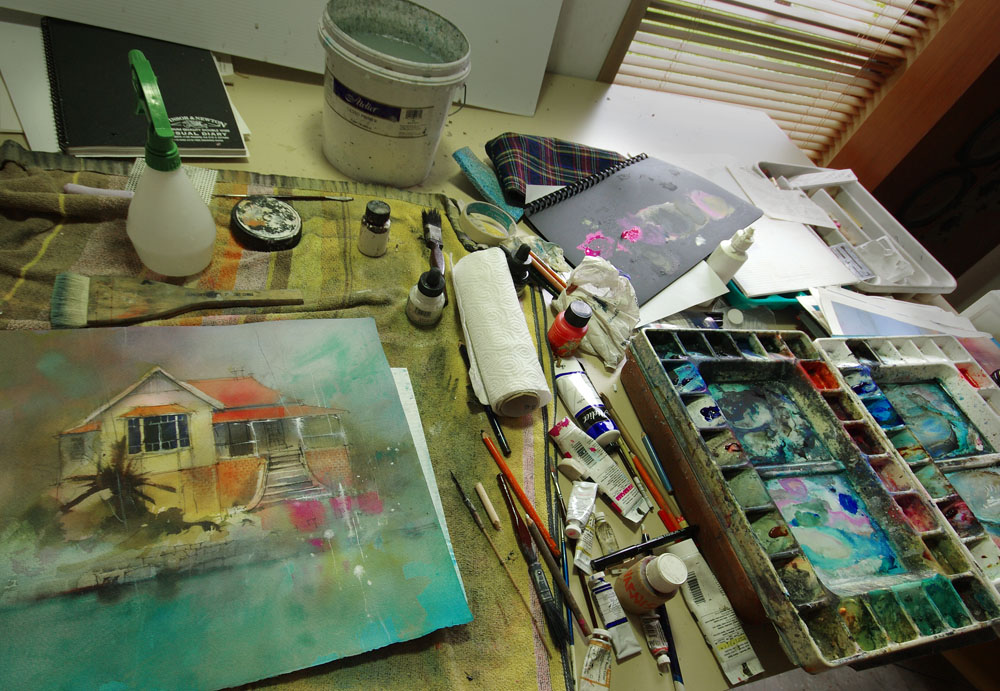
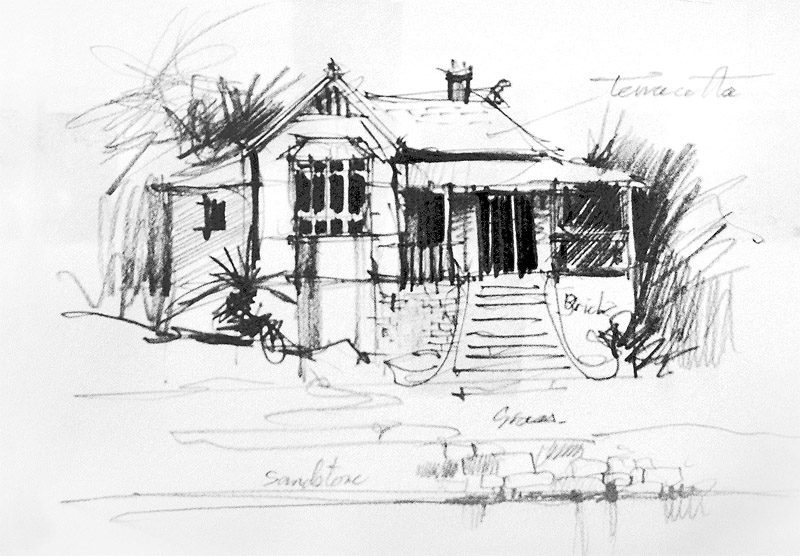
A few years ago I sketched this little cottage on Sydney Harbour. It was late in the afternoon and there was no activity – no sign of life at all. As I did the sketch I started wondering what had gone on here in the past. Such an amazing location, I could imagine parties on the verandah, kids running around, boats in the water, but now, nothing – just a little cottage gazing out across the water. It had a kind of empty sadness – a little neglected with vague evidence of lively past.

COLORS:

Quinacridone Gold, Alizarin Crimson,  French Ultramarine Blue,  Phthalo Blue, Medium Magenta Acrylic, White Gesso, White Gouache

INK:

White pigment Ink, Burnt Sienna Pigment Ink

PENCILS:

White Charcoal,  Black Charcoal, Dark Brown Derwent Inktense

URBAN WATERCOLORS


It seems strange I guess, five months traveling through the bush, and I’m back in the studio absorbed in Urban landscapes. Maybe I miss all  that noise traffic and chaos.

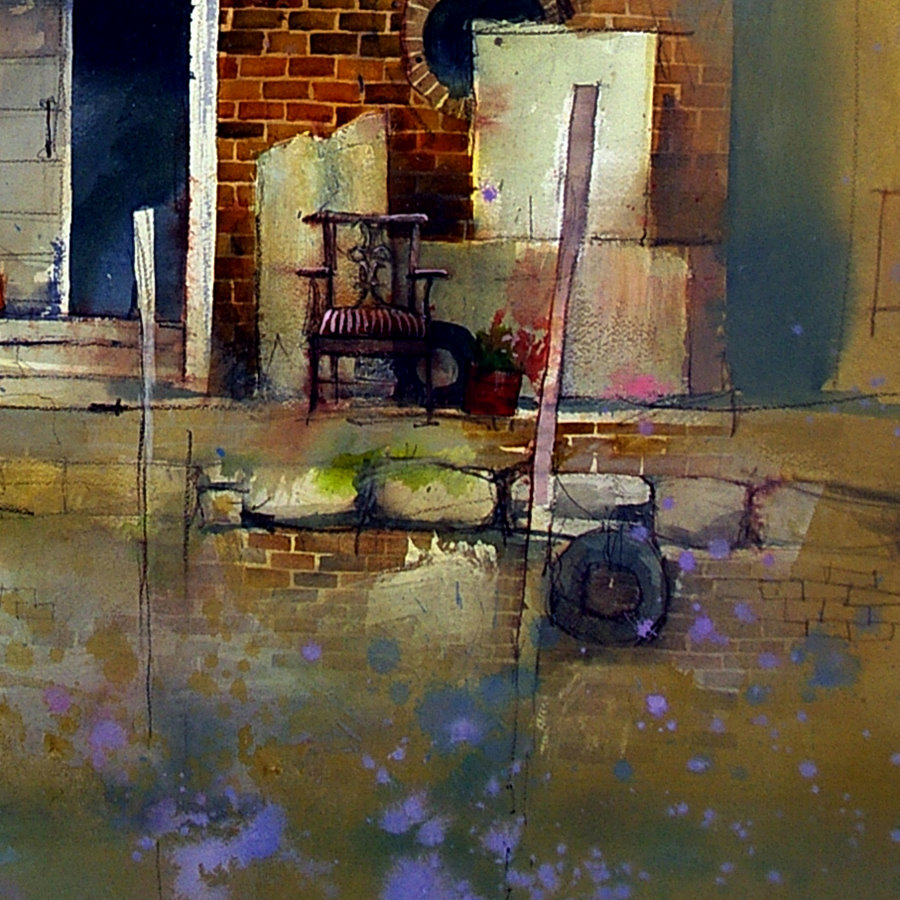
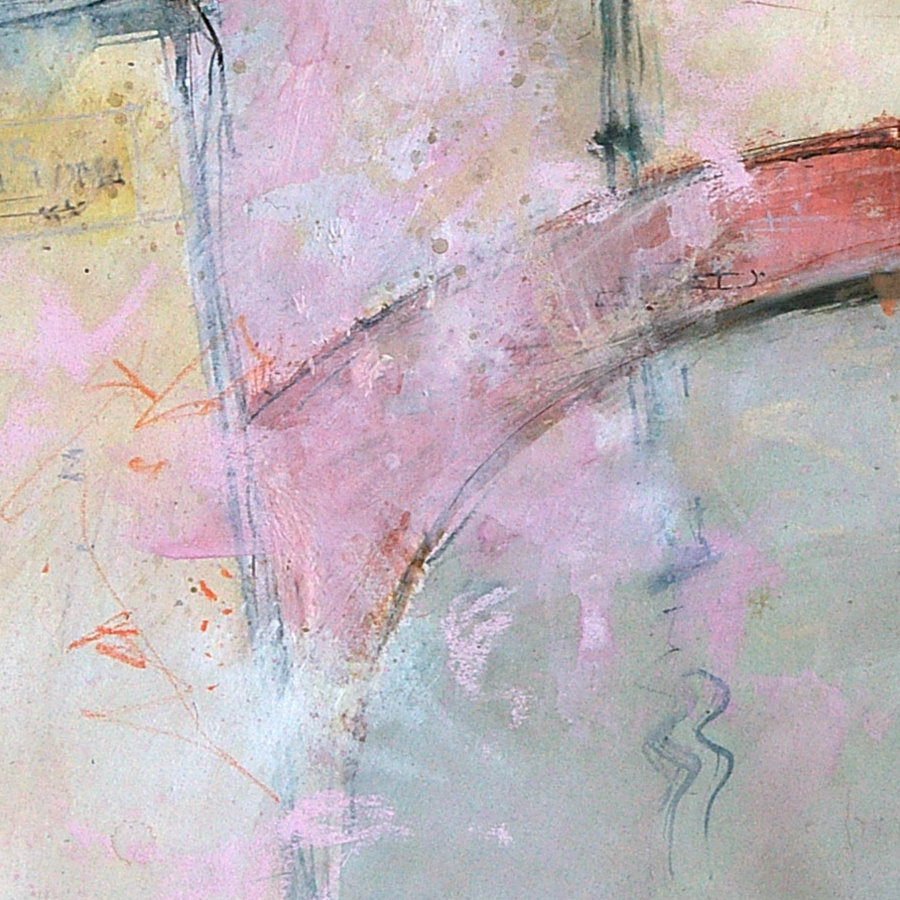
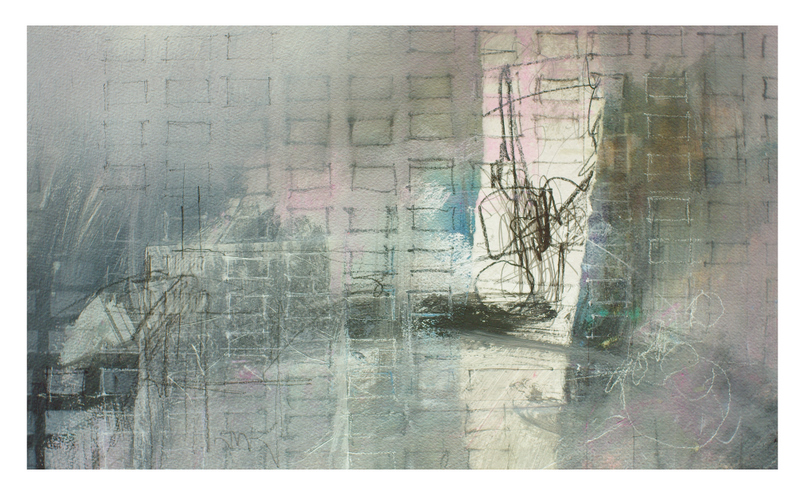
This painting was built up in layers of watercolor and gouache then worked over with thin glazes of gesso. Lots of calligraphic charcoal and pastel pencil marks were then threaded across the surface similar to graffiti on a wall.

Transparent washes of Alizarin Crimson and Quinacridone Gold contrast with the Phthalo Blue foreground glazes and Phthalo tinted White Gouache sky. The brick shaped fine detail was applied with Burnt Sienna tinted White Gouache

A compressed industrial grey color scheme and formal, geometric marks suggest the urban subject rather than accurately describing it in these two paintings.

I find that reducing a painting to the simplest elements and barely suggesting the subject can have a lot more impact. The viewer is engaged on a far deeper level and in a more subliminal way than when details are clearly presented.

BACK IN THE STUDIO

After 5 months away it’s good to get back in the studio and start painting. As much as I enjoy painting outdoors, I always feel the best work comes when conditions are under control and there is limitless time to consider things

.

The first thing I did when I got back to the studio was pull out the last demonstration painting I did at the workshop in Pemberton. At the time I was wrestling with it and hurrying to get it finished. I just wanted to see where it would go with a little more time and less pressure.

I attacked it with a 1″ house painting brush full of gesso , leaving the central core of previously painted watercolor untouched. After the gesso dried, detail was added and blotted back with tissue.

The pigment sits on the surface of the gesso, so can be sprayed and blotted back similar to yupo paper. This produces the subtle effects seen in the detail above. It is an interesting, very controllable way to work and produces unusual results.

FISHERMEN’S HUTS

FISHERMEN’S HUTS
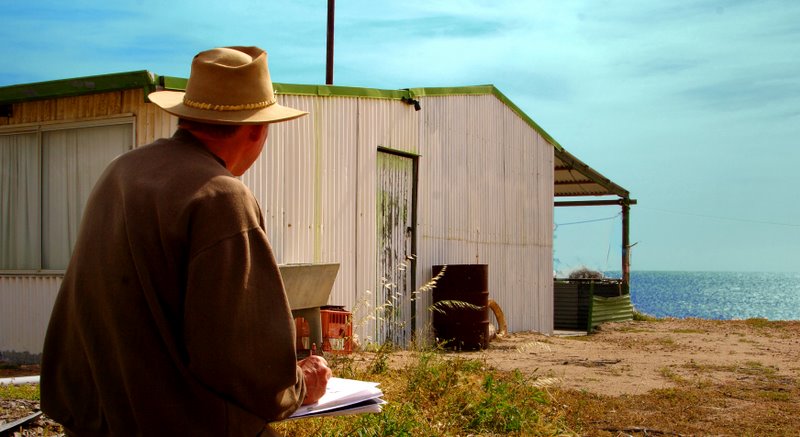
Traveling about looking for interesting things to paint is a lot of fun and occasionally you stumble upon a location you just don’t want to leave. This was the case when we followed a rough sandy track down onto an isolated West Australian beach. The sea was that pristine turquoise color and, sheltered by a low headland, were a number of unoccupied fishermen’s huts looking out to sea. The fishermen had built a makeshift jetty and scattered about were lobster pots, nets, floats, ropes and all the tools of the fishermen’s trade.
The area was stark and windswept, and the salt air had rusted, corroded and faded everything in site. We wound our way along a sandy track past the huts and set up camp under the shelter of the headland. It was a short walk back to the huts to sketch and paint.
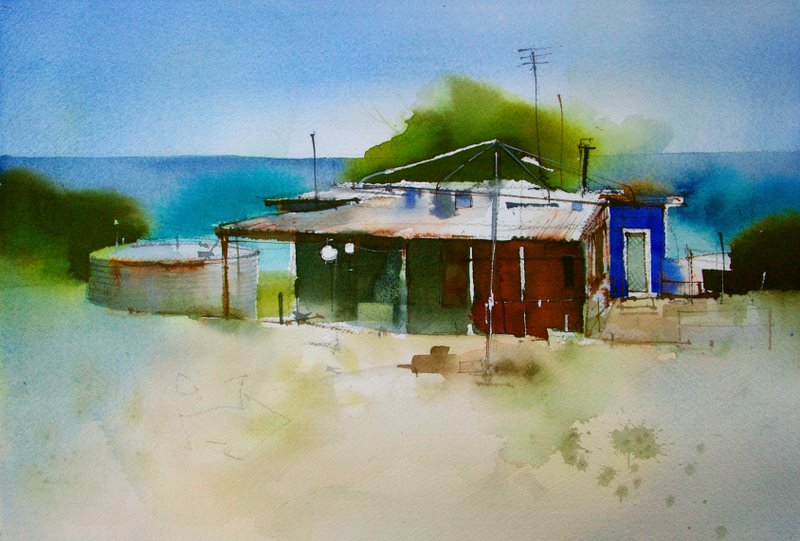
What appealed to me was the bleached weathered look of everything and the interesting contrast between warm and cool blues. For this reason I chose a palette containing three blues. Phthalo, Ultramarine and Cobalt. The only other colors were Permanent Alizarin Crimson and Quinacridone Gold.
These five pigments give us a good range of colors to suit our subject. Quinacridone Gold doesn’t give us a saturated yellow, but this subject doesn’t require one. What we do have is a warm, neutral and cool blue. The Ultramarine leans towards violet, so contains a little red. This is our warm blue. The Cobalt is neither warm or cool. It is about as close as we can get to a pure primary blue. The Phthalo leans towards green, so contains a little yellow. It is our cool blue.
The rough layout drawing was sketched in lightly with a charcoal pencil. Just enough information to indicate where the main shapes will go.
A graded wash of Cobalt Blue was put through the sky and water and allowed to dry. The sandy foreground was washed in with a mixture of Quinacridone Gold, Alizarin and a touch of Ultramarine. Some more Quinacridone Gold and a little Phthalo was added to the sandy color on the palette. This was then splashed into the still wet foreground.
The next step was to wet the sea and drop some pure Ultramarine along the horizon. Before this dried Phthalo blue was put into the lower part of the sea. The shadow areas of the hut were painted with a neutral gray, then Alizarin was dropped in while it was still wet. The important thing to remember at this stage is to leave those punctuating white marks. The bushes were mixed from Quinacridone Gold, Phthalo Blue and a little Alizarin. They were not applied until the painting was completely dry. This meant the edges could be softened with a damp, clean 1″ brush without disturbing the washes underneath. The blue surrounding the door is pure Cobalt.
Fine details were added next with a No.2 Rigger Brush. A few Burnt Sienna ink lines were also added and sprayed with a mist of water to make them bleed and run
The final step after adding some more detail to the foreground, was to grade a wash of straight cobalt in from either side of the painting. This helps focus attention on the center of interest and makes the warm colors of the hut jump out from the surrounding area of cool. For these Cobalt washes to succeed the painting first needs to be thoroughly dry.
The old makeshift jetty was great to draw with all the interesting negative shapes and varied lines and spacing.
After I finished the sketch, a series of graded washes using the same five colors was laid over the pencil lines. A few dark rigger lines added strength to the pencil marks and a couple of patches of white paper draw attention to the center of interest.

WATERCOLOR PAINTING DEMONSTRATION

www.johnlovett.com – opens in a new window

Traveling about looking for interesting things to paint is a lot of fun and occasionally you stumble upon a location you just don’t want to leave. This was the case when we followed a rough sandy track down onto an isolated West Australian beach. The sea was that pristine turquoise color and, sheltered by a low headland, were a number of unoccupied fishermen’s huts looking out to sea. The fishermen had built a makeshift jetty and scattered about were lobster pots, nets, floats, ropes and all the tools of the fishermen’s trade.

photo2-1

The area was stark and windswept, and the salt air had rusted, corroded and faded everything in site. We wound our way along a sandy track past the huts and set up camp under the shelter of the headland. It was a short walk back to the huts to sketch and paint.

IMGP0946

What appealed to me was the bleached weathered look of everything and the interesting contrast between warm and cool blues. For this reason I chose a palette containing three blues. Phthalo, Ultramarine and Cobalt. The only other colors were Permanent Alizarin Crimson and Quinacridone Gold.

colwheel

These five pigments give us a good range of colors to suit our subject. Quinacridone Gold doesn’t give us a saturated yellow, but this subject doesn’t require one. What we do have is a warm, neutral and cool blue. The Ultramarine leans towards violet, so contains a little red. This is our warm blue. The Cobalt is neither warm or cool. It is about as close as we can get to a pure primary blue. The Phthalo leans towards green, so contains a little yellow. It is our cool blue.

draringhut

3

This painting was started with a graded wash of Cobalt Blue put through the sky and water then allowed to dry. The sandy foreground was washed in with a mixture of Quinacridone Gold, Alizarin and a touch of Ultramarine. Some more Quinacridone Gold and a little Phthalo was added to the sandy color on the palette. This was then splashed into the still wet foreground.

4

The next step was to wet the sea and drop some pure Ultramarine along the horizon. Before this dried Phthalo blue was put into the lower part of the sea. The shadow areas of the hut were then painted, leaving those punctuating white marks. The bushes were mixed from Quinacridone Gold, Phthalo Blue and a little Alizarin. They were not applied until the painting was completely dry so the edges could be softened.  The blue surrounding the door is pure Cobalt.

5

Fine details were added next with a No.2 Rigger Brush. A few Burnt Sienna ink lines were also added and sprayed with a mist of water to make them bleed and run.
final

The final step after adding some more detail to the foreground, was to grade a wash of straight Cobalt in from either side of the painting. This helps focus attention on the center of interest and makes the warm colors of the hut jump out from the surrounding area of cool. For these Cobalt washes to succeed the painting first needs to be thoroughly dry.

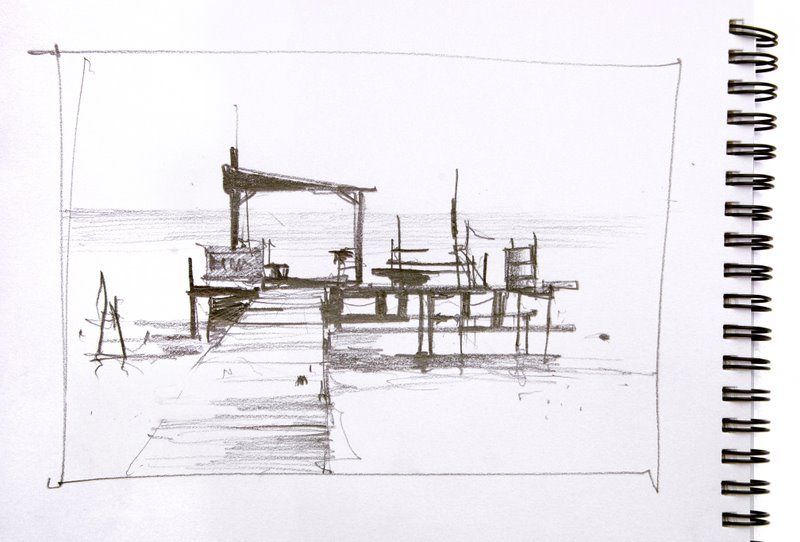
photo1

sketch

The old makeshift jetty was great to draw with all the interesting negative shapes and varied lines and spacing.

colsketch

After I finished the sketch, a series of graded washes using the same five colors was laid over the pencil lines. A few dark rigger lines added strength to the pencil marks and a couple of patches of white paper draw attention to the center of interest.

This article will appear in full in the next issue of INTERNATIONAL ARTIST MAGAZINE.