NEW TOYS

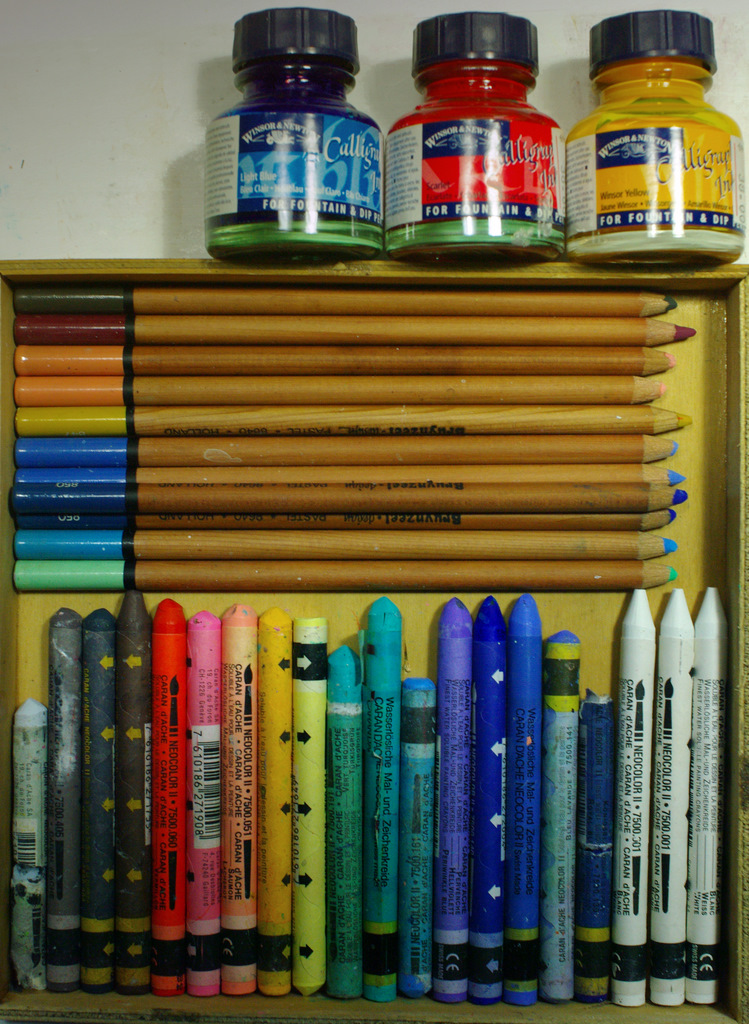
I’m a sucker for an Art Supply Shop. I just can’t walk past them. While we were in Hong Kong an assortment of pastel pencils, water soluble crayons and colored inks became absolute necessities. Things that I couldn’t leave the shop without!

I have drawers full of such items. Essential in the excitement of the moment, but once in the studio and tested, they become just another unnecessary distraction. Fortunately, this bout of impulse buying resulted in some really useful new toys.

The inks are Winsor and Newton Calligraphy inks – Brilliant primary colors

The pastel pencils are a Dutch brand I have not tried before – Bruynzeel. Fine textured and good colors.

I have used the Caran d’Ache water soluble crayons before, but fell for a pile of new colors.

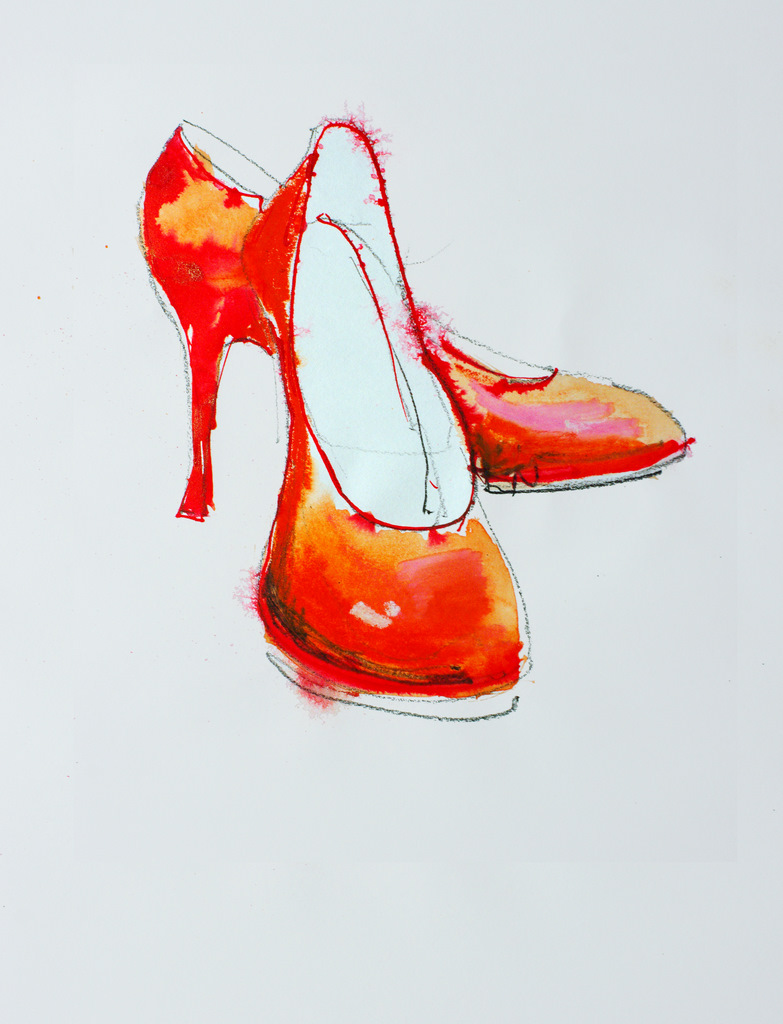
Red Shoes – Sketched with a charcoal pencil then colored with a red, orange and pink crayon. After the crayon was applied, a wet 1/2″ brush was used to dissolve and blend the colors. Finally a few red ink lines were drawn on and sprayed with a mist of water.

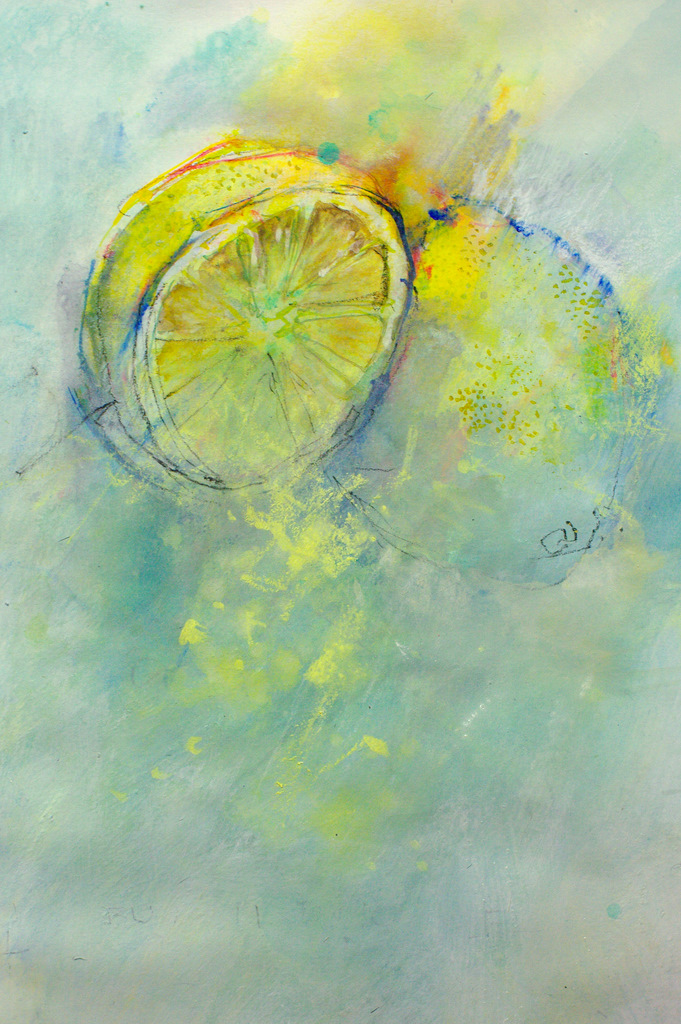
These Lemons were painted with a mixture of crayon ink and pastel pencil. A gesso wash was scrubbed over the foreground before the final yellow crayon marks were applied. Before the Gesso had dried the lemon was carefully sliced and dropped into a Gin and tonic.

WALLS AND DOORS

It’s good to be back in the studio again after our Italian workshop break. Over the next few months I will be kept busy working on an Exhibition for late October. These first few paintings of architectural subjects will probably find their way into the exhibition. They will also be used in an article on The Illusion of Accuracy for International Artist Magazine.

“Notes on a Door” – Watercolor, Ink and Gesso on Arches 300gsm paper

“Medievalness” Watercolor and Ink on 300gsm Arches paper

“Village with lake and Olive Trees” mixed media on 300gsm Blue Lake Paper

AIRPLANE SKETCHES

How do you kill 30 odd hours strapped into the seat of an airplane? Movies on a tiny screen with the background drone of jet engines are OK for a while, reading is fine for a couple of hours, but scribbling in a little sketch book eats up the hours and is a lot of fun.

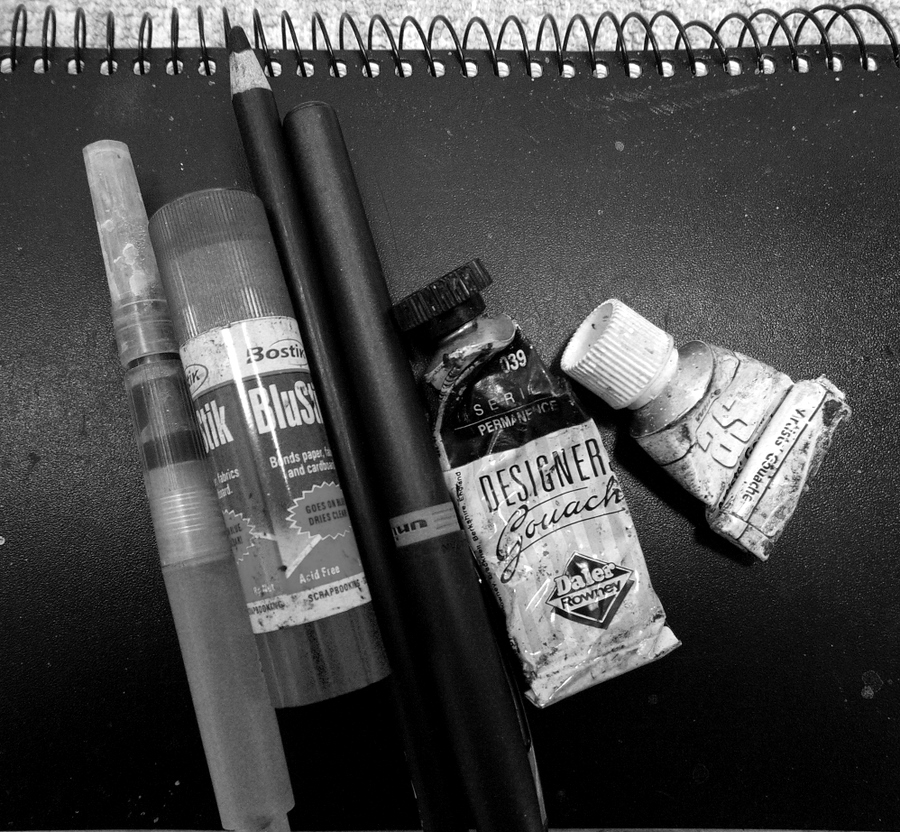
To keep things simple I use a tube of black and a tube of white gouache, a small brush with a built in water reservoir, a charcoal pencil, glue stick, fine line black  pen and a liner brush cut in half.

I once tried a uni posca white paint pen, but the change in atmospheric pressure at 30,000 feet caused it to empty half a cup of white paint all over my sketch book on the first stroke. The Uni Posca is only used at ground level now.

All stored in a ziplock plastic bag. Cut down rigger – still in the seat pocket of a Jumbo Jet somewhere?

CEFALU

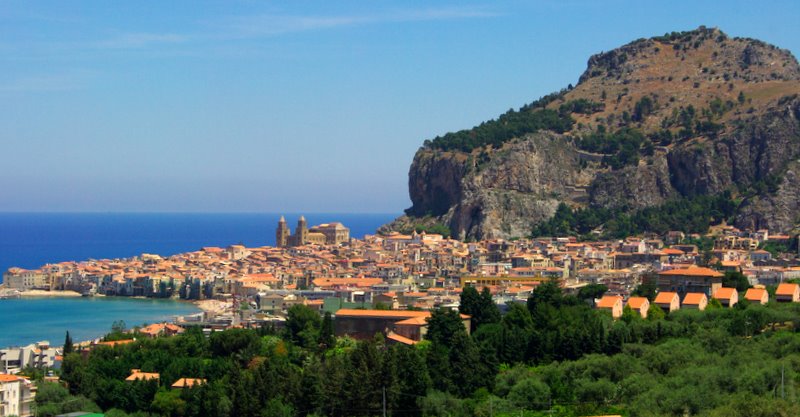
Tucked under an enormous rock outcrop on the North coast of Sicily, the small town of Cefalu is dominated by its impressive Norman cathedral.

The old town has a wonderful, busy character and it’s maze of streets and alleys are fun to explore.

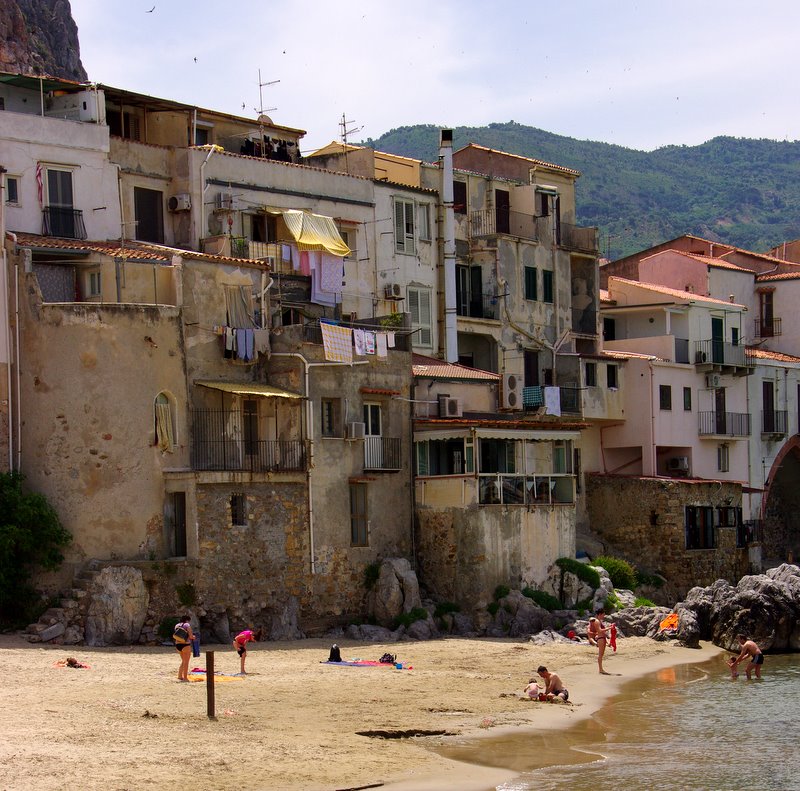
The town wraps around some attractive, sheltered beaches and has a fleet of small wooden fishing boats providing fresh fish for the local restaurants.

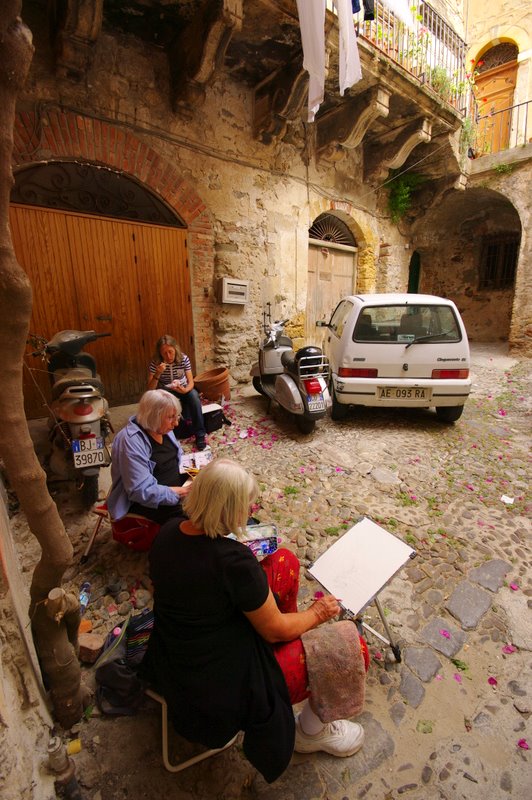
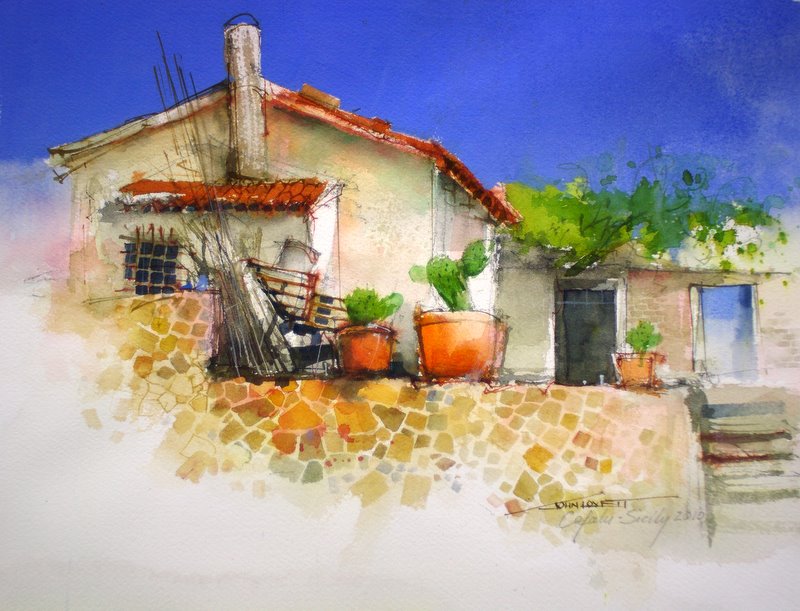
We managed to find some great painting locations tucked into out-of-the-way alleys.

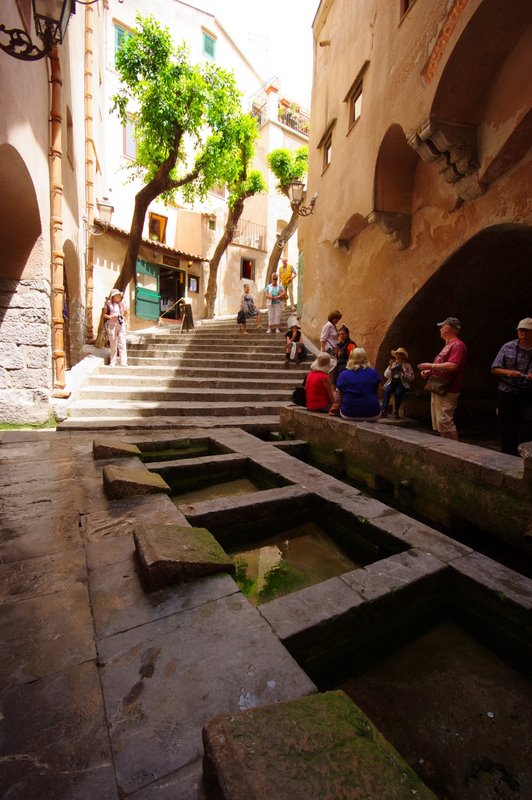
Up until 20 years ago, these old Roman wash tubs were still in use. An endless supply of clean, spring water flushes through them and out to sea. The luxury of electricity and white goods has relegated them to a tourist attraction.

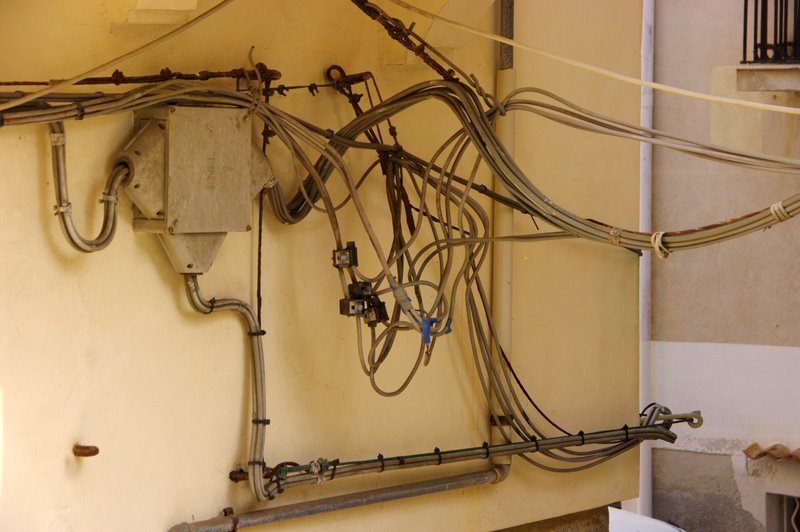
Electric wiring in Cefalu is an incredibly confusing tangle of cables, strung haphazardly from building to building.

Little wonder the locals puzzle over electricity bills.

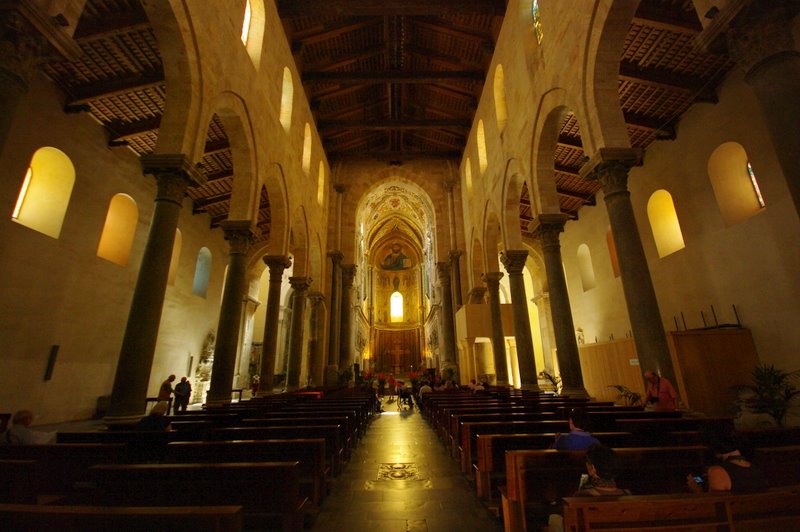
In the centre of town, the huge Norman cathedral is an impressive structure. Interior decoration is fairly schizophrenic,  having chopped and changed over the centuries according to religious preference, politics and fashion

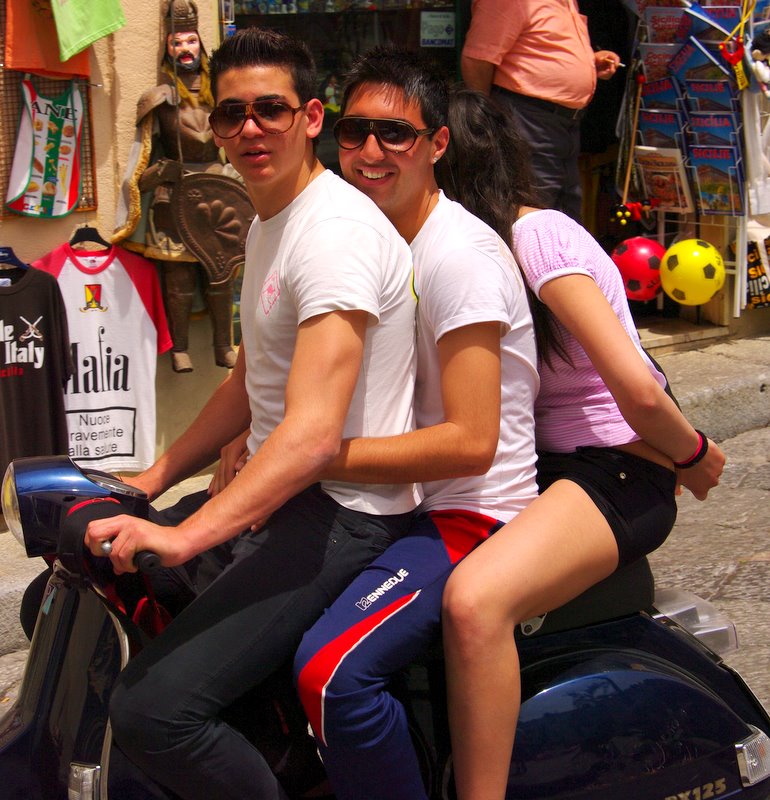
Young people in Cefalu have the same crazy desire to push a vesper to the edge of suicidal self destruction as is found in most of Italy.

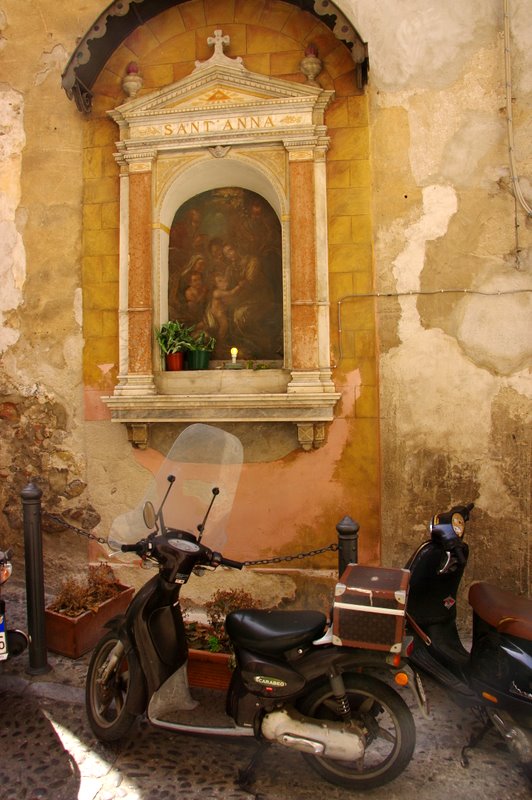
Parking under religious icons guarantees safety here too!

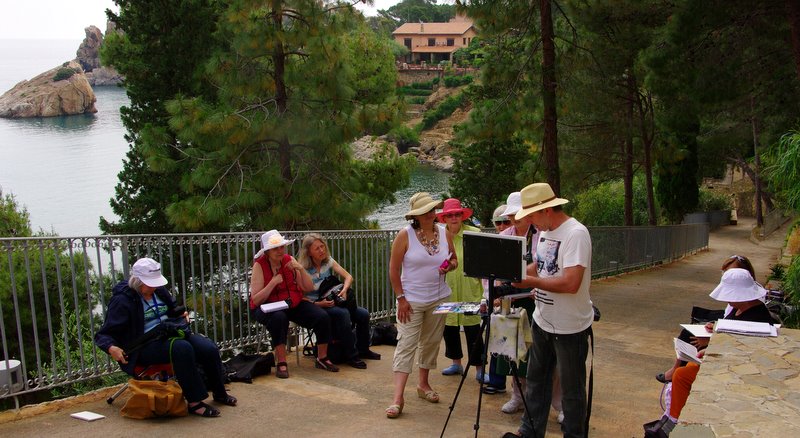
Our Hotel was perched above the bay on the opposite side of the rock to the town. This path led down to a terrace, swimming pool and small beach. It made a comfortable, shady spot to paint some old buildings and garden walls attached to the hotel.

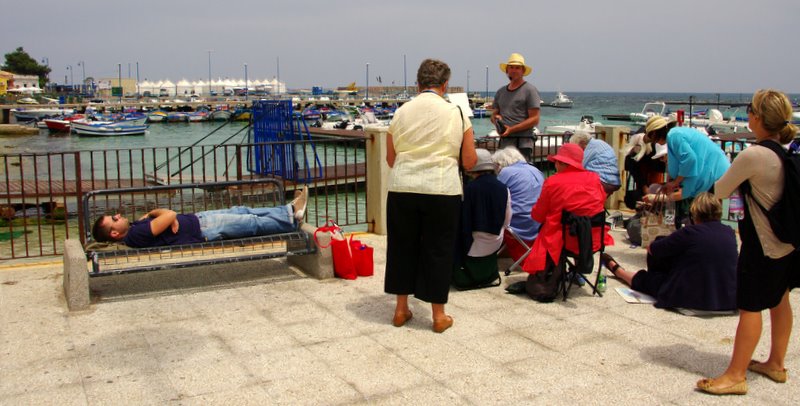
We found this poor fellow sound asleep on a bench at a small beach resort out of Palermo. He was a bit confused when he woke up and found 20 people spread around him with easels and paint boxes.

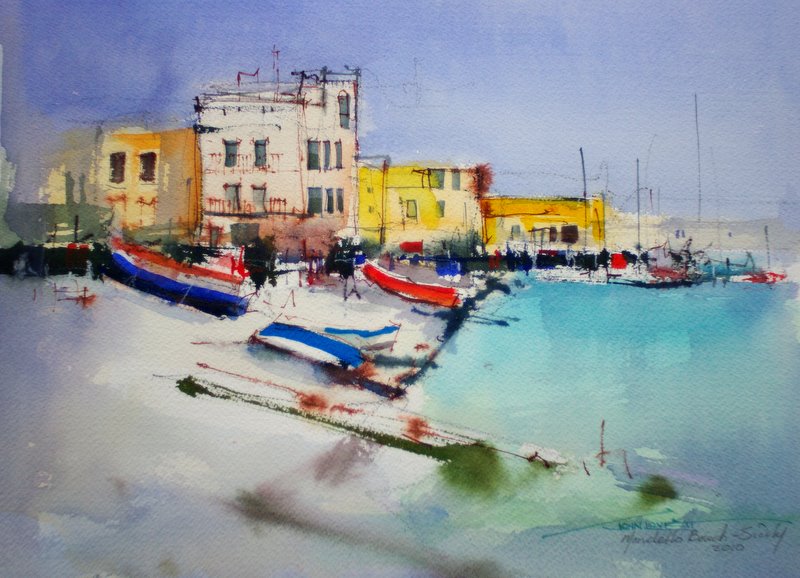
Mondello waterfront – Sicily

PAINT BY ACCIDENT

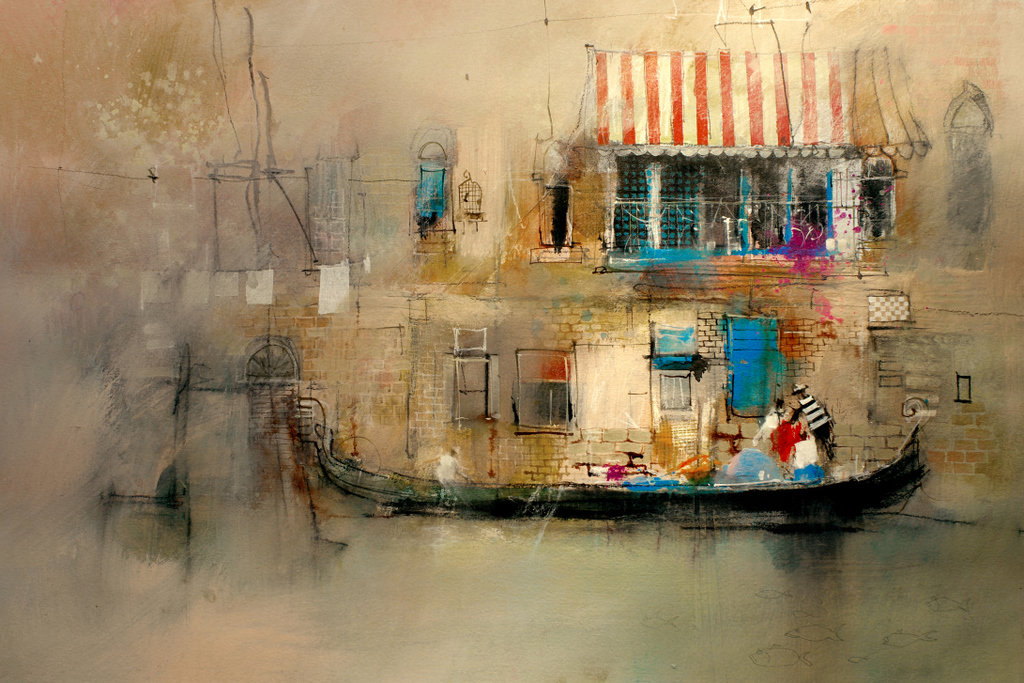
There is nothing like a looming magazine deadline to speed up the painting process. I had just finished an article on controlling color temperature for International Artist Magazine and realized I didn’t have an example of a dominant warm painting using a cool contrast. Rather than go through paintings I already had, I decided to work on a sketch I did along one of the little back canals in Venice.

Most of this painting was done using a 1″  bristle brush. I attacked it mercilessly using watercolor and pots of premixed acrylic and gesso, splashing the paint on and feathering it out with a 3″ Hake brush. This quickly covered the paper and provided the area of light at the focal point. Once the dark shapes were scrubbed in with the 1″ brush, I used a charcoal pencil to define the details – again very quickly and accidentally – sort of like draw first and ask questions later. After all this a small brush added all the details – bricks, window frames, striped awning etc.

It is a fantastic way to work, pushing and shoving until things somehow work themselves into place. The hardest thing is learning not to be careful until it is absolutely necessary! The beauty of building up a painting in layers like this means you really can’t go wrong – things can continually be worked over and changed.

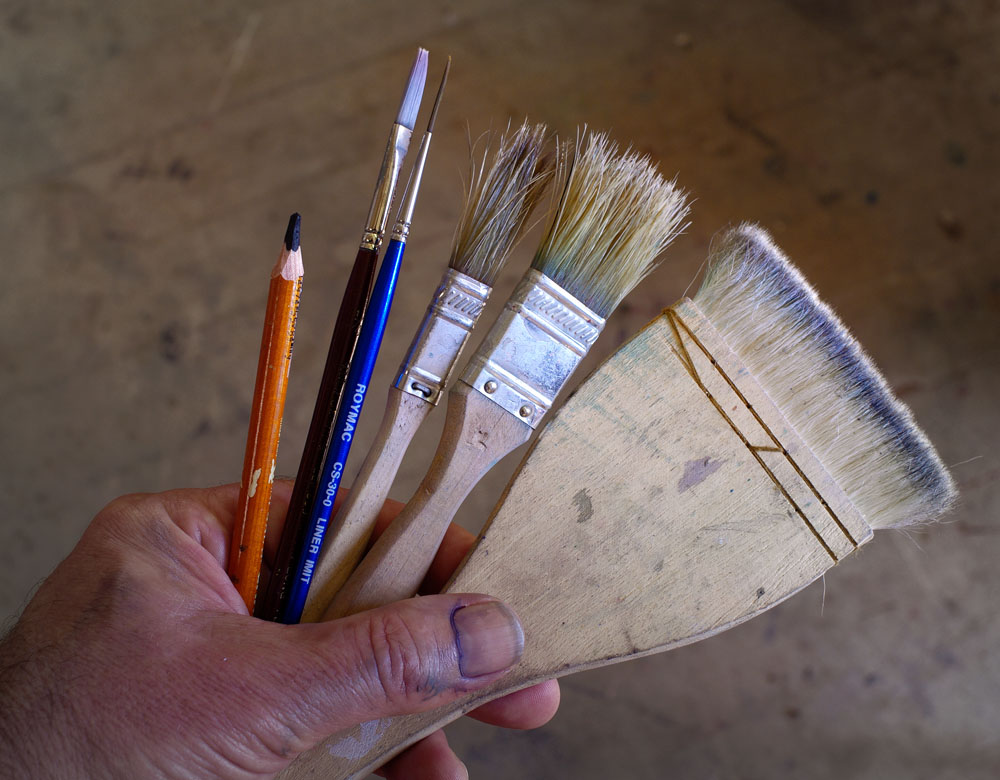
A rough looking collection of brushes, but perfect for this type of painting.

  • A charcoal pencil
  • 1/4″ flat One Stroke
  • #1 Liner Brush
  • 1/2″  Bristle Brush
  • 1″ Bristle Brush
  • 3″ Hake Brush

WATERCOLOR CHICKEN

Over the past couple of months I have been busy working on a new book, which means I am madly leaping from one subject to another. Somehow I ended up choosing a chicken to demonstrate the different qualities of watercolor and Gouache. I hope to have the book finished before the end of the year. A step by step guide to painting this chicken will feature in book. It combines clear washes of watercolor and the opaque flatness of gouache to get that fantastic contrast between glowing transparency and flat, velvety gouache.

This type of subject is a lot of fun, I love the contrast between fine detail and loose abstraction. The face of the chicken leaves nothing to the imagination, but as the eye moves down the neck, things get a little out of control – just like a chicken tearing around in a chicken coop.

French Ultramarine Blue, Permanent Alizarin, Windsor Red, and Quinacridone Gold  with White Gouache provided all the necessary colors.

A few one stroke brushes and a rigger took care of the detail and the 1/2 inch bristle brush made all the mess.

The book should be available towards the end of the year. As soon as it’s out I will put a link on my website

TRIAL AND ERROR

.
When writing magazine articles, I usually try to have a nice clean start to finish demonstration, free of  problems or corrections. With this painting, however, I ran into a period of indecision and confusion. Rather than put it aside for something else, I decided to make the eventual solution to the problem the subject of the article.

This article will appear in the next issue of International Artist Magazine.
Sometimes a painting will happily sail along to a certain point, then, seemingly without reason, grind to a halt.  An indecisive moment perhaps, not enough planning, a lack of concentration, who knows? What ever the cause it can be a frustrating and time-consuming experience. Short of putting the painting aside and forgetting it, the best solution sometimes is to plough on fearlessly and see what happens.
This painting, of a small Tuscan farm, was going well right up till it was almost finished. For some reason I was not quite happy with the result. I was unsure where to go.  After looking at the painting for a couple of weeks I still could not put my finger on what the problem was. The only solution was to try out a few options – play with it till something started to emerge.
.
Mixed Media on Canvas  1200×1200
.
.
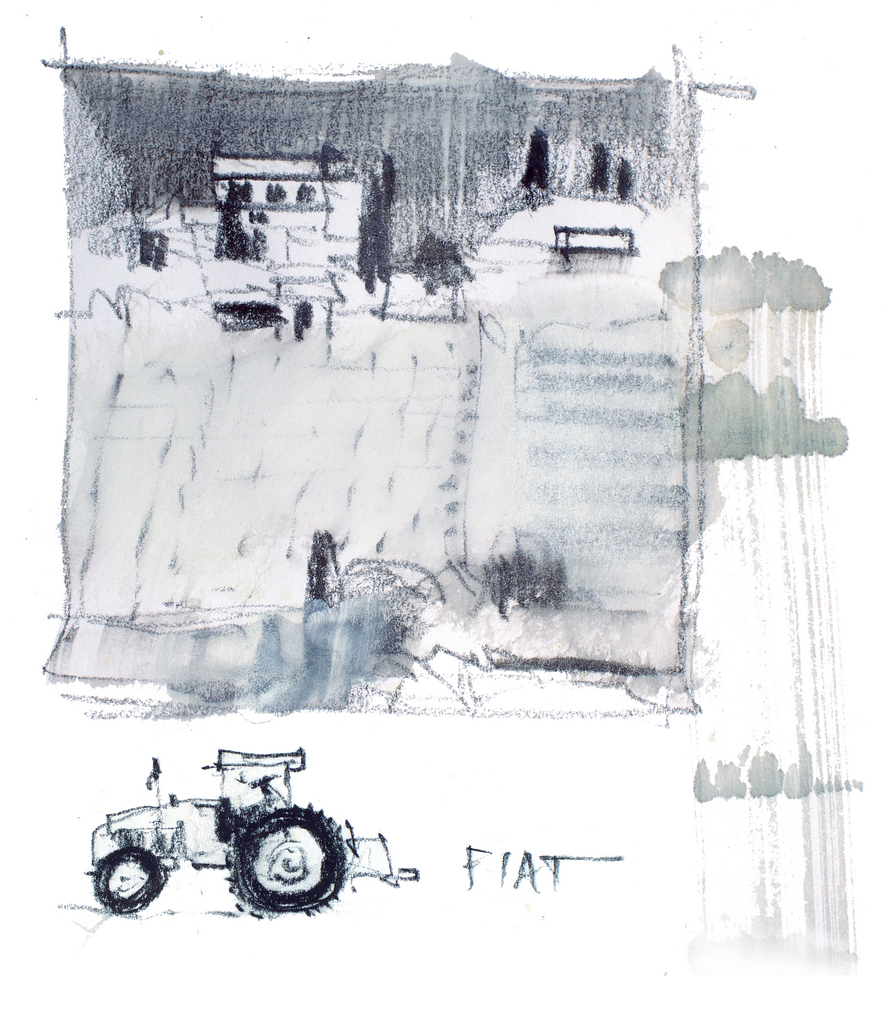
My rough thumbnail sketch certainly was rough, but I was happy with the composition. The old Fiat tractor eventually snuck its way in, off to the left of the farmhouse.

.
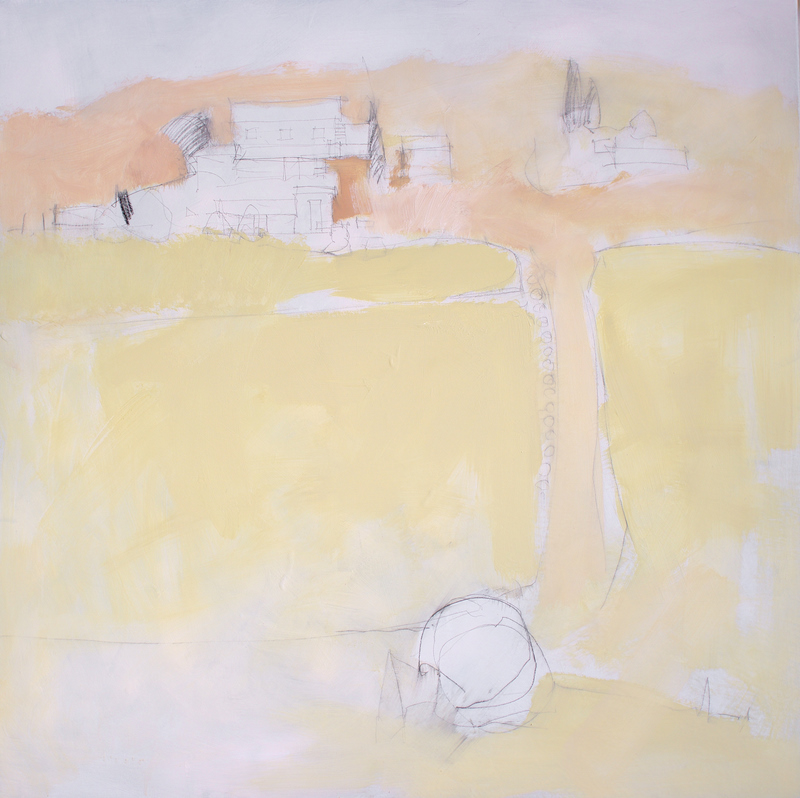
Initial drawing was done with a charcoal pencil and the first big areas of paint were roughed in with a 2″ brush
.
.
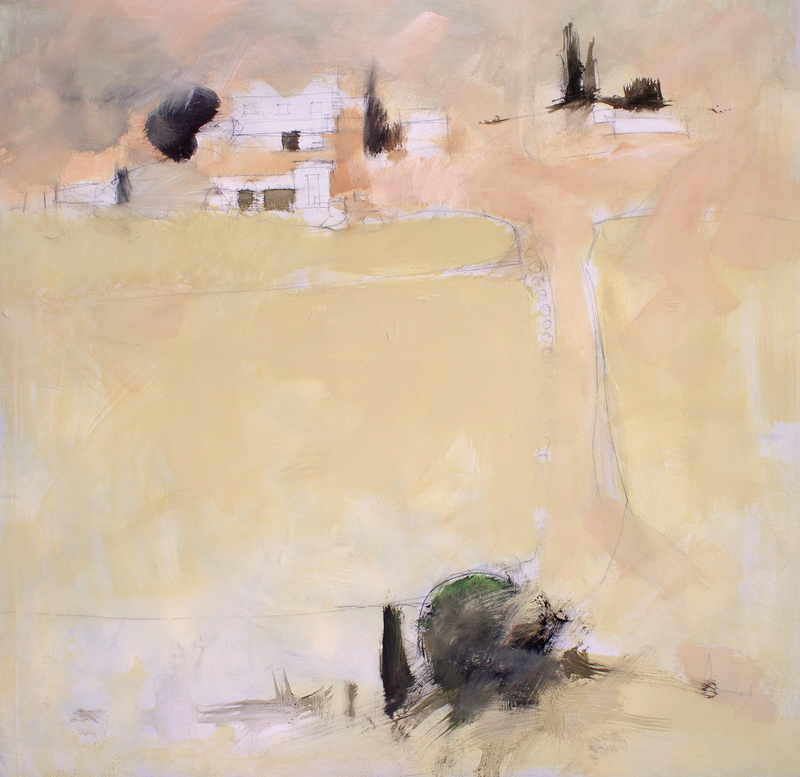
A little more modeling took place, then a few dark shapes were added. So far, so good!

.

.
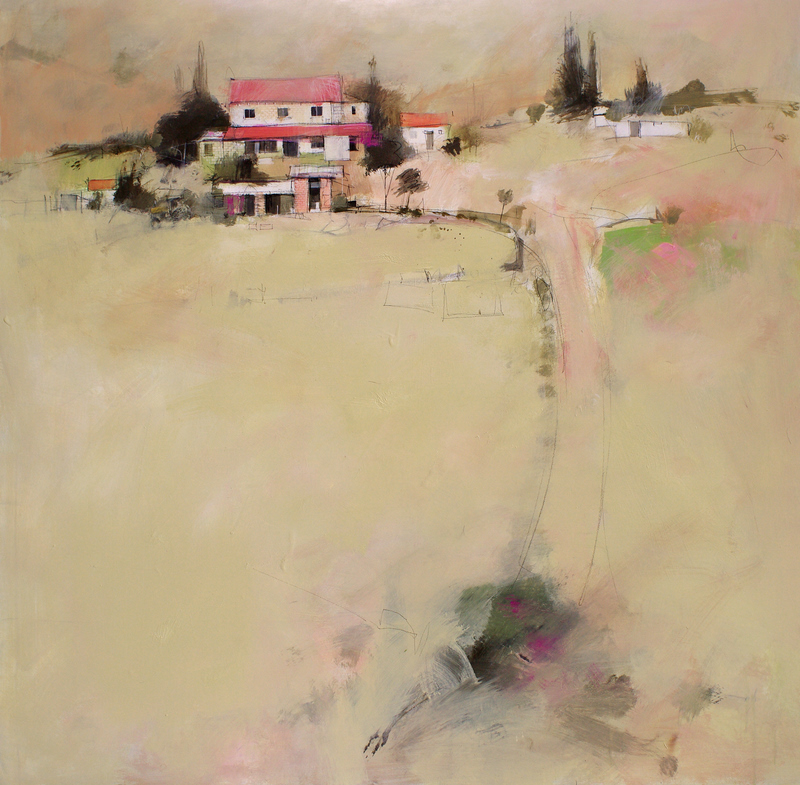
Perhaps this is where things started to get confusing. Too much color too quickly. I threaded some strong green through the top of the painting then, rather than trying to subdue it, attempted to counter the green with strong reds and pinks.After much head scratching I decided to knock back the pinks and put more light into the large foreground. The single dark shape in the immediate foreground was causing distraction and not really saying much. It needed a little more definition and a stronger link to the main focal point.

.

.
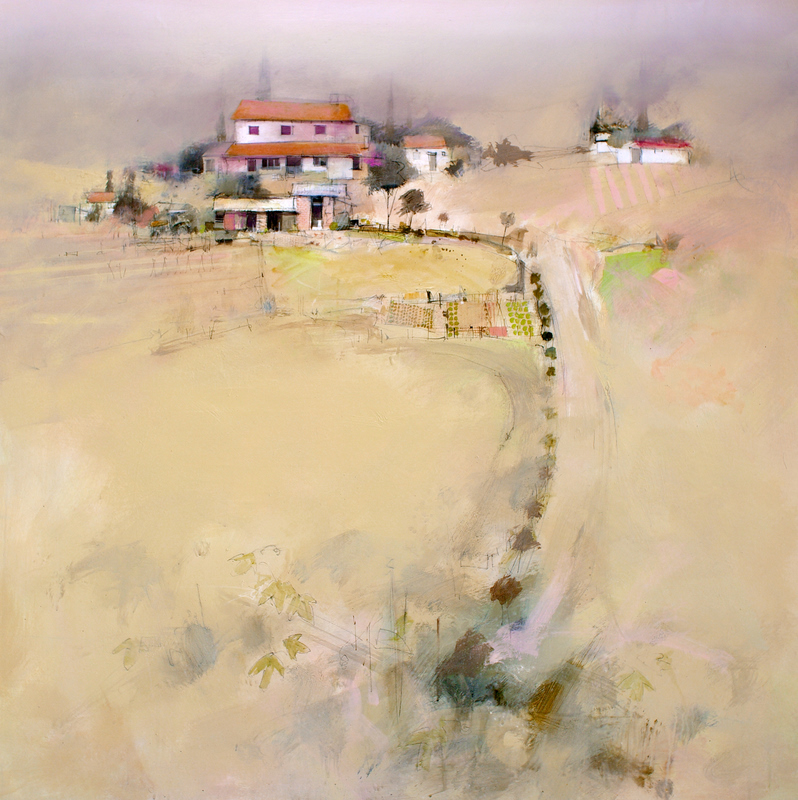
The foreground was broken up with the suggestion of grape vines. Not too much detail – just enough information to add some meaning as the eye moves across the foreground. The line linking the foreground to the focal point was also strengthened. The pink roof was changed to a more terracotta color just to see the effect.

.

.
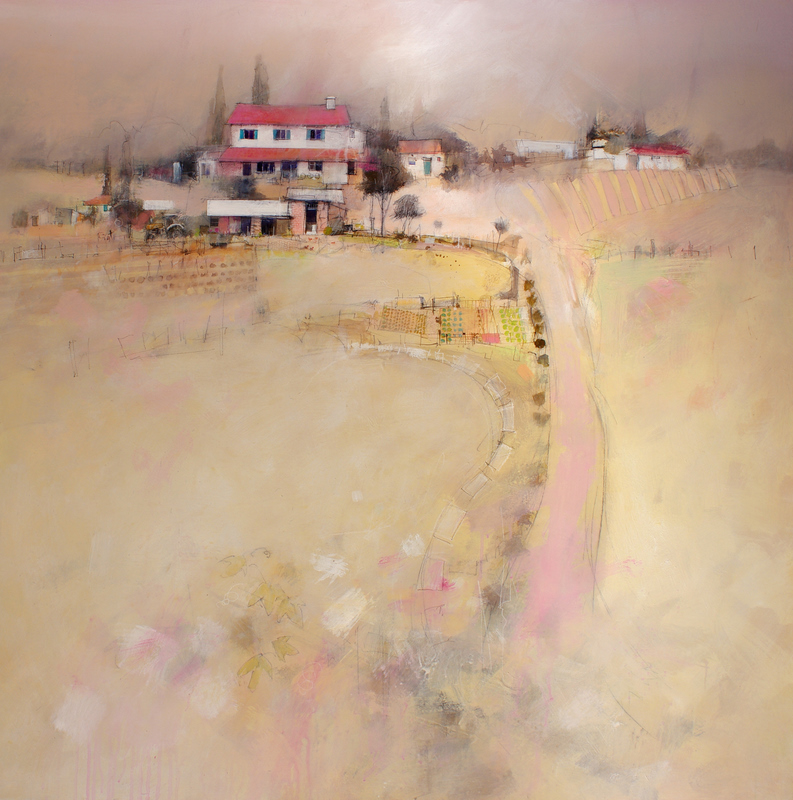
Not happy with the warm terracotta roof I decided to go back to the cooler pink. After much trial and error, I finally found a balance between the pink and green. Working the pink from the main focal point down the curve of the road and into the foreground.

.

.
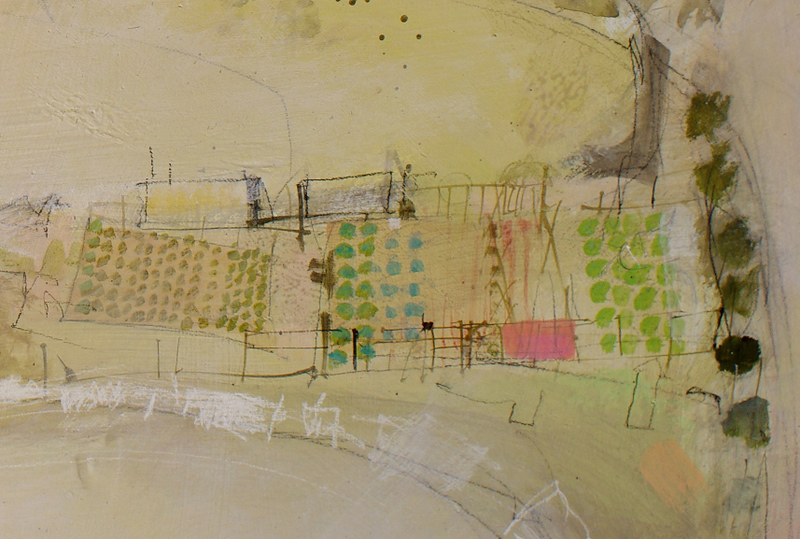
This detail shows the vegetable garden put in with a combination of fine acrylic lines painted with a rigger brush, charcoal pencil marks and areas of colored acrylic. Although many of the details are repeated, I have varied their color, shape and tone to keep the detail interesting.

.

.
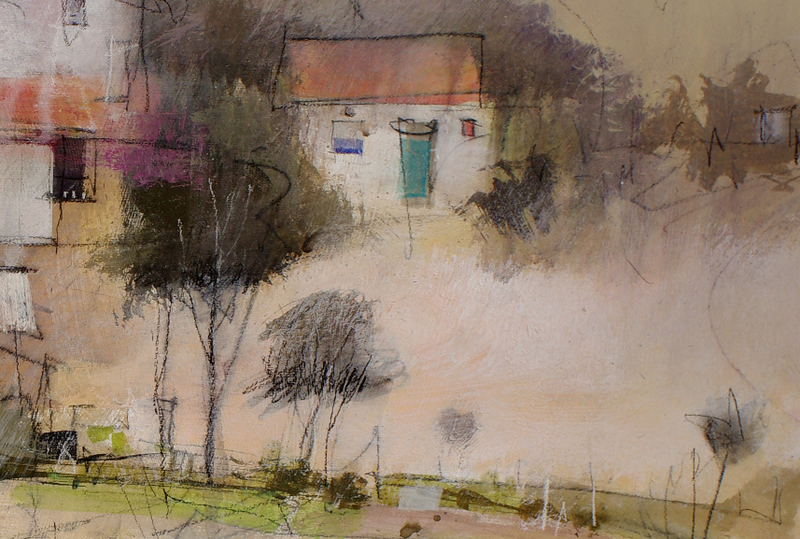
The building detail shows how the loose, spidery charcoal lines add a sketchy quality to the areas of detail. The small patches of cool green and blue add interesting relief to the areas of warm color.

.

.
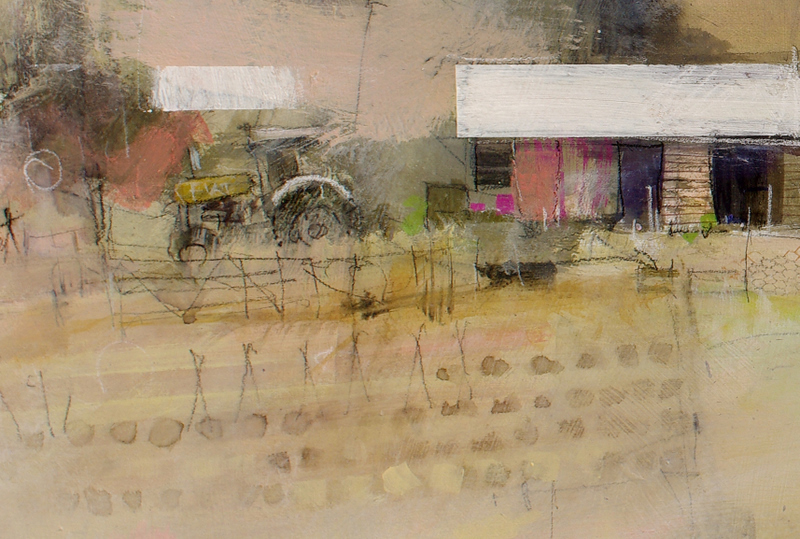
Next to the masked roof of the shed is the old Fiat tractor, barely suggested with roughly scribbled charcoal pencil.
..

JOIN ME FOR A WORKSHOP IN ITALY THIS MAY.

Discover the spectacular beauty of Sicily and Sorrento
MON. MAY 17 TO SUN. MAY 30, 2010

This workshop offers 14 days of painting and adventure. Starting in spectacular Sorrento, the entrance to the Neapolitan Coast then traveling to  Sicily, Italy’s most historically cosmopolitan region surrounded by the beautiful blue waters of the Mediterranean.

Click here for details

.