GLEN DAVIS

A couple of weeks ago I joined large format photographer, Tony Lewis, for a few days painting and photographing up over the Blue Mountains, west of Sydney. Our subject was the ruins of  an old oil shale works tucked under the escarpment at Glen Davis. It’s a spectacular location and Tony and I plan to base an exhibition on these and other abandoned ruins in the area.

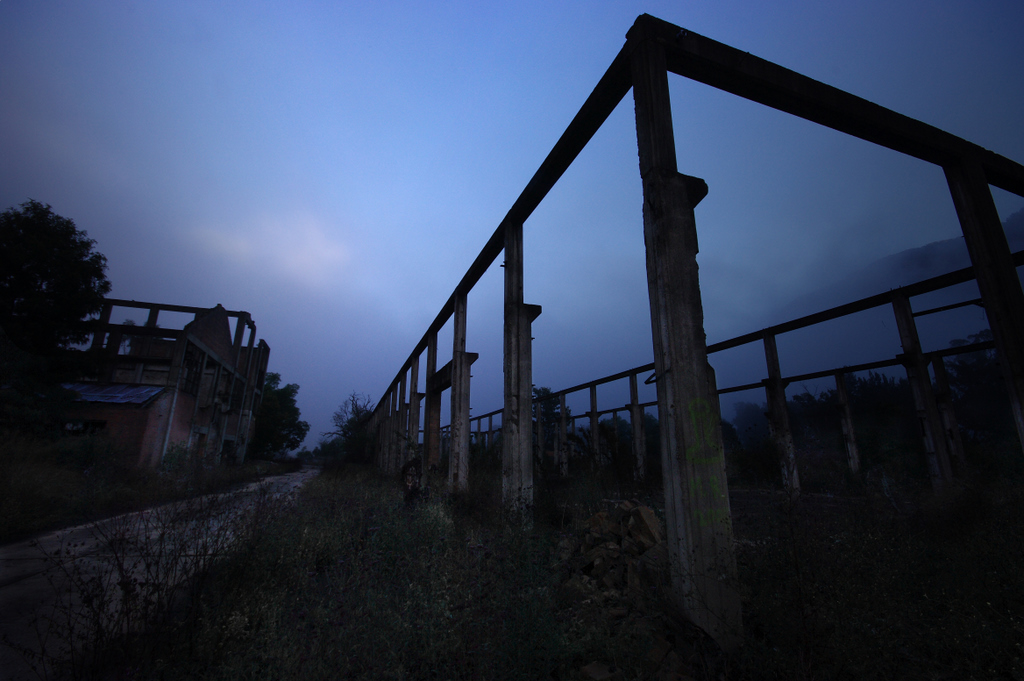
The dominating structure at the old shale works is the abandoned retort building. Its interesting brick work, steel strapping and monumental scale give it a unique and menacing presence.

The contrast between the hard, geometric ruins and the soft, organic landscape make stark and beautiful subjects as the sun goes down.

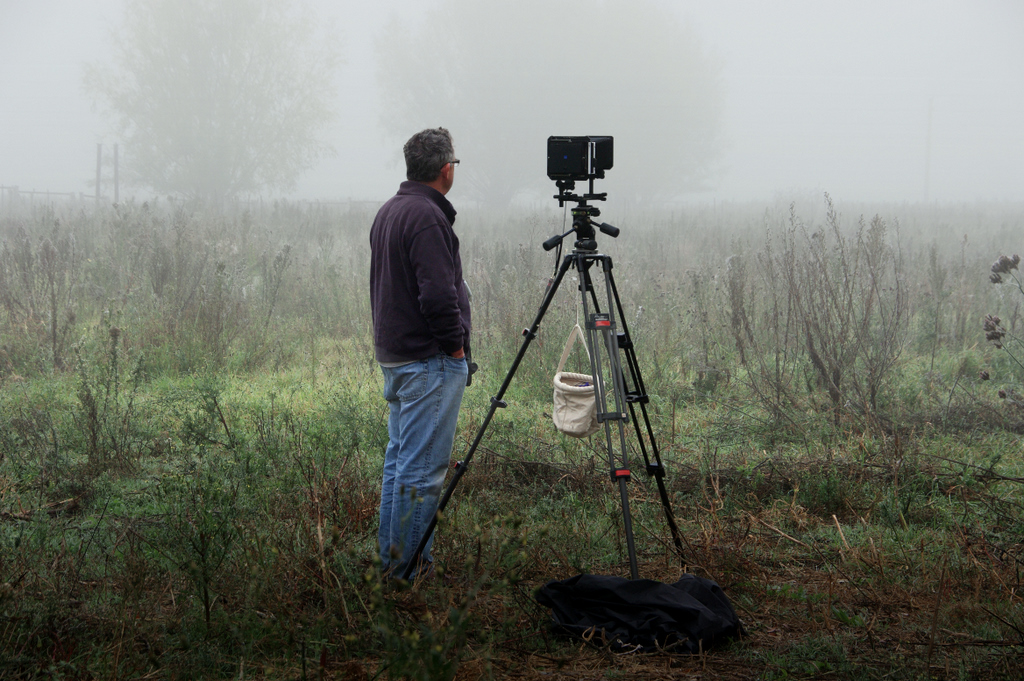
Tony waits for a shot through the early morning fog. Large format photography is a time consuming business – calculating exposure, loading film, framing shots and then waiting for the perfect light.

We were lucky to have atmospheric foggy mornings and mostly clear days while we were there. The fog soaked everything, saturating the colors and stretching the tonal contrast – ideal conditions for taking photographs.

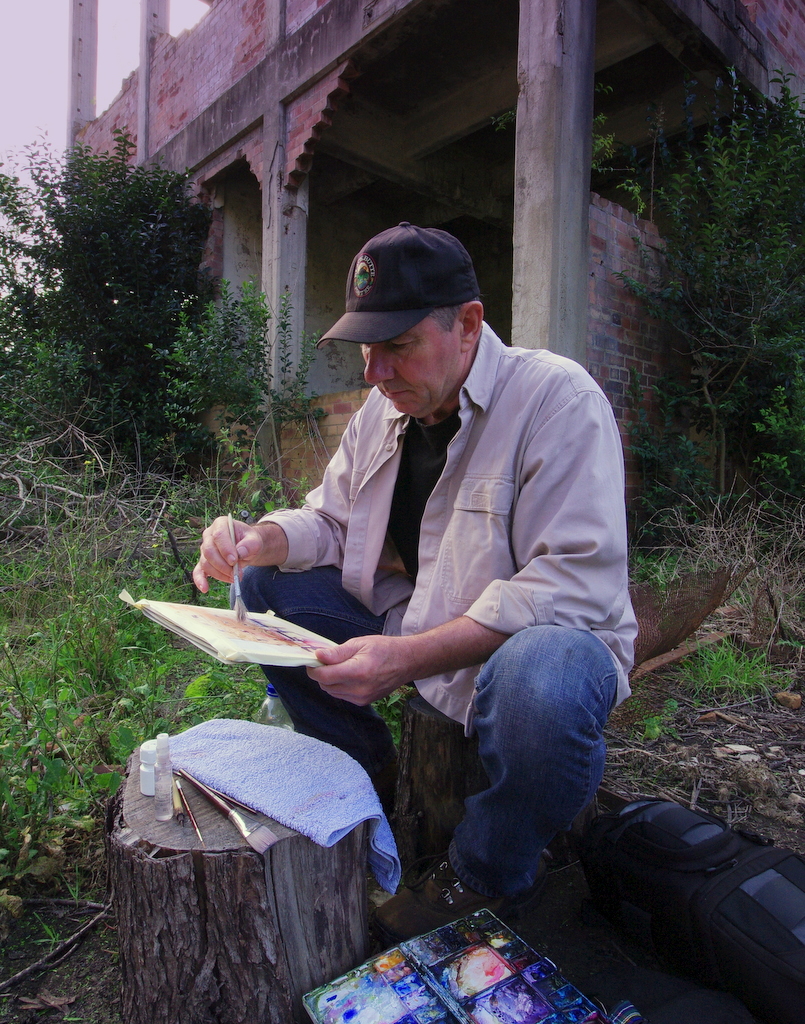
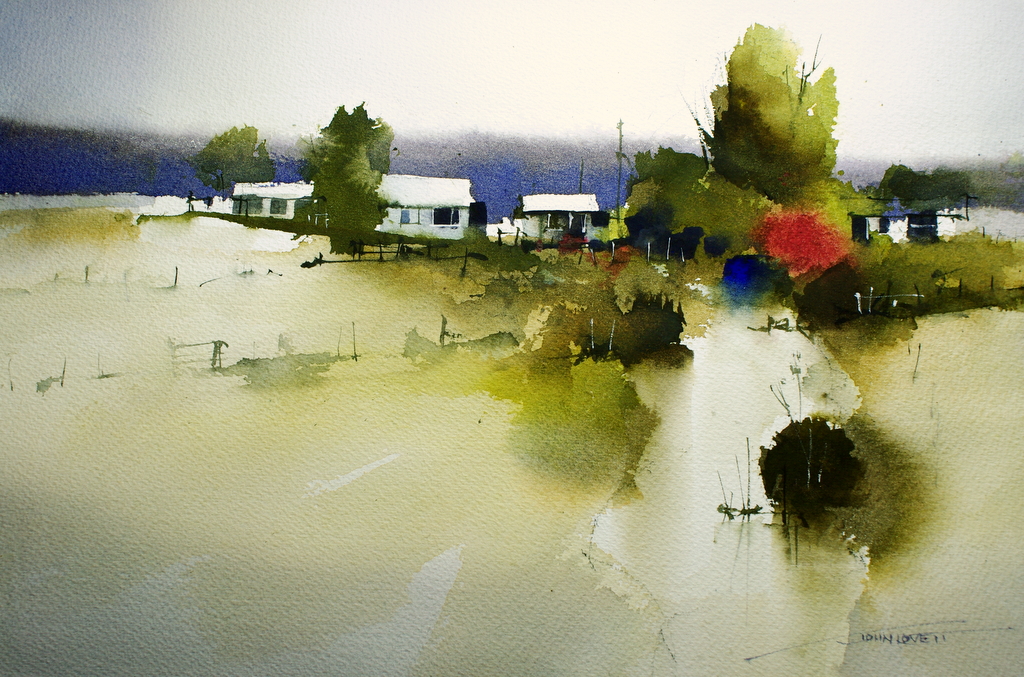
We started and finished each day in the dark. My intention was to do a few watercolor sketches, but there was so much interesting stuff to record , I only managed one painting of the old retorts.

I’m looking forward to getting back down to the area with Tony and exploring some more of these old ruins he has discovered.

Tony’s large format images can be seen on his website “A Brief Vision of Time”

STUDIO WORKSHOP

In April we had two one week workshops in my studio. It was a lot of fun. We had students from all over the place – Cairns, Melbourne, Sydney, The Sunshine Coast, even Hamilton Island.

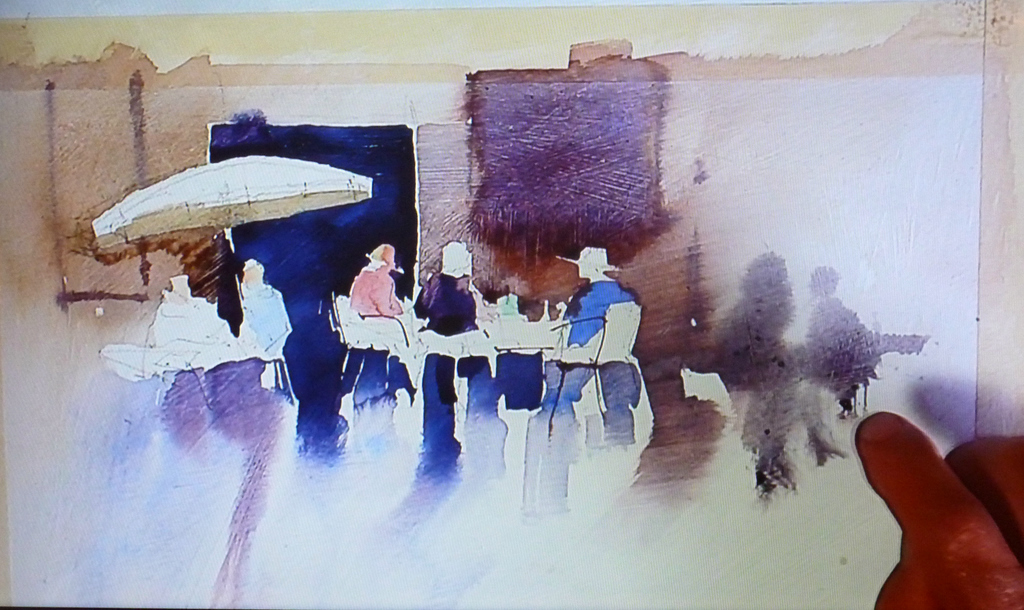
We worked hard and some great paintings were produced. It’s good to see students pick up momentum as the workshops progress. The first day or two are usually a little tentative, then, as every one relaxes and get to know one another, the paintings really start to improve. We all managed to do at least two 1/4 sheet paintings each day. I would demonstrate under a high definition camera hooked up to a large LCD screen, so everyone had a great view of what was happening. Being able to zoom right in on fine detail made it easy to pick up different techniques.

After the demo every one would work on their own paintings while I walked around giving advice and assistance where necessary.

We were spoiled with delicious cakes and slices courtesy of Dianne. I was just getting used to it then the workshop finished!

Hard at work


Landscape demo using French Ultramarine Blue, Phthalo Blue, Quinacridone Gold and Permanent Alizarin.

In this demo we took a complicated subject, simplified it then worked detail over the simplified shapes. The sky and awnings were painted with pale ultramarine gouache (mixed from white and ultramarine gouache).

A similar subject, this time we launched into it with a big 1/2 inch bristle brush to make the main Ultramarine shapes then built the rest of the painting around these marks.

Again, using a 1/2 inch bristle brush, we reduced this subject to a few simple shapes. A broad, direct approach delivers just enough information to tell the story without the clutter of unnecessary detail.

This demo was an experiment with negative shapes. The leaves were built up layer by layer, painting the successively darker backgrounds and leaving the leaf  shapes exposed.

.

.

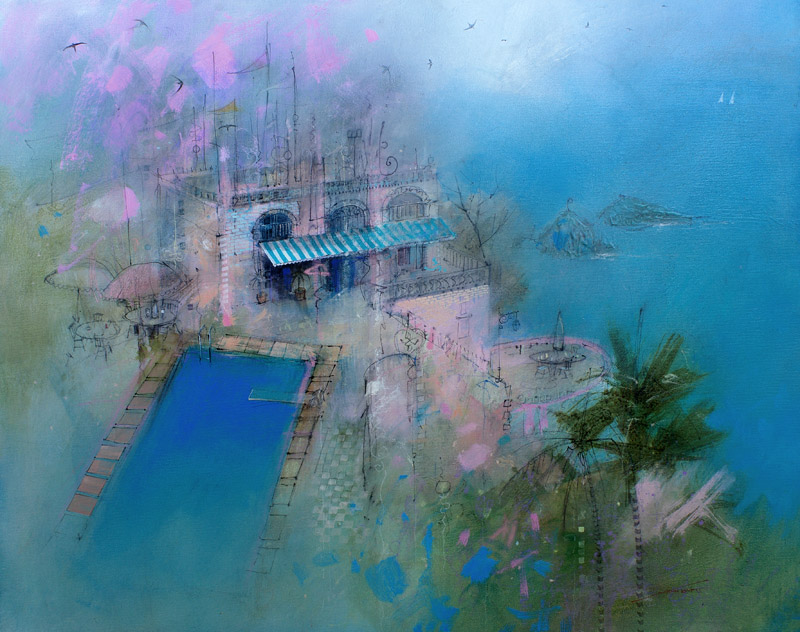
The three images below were an experiment using a watercolor Gesso on aluminium composite panel. The watercolor behaves in a completely different way to working on a paper surface. Pigment sits on the surface rather than soaking in. It is easily washed back or lifted off. I love the way the gesso brush strokes are exaggerated by the settling paint, and I also like the hard, dead flat surface to work on.

NZ CRUISING WORKSHOP

On Feb. 7, Artists Greg Allan and Amanda Hyatt joined me on board the Sun Princess to take 60 painters on a cruising workshop around New Zealand.

I had never been on a cruise ship before and could not believe the scale and efficiency of this floating giant. With 2000 guests and 900 staff, I imagined long cues for everything , but I’d never seen anything run so smoothly!

We sailed from Sydney to the Bay of Islands then hopped our way down the East Coast of New Zealand, stopping at all the major ports.


Anchored in the Bay of Islands, we were ferried ashore by the ships tenders


Our first day painting ashore was in the small town of Russell in the Bay Of Islands. A sunny day under a shady tree with cafes and bakeries close by – what luxury!


Painting on board was in the large, plastic wrapped disco with panoramic ocean views.


On board demos took students through a number of techniques we would use once ashore.


On board Hawkesbury River demo, showing how to simplify a complex subject.


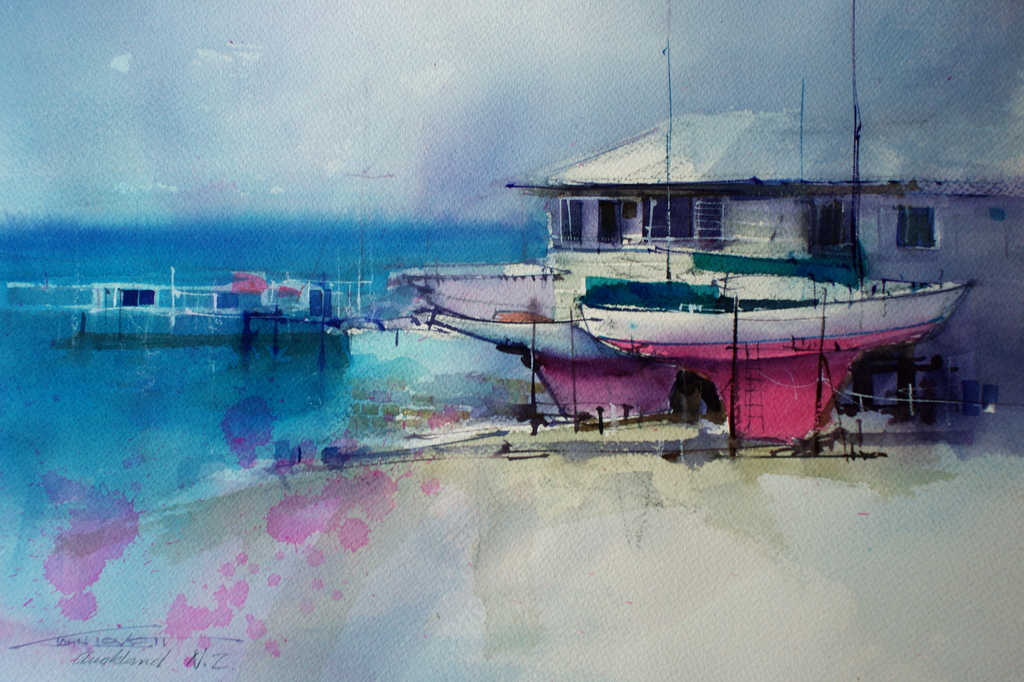
We found a busy boatyard on Auckland Harbor and spent a day painting there. They say Auckland has more boats per head of population than any other city in the world.


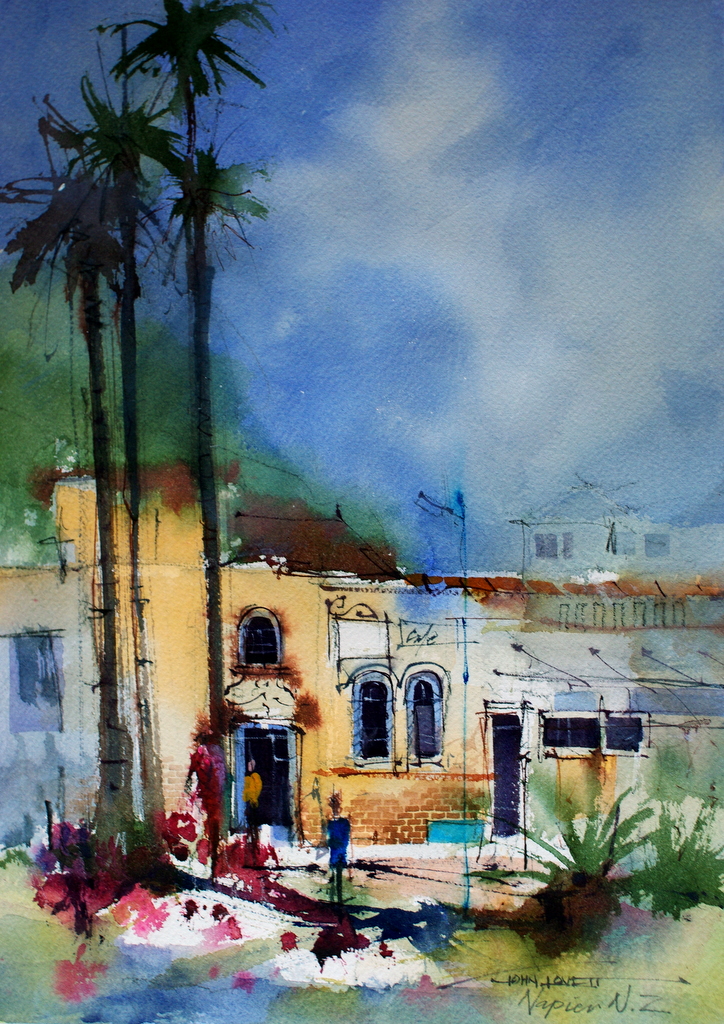
Napier was an interesting town – destroyed by earthquake in 1931 then completely rebuilt in the Art Deco style. It has been proudly maintained in that style ever since

We spent an afternoon painting in the central park, the interesting architecture and tall palms making great subjects

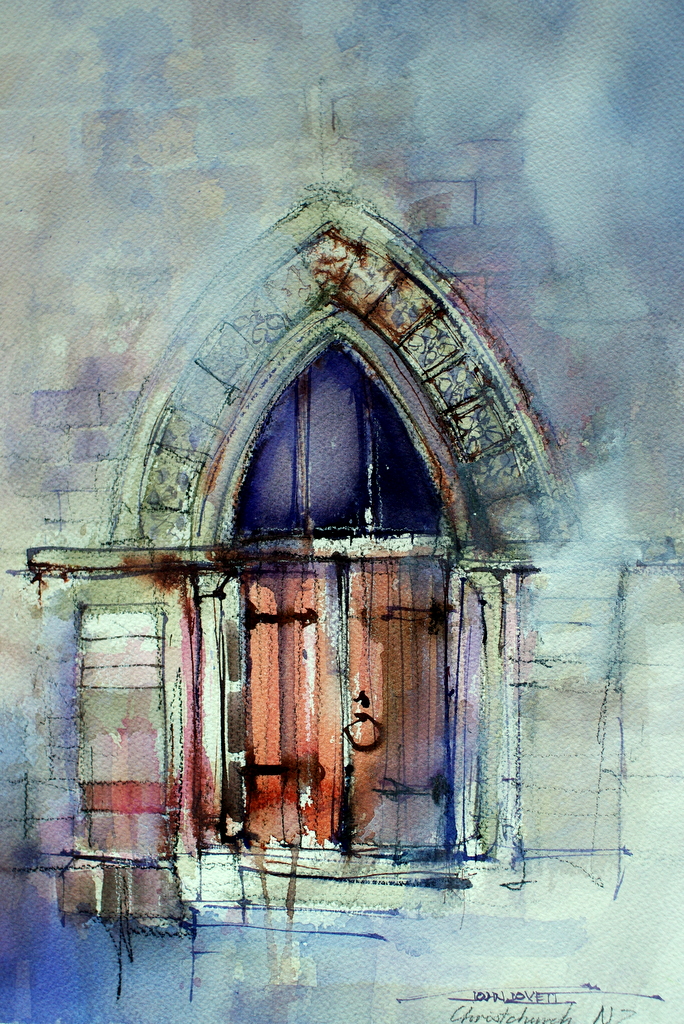
A warm sunny day greeted us in the beautiful city of Christchurch. This is the side door to Christchurch cathedral. It is hard to believe, just a week later the city was hit by a devastating earthquake. The cathedral spire crashing to the ground where we painted.


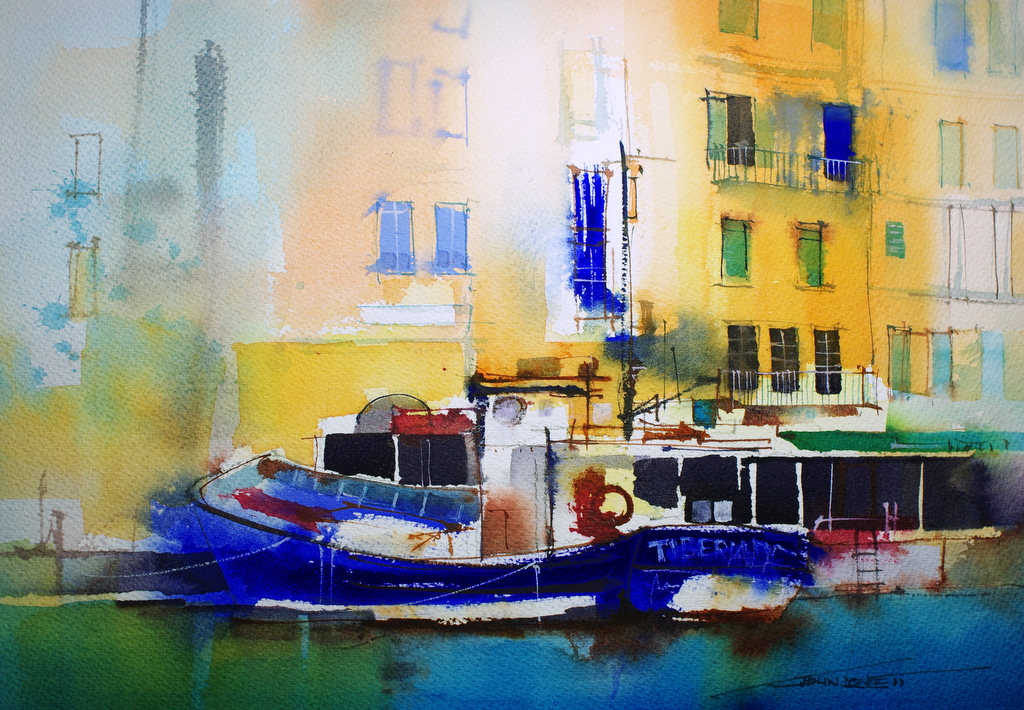
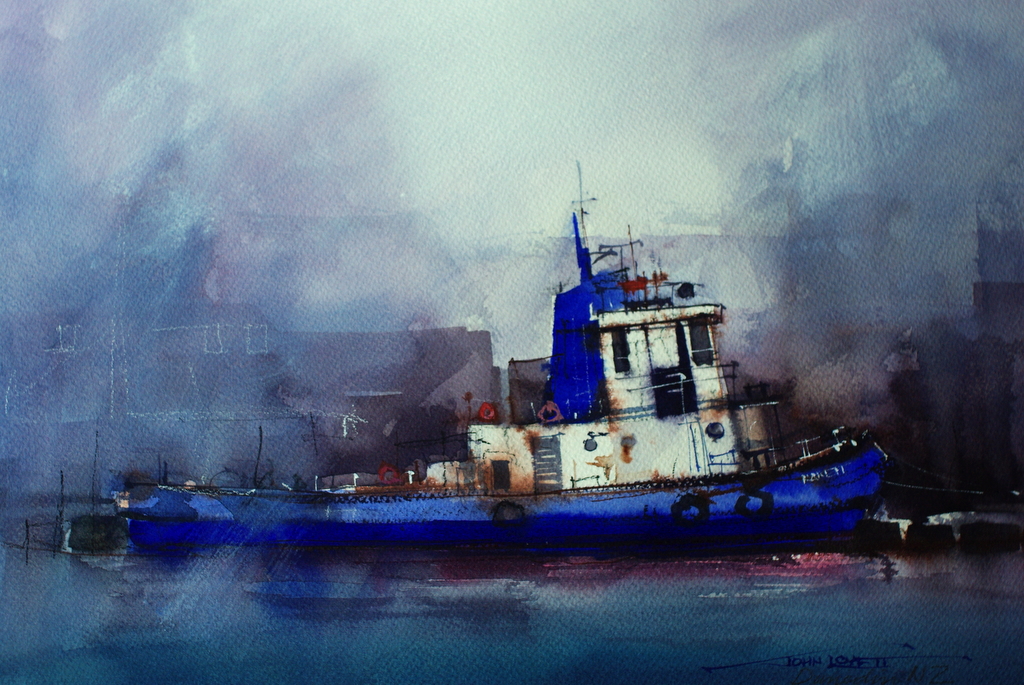
One of the few bad weather days on the workshop. Dunedin was overcast, cold and windy, but it somehow added to the character of this old tug and the jetty below.

Fiordland on the southern tip of New Zealand was spectacular in the early morning mist. Later in the day we sailed into Milford Sound. The clouds had lifted and the sun was shining. It looked amazing, but I cant help wondering what it would have looked like through mist and rain. Some things need lousy weather to look their best.

Milford Sound

For our final demo Greg, Amanda and I worked simultaneously on this large, three sheet painting. The finished work was auctioned for charity and the winning bidder kindly donated it to be hung on board the Sun Princess.

Life on board a cruise ship is pretty luxurious, good food, amazing service, lots of entertainment, bars and restaurants everywhere. Would I do another cruising workshop? You bet!

TALL TALES

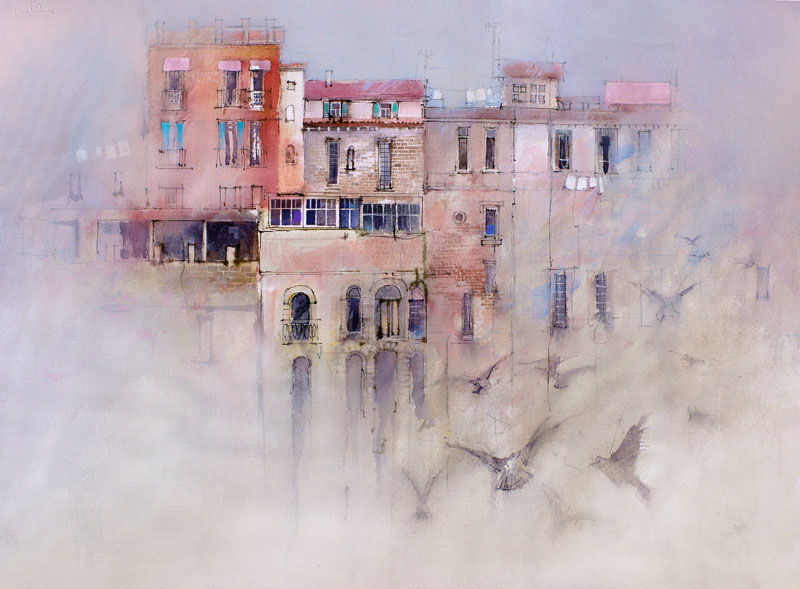
One of the great things about the International Artist workshops is the chance to travel to interesting places and accumulate information and ideas for exhibitions. Recent workshops in Italy and Sicily provided an enormous amount of inspiring ideas.
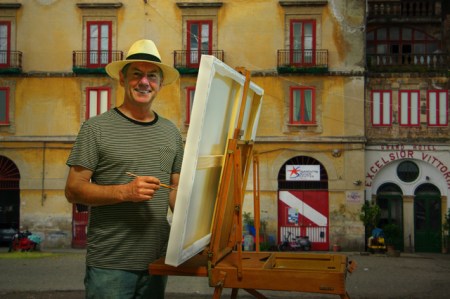
After gathering and sorting information, putting together a collection of paintings for an exhibition is a lot of hard work. It becomes an obsession for four or five months – sometimes frustrating and annoying, other times, satisfying and inspiring.
I like to have a theme or unifying element to an exhibition. It helps with the creation of the work and presents a cohesive and more engaging package to the viewer.
My current exhibition, “Tall Tales” is based on the loose interpretation of fascinating incidents, customs and beliefs witnessed in Italy and Sicily. Rather than try and find out the truth, I relied on my own interpretation of what I experienced. Not speaking the language, or understanding many of the local customs allowed for a much freer interpretation. The truth is fine for history books and anthropological studies, but for me, tall tales make much better paintings.

Tall Tales opens at Moulton Galleries 777 Military Rd Mosman, Sydney 6:00pm 29th October and runs for one month.

Here are a few of the paintings from Tall Tales
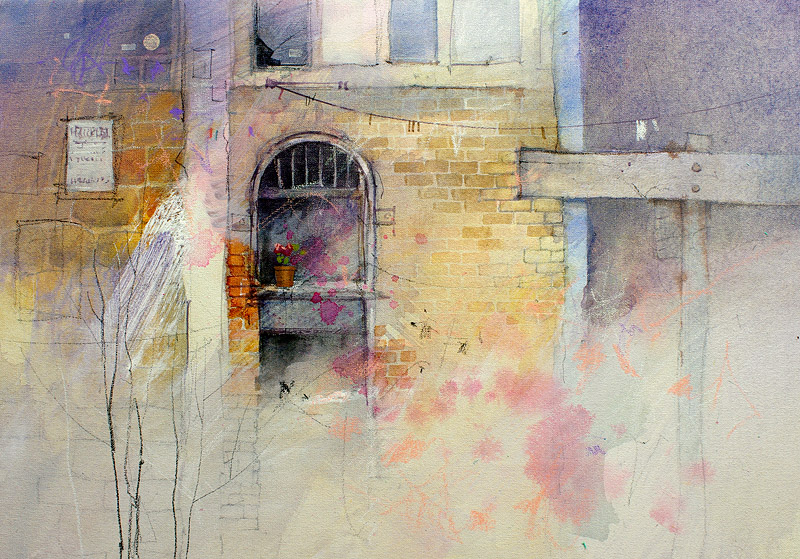
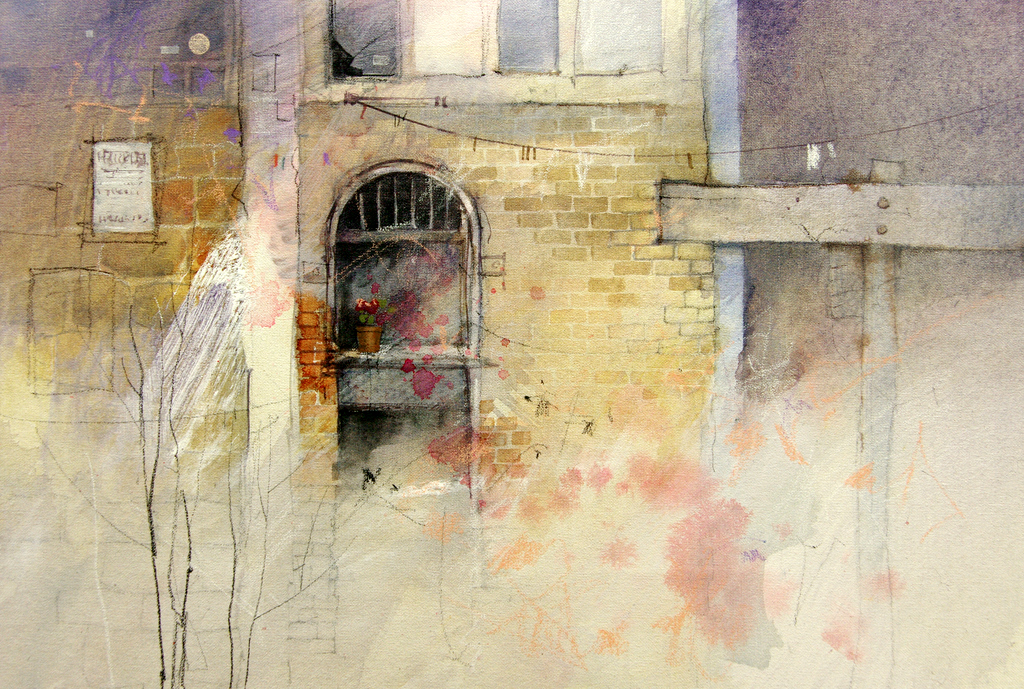
“Palermo Geraniums”
On a dusty window sill in the rundown center of Palermo, a small pot of geraniums are lovingly watered each day as the city slowly crumbles around them.

“Lovers Beach”
A small corner of Southern Italy where the day to day life of traditional fishermen mix with the opulent lifestyle of a five star Hotel. Walking along the beach before sunrise reveals fresh graffiti, religious icons and a discarded pair of red stilettos – all the ingredients for another tall tale.

“Dreams of The Open Sea”

(480×530 watercolor on Arches 300gsm paper)  In a tiny sea side village a Sicilian fisherman lovingly coaxes life back into a small wooden boat.

“Rain birds Whirl”
The spiraling arcs of rain birds echo the ornate flourishes of opulent Italian pre war architecture.
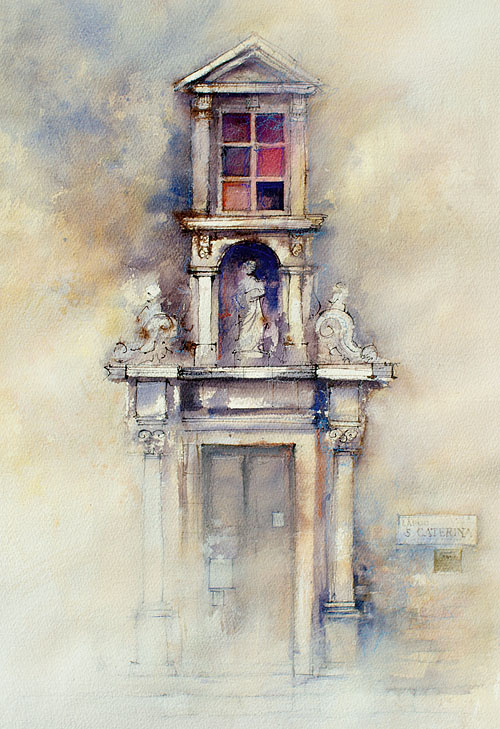
“Notes On a Door”

The Sicilian village of Taormina has some beautiful old buildings. This doorway to an ancient church was pinned with hand written notes, all scribbled in Italian. I could have deciphered them with the phrase book, but that may have ruined the tale that they were the guilty confessions of many strayed parishioners.

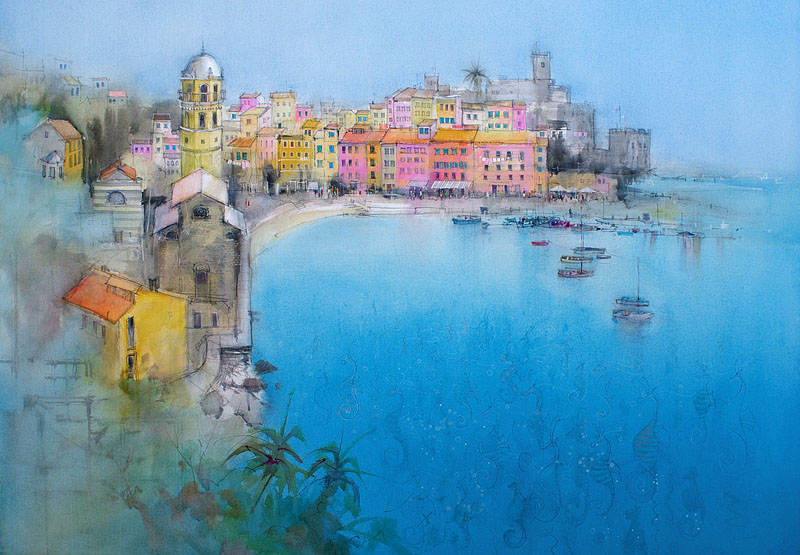
“Creatures in the Bay”

(900×1200 mixed media on watercolor canvas) The quaint and picturesque villages of the Cinque Terre attract crowds of magnificently decorated visitors.
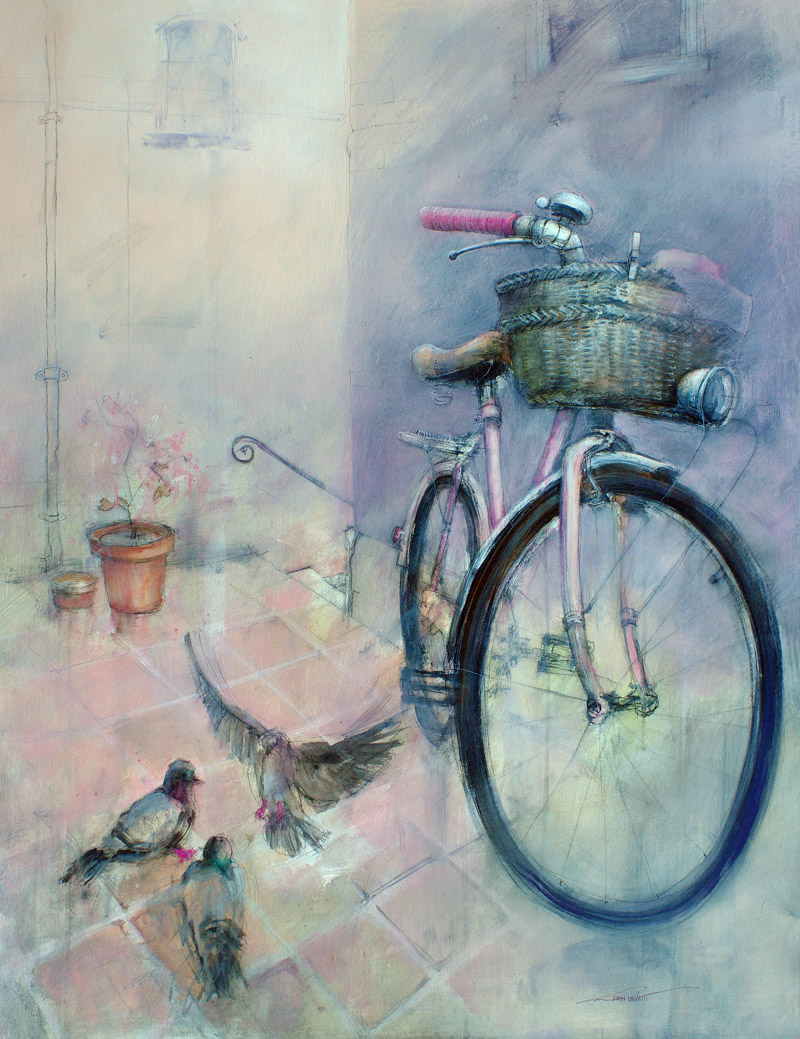
“Under Gina’s Window”
Life goes on in Palermo, a city whose colourful history doesn’t seem to affect the daily life of its inhabitants. Pigeons are fed and an unlocked bike defies the history of theft, murder and corruption.

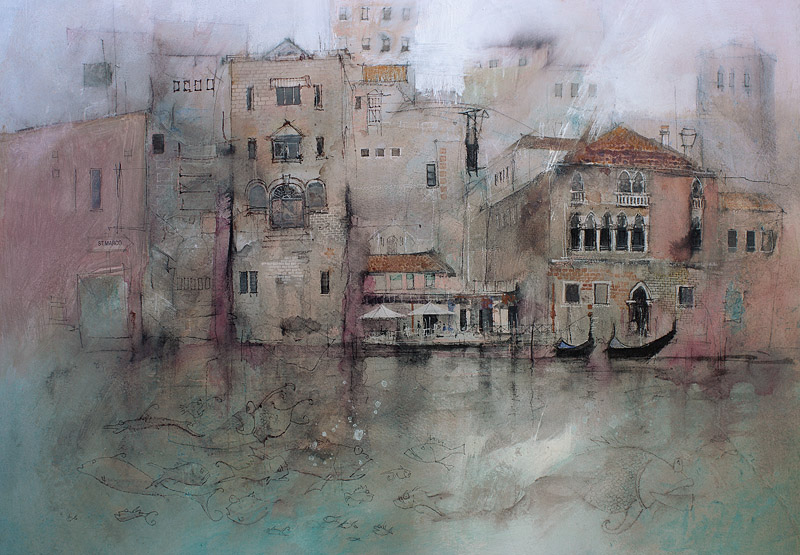
“Canal Life”

(530×760 mixed media on 600gsm paper) Tiny glimpses of life in the milky backwaters of Venice. This painting was done on heavy paper and mounted down on a gesso primed board using acrylic medium. It was finished with a satin acrylic varnish

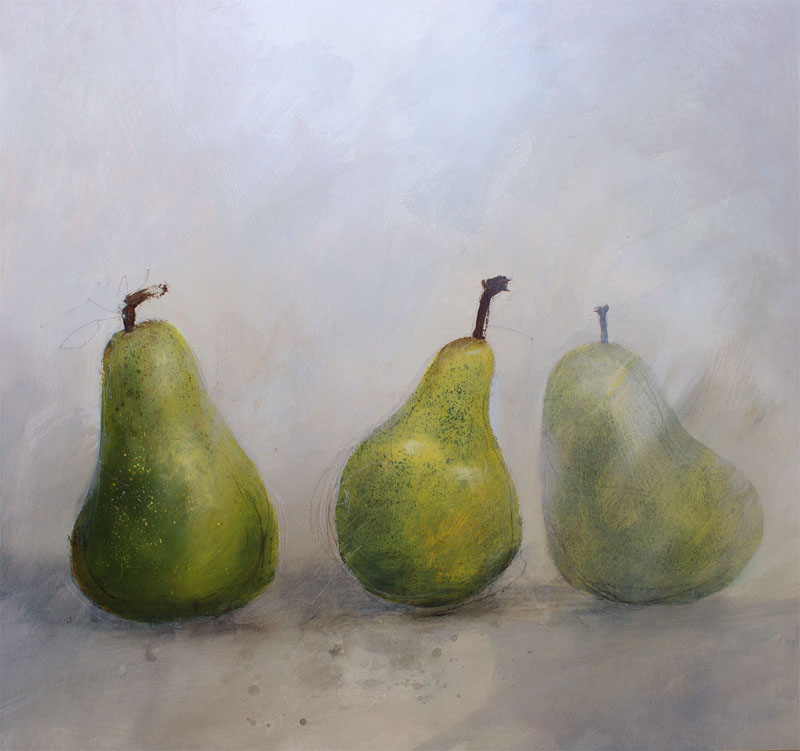
“Stolen Fruit”

(590×630 mixed media on board) The risk of jumping the orchard fence makes even the greenest pears taste good.

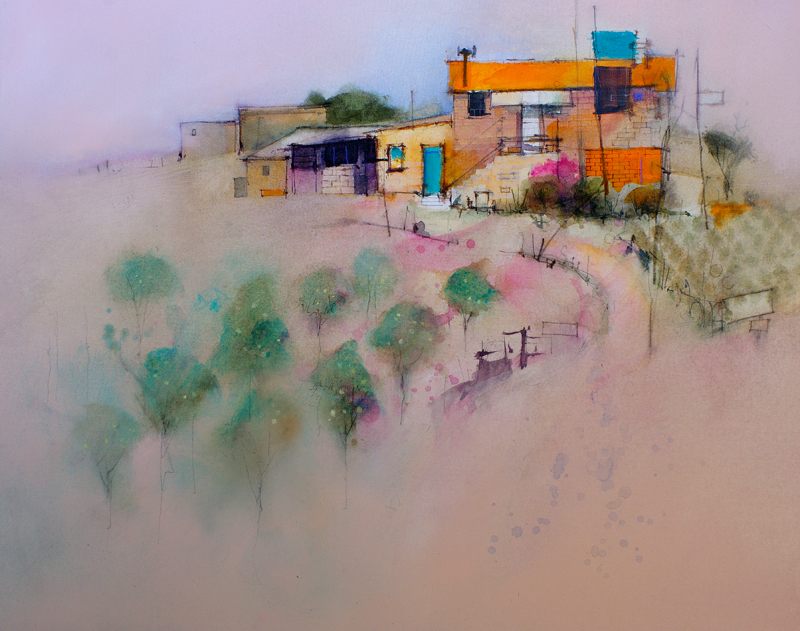
“On a Dry Sicilian Hill”

(600×760 Watercolor and mixed media on watercolor canvas) A Sicilian farmer coaxes lemons, olives and cabbages from a dry dusty hillside.

“Pigeons in a square”

(530×760 watercolor, ink, charcoal and Gesso on textured paper) A flock of pigeons cut spiraling arcs against the formal, geometric facades of ancient buildings.

If you happen to be in Sydney on Friday 29 October 2010, drop in to the Moulton Gallery (777 Military Rd, Mosman)  for a glass of wine and a chat.

WATERCOLOR CANVAS

While we were in Italy one of the artists in our group, Lety Herrera, from Mexico, asked if I had ever tried Watercolor Canvas. I hadn’t, and she suggested I should, so when I arrived home I picked up a pad of small sheets. I was amazed how good it was to work on and how well the washes reacted to the primed surface. I did a couple of small paintings then ordered a roll of the canvas.

It needs to be stretched or mounted securely to a board before you paint on it or it will buckle and twist badly, making it impossible to work on. The paint tends to sit more on the surface than it does on paper, and can easily be washed back to clean canvas. This may sound like a problem, but you soon get use to gently working over underlying washes so as not to disturb them. Eventually, the ability to easily lift off pigment becomes an advantage, allowing tones to be adjusted and whites to be retrieved at any stage.

You may wonder why work on watercolor canvas when there are so many excellent watercolor papers. For me, the big advantage is not having to place the finished painting under glass plus the option to work on a larger surface. Once finished the paintings need to be treated with a suitable varnish.

Palermo Geraniums

.

.

Sorrento Breeze –  Marina Grande

I still love the feeling of painting on watercolor paper but this watercolor canvas offers a new way of working and different way to present your work. I see it as an extension to the traditional format of watercolor on paper. Acrylic, ink and pastel can also be incorporated into these paintings.

Fredrix Watercolor canvas is acid free, 100% cotton canvas, primed with a patent pending, specially formulated Gesso for all water based paints. It is available in pads, boards and in a 58″x 3 yard roll.

PAINT RECYCLING

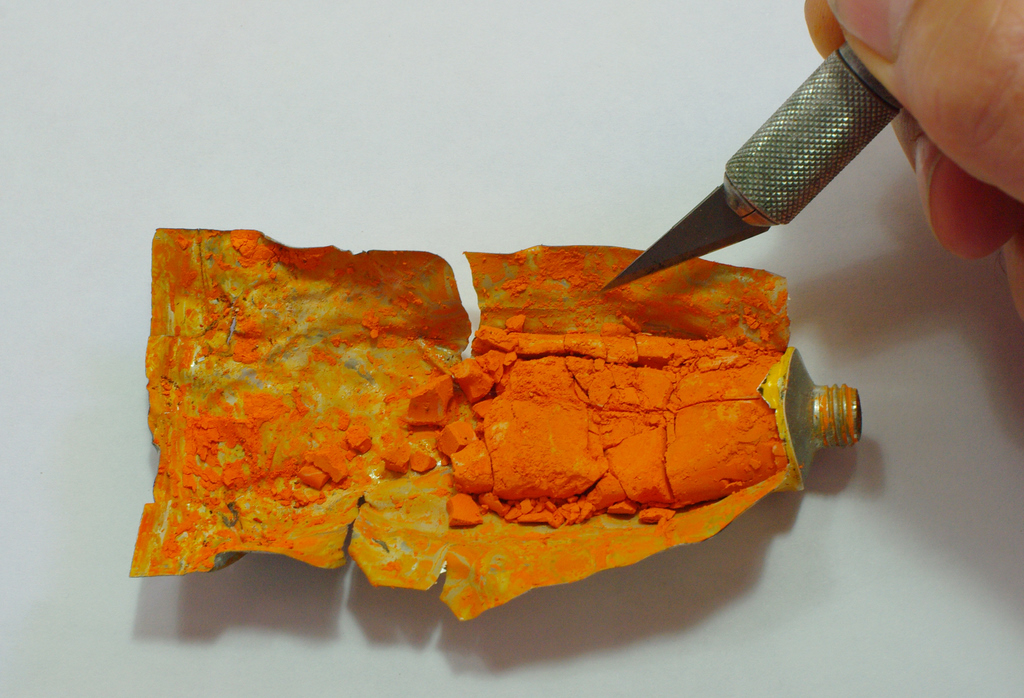
Do you have a collection of dried up paint tubes you just can’t bring yourself to throwing out?

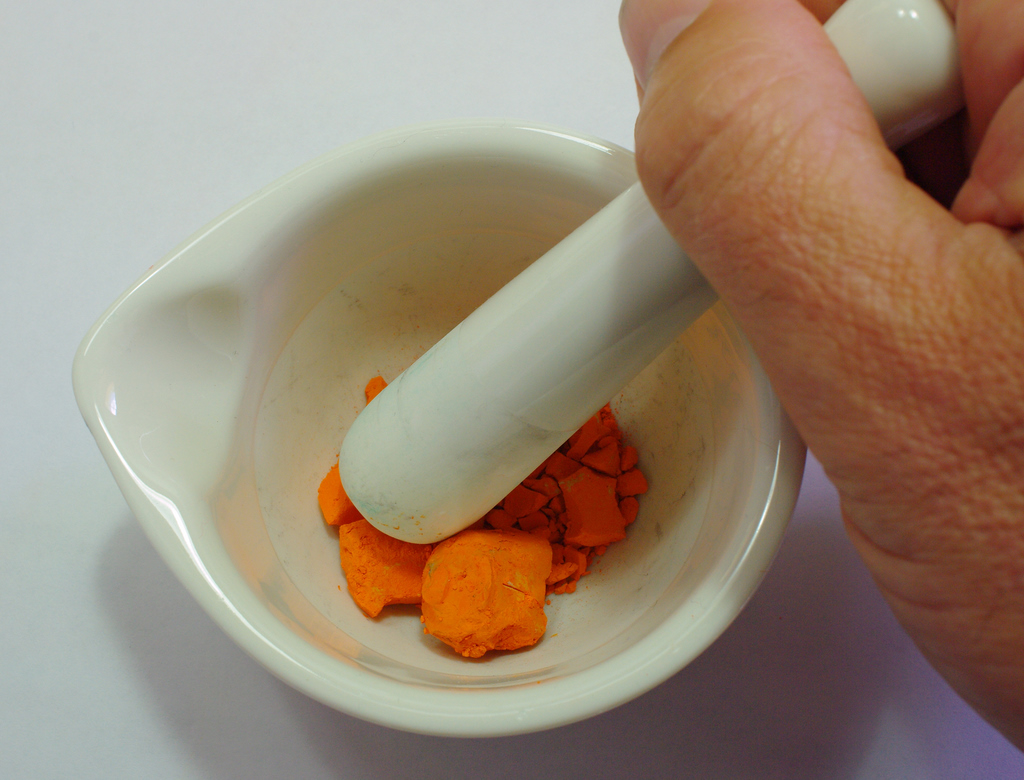
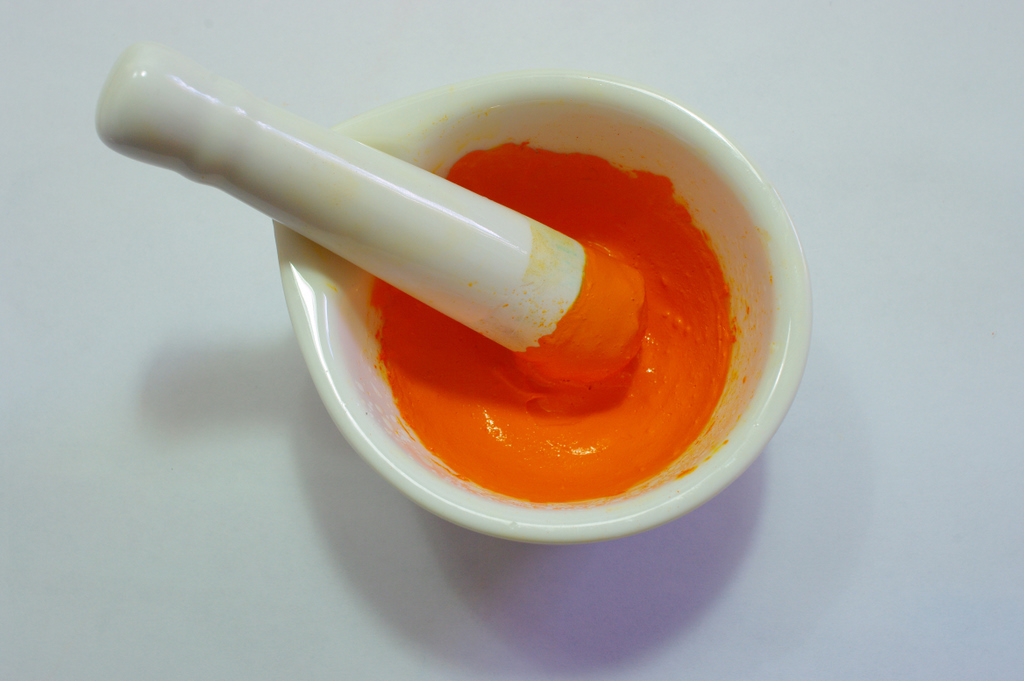
Here is a way to bring the paint back to life.  I found a small pestle and mortar hidden in the back of a kitchen cupboard. It turned out to be the perfect device for grinding the contents of all those dried out tubes into a fine powder, ready to be brought back to life.

The first thing to do is cut open the tube and empty the dry lumps of pigment into the motar

Next step is to grind them to a fine powder. The pigment sticks to the pestle, so a metal palette knife is handy to scrape and loosen the pigment.
Once the pigment is a fine even powder, slowly stir in some water. Just enough to make a thick, creamy consistency. Keep grinding the paste for a few minutes to make sure there are no small, unbroken lumps left.

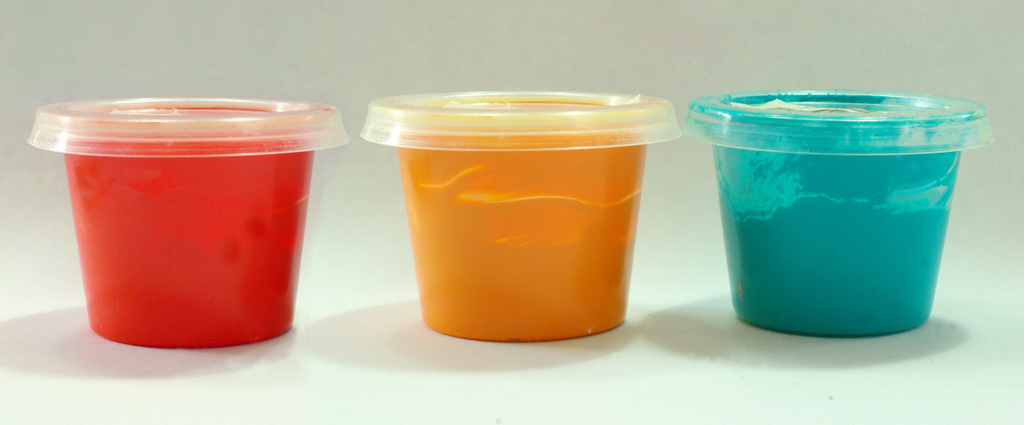
The final step is to scoop the recycled paint into a container. These little plastic sauce containers come from the local Thai restaurant – a couple of dollars for a plastic bag full. A piece of masking tape with details identifying the brand and color is a good idea before you throw away the empty tube.

WARNING

Some pigments contain heavy metals such as Cobalt and Cadmium (check the warnings on the tube). Be careful not to breathe in or swallow the dust off these. Wear a suitable mask if in doubt.

.

COLOR TEST

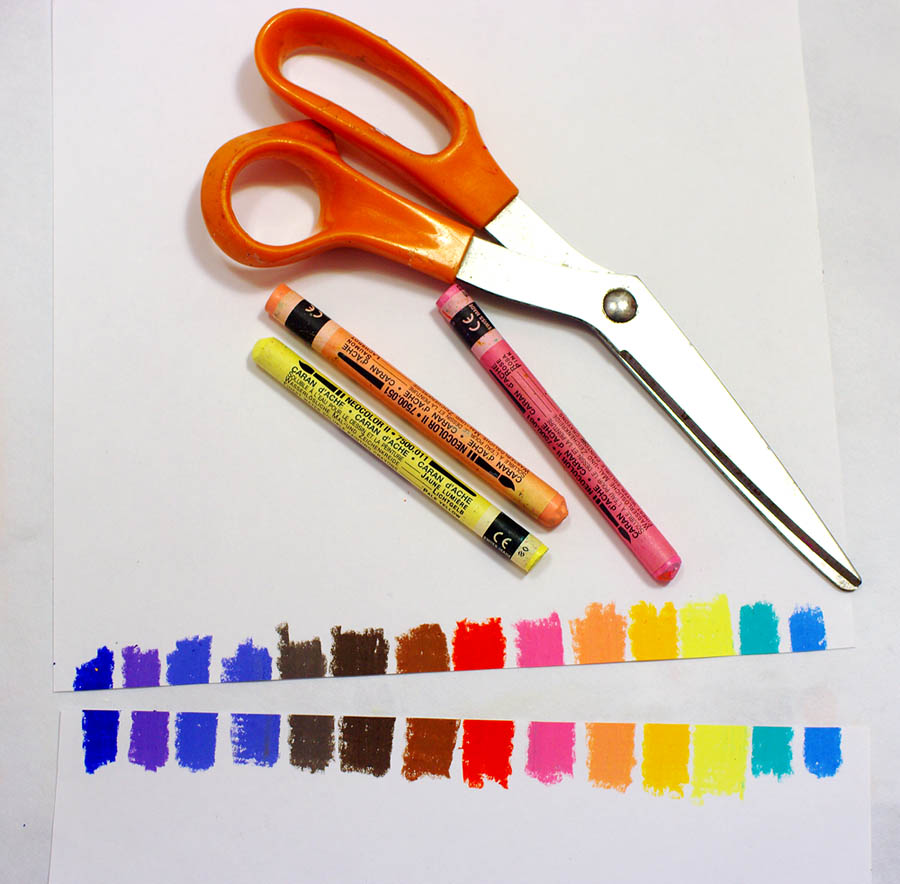
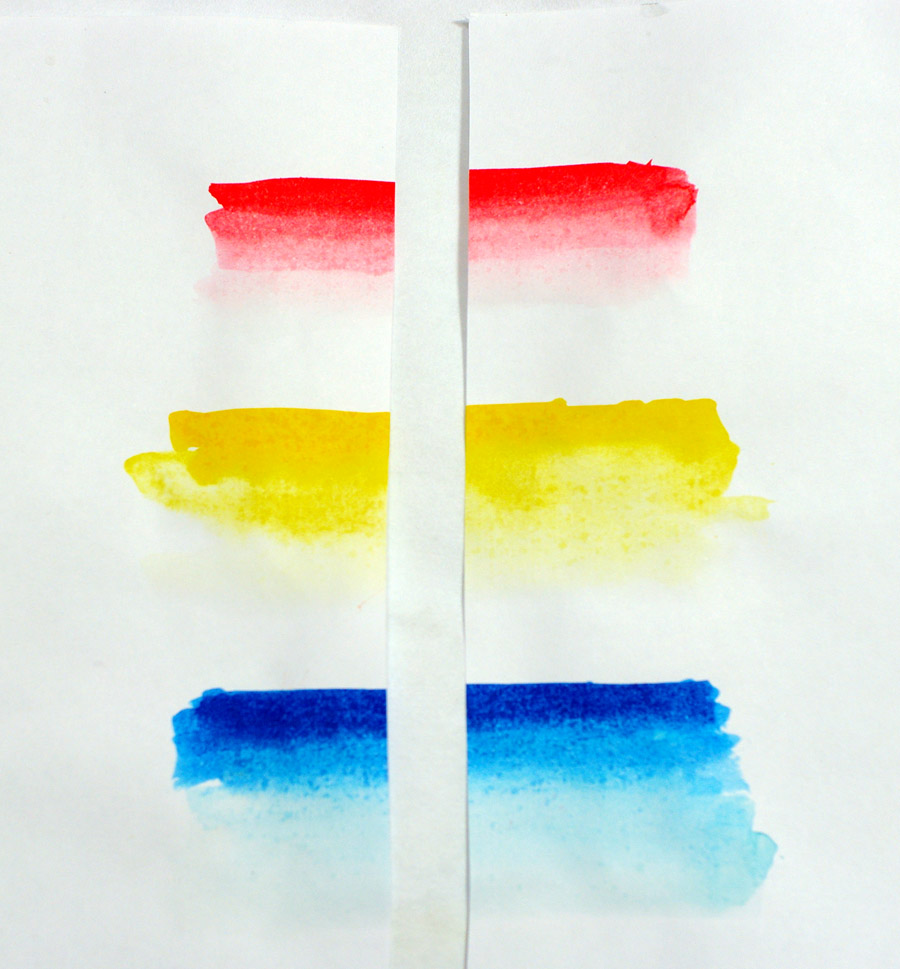
After the excitement of playing with a pile of new art materials dies down, the important job of testing for light fastness must be done. It is a simple task, but takes a couple of months to yield a result. The test involves putting a mark of all the new materials onto a piece of paper. Cutting the paper so that the marks are cut in half, then placing one half behind glass, on a window sill or ledge exposed to the sun and the other half in a book or dark draw.  After 2 – 3 months compare the two halves and don’t use any of the products that show signs of fading or color shift.

With the ink marks, a graded dilution with clean water will also show the permanence of thin washes.

Many manufacturers provide light-fastness and permanence ratings on their products, but, for the small effort involved, it is worthwhile checking for yourself.