POMPEI RELICS

Wandering through the ruins of Pompei is a weird experience. The place feels like a recently evacuated settlement rather than a 2000 year old ruin. The major roads and alleyways are all well intact and many of the buildings still have walls and roofs in place. Spacious villas with internal court yards, mosaic floors and large painted frescos could be re-inhabited today. There are the remnants of many stores lining the main roads, large amphitheaters with food and drink venders shops outside, a public forum at the junction of the main roads, even a public toilet and brothel have been uncovered. It gives the impression that life really hasn’t changed much in 2000 years.

Oil, wine and honey pots

Columns were built of small scalloped bricks then rendered with plaster and painted to took like marble.

Deep ruts from wagon wheels suggest that rubber tyres were not popular 2000 years ago

Villas owned by the wealthy inhabitants were impressive structures.
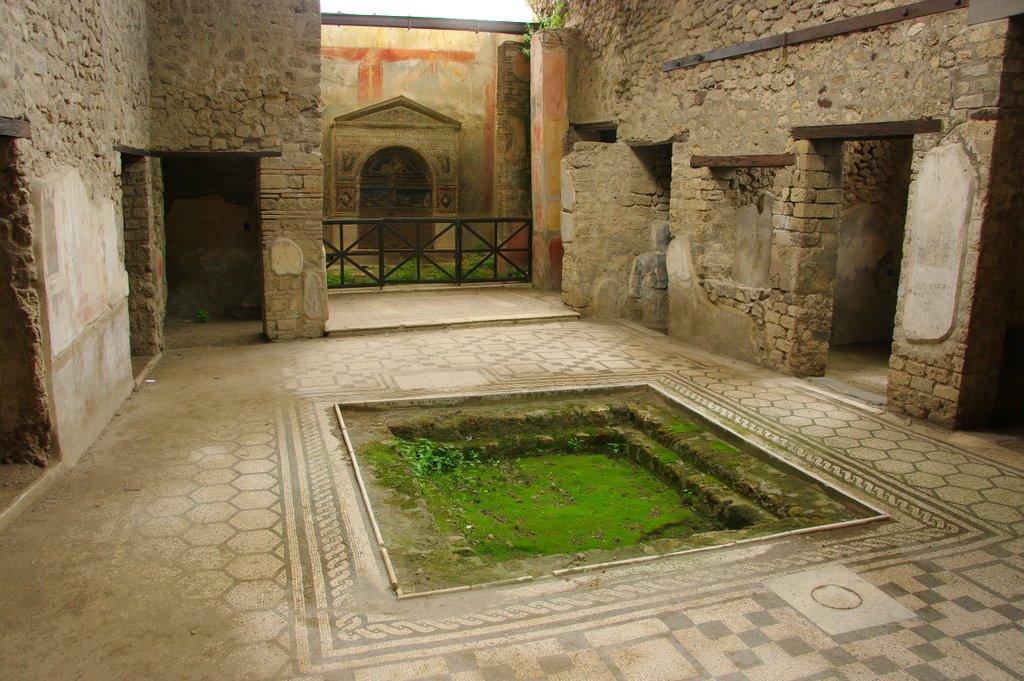
Mosaic internal courtyard
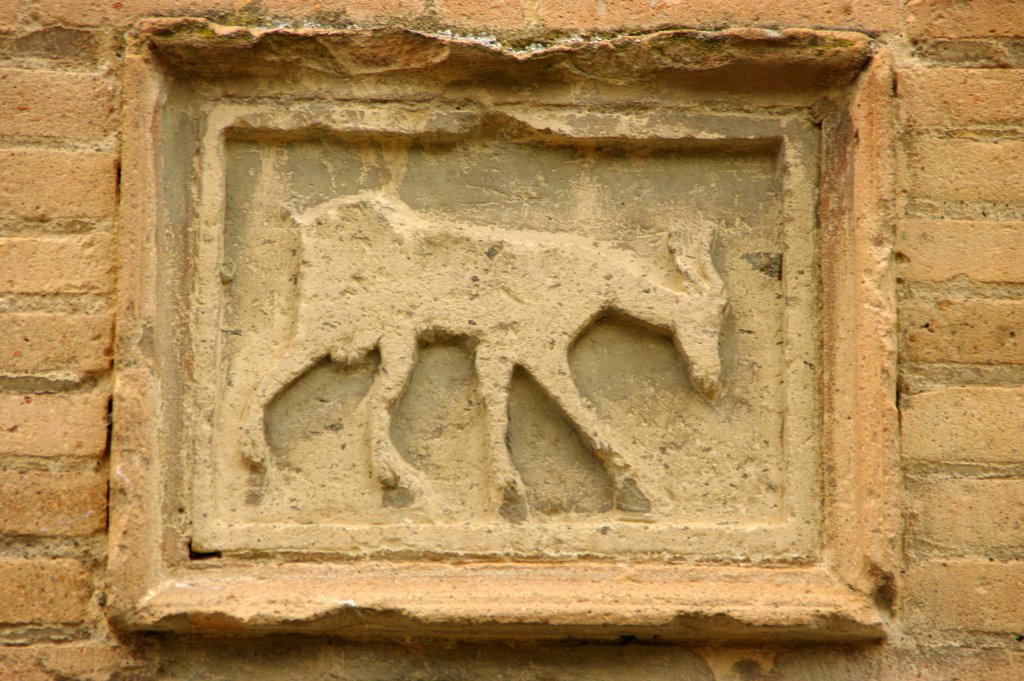
Carved sign on street corner

Large storage vessels in what was once a food store

Decorated alcove in a Villa

Before the compacted ash was removed, plaster was pumped into the cavities left by decomposed flesh. This encased the bone and made an accurate model of the unfortunate victim.

Ancient Roman bobcat

Interesting brick doorway locked into a stone wall.

Marble counter top in food vendor’s store.

Defiant columns in the shadow of Mt Vesuvius.
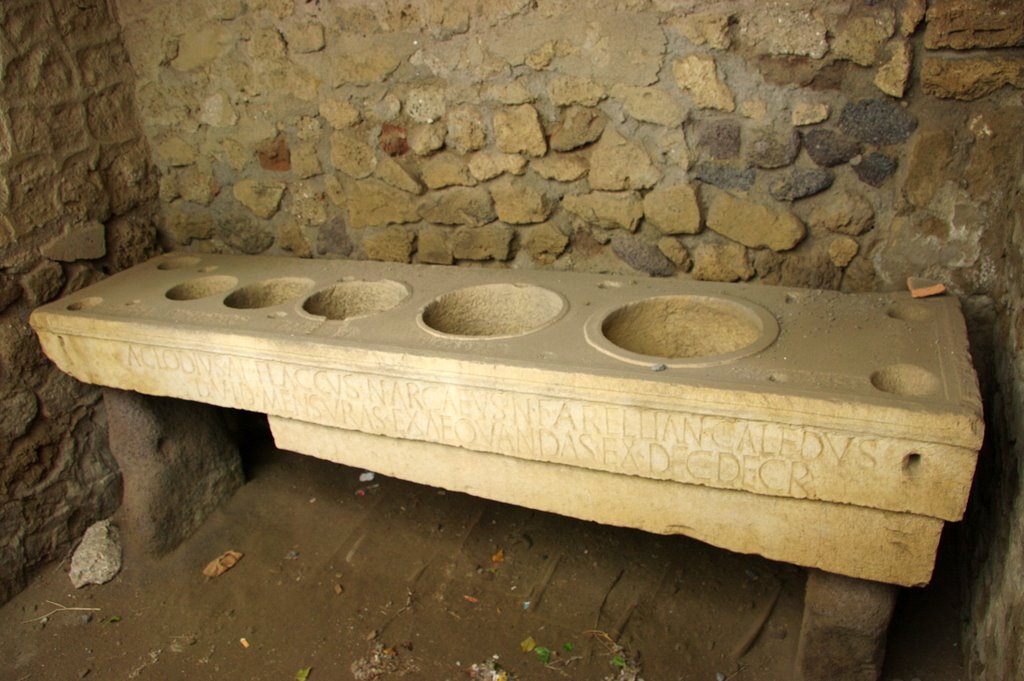
Public measuring device in the forum. Grain could be measured in the various sized holes to make sure merchants weren’t  cheating the public.

MARINA GRANDE

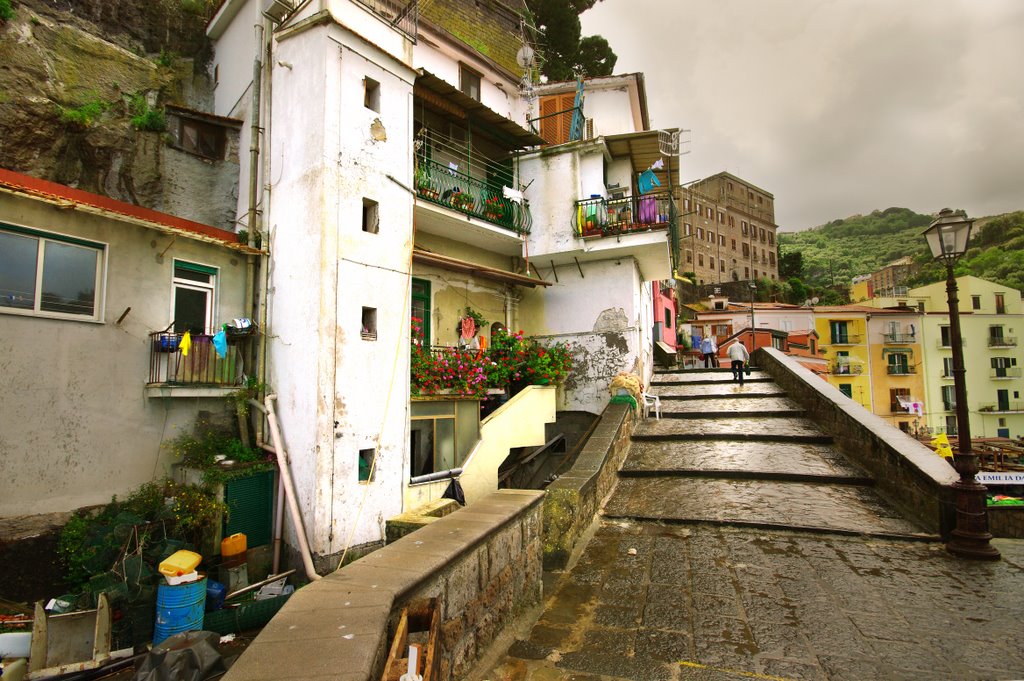
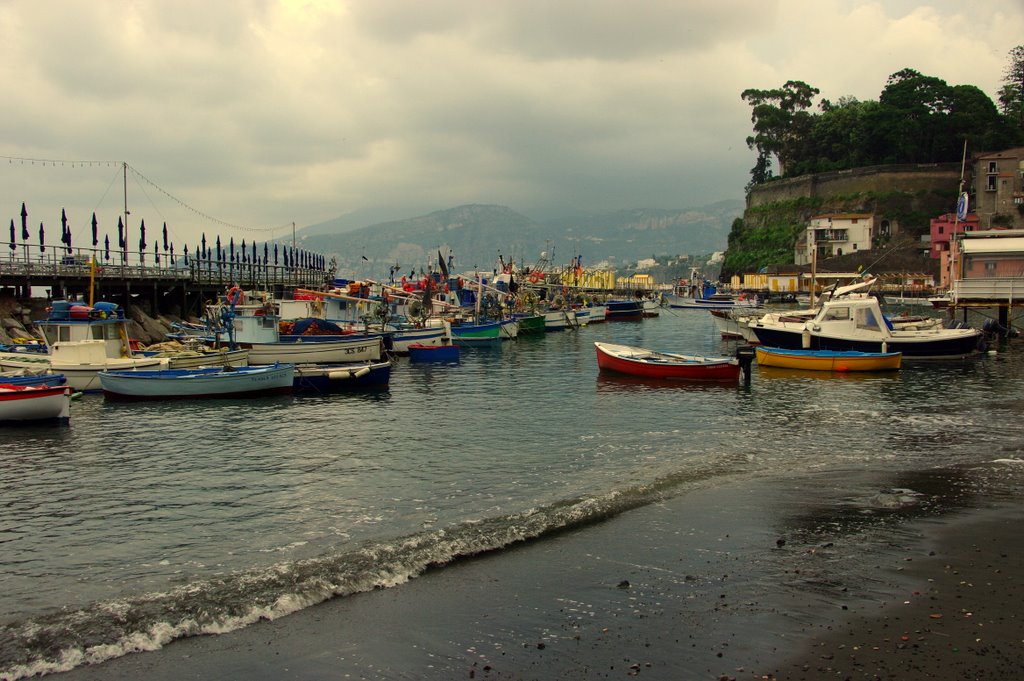
The last part of the town of Sorrento, towards the end of the Sorrento Peninsular is Marina Grande. It is the fishing village of Sorrento, tucked into it’s own little bay and protected by headlands on either side. Rock walls and pontoons shelter the harbour from the swell of the Mediterranean and provide a protected mooring for a fleet of small fishing boats.

Access from the main town of Sorrento is via a winding path that tunnels through the headland. You can also catch the bus. It follows the ridge behind the town then drops and twists to the marina – not a trip for the faint hearted, but then, any bus trip around Sorrento delivers the adrenaline equivalent to a roller coaster ride.

A beach of  black volcanic sand is dotted with colored fishing boats and set against a backdrop of old painted buildings.

This part of town is less inhabited by wandering tourists and more the home of fishermen and local villagers

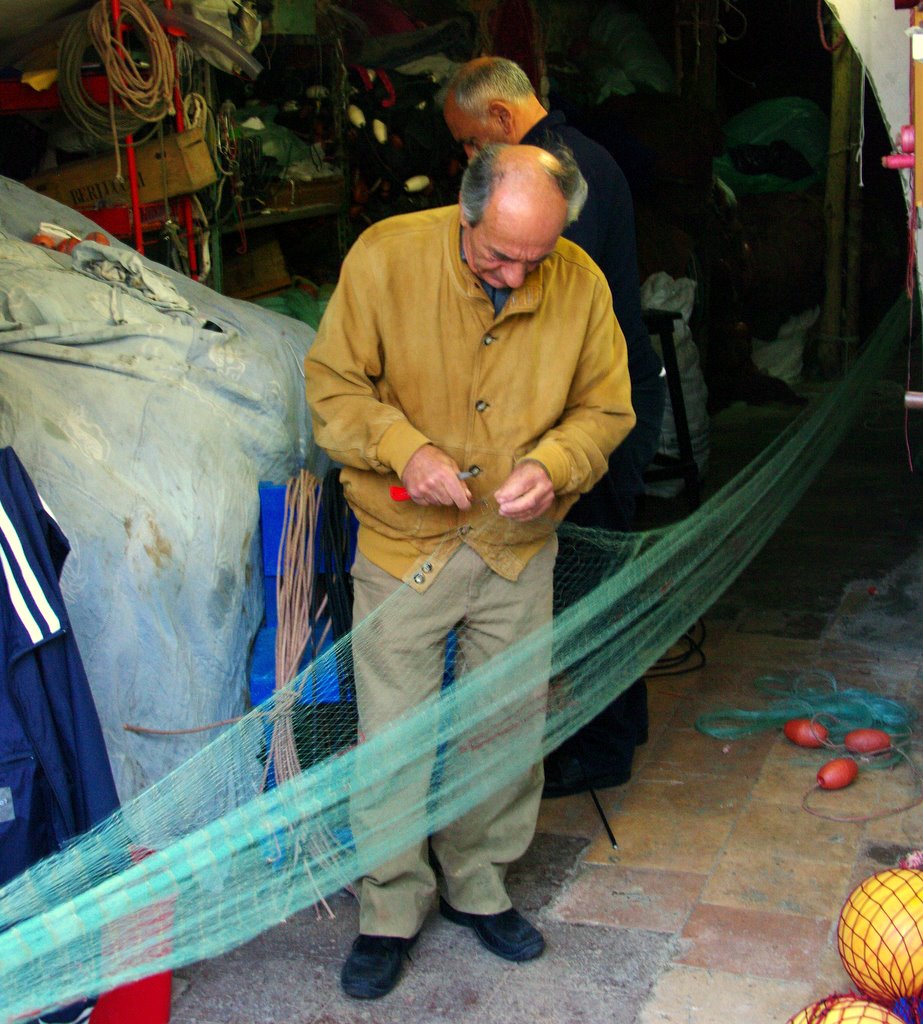
Many of the houses are owned by fishermen and piles of nets floats and ropes fill the alleyways.

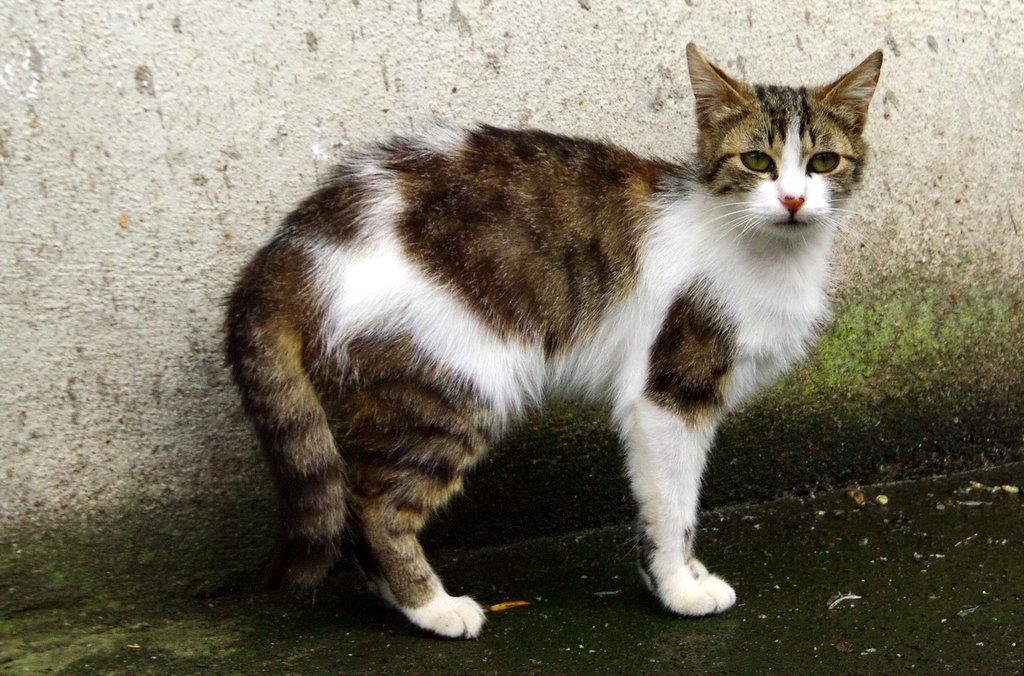
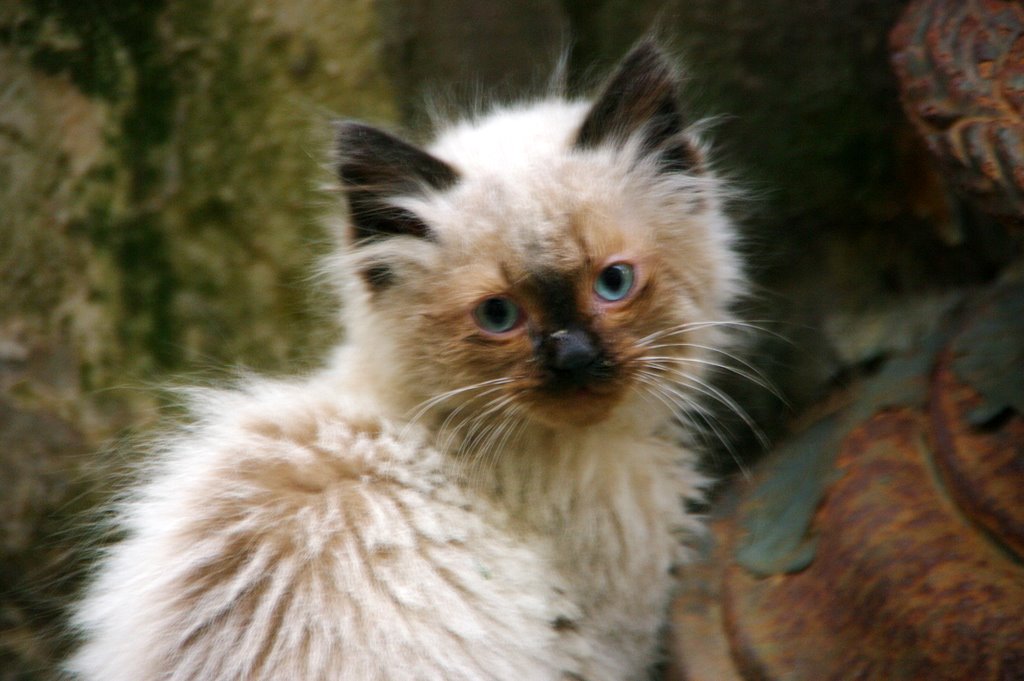
Of course, the cats of Marina Grande are all well fed and healthy

Most of the Sorrento fleet are still the old, brightly painted wooden boats that have been used for hundreds of years.

On the waterfront are a couple of restaurants.  This was the view from our table where we enjoyed a fantastic lunch of fresh sardines and salad

DOWNTOWN SORRENTO

The down town area of Sorrento is the old part of town made up of narrow winding alleys and streets just wide enough for a small, thin car.

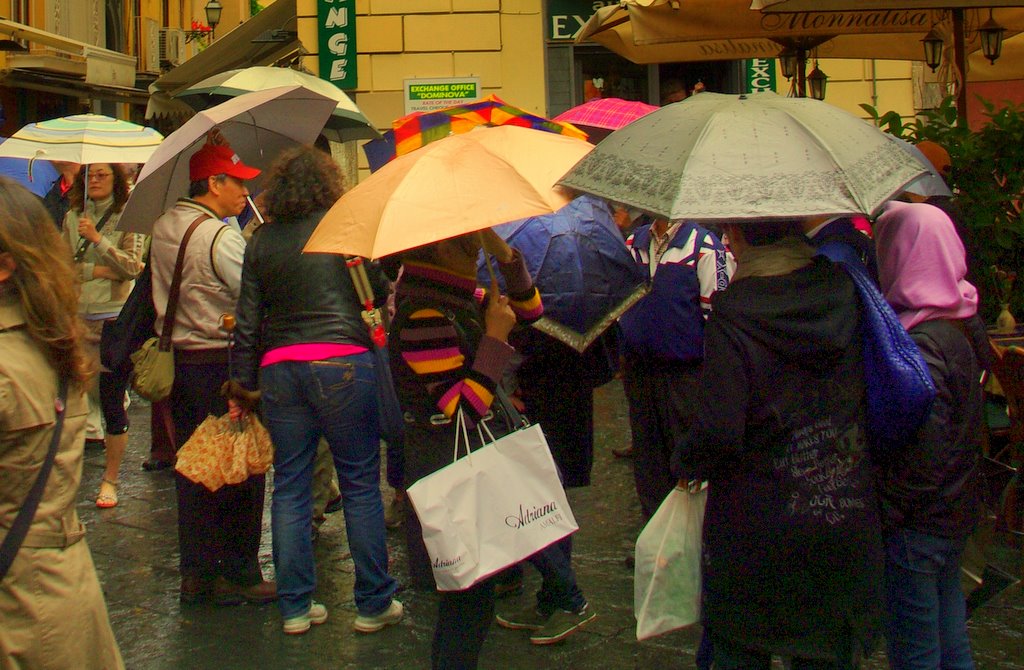
Cruise ships stop off in the port so the shops and markets in the down town area are always crowded and hectic.

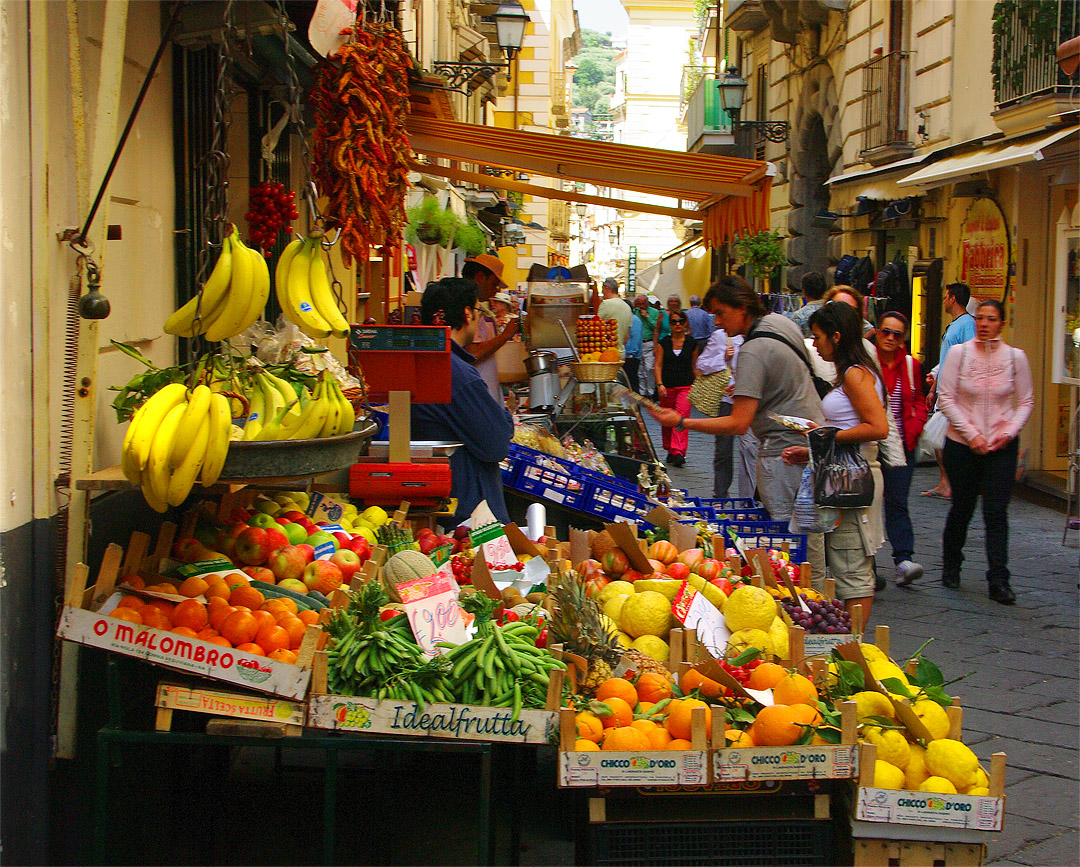
Cheap leather goods, inlaid timber products and all sorts of fresh food are available. There are bars and cafes everywhere and competition for patronage is fierce. There are three cafes within a hundred meters of one another all offering the best Cappuccino in the world.

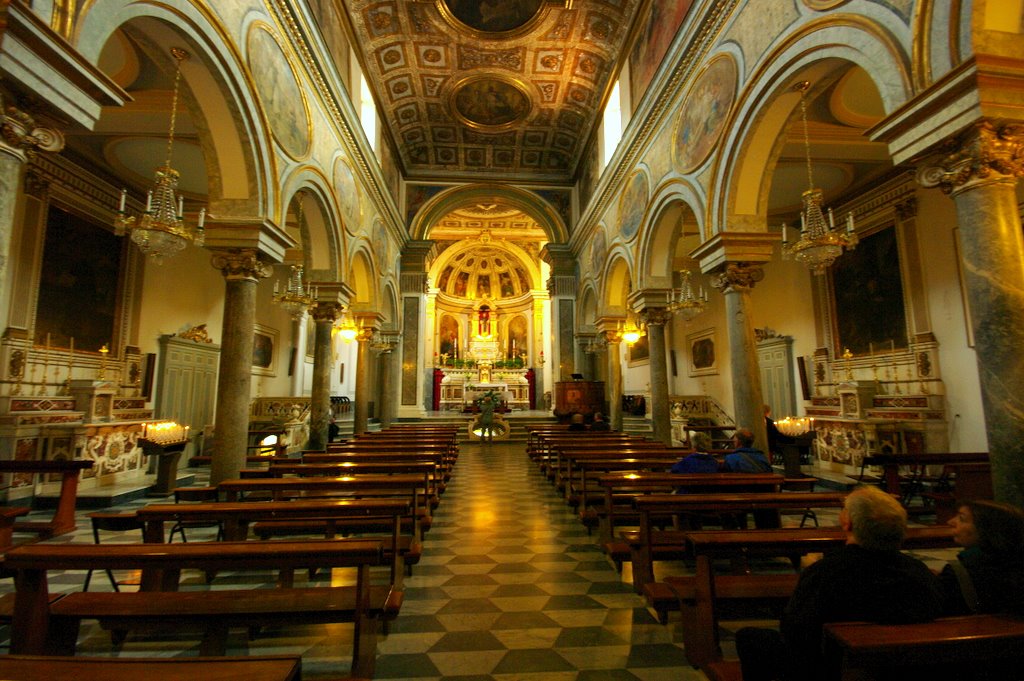
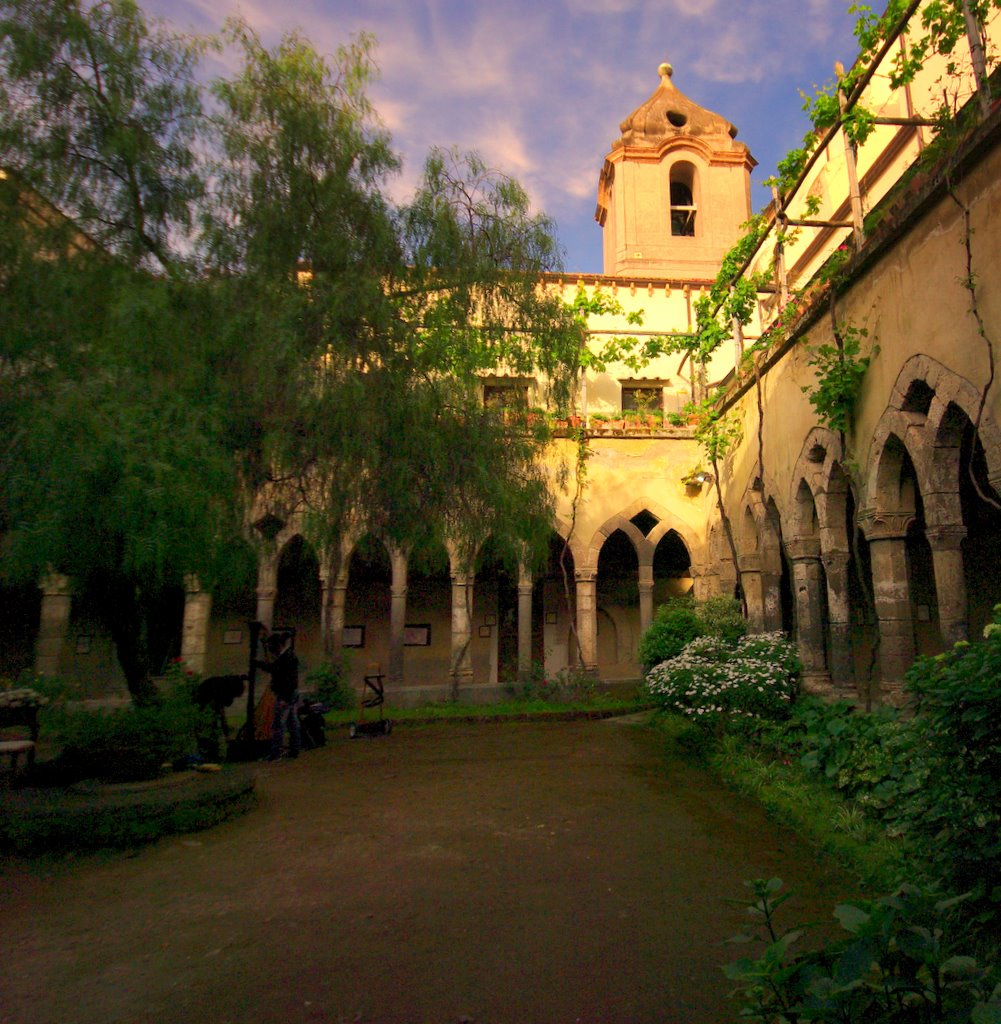
Not surprisingly, Italy has some incredible churches and Sorrento has some great examples

When space is lacking to build great, sprawling cathedrals, the Italians have perfected the optical illusion of constructing a small room and painting it to appear cavernous and spectacular.

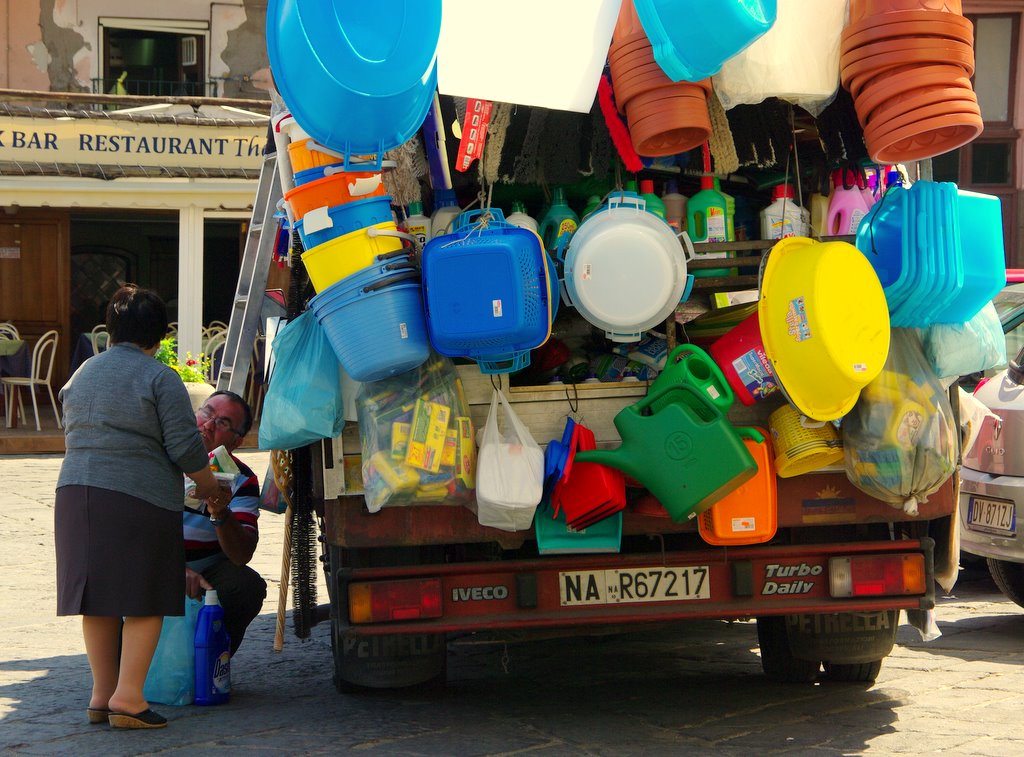
Not all shopping is done in the down town markets. This guy has a truck loaded with bargains. Anything you could possibly want so long as its made out of plastic.

Small motor scooters are the preferred mode of transport for most of the population of Sorrento. Parking them under religious icons guarantees safety no matter where or how fast they are driven – even while texting, smoking a cigarette or carrying a case of wine.

Folks without access to religious icons opt for a safer means of transport.

Even the police choose to live dangerously, cutting through hoards of suicidal commuters on these uncontrollable wheeled pogo sticks. It says a lot for Italian optimism – How do you pull over a speeding Ferrari on one of these things?

Not everyone succumbs to the adrenalin rush of all day peak hour madness. These incredibly underpowered, three wheeled Piaggios are favored by many of the elderly Italians with a need to move a very small amount of stuff around very slowly at maximum decibels.

Of course, if you have a large amount of stuff to move around, then you go for a big car.

SORRENTO – ITALY

After 36 hours sitting in planes, airport lounges, buses and taxis, we finally arrived in Sorrento. Unfortunately, we parted company with our luggage in Frankfurt. We were assured, in fractured English, by an overstressed baggage attendant at Naples airport that our bags would arrive in a couple of days. Fortunately she was right.

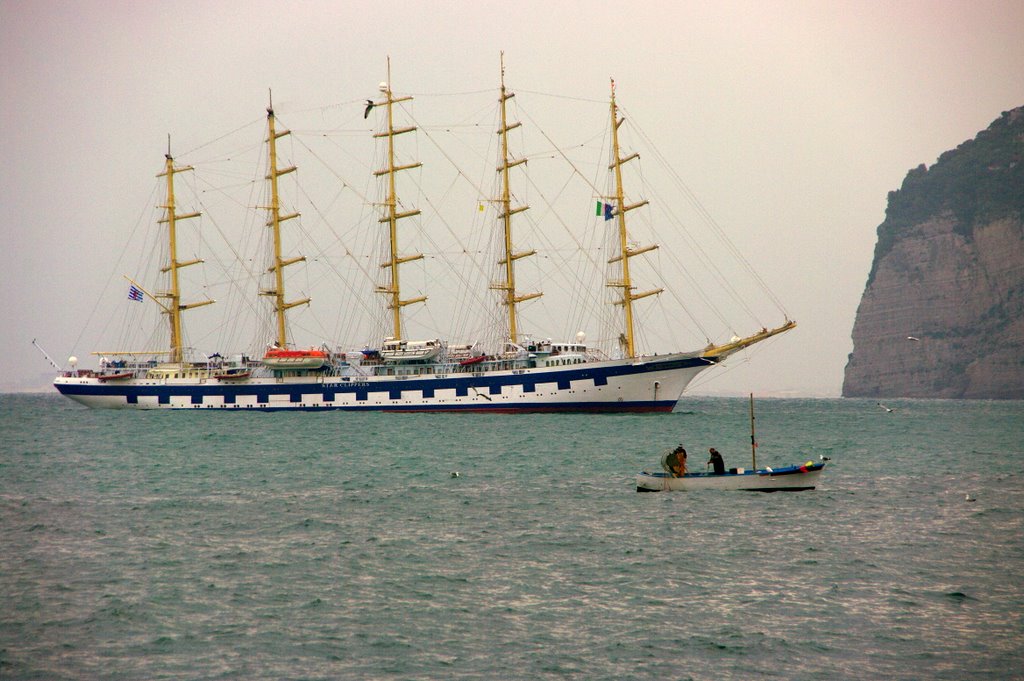
Sorrento is a busy little town, looking across the Bay of Naples to Mt Vesuvius.

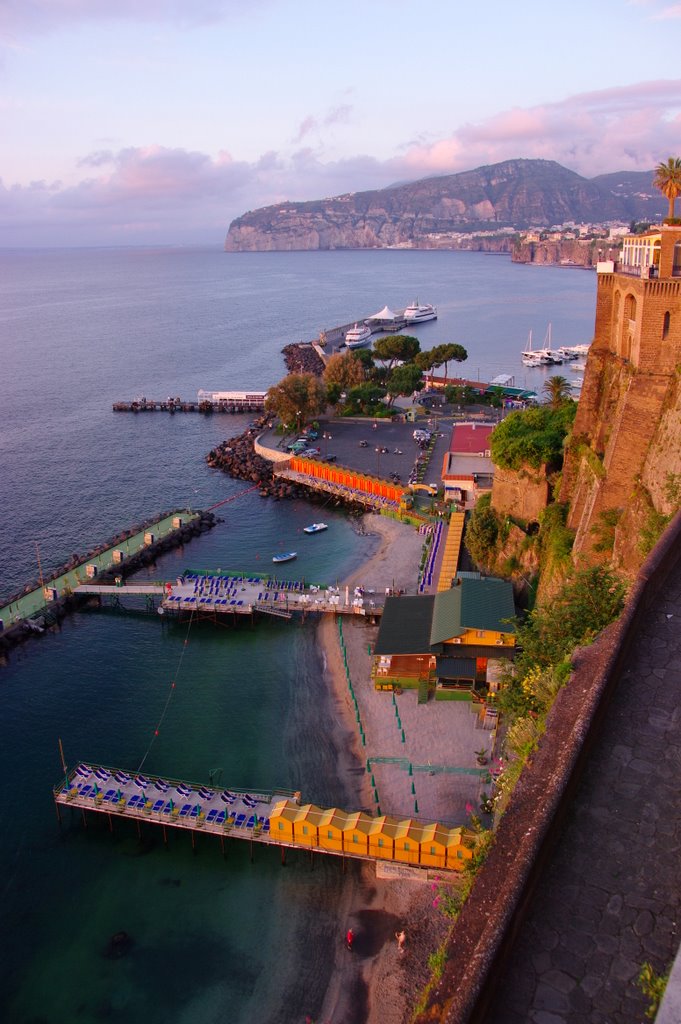
It is a popular holiday destination and at peak season must be pretty hectic. The beaches are black volcanic sand and are mostly sectioned off and privately controlled.

For a few Euro you can hire a deck chair and a patch of sand, a few Euro more gets you a colored umbrella and with a hefty investment you can also secure a small, brightly colored change room. All very organised!

Mt Vesuvius dominates the landscape across the bay. This photo looks pretty exciting but the cloud is just a regular rain cloud, not a billowing  plume of volcanic ash.

Most of the shoreline around Sorrento is sheer cliffs of volcanic rock with buildings clinging precariously to the edge

As the sun sets into the Mediterranean, visitors flock to spectacular vantage points to photograph one another and drink Prosecco and Peroni.

Some of the Grand old Hotels are situated on the cliff tops, but have elevators to deliver guests to their little beach side annexes below.

Once on the beach, visitors have a variety of ocean going vessels at their disposal.

One of the great features of Sorrento is what must be one of the most extreme hairpin bends in the world. This ancient piece of road design explains why such a busy town has such short buses.

At the bottom of the hairpin bend the road loops around to bring you out at the port where swarms of commuters on motor scooters arrive early each morning to catch a ferry across the bay to Naples.

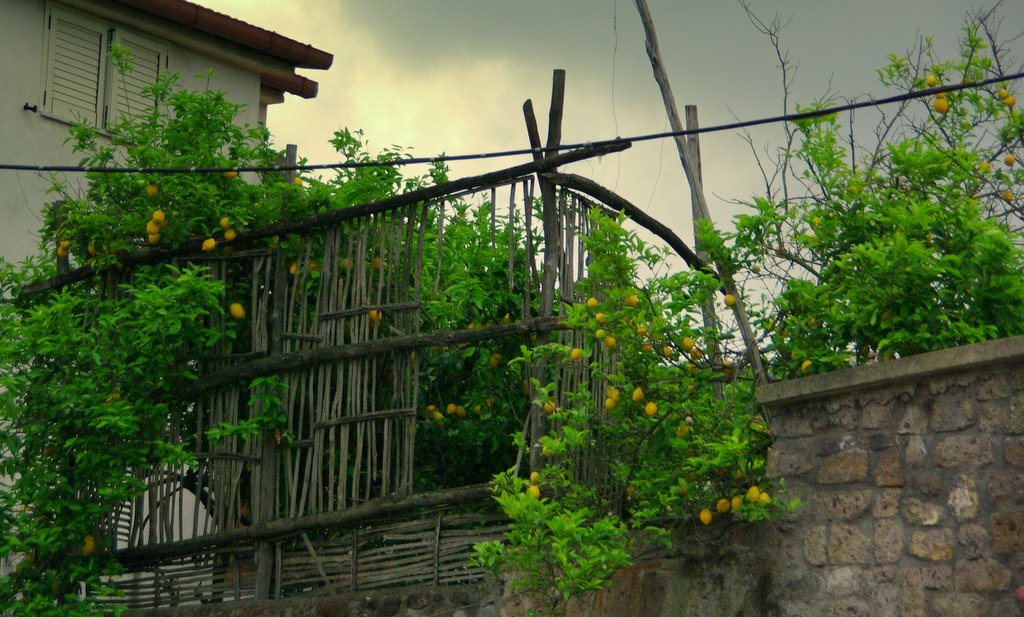
The regions rich, volcanic soil and mild climate grows amazing flowers and produces three crops of citrus fruit a year.

Scattered through Sorrento are numerous citrus orchards covered with lattice and shade cloth. They must be part of the towns tradition because, even with three pickings per year, there is no way the multi million Euro plots of land could even pay the land rates.

Cyclists in Sorrento dispense with helmets and reflective clothing and adopt a more sensible form of typically Italian bicycle safety.

Tomorrow our workshop group arrives and we will head of to some of the fantastic painting locations around the town.

SILENT ECHOES

Over the past couple of weeks I have been busy working on this large (1500×900) acrylic, charcoal and ink painting. It is based on a large sandstone wall, towering over a rock pool in the Umbrawarra Gorge, south of Litchfield National Park in the Northern Territory. Apart from the spectacular appearance of the place, the thing that impressed me was the strange silence, broken by occasional disjointed echoes. The sounds of distant birds, insects and breezes all seemed to emanate from the rocks, always punctuated by long periods of silence. Hidden through the rocks was evidence of faded aboriginal rock paintings.

I used colored acrylic glazes over white areas of gesso to get a transparent glow into some of the rock shapes. These are contrasted with solid opaque patches of similar colored acrylic. When the paint was dry I drew over it with charcoal pencil (black and white) and Burnt Sienna pigment ink. The most difficult part of this painting was getting the abstract marks right. It took a lot of looking and adjusting until everything seemed to fall into place. What I like about this process are the intricate, underlying textures that build up. Painting like this really makes me appreciate the work of  Franz Kline. He seems to effortlessly create the most beautiful abstract marks – perfectly balanced and proportioned, right from scratch.

JAMIE NICOLAOU

I was fortunate to cross paths with Jamie Nicolaou while we were in Western Australia. Jamie is the son of  long time friends we stayed with near Manjimup. He has an amazing passion for photography, a great eye for a good shot and a humble attitude to his wealth of knowledge.

It was inspiring to go out with Jamie and watch as he shot a panorama of the family farm just as the light faded to dark. I then followed him through the process of turning it into the image you can see on his blog. The incredible thing about this image is that it’s resolution is high enough to produce a print measured in meters not centimeters!

Check out Jamie’s blog http://jamienicolaou.wordpress.com/

…and his website http://actionpics.com.au

Jamie Nicolaou – Photo by Tegan Studsor

STRANGE BIRDS

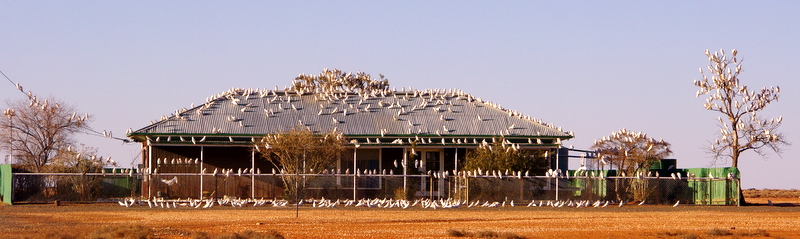
Calling this a flock of corellas is probably an understatement. More like a swarm, descending on one little lonely house on the border of South Australia and New South Wales. The cleanup must be a nightmare!

IMGP9543

IMGP2577

IMGP9546