PARIS

We arrived in Paris with a week to explore the city before our workshop starts in Aix en Provence. Our apartment in Montmartre is great – close to some great bars and cafes, and just down the hill from Sacré Cœur.  A 6 day metro pass costs around 25 Euro and makes traveling around the city so easy – it is rare to wait more than a couple of minutes for a metro and the system is well signed and easy to follow – even for a pair of non French speaking Australians.


From a little bar at the top of Rue Tholoze – good beer and great view
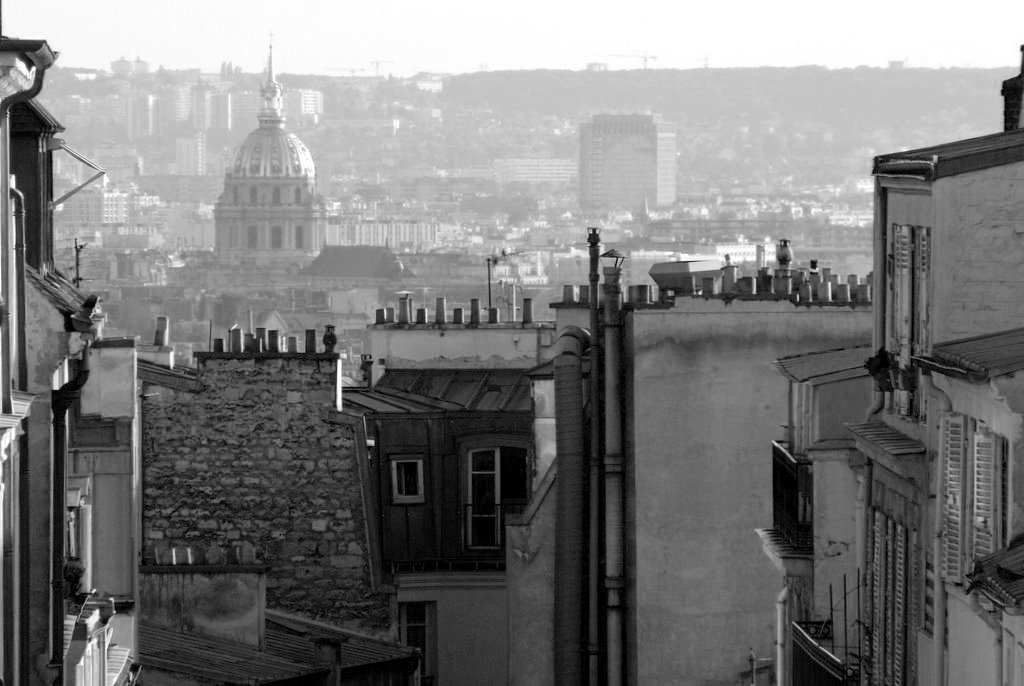

Montmartre rooftops
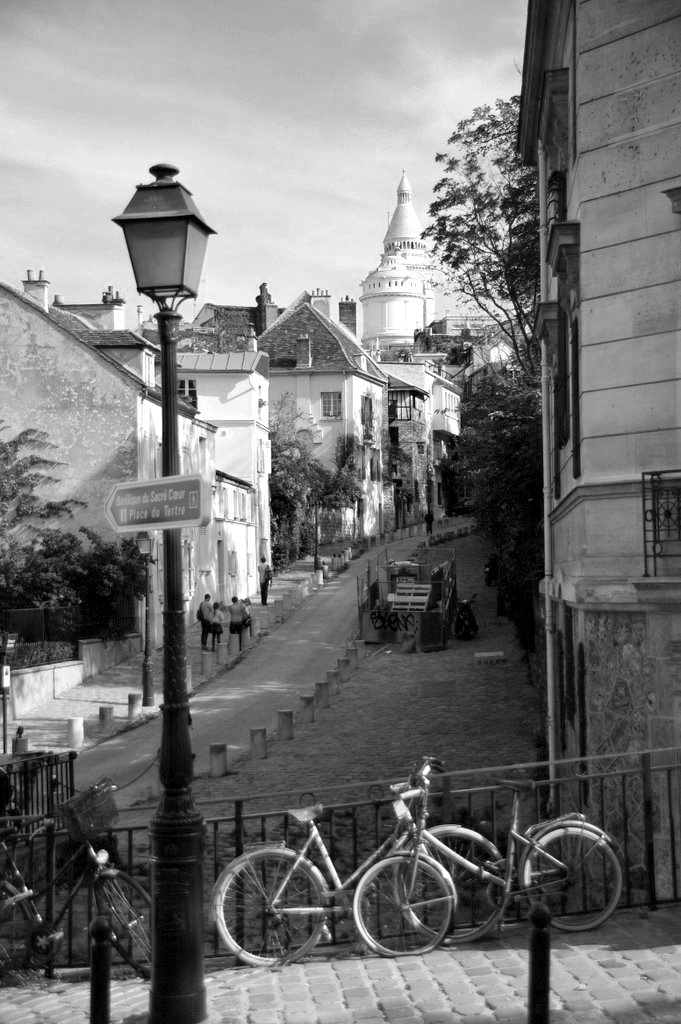

Path to Sacré Cœur


Montmatre backstreets


At the top of Montmatre near Sacré Cœur is the busy tourist area where artists crowd the square and sell their wares.


Two people trying to walk past a crepe shop.


Rooftops from Sacré Cœur


Our apartment has a beautiful old oak floor and staircase. when you walk into the building you can smell the linseed oil someone lovingly rubs into it.
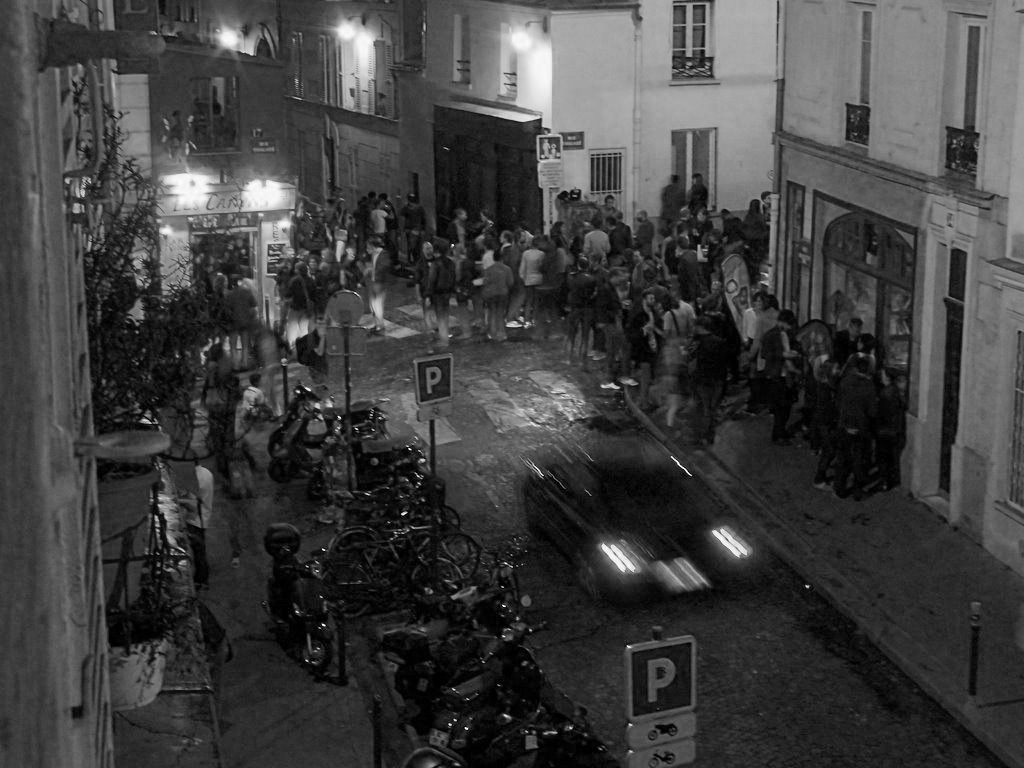

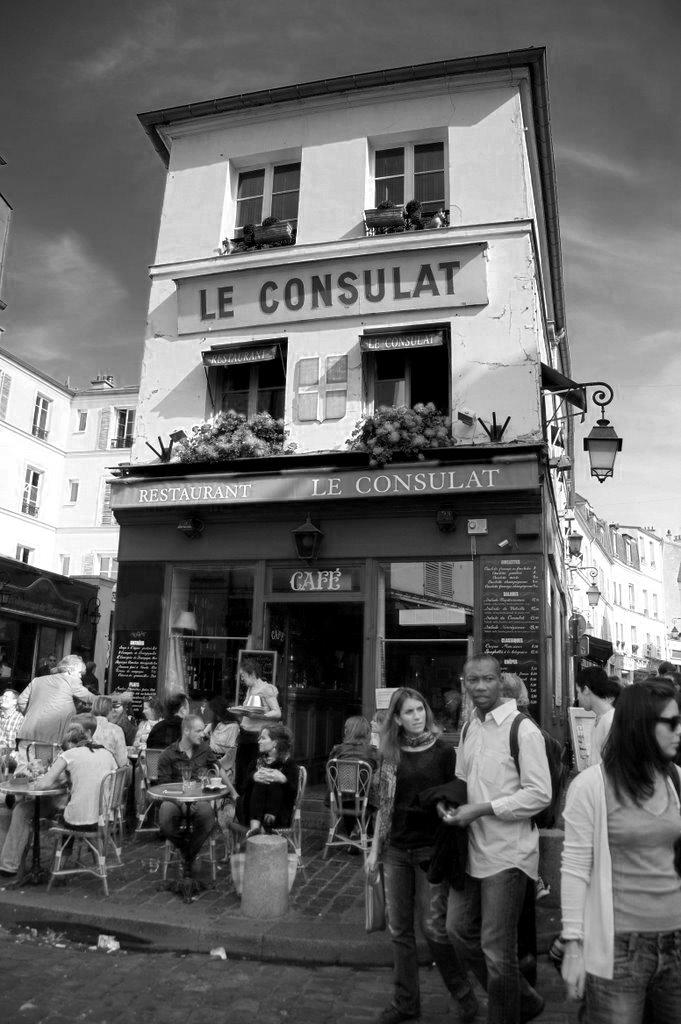
From our apartment window we look down on one of the busiest bars in Montmatre. I’m sure Picasso and Henry Miller and Alfred Jarry all drank here. Every night sees dozens of people spilling out onto the streets.
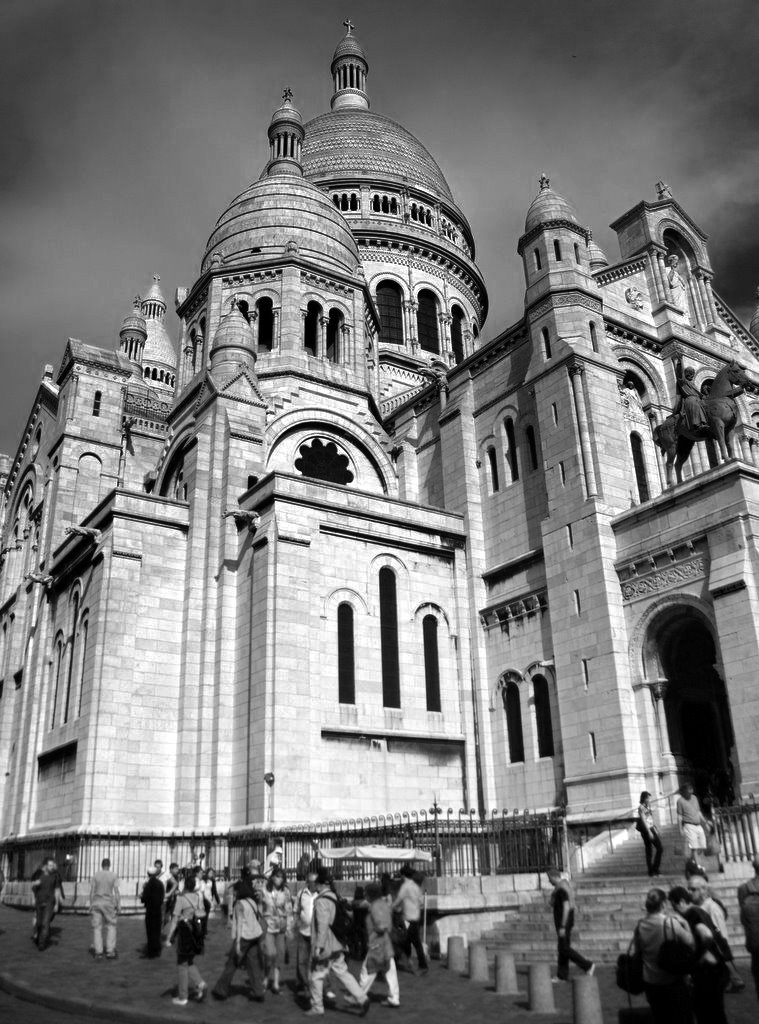

Sacré Cœur

The Romans lay claim to the arch, but I think the French must have invented the spiral staircase. We have been up and down so many in the last few days – thankfully Sacré Cœur has a clockwise one going up and an anti clockwise one coming down.


Spectacular views of Paris from the dome of Sacré Cœur


At night Sacré Cœur is a pretty scary sight.


Not near as scary as this strange grave in the Montmatre Cemetry…
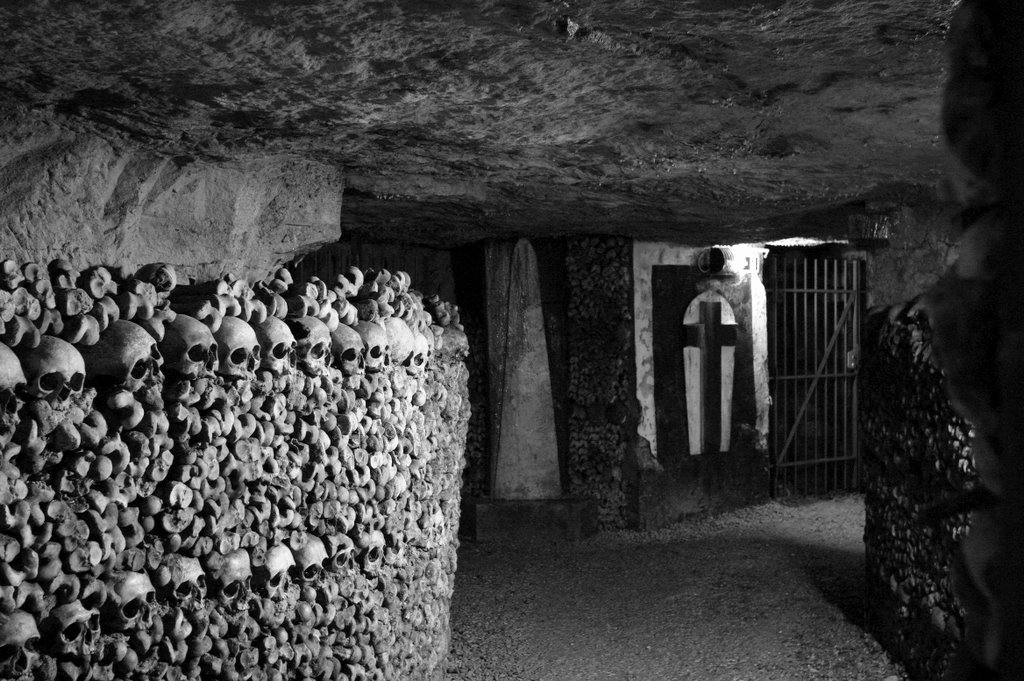

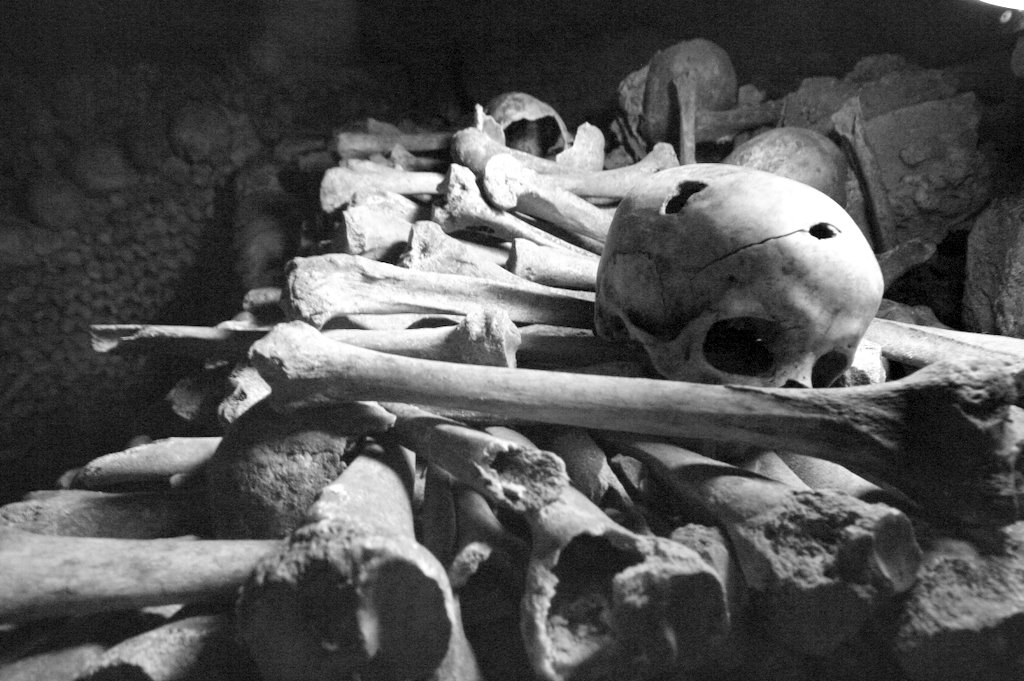
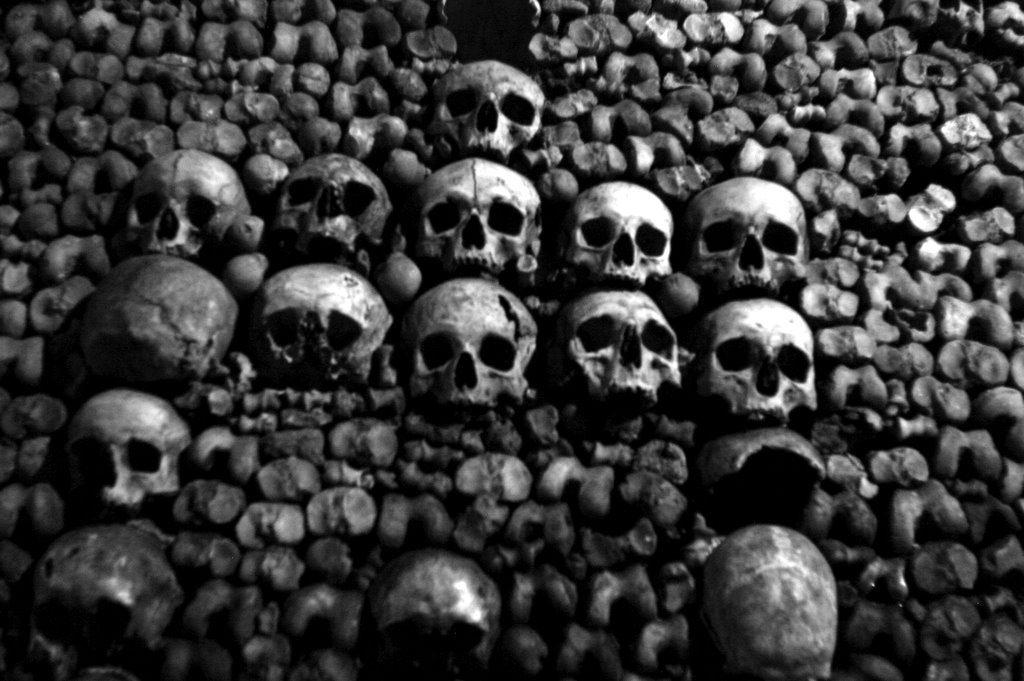
…or the walls of bones lining the catacombs under the streets of Paris
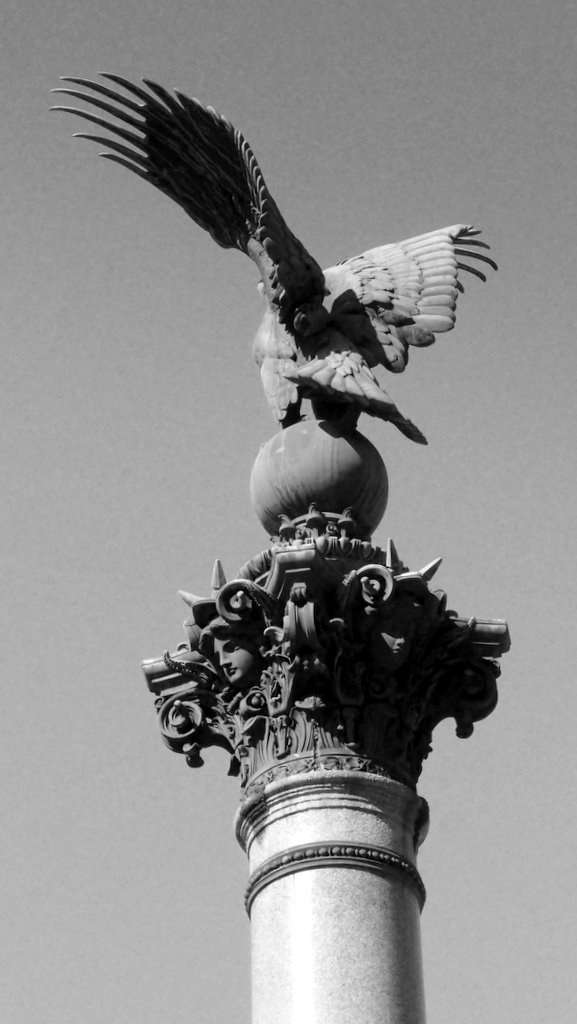
The French are right up there with the Italians when it comes to decorative ornamentation
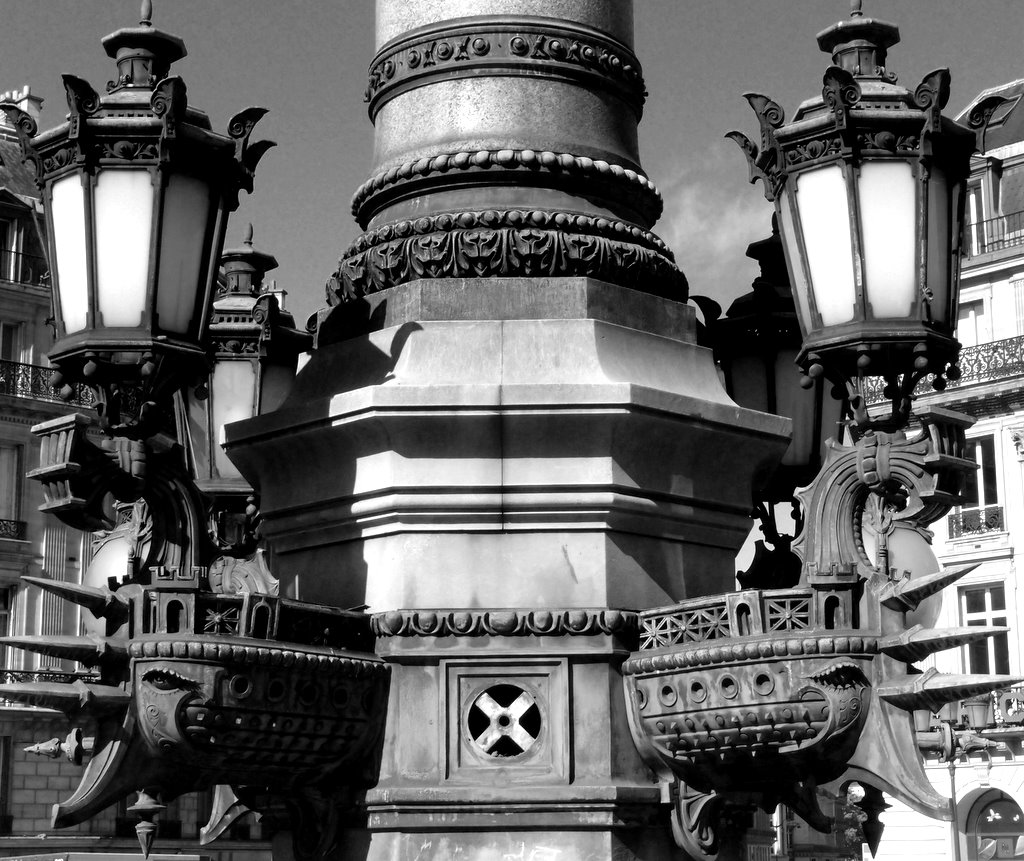
All through Paris are statues, ornamental gates, arches and fences and everywhere you look, beautifully decorated buildings. This all forms a backdrop to some of the most spectacularly presented humans on earth. The whole decoration thing went haywire back in the 1700’s and the Palace of Versailles  is a grand example of decorative excess. Unfortunately it was all carried out with tax payers money, bleeding the country into poverty, so the tax payers revolted and chopped off all the offending heads.
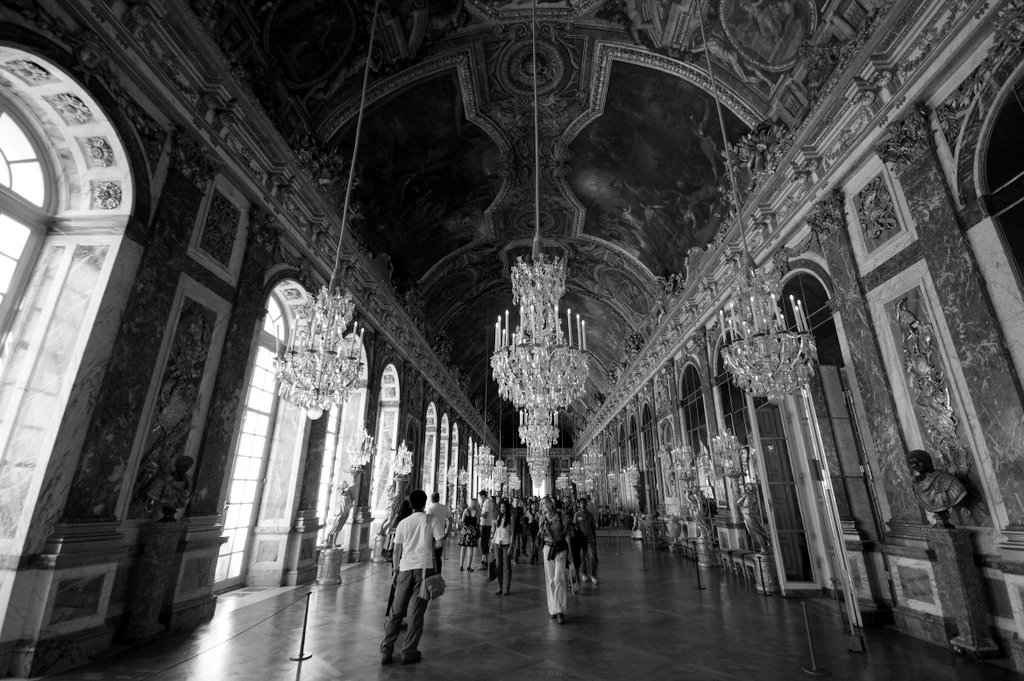

Hall of Mirrors, Palace of Versailles 


Chapel, Palace of Versailles
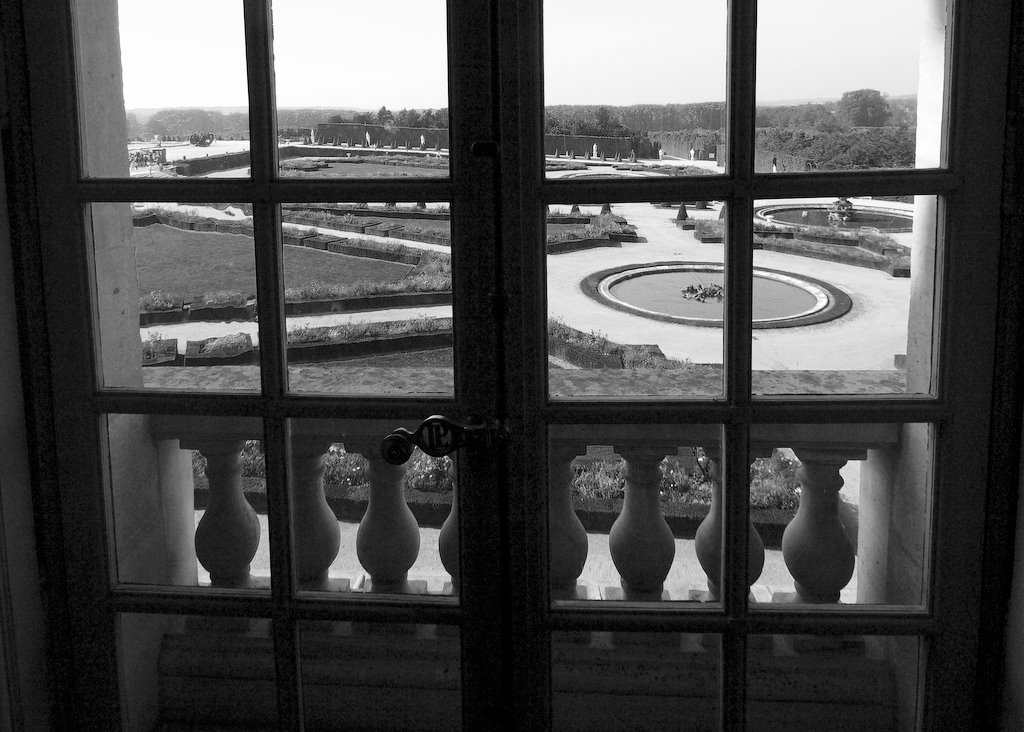

The Palace of Versailles has amazing gardens covering 100’s of hectares. This is the view Louis XIV would have enjoyed as he sat to gaze out his window.


This would have been Louis’ bedroom – complete with everything except a flushing toilet

This room was used by Marie Antoinette when the disgruntled taxpayers came searching for her.

These elegant ladies in all their decorative finery were apparently riddled with nits and lice, had bad breath and didn’t smell too good, as it was believed at the time, that washing with water put germs into the pores of your skin causing nasty diseases.

This little abode was built to house the mistresses of the then rulers.


Busking with Tuba

How not to sell glasses
MOMA NEW YORK

One of the most amazing places in New York is the Museum of Modern Art. It houses an incredible collection of 20th century art, carefully selected and beautifully displayed. These are a few of my favorites.

This painting of Morocco by Henri Matisse is pared down to simple abstracted elements, perfectly balanced and unified by contrasting black marks. The color arrangement is simple and compressed and the repeating circular shapes carry the eye around the painting, echoing the confusion of, what appears to be, mid day Morocco. This confused movement is balanced and directed by the stripes and grids. Notice how the diagonal stripes in the top left lead the eye back into the painting, as does the grid at bottom center. I love the scattered, repeating yellows and the way he has tied the big slab of pink  to the rest of the painting by carrying it through to smaller marks to the left.

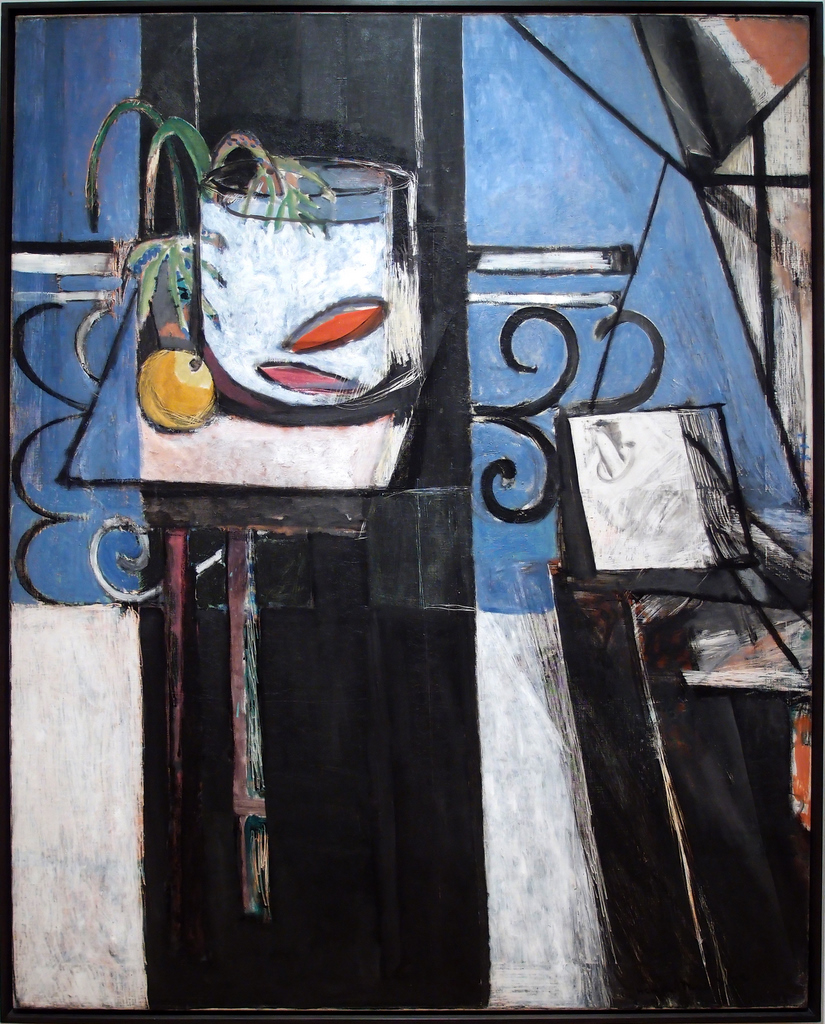
Another painting by Matisse, again the subject is reduced to simple abstract marks, beautifully arranged to lead your eye up to the focal point of fishbowl and lemon. Matisse has halted the strong upward movement created by the tapering diagonals with the two white horizontal marks behind the fish bowl. The eye then wanders out to other carefully placed fragments of  repeating warm colors before being drawn back to the focal point. The only curved lines in the painting are also arranged to hold interest around the focal point, circling it  like a cloud or thought bubble, and contrasting with the hard geometric shapes in the rest of the painting.

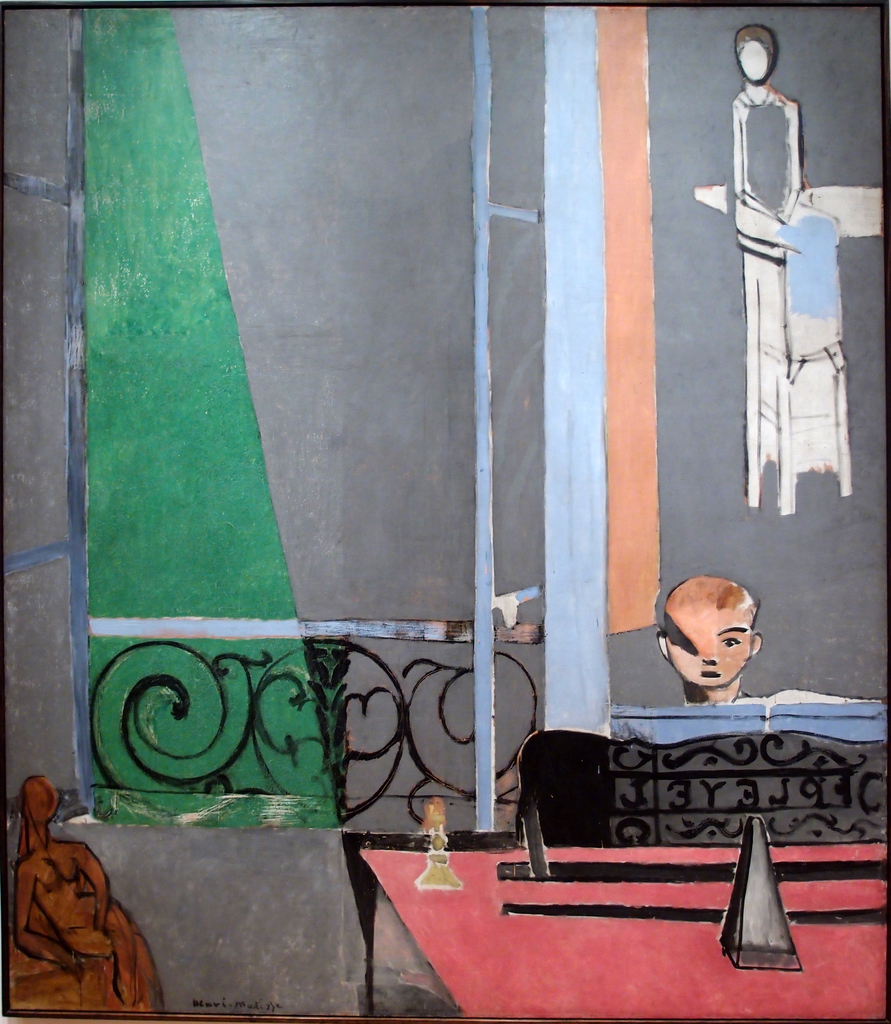
In this painting called “The Piano Lesson” Matisse depicts his son being watched over by his piano teacher as he practices in front of an open window. The scene is lit by candle light so Matisse has used a number of large grey shadow shapes to separate and intensify the muted colors. The color arrangement again is kept very simple – warm shapes concentrated at the bottom, being led down to by a stripe of pale warm orange. Matisse has placed this stripe of orange alongside it’s complimentary blue. By matching the tonal values of the parallel stripes, Matisse has created a strange shimmering effect that almost hurts to look at. As you follow these stripes down to the head of his son, the sharp dark wedge over one eye seems to confirm the strange optical effect.

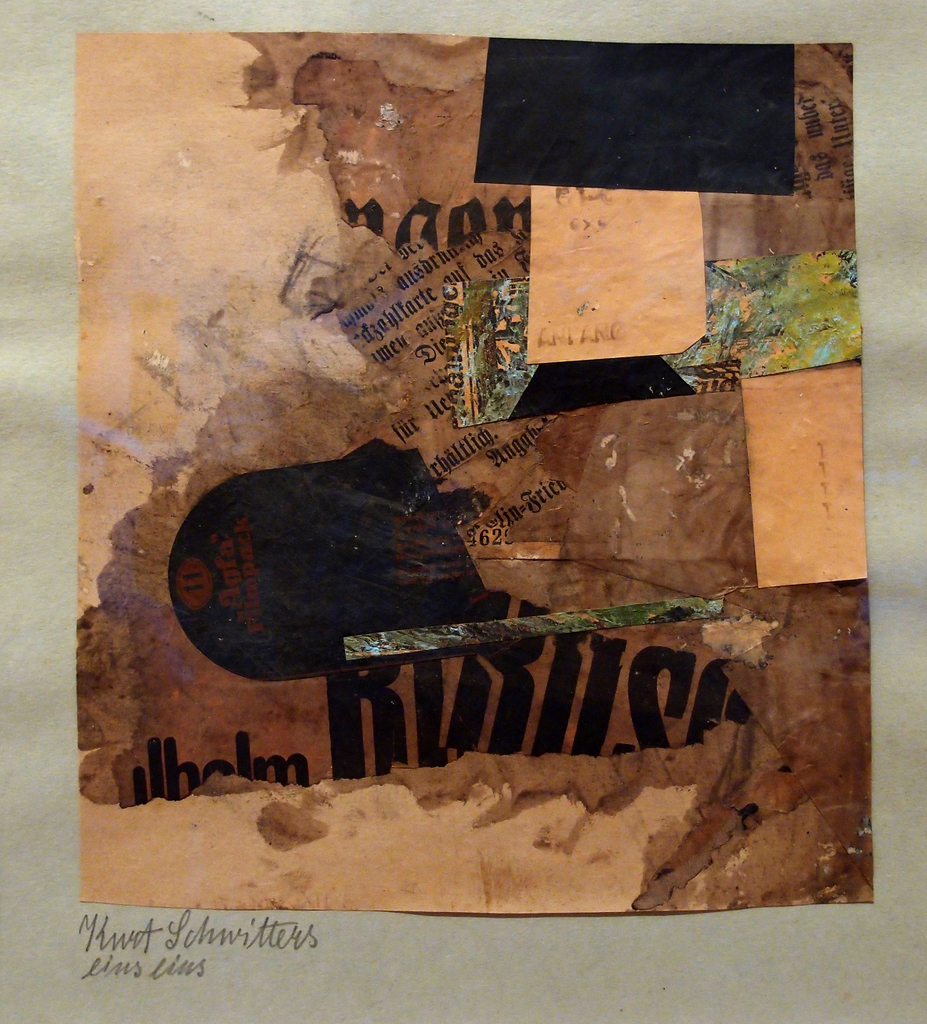
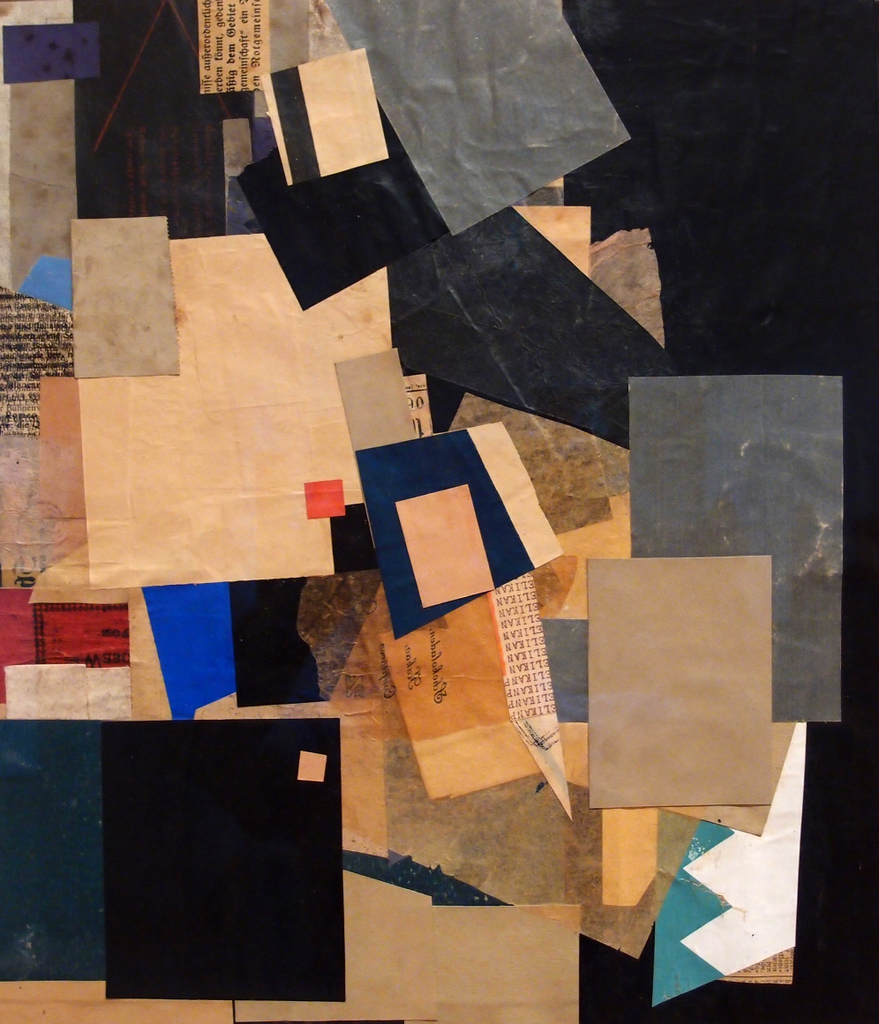
The following four images are of small collage paintings by Kurt Schwitters. Beautiful arrangements of colored paper, cardboard and printed matter – they have an aged, weathered look about them but still seem fresh and vibrant.

.

.

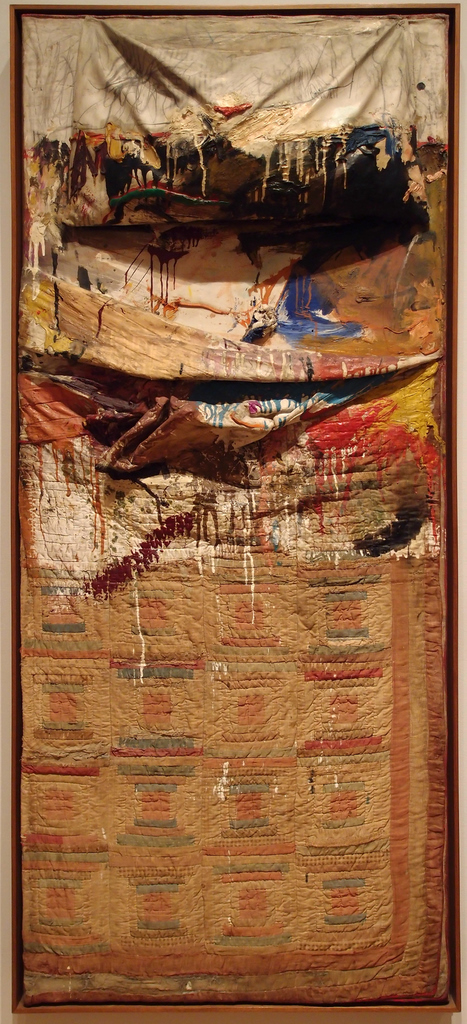
Robert Rauschenberg “Bed” At first glance this painting just looks like a heavily textured Abstract expressionist  painting, but after a few seconds the heavily painted support sneaks up and hits you. According to the accompanying notes the bed was Rauschenberg’s. You wonder what wild dreams he had beneath these covers.

BEND, OREGON

Tucked under the backdrop of the Cascade Mountains is the little town of Bend in central Oregon. First settled as a logging town in the late 1800’s, today Bend is one of the main mountain bike centers in the US and a headquarters for all kind of outdoor activity including fishing, kayaking, skiing, golf and rock climbing. We felt kind of  wimpy, arriving for the indoor pursuit of watercolor painting!

Mirror Pond – down town Bend

All along the Deschutes River and through much of the town are these beautiful old timber houses.

Evening, down town Bend.

We were lucky enough to arrive the week the “Bite of Bend” was being held. A big food, wine, beer and music festival taking over the main roads in down town Bend.

Stalls selling all kinds of food lined the streets. The numerous boutique brewerys had their wares for sale. Ten bucks bought you a ticket to sample spirits from dozens of distillers dotted throughout the area and the main stage had a non stop variety of awesome bands from all over the country.

Half an hour drive from bend is Smith Rock State Park – an impressive gorge of craggy rock cut through by a small meandering river. A great place for rock climbing, horse and mountain bike riding, walking or just relaxing under the juniper trees.

CANADA

After floating our way up through the Northwoods we crossed the boarder into Canada at Sault Ste Marie. A mighty bridge spans the locks that move ships from one great lake to another. A short queue, quick passport inspection and some questions about alcohol and firearms saw us welcomed into Canada.

Once across the boarder the highway was lined with warning signs about deer, moose and Amish rickshaws. We saw many Amish rickshaws, a few deer, but unfortunately, not a moose in site.

The Canadian roads were excellent and it didn’t take long for the big V8 to float its way to Sudbury where my brother Wayne and his wife Monique live.

Sudbury sailing club and lake ferry.

Science North is a big, snow flake shaped building housing an Imax theater and a number of science displays relating to the local area.

The park surrounding Ramsey lake, in the center of town, is the home to a large collection of native wildlife. These Canada geese share the waters edge with a resident beaver. There are squirrel’s, chipmunks and raccoons, but still no moose or bears.

One of the main tourist attractions in Sudbury is the Big Nickel. At 9 meters high, it is listed in the Guinness book of records as the worlds largest coin.

Sudbury’s Inco Superstack is the second tallest freestanding chimney in the world (380 meters)  being outstacked by a neat 10% by a chimney in Kazakhstan. Before construction of the superstack toxic gases from the mine had a devastating effect on the local environment – acid rain turning rocks black and killing off all vegitation. The superstack pumps the gas high into the atmosphere, where it can be detected for a 240km radius around Sudbury.

The Canadian government control all alcohol sales in the country. If you want to buy beer you go to the Beer Store – they don’t sell wine or spirits, just beer. If you want alcohol containing beverages other than beer you drive across town to another government owned store called the LCBO. There you can buy wine and spirits, but not beer?

Cigarette sales are also controlled by the government via heavy taxes. Through some loophole, the Indian reservations can sell cigarettes tax free. For a few bucks you can buy 250 generic cigarettes and add some more toxic fumes to the local atmosphere.

Monique took us for a drive to Onaping Falls north of Sudbury. A beautiful river cuts through weathered granite country, lined by forests of birch, maple and pines. It’s a spectacular site at the start of summer but during the fall the green forests turn brilliant red and yellow – it must be really something to see.

Wayne and Monique took us on a boat trip down French River, an hour south of Sudbury. It is a wild unspoilt waterway, dotted with islands and scattered cabins. Indian tribes have lived in the area for centuries and the first European contact was way back in the 1600’s, when the river became a major trade route for furs and timber.

French River Loon

This old fishing lodge was built on French River in the early 1940’s. The semicircular dining room has hardly changed since the day it was built.

French River is a beautiful, unspoiled part of the country. Our guide, Rene, had a real passion for the region, having lived there all his life. His detailed knowledge of the river’s history really made it a fascinating trip.

THROUGH THE NORTHWOODS

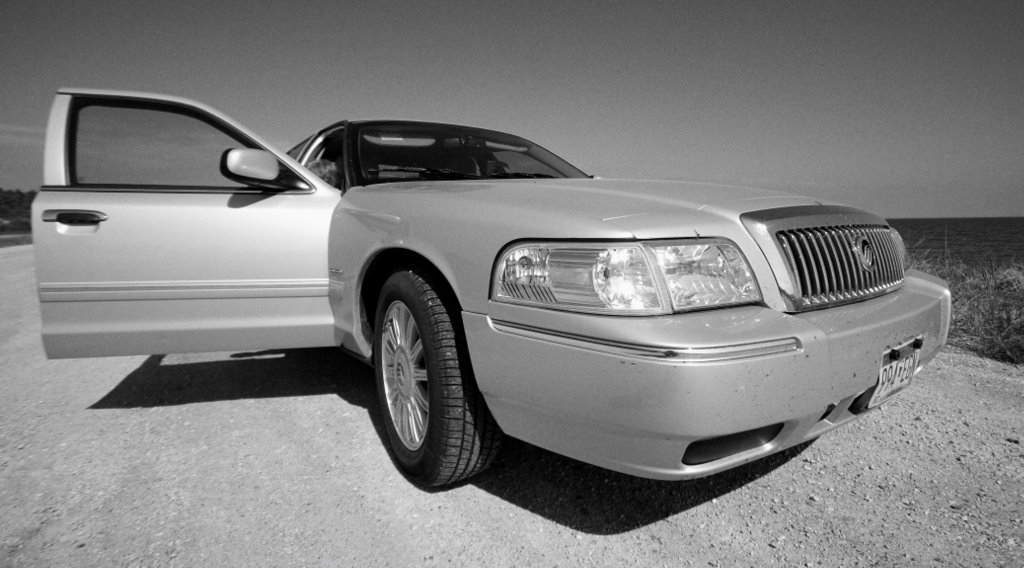
After our workshop at Dillmans in Wisconsin, we picked up a hire car from Rhinelander airport to drive up to Sudbury, in Canada, and visit my brother Wayne and his family. We ordered a mid sized sedan but ended up with a Mercury Grand Marquis  with all the electric fancy bits, a big V8 engine, full leather lounge chairs and shiny wood trim that looks like plastic (or maybe plastic trim that looks like wood). Anyway, it takes up a lot of road, gulps down gasoline and would have looked really ugly, even in the 1980’s.

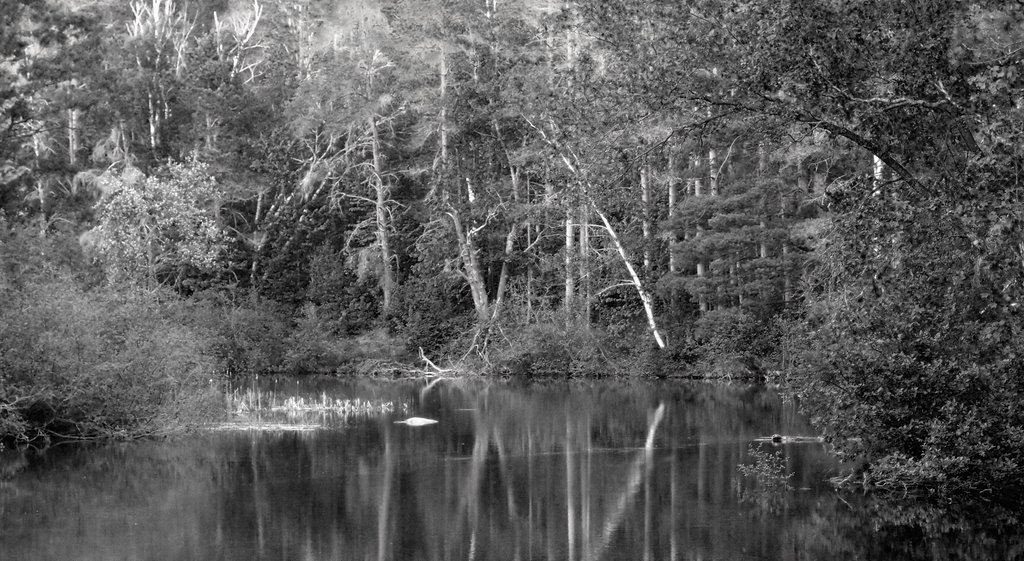
The Northern region of Wisconsin / Michigan  is known as the Northwoods. It is a flat, green maze of lakes and creeks. Much of the country is covered with heavily wooded forests of birch, maple and a variety of conifers. In winter the region is covered with feet of snow and the temperature stays below freezing till spring. The green grass and  dense growth of the woodlands was a surprise in such low temperatures. We managed to spot a coyote, many squirells, chipmonks, deer and loons, but bears and moose have evaded us.


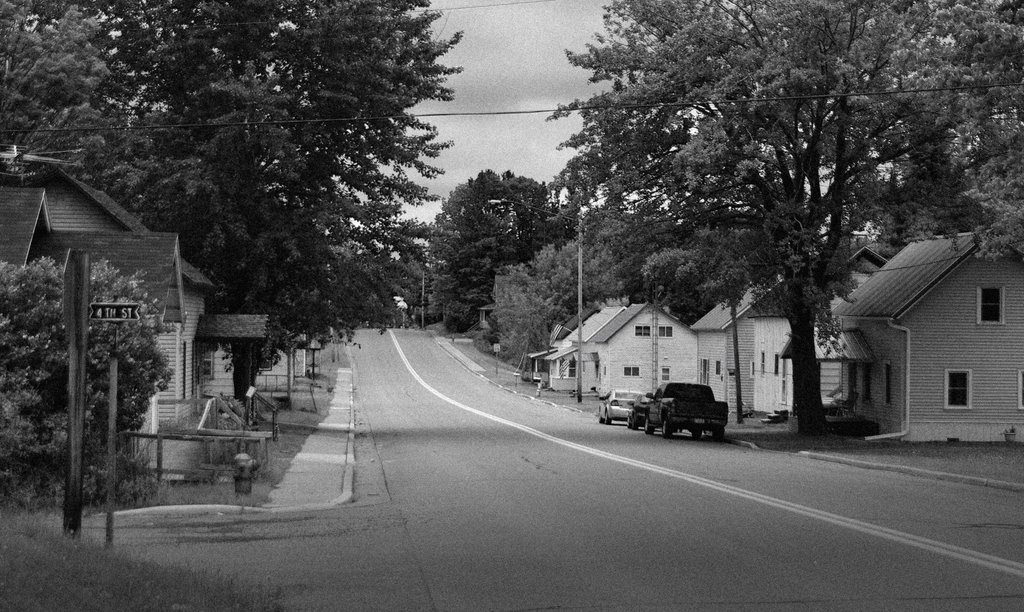
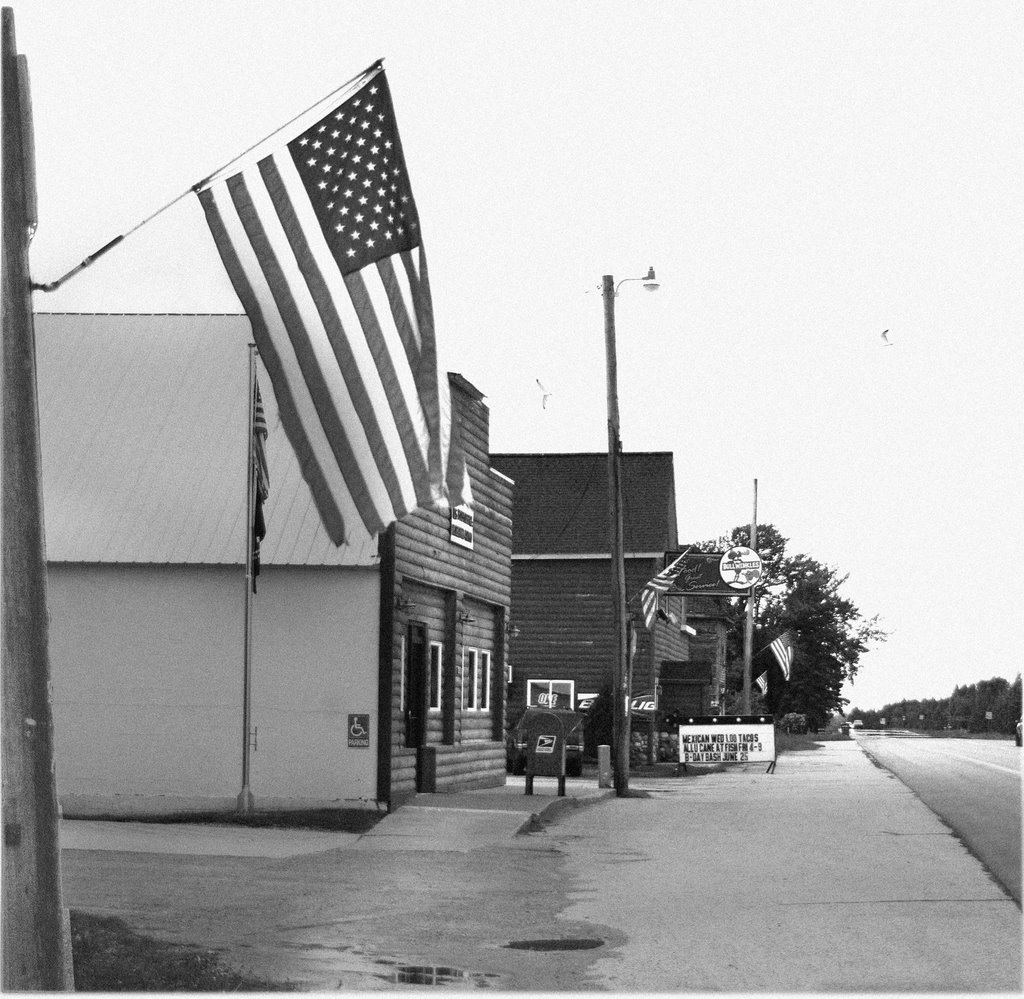
Northwoods towns are quaint and tidy


Patriotism is always evident.

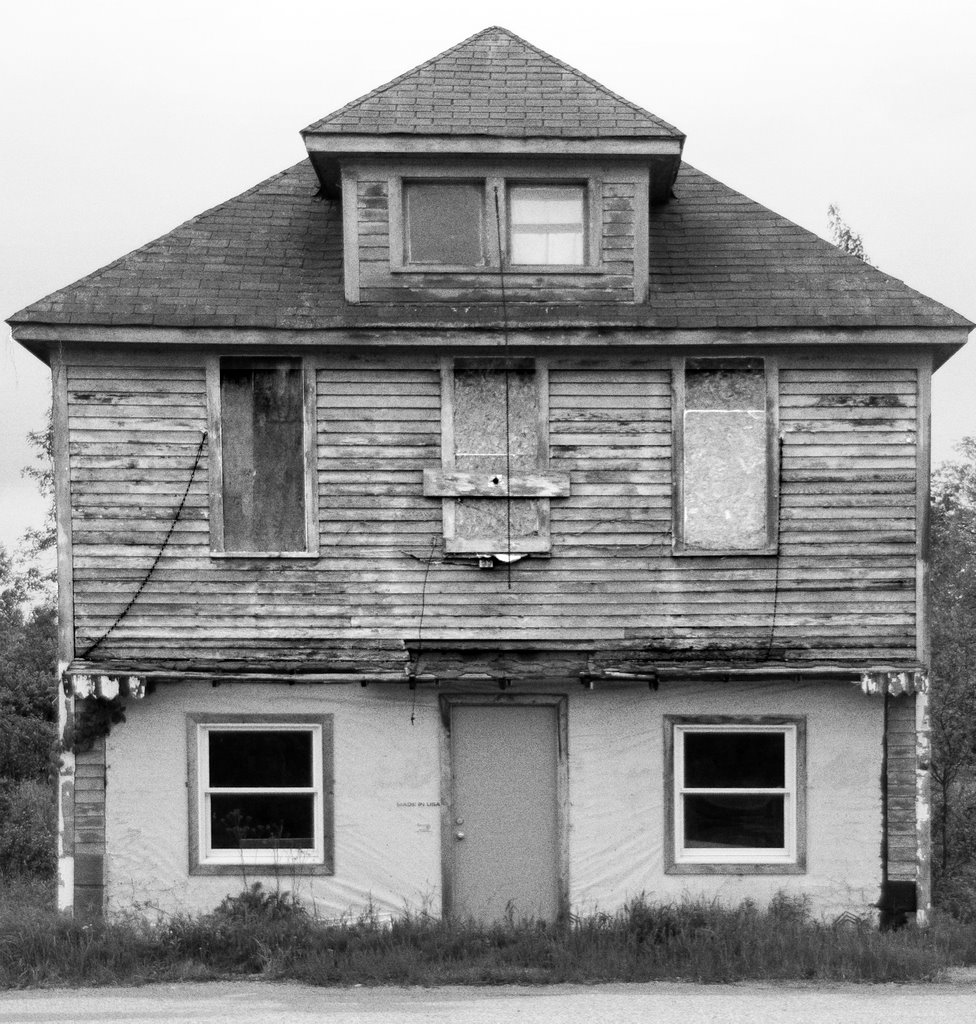
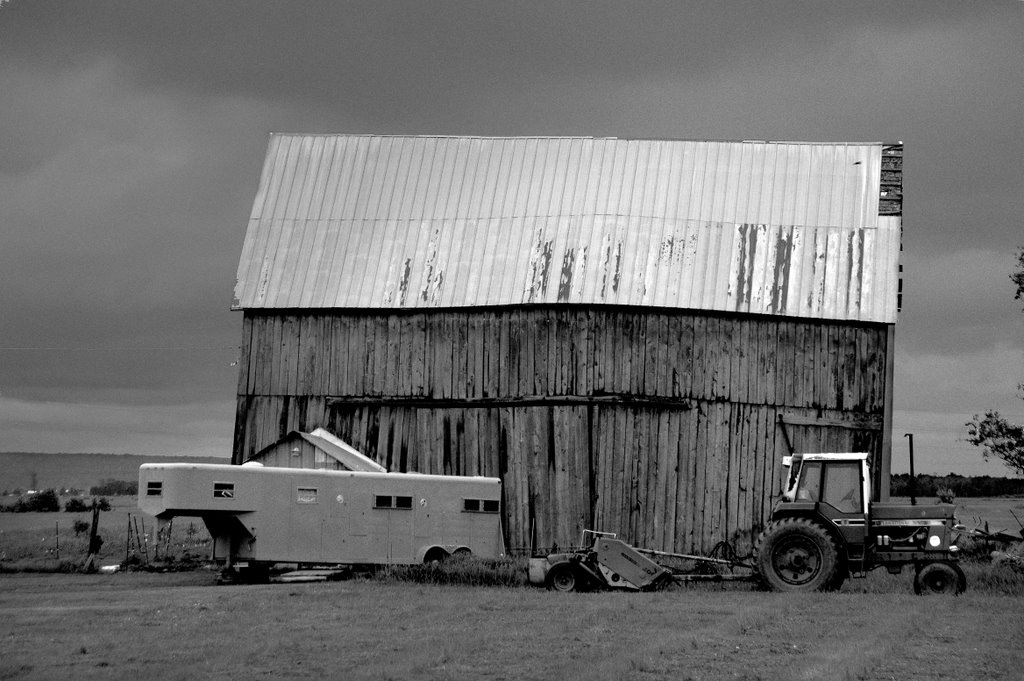
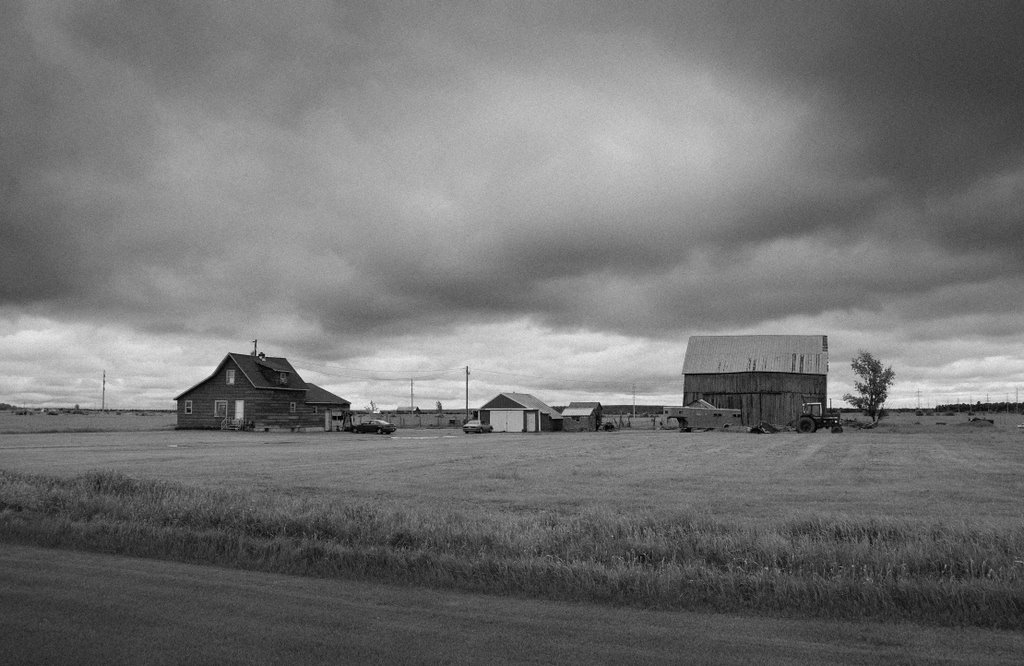
The rural properties try to out barn one another.

Waving Chipmonk

DILLMAN’S WORKSHOP

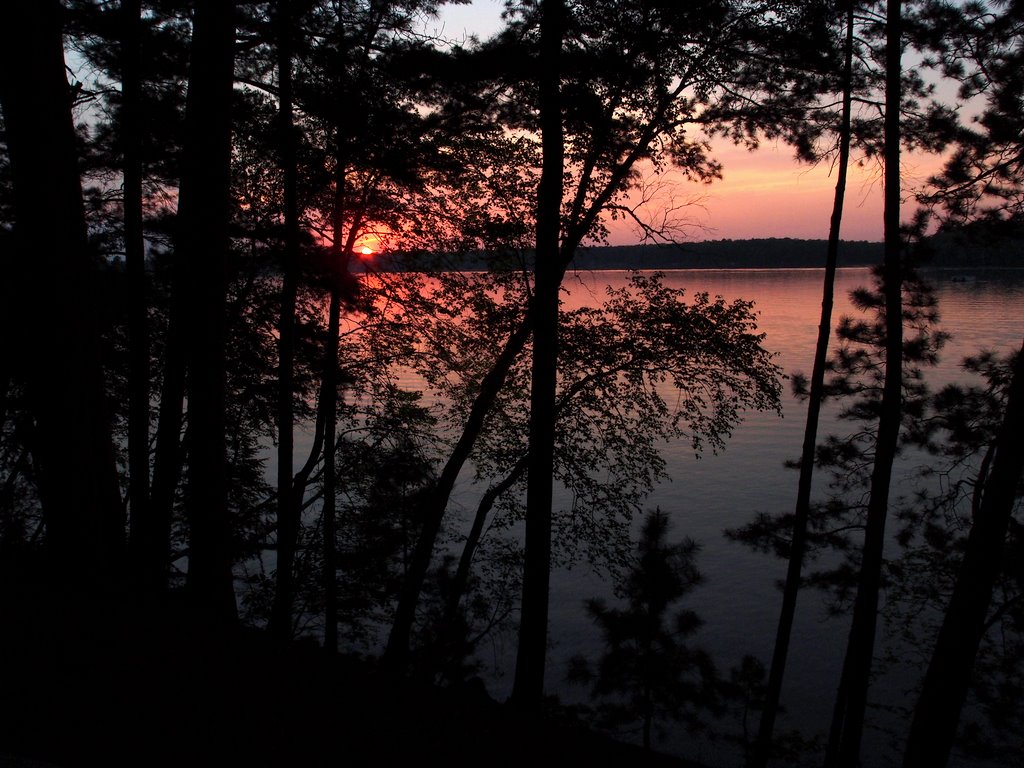
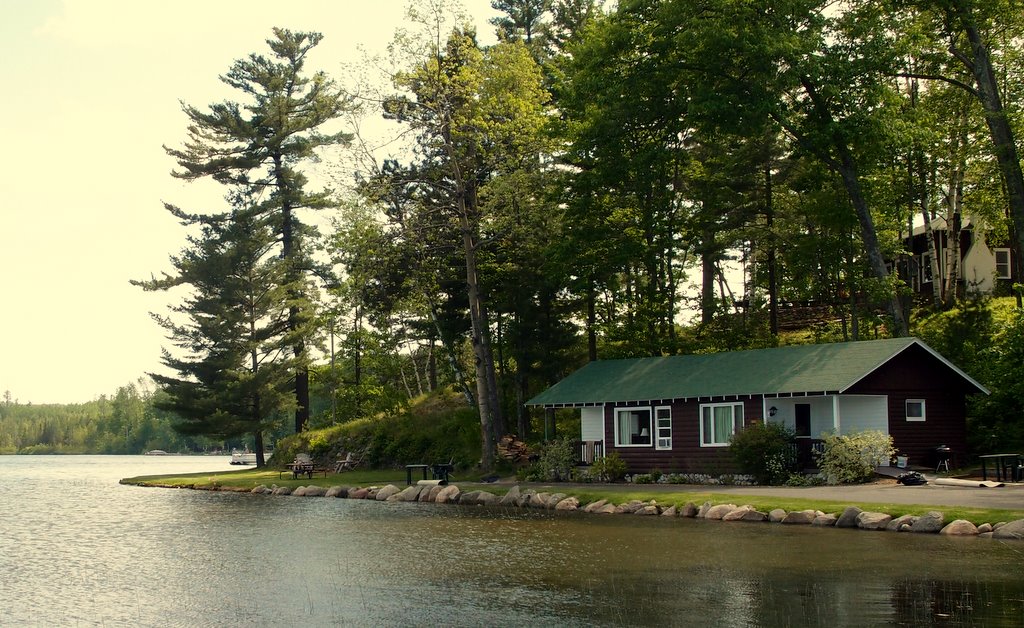
Dillman’s Resort is tucked up into the north of Wisconsin at Lac Du Flambeau. It sits on a tree covered  peninsular jutting out into  a beautiful lake. We were lucky to have good weather, but the resort closes over winter due to snow.

Evenings on the lake are pretty spectacular, watching the sun set to the haunting call of  loons

In the main reception area is a large open fire, the Tom Lynch Library, an art supply shop, a bar and friendly, helpful staff.

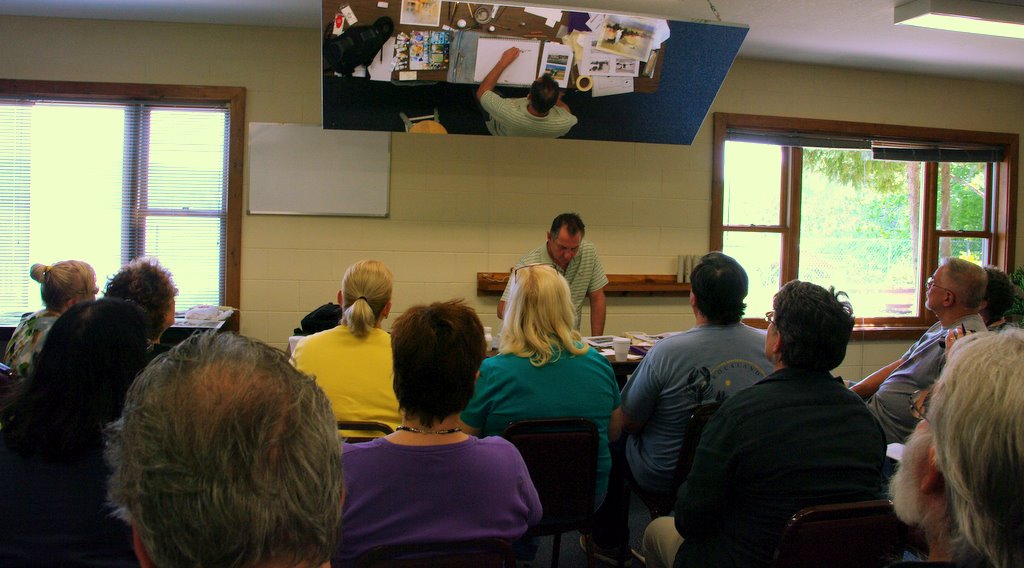
Art workshops have been conducted at Dillmans since 1978. Their two large studios have excellent facilities and the resort offers great accommodation with kitchens, barbecues, kayaks and push bikes.

Workshop Demos

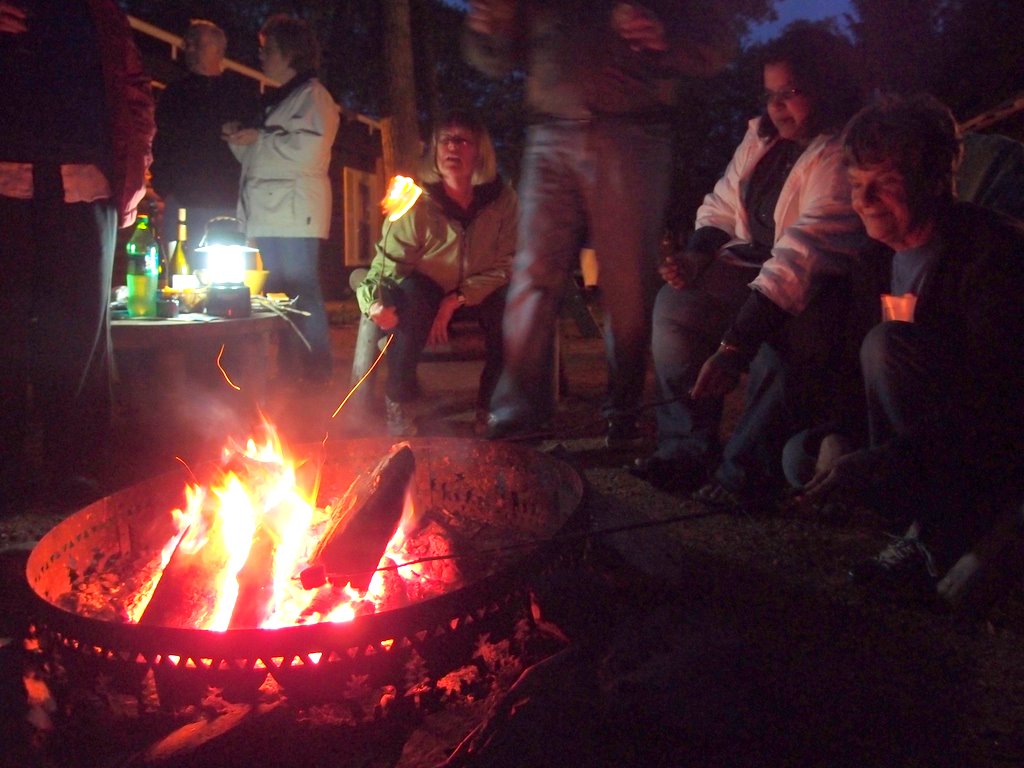
Cool nights were warmed up by a large bonfire hosted by one of our group.

The week at Dillmans seemed to go very quickly, but we look forward to coming back to this beautiful part of the world in a couple of years time.