OUTBACK WORKSHOP 1

DARWIN, KAKADU, KATHERINE

IMG_4703

We arrived back in Darwin, put our vehicle into storage and met Amanda and Gordon, our tour guides, at the Mindil Beach Markets. After wandering  around and watching the sun set into the ocean, we all headed back into the city for dinner.
IMGP6447

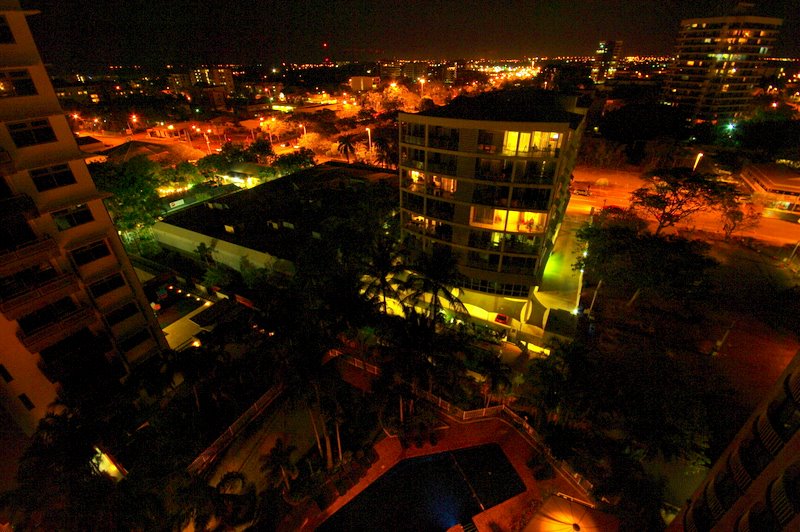
Monday, the 26 people that form our group got to know each other over drinks on the balmy veranda of the Holiday Inn.

IMGP6459

Tuesday, our first painting day,  we headed down to Government House , spread ourselves out on the rolling lawns opposite, and filled in the morning painting under the shade of a banyan tree.
IMGP6460

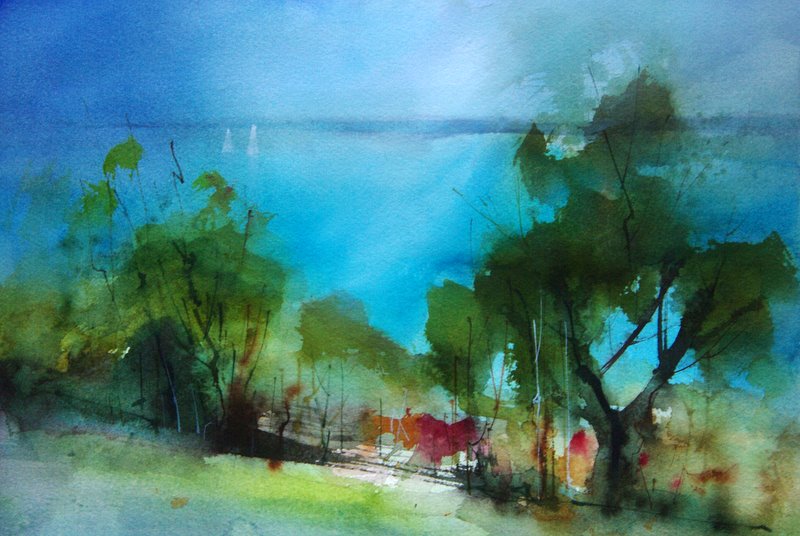
The afternoon was hot, so we found a shady spot opposite our hotel and painted the fringe of vegetation between us and the Arafura Sea

IMGP6480

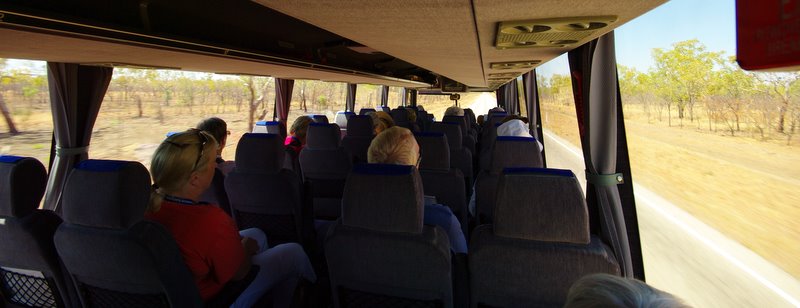
Off to Kakadu and three days at Cooinda Lodge, Our coach driver had a tremendous knowledge of the aboriginal people of the area, having lived and worked with them over the years, He took us around Nourlangie and filled us in on many of the aboriginal customs and beliefs.

IMGP6510

Nourlangie

IMGP6539

Whistling Ducks – Yellow Waters. Except for the fact that these guys are walking around, they are the most artificial looking animal I have ever seen. They don’t  like getting wet either, happy just to stand beside the water.

IMGP6551

We watched this Croc cruise past our boat accompanied by a large Barramundi with a death wish.
IMGP6588

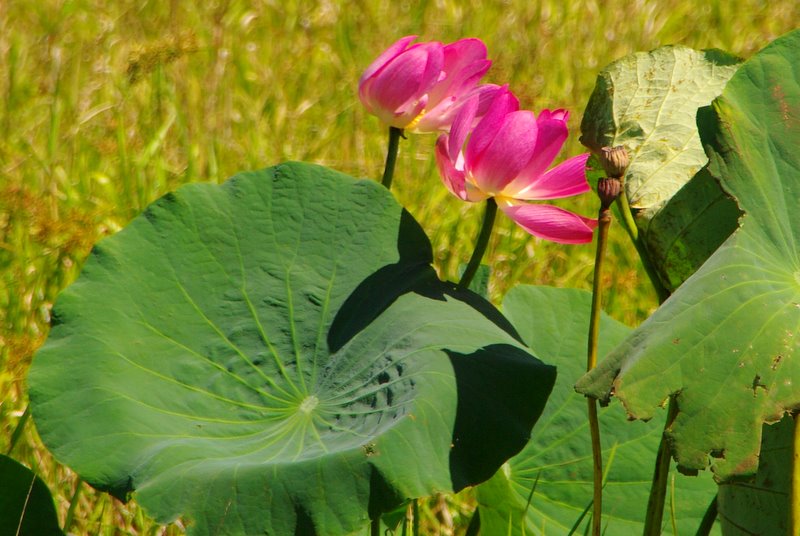
Red Lillys – It may not look like it, but every bit is edible!
IMGP6597

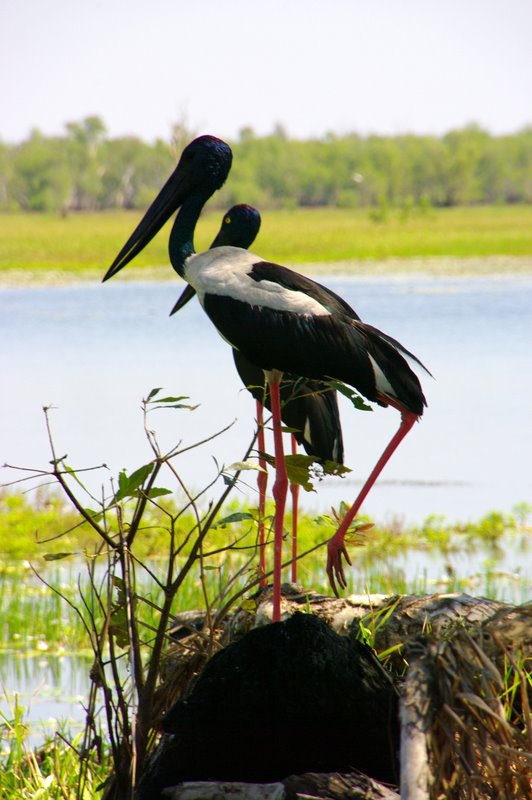
Pair of Jabiru (Male with dark eye)

IMGP6505

Cruising Black Cockatoo – they fly slowly in formation like a flock of B52’s on a mission.

IMGP6618

Wetland Waterlilies

IMGP6893

In the afternoon heat, an old Akubra in front of our lodge was a more comfortable option for a painting subject. Just so things didn’t become too comfortable, we limited ourselves to just two colours.
IMGP6622

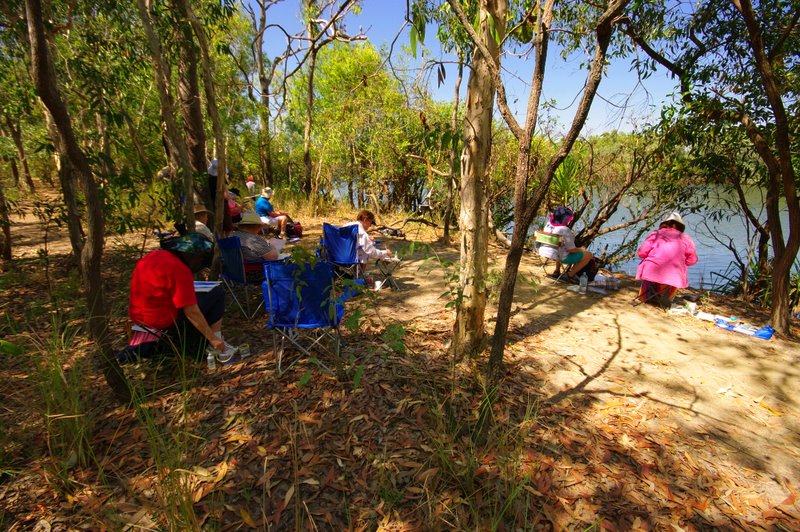
Home Billabong at Cooinda Lodge was dotted with shady clearings looking across the water – great places to paint.

IMGP6894

Home Billabong – Cooinda

IMGP6757

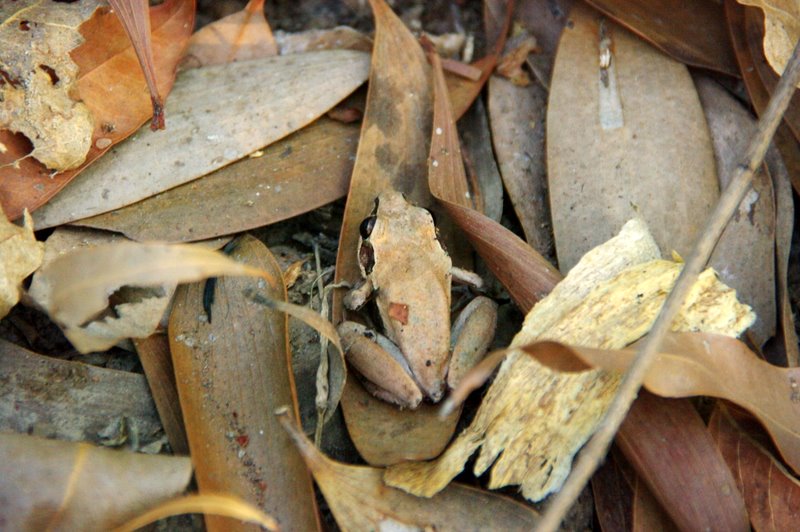
If this little fellow hadn’t hopped, we would never have seen him
IMGP6733

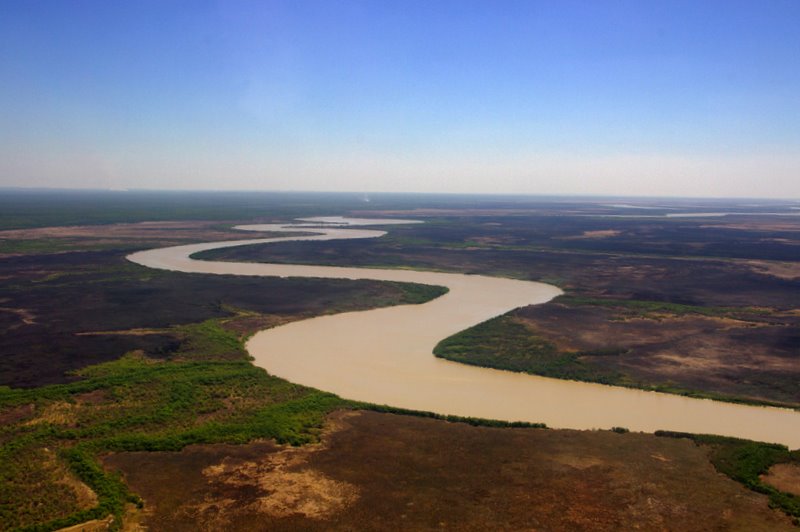
South Alligator River, meandering across the wetlands

IMGP6680

Arnhemland Escarpment

IMGP6703

Ranger Uranium Mine

IMGP6890

South to Katherine

IMGP6883

Gold rush architecture, Pine Creek NT

IMGP6896

Another shady Banyan tree, this time in Katherine
IMGP8312

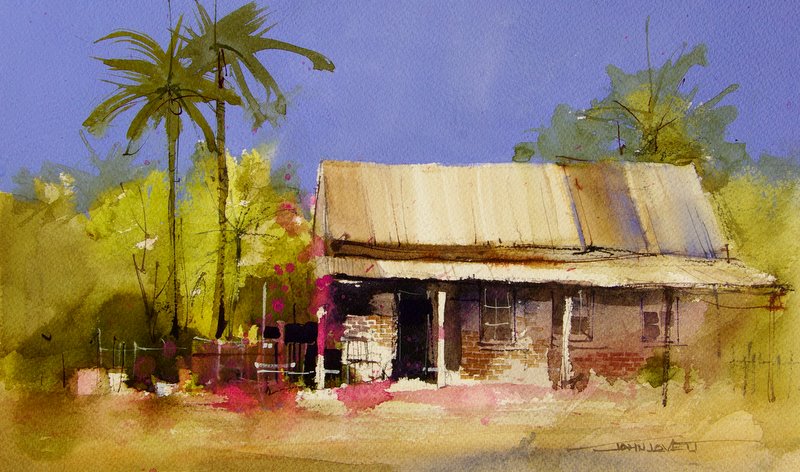
Some transparent watercolor washes and a lot of pale Ultramarine Gouache made this demo a lot of fun.

IMGP8312-1

Splashes of Alizarin, ink marks, charcoal pencil lines and fine rigger strokes suggest a lot of complicated detail without being too descriptive.

ARNHEM LAND REFLECTIONS

WATERCOLOR AND MIXED MEDIA PAINTING DEMONSTRATION

Throughout Kakadu National Park, the landscape is dominated by the Arnhem land and Kakadu escarpments. In their own  right, these bands of ancient sandstone are spectacular sights. Seen across the wetlands and  through curtains of paperbark trees, the escarpments add a rich, warm shot of colour to a fairly monochrome landscape.

In this painting I want to use a sickly pink acrylic pigment to exaggerate the warm hues of the escarpment. To really give this colour some impact I will contrast it with some raw Ultramarine Blue

IMGP5808

The spectacular Kakadu escarpment

The range of colours for this painting is very small. Medium Magenta Acrylic being the only unusual pigment.

materials

On the extreme left, above, is a small water spray. Not in the image is a 3″ Hake brush

IMG_4691

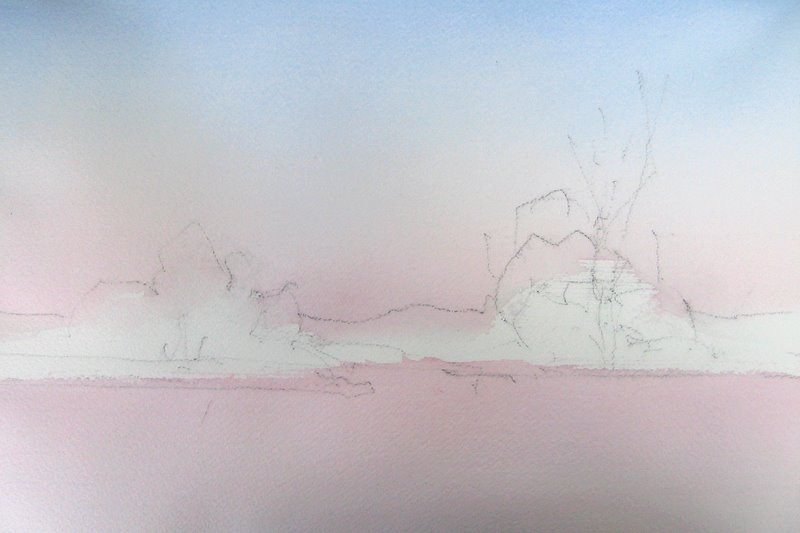
A rough sketch sketch provides just enough information to place the various elements. The first washes are gradations of Ultramarine Blue and Alizarin Crimson.

IMG_4692

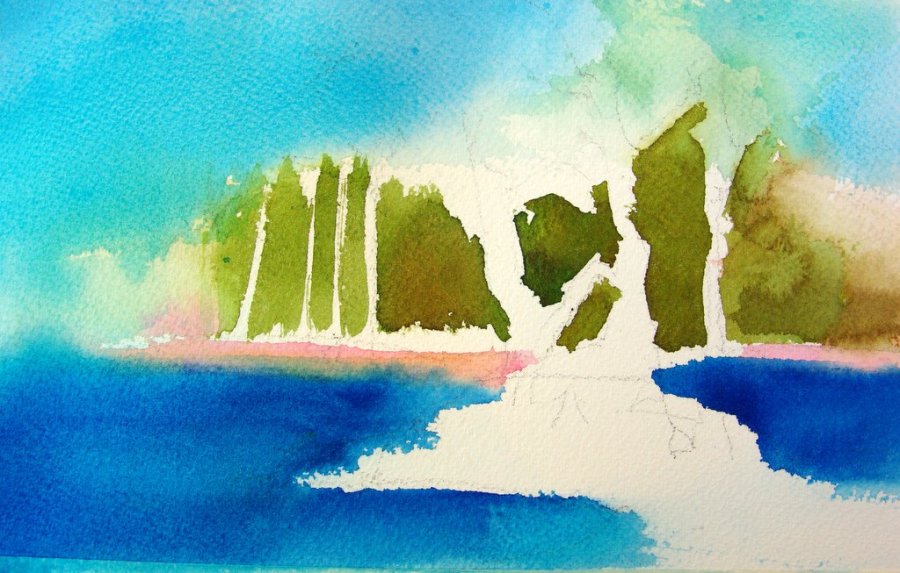
Once the first washes are completely dry, the foliage can be suggested with varying mixtures of Quinacridone Gold, Alizarin and Phthalo Blue. In order to make the shapes appear random and uncontrived, the paint is splashed onto the paper then the edges are adjusted before the pigment dries.  The important thing to remember with these shapes is to put as much variation as possible into the edges.

The horizontal bands of white paper will later be tinted to represent the horizontal line of the waters edge.

IMG_4694

More detail is added to the foliage and reflections. The pure Ultramarine that will form the shadow at the bottom of the escarpment is dropped in and softened with a damp 1″ brush

A liner brush is used to add the fine twigs and branches. The paler, main tree trunks, are lifted out with a damp 1″ flat brush.

IMG_4695

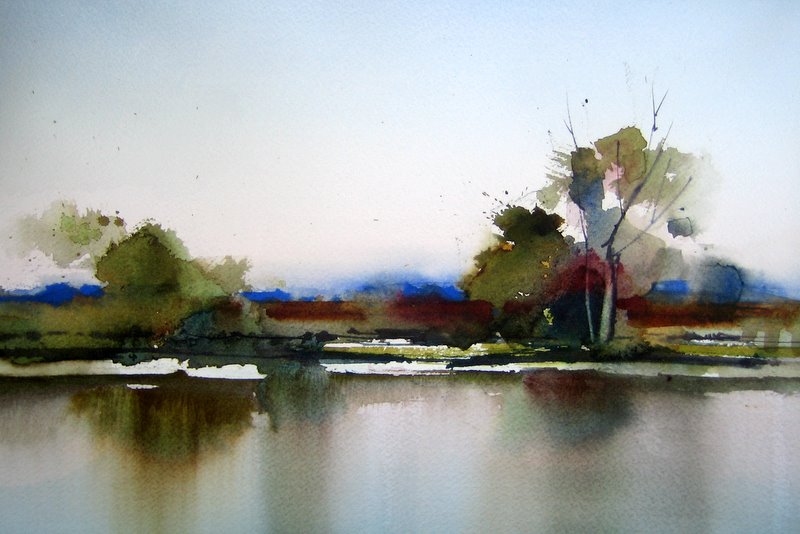
Finally the sickly pink acrylic is dropped in over a wash of Quinacridone Gold and Alizarin Crimson. A wash of Phthalo Blue cools down the water. Graded washes of Ultramarine Blue darken the outer edges of sky and water.

With the painting once again , thoroughly dry, pools of White Gouache are dropped into the sky and water and adjusted with a dry hake brush and water spray.

The last step is to add some Burnt Sienna Ink marks and Black and White charcoal pencil lines to suggest  finerl detail.

NORTHERN TERRITORY ARCHITECTURE

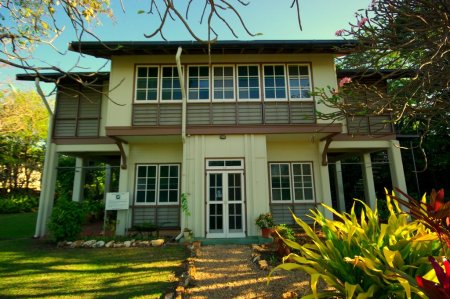
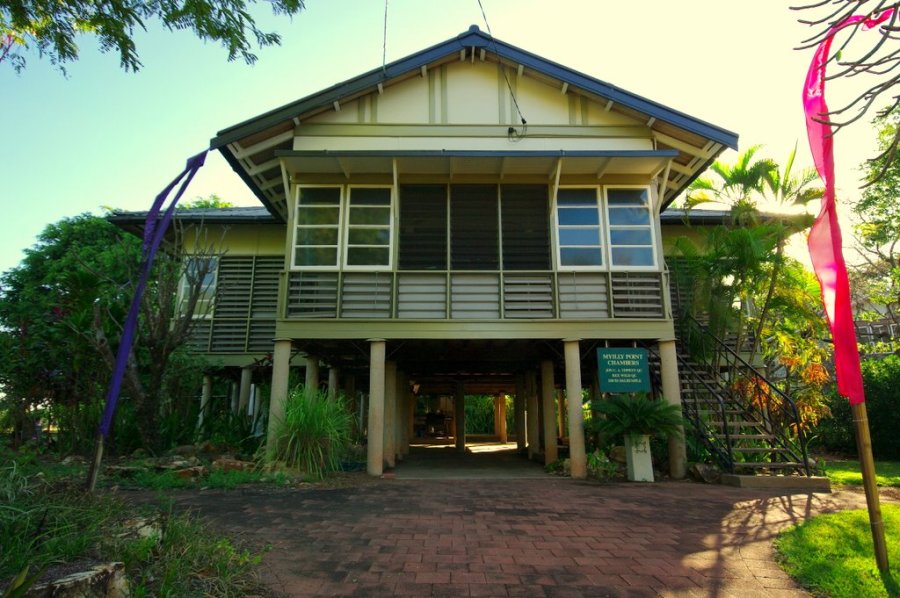
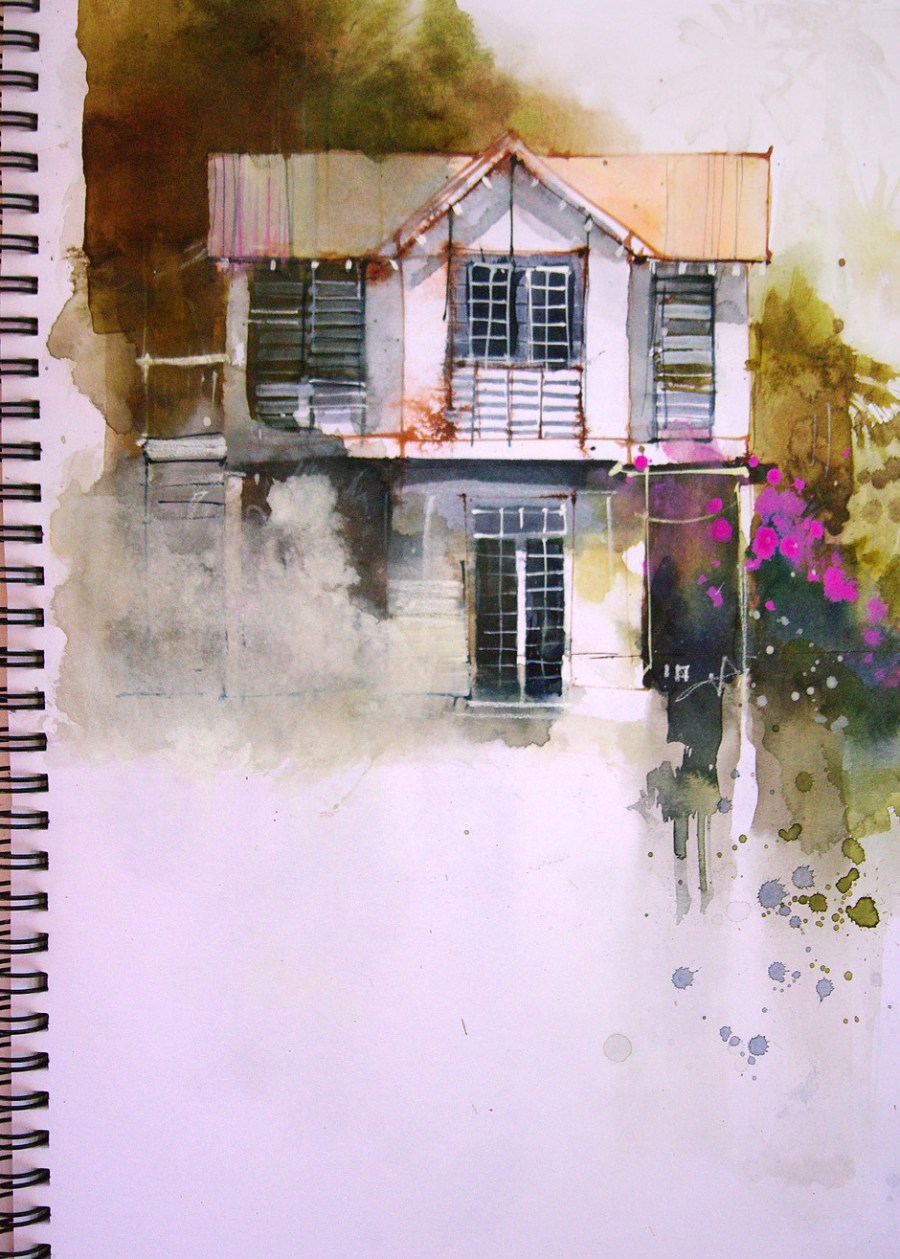
The Northern Territory has its own unique style of architecture created to cope with  the hot tropical climate. Some of the most important examples of pre WWII N T architecture are the Burnett Houses.

Beni Burnett was born in Mongolia, raised in China and worked in Singapore, Japan and China. His Northern Territory buildings are influenced by the Colonial architecture of Malaysia and Singapore.

He employed a system of screened asbestos cement louvers to allow for cross ventilation, no matter which way the breeze was blowing. Open eaves, ventilated roof ridging and open topped internal walls provided easy evacuation of warm air. Steep pitched roofs and two story construction also aid in keeping the building cool.

IMGP5602

“K Type” Burnett House – 1939

IMGP5605

“E Type”  Burnett House – 1939

IMGP5372

Parliament house in Darwin echoes the colonial windows and louvers of the traditional Burnett House

IMGP5448

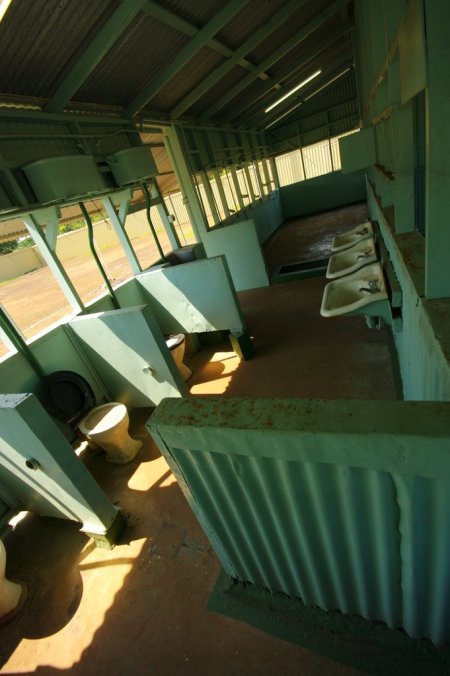
This is the toilet block at the old Fanny Bay Gaol  Darwin. From waist height, external walls are timber stud frame with fly wire mesh attached. The internal walls also stop at waist height. Great for ventilation, not so good for privacy. I have a sneaking suspicion that this may have had an influence on Burnett’s designs. I’d like to think so. The Burnett houses were originally designed for high ranking public servants. I’d like to think they lived in houses influenced by a prison toilet block.

.

.

SKETCHES

materials2

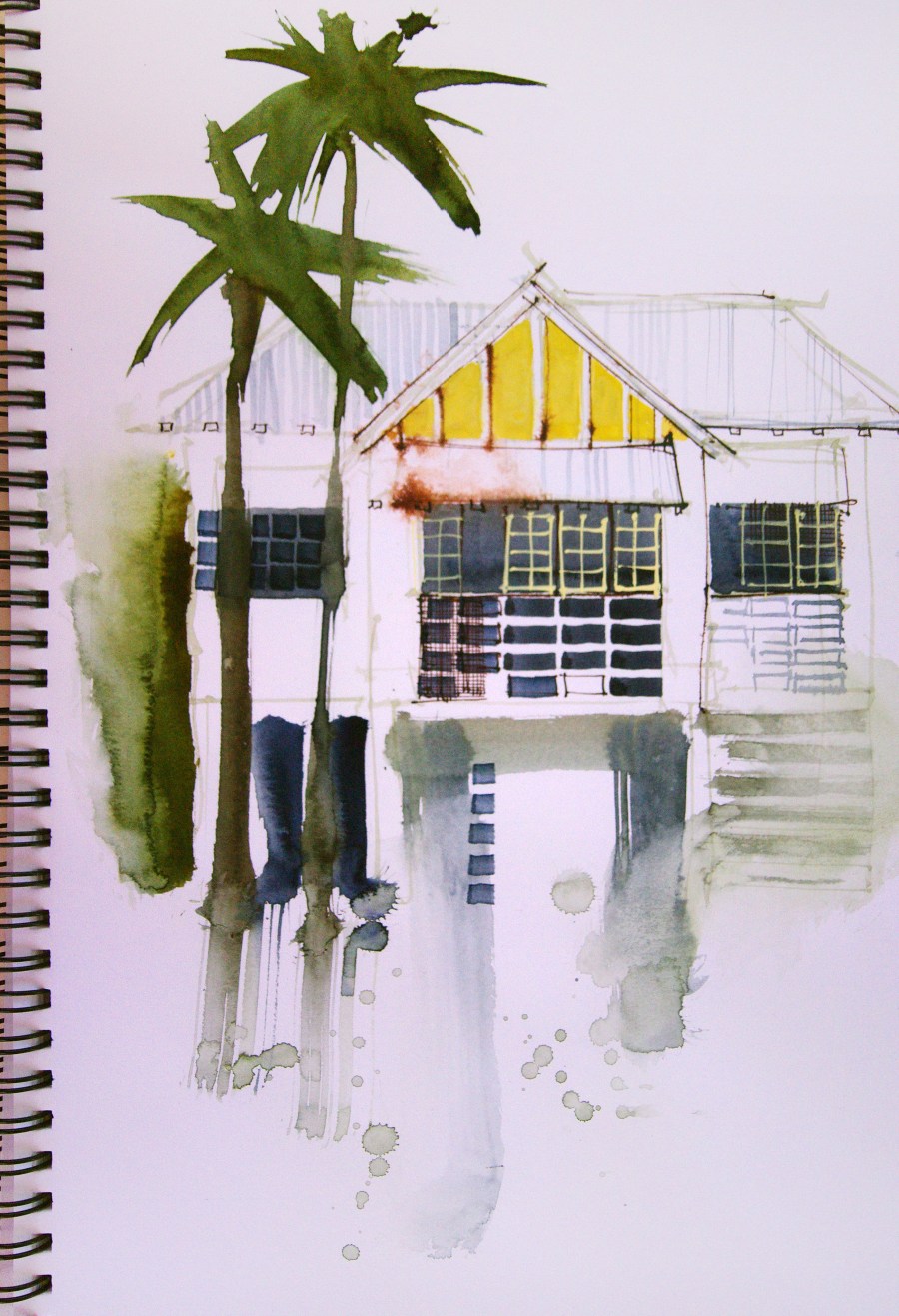
Embroidery mesh was used to press geometric squares into the colonial windows. White Gouache was also used in the sketches.

burnett 2

burnett house

burnett 1

.

.

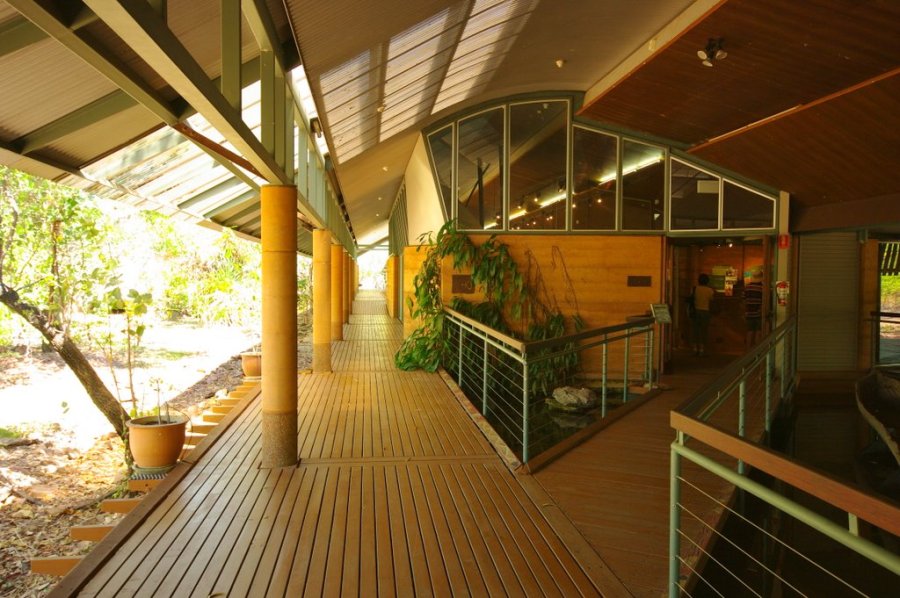
One of my favourite examples of NT architecture is the Glenn Murcutt “Bowali Visitors Centre” in Kakadu National Park. Built of  formed, tinted concrete, corrugated iron, steel and timber. Its colours and textures look to have come directly from the ground it sits on. The building feels big and open and natural, inspired by one of the rock art galleries in the Park

IMGP5677

IMGP5665

IMGP5680

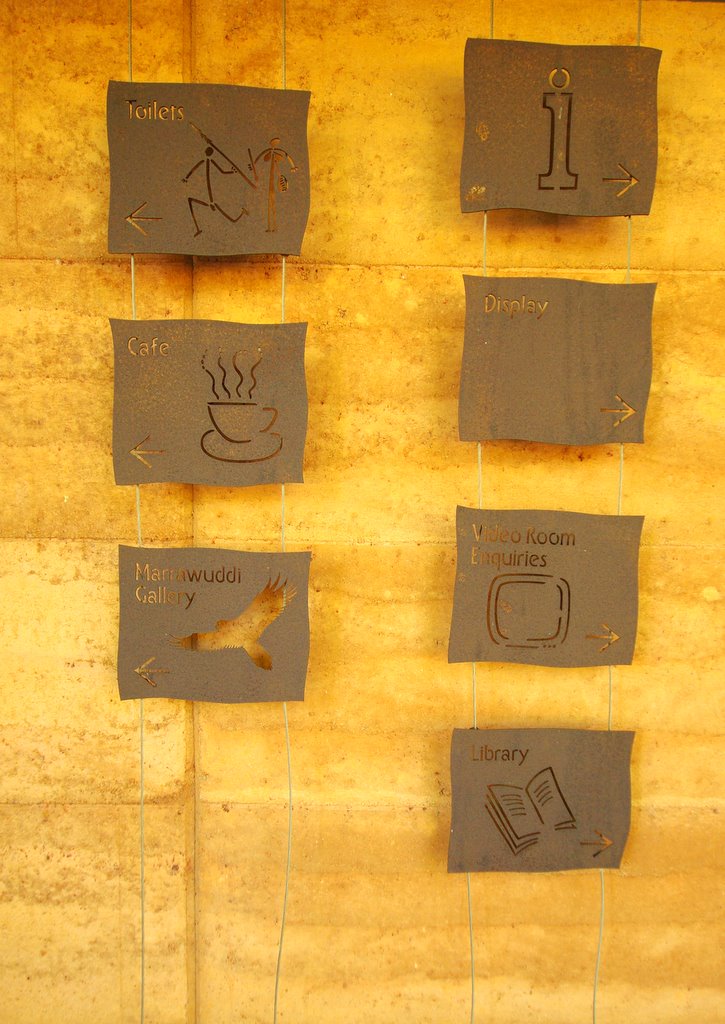
Information signs are made of 1/4″ steel plate, laser cut and left to rust. Here they are suspended by wire in front of an off the form concrete wall panel Tinted with natural ochre.

RIVER PAPERBARKS – KATHERINE

PAINTING DEMONSTRATION

The big, distorted paperbarks along Katherine River are awesome things. They defy the battering dished out by the annual wet season, accumulating scars and debris, to emerge each dry with an invincible appearance that defines the rivers character.

IMGP5089

This painting started with a simple charcoal sketch

.

.

IMGP5092

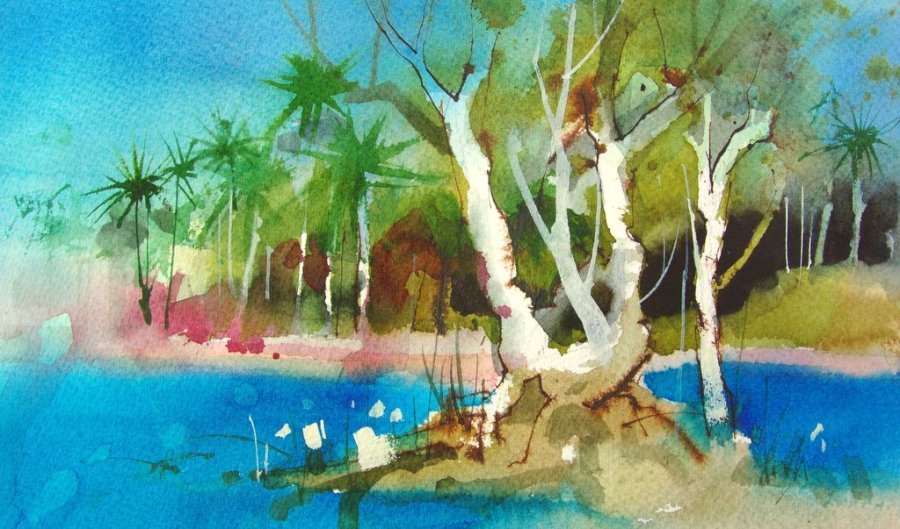
The first washes were cut in around the tree shapes with a  a dirty green mixed from Quinacridone Gold, Phthalo Blue and Alizarin Crimson. Some Phthalo Blue was dropped into the sky and a pale Alizarin dragged along the river bank.

.

.

IMGP5094

A strong  Phthalo Blue was washed into the water then diluted slightly for the sky. These areas are more intense than I want, as I plan to knock them back with a glaze of Gesso.

.

.

IMGP5097

The next step was to put a contrasting band of dark behind the main trees. More detail was added to the trees and foliage, then a few rough ink lines were scratched in. Splashes of pure Alizarin were dropped into the area I plan to soften with the Gesso glaze

.

.

IMGP5099

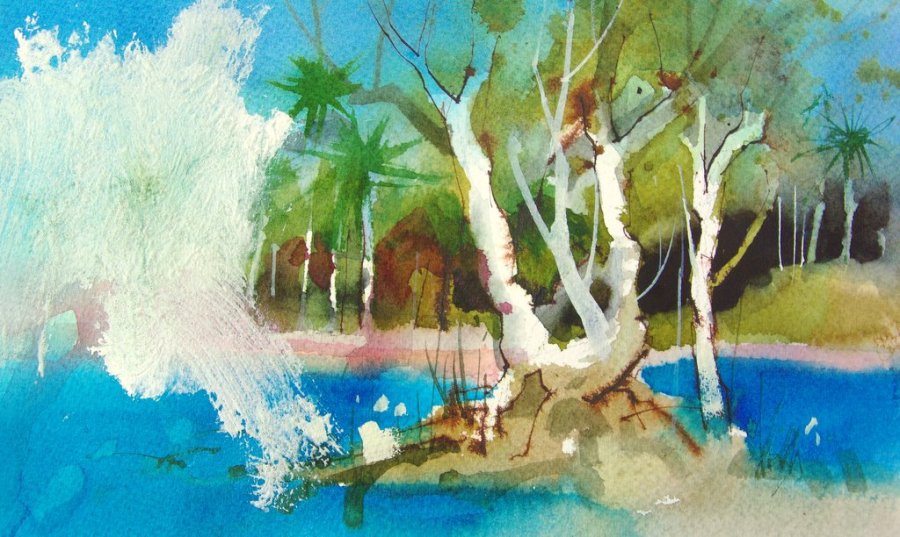
Before the colours were completely dry Gesso, straight out of the pot, was worked over the distant bank with a 1/2″ bristle brush.

.

.

IMGP5100

The Gesso was quickly spread and thinned with water.

.

.

IMGP5101

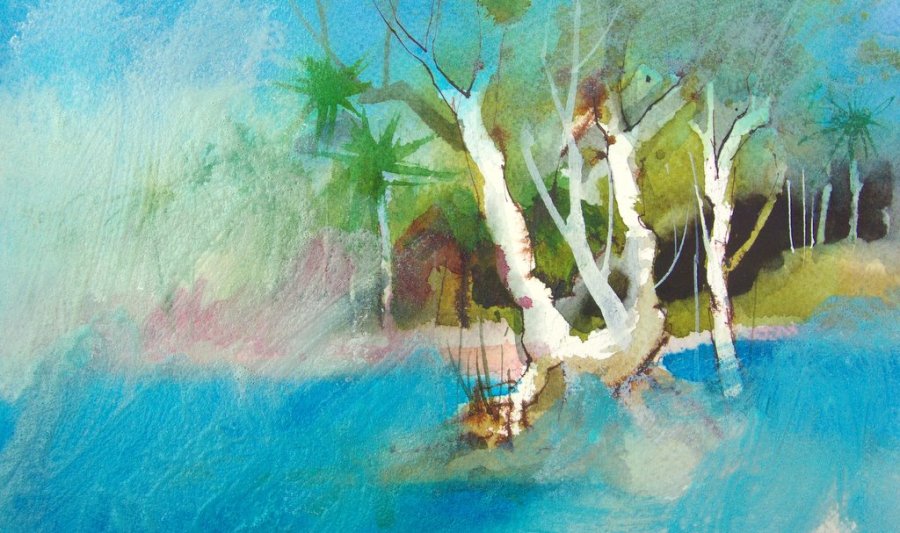
While everything was still wet a 3″ Hake brush was used to smooth the Gesso into a soft, transparent haze. This was done quickly and lightly, keeping the brush very dry with an old towel.

.

.

IMGP5102

With the painting still wet, patches of tinted white Gouache were put on and softened with a fine spray of water.

.

.

IMGP5103

The final step was to add more detail and definition with ink, white charcoal pencil  and rigger lines

MATERIALS

Phthalo Blue

Ultramarine Blue

Permanent Alizarin Crimson

Quinacridone Gold

Burnt Sienna Ink

White Gouache

Gesso

Black and White charcoal pencils

1/2″ bristle brush

1″ and 1/4″ flat taklon one stroke

#2 liner

3″ Hake

PAINTING MATERIAL

Five months traveling and three workshops, without the opportunity to restock, means a fair amount of paint, brushes and paper must be carried. I like to get as much done as possible in the workshops, so we usually complete 2-3 small paintings each day. At that pace the workshops alone will use up around 40 quarter sheets. Fortunately I only use a few colors (Indian Yellow/ Quinacridone Gold, Permanent Alizarin Crimson, Burnt Sienna, French Ultramarine Blue and Phthalo Blue) Half a dozen tubes of each of these plus a handful of other less used colors, Ink, Gesso, Gouache, a pile of brushes and pencils and things soon start to look like a mobile art supply store.

painting materials

Watercolors, Gouache, Acrylics, Gesso, Ink, Lightweight Easel, Folding Palette, Pastel Pencils, Black and White Charcoal Pencils, Derwent Inktense Pencils, One stroke Brushes, Liner Brushes, Hake Brushes, Old Bristle Brushes, Water Container and Towel

arches paper

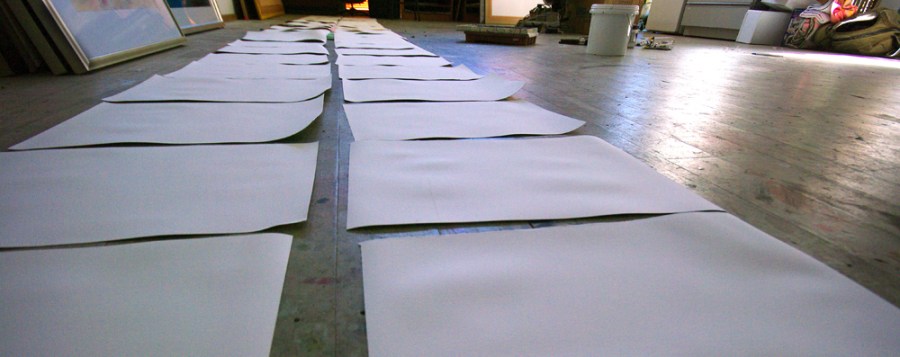
Fifty sheets of Arches 300gsm cold pressed paper – cut, soaked, flattened and drying on the studio floor.

Paper stored for traveling

Transporting watercolor paper over corrugated dirt roads can have disastrous results. Constant vibrations wear through the top surface of the sheets making them useless. Clamping the paper between two sheets of core board stops them moving against one another.

Finished paintings are clamped in the same way to keep them from damage.

WORKSHOP MATERIALS LIST

For people attending workshops, here is a list of materials I use most of the time and the brands I prefer.

PAINT

  • *Ultramarine Blue (Art Spectrum )
  • *Phthalo Blue ( Art Spectrum )
  • *Alizarin Crimson (W & N or Rowney)
  • Burnt Sienna (Rowney or Art Spectrum )
  • *Indian Yellow ( Rowney is the only real transparent one capable of mixing rich darks)       or
  • *Quinacridone Gold (Windsor & Newton) This is more permanent than Indian Yellow but a little less intense
  • *White Gouache
  • Small container of Gesso

Used less frequently : Cobalt Blue, Indigo, Rose Madder

*These are the most important colours.

INK

  • Burnt Siena pigmant ink (Art Spectrum)
  • Plain dip in pen and nib

BRUSHES

  • 1 inch flat Taklon (One Stroke)
  • 1/4 inch flat Taklon (One Stroke)
  • #2 Taklon liner

Neef are a good brand of taklon brush

  • An old 1/2” bristle house painting brush is also a handy thing to have.
  • 2” or 3” Hake brush or wide soft goat hair brush

OLD TOWEL

Handy for adjusting the amount of water in your brush.

PALETTE

The best palette is one with a fair amount of room for mixing and a slopingside on the paint wells. This allows dirty paint to run to the bottom of thewell keeping the fresh paint reasonably clean. For traveling, a small folding palette is best

PASTELS

A mixture of hard and soft pastels, Schwan Stabillo, or conte, pastel pencils and charcoal pencils.

WATER SPRAY BOTTLE

PAPER

I prefer Arches paper, but also like Saunders rough and Cottman (a cheap, heavily sized paper) for quick water colour sketches and demos