FISHERMEN’S HUTS
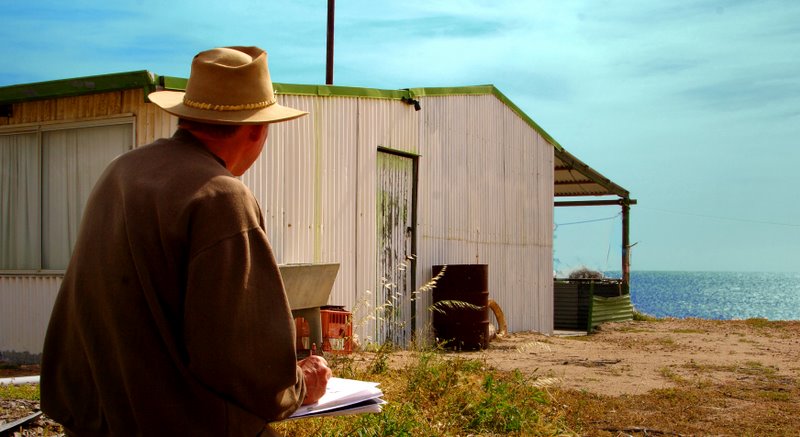
Traveling about looking for interesting things to paint is a lot of fun and occasionally you stumble upon a location you just don’t want to leave. This was the case when we followed a rough sandy track down onto an isolated West Australian beach. The sea was that pristine turquoise color and, sheltered by a low headland, were a number of unoccupied fishermen’s huts looking out to sea. The fishermen had built a makeshift jetty and scattered about were lobster pots, nets, floats, ropes and all the tools of the fishermen’s trade.
The area was stark and windswept, and the salt air had rusted, corroded and faded everything in site. We wound our way along a sandy track past the huts and set up camp under the shelter of the headland. It was a short walk back to the huts to sketch and paint.
What appealed to me was the bleached weathered look of everything and the interesting contrast between warm and cool blues. For this reason I chose a palette containing three blues. Phthalo, Ultramarine and Cobalt. The only other colors were Permanent Alizarin Crimson and Quinacridone Gold.
These five pigments give us a good range of colors to suit our subject. Quinacridone Gold doesn’t give us a saturated yellow, but this subject doesn’t require one. What we do have is a warm, neutral and cool blue. The Ultramarine leans towards violet, so contains a little red. This is our warm blue. The Cobalt is neither warm or cool. It is about as close as we can get to a pure primary blue. The Phthalo leans towards green, so contains a little yellow. It is our cool blue.
The rough layout drawing was sketched in lightly with a charcoal pencil. Just enough information to indicate where the main shapes will go.
A graded wash of Cobalt Blue was put through the sky and water and allowed to dry. The sandy foreground was washed in with a mixture of Quinacridone Gold, Alizarin and a touch of Ultramarine. Some more Quinacridone Gold and a little Phthalo was added to the sandy color on the palette. This was then splashed into the still wet foreground.
The next step was to wet the sea and drop some pure Ultramarine along the horizon. Before this dried Phthalo blue was put into the lower part of the sea. The shadow areas of the hut were painted with a neutral gray, then Alizarin was dropped in while it was still wet. The important thing to remember at this stage is to leave those punctuating white marks. The bushes were mixed from Quinacridone Gold, Phthalo Blue and a little Alizarin. They were not applied until the painting was completely dry. This meant the edges could be softened with a damp, clean 1″ brush without disturbing the washes underneath. The blue surrounding the door is pure Cobalt.
Fine details were added next with a No.2 Rigger Brush. A few Burnt Sienna ink lines were also added and sprayed with a mist of water to make them bleed and run
The final step after adding some more detail to the foreground, was to grade a wash of straight cobalt in from either side of the painting. This helps focus attention on the center of interest and makes the warm colors of the hut jump out from the surrounding area of cool. For these Cobalt washes to succeed the painting first needs to be thoroughly dry.
The old makeshift jetty was great to draw with all the interesting negative shapes and varied lines and spacing.
After I finished the sketch, a series of graded washes using the same five colors was laid over the pencil lines. A few dark rigger lines added strength to the pencil marks and a couple of patches of white paper draw attention to the center of interest.
WATERCOLOR PAINTING DEMONSTRATION
www.johnlovett.com – opens in a new window
Traveling about looking for interesting things to paint is a lot of fun and occasionally you stumble upon a location you just don’t want to leave. This was the case when we followed a rough sandy track down onto an isolated West Australian beach. The sea was that pristine turquoise color and, sheltered by a low headland, were a number of unoccupied fishermen’s huts looking out to sea. The fishermen had built a makeshift jetty and scattered about were lobster pots, nets, floats, ropes and all the tools of the fishermen’s trade.

The area was stark and windswept, and the salt air had rusted, corroded and faded everything in site. We wound our way along a sandy track past the huts and set up camp under the shelter of the headland. It was a short walk back to the huts to sketch and paint.

What appealed to me was the bleached weathered look of everything and the interesting contrast between warm and cool blues. For this reason I chose a palette containing three blues. Phthalo, Ultramarine and Cobalt. The only other colors were Permanent Alizarin Crimson and Quinacridone Gold.

These five pigments give us a good range of colors to suit our subject. Quinacridone Gold doesn’t give us a saturated yellow, but this subject doesn’t require one. What we do have is a warm, neutral and cool blue. The Ultramarine leans towards violet, so contains a little red. This is our warm blue. The Cobalt is neither warm or cool. It is about as close as we can get to a pure primary blue. The Phthalo leans towards green, so contains a little yellow. It is our cool blue.

This painting was started with a graded wash of Cobalt Blue put through the sky and water then allowed to dry. The sandy foreground was washed in with a mixture of Quinacridone Gold, Alizarin and a touch of Ultramarine. Some more Quinacridone Gold and a little Phthalo was added to the sandy color on the palette. This was then splashed into the still wet foreground.

The next step was to wet the sea and drop some pure Ultramarine along the horizon. Before this dried Phthalo blue was put into the lower part of the sea. The shadow areas of the hut were then painted, leaving those punctuating white marks. The bushes were mixed from Quinacridone Gold, Phthalo Blue and a little Alizarin. They were not applied until the painting was completely dry so the edges could be softened. The blue surrounding the door is pure Cobalt.

Fine details were added next with a No.2 Rigger Brush. A few Burnt Sienna ink lines were also added and sprayed with a mist of water to make them bleed and run.
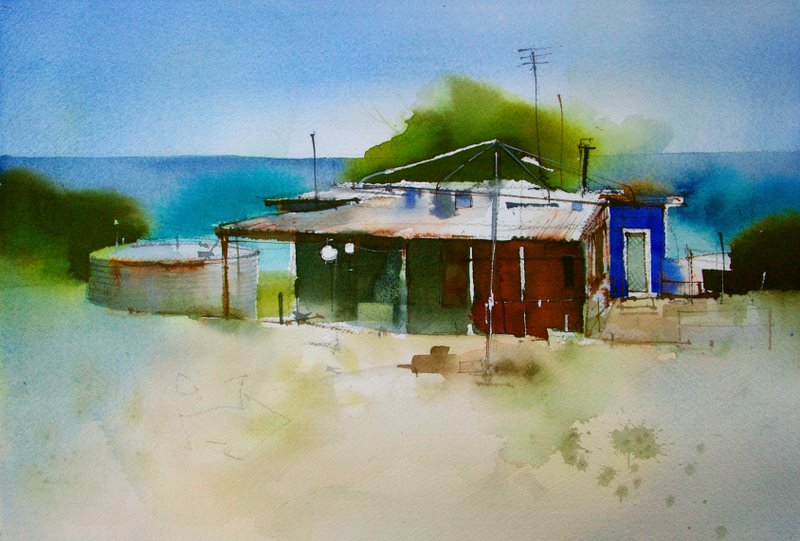
The final step after adding some more detail to the foreground, was to grade a wash of straight Cobalt in from either side of the painting. This helps focus attention on the center of interest and makes the warm colors of the hut jump out from the surrounding area of cool. For these Cobalt washes to succeed the painting first needs to be thoroughly dry.

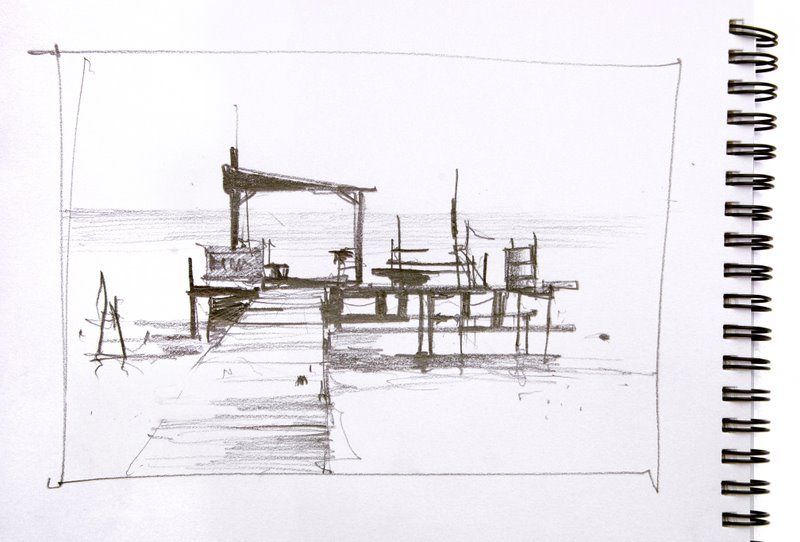
The old makeshift jetty was great to draw with all the interesting negative shapes and varied lines and spacing.

After I finished the sketch, a series of graded washes using the same five colors was laid over the pencil lines. A few dark rigger lines added strength to the pencil marks and a couple of patches of white paper draw attention to the center of interest.
This article will appear in full in the next issue of INTERNATIONAL ARTIST MAGAZINE.



















 Splashing Paint