TALL TALES

One of the great things about the International Artist workshops is the chance to travel to interesting places and accumulate information and ideas for exhibitions. Recent workshops in Italy and Sicily provided an enormous amount of inspiring ideas.
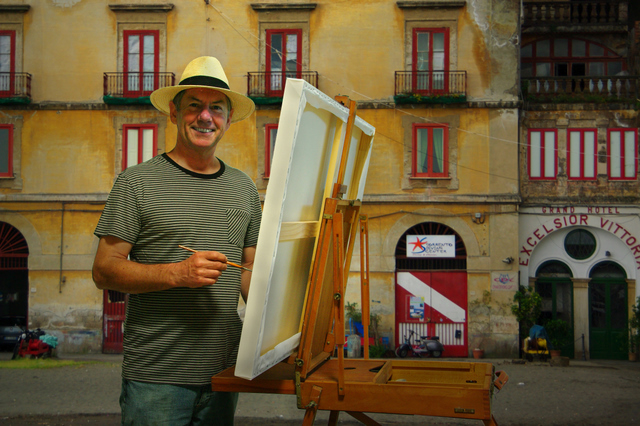
After gathering and sorting information, putting together a collection of paintings for an exhibition is a lot of hard work. It becomes an obsession for four or five months – sometimes frustrating and annoying, other times, satisfying and inspiring.
I like to have a theme or unifying element to an exhibition. It helps with the creation of the work and presents a cohesive and more engaging package to the viewer.
My current exhibition, “Tall Tales” is based on the loose interpretation of fascinating incidents, customs and beliefs witnessed in Italy and Sicily. Rather than try and find out the truth, I relied on my own interpretation of what I experienced. Not speaking the language, or understanding many of the local customs allowed for a much freer interpretation. The truth is fine for history books and anthropological studies, but for me, tall tales make much better paintings.

Tall Tales opens at Moulton Galleries 777 Military Rd Mosman, Sydney 6:00pm 29th October and runs for one month.

Here are a few of the paintings from Tall Tales
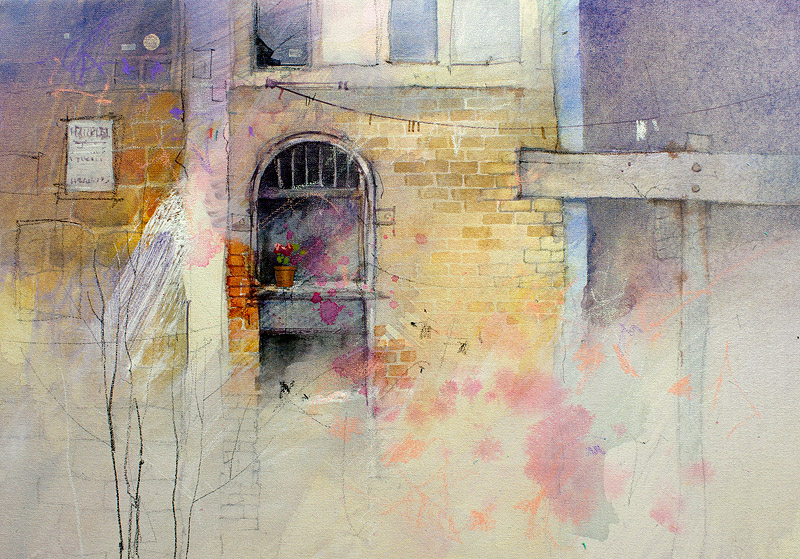
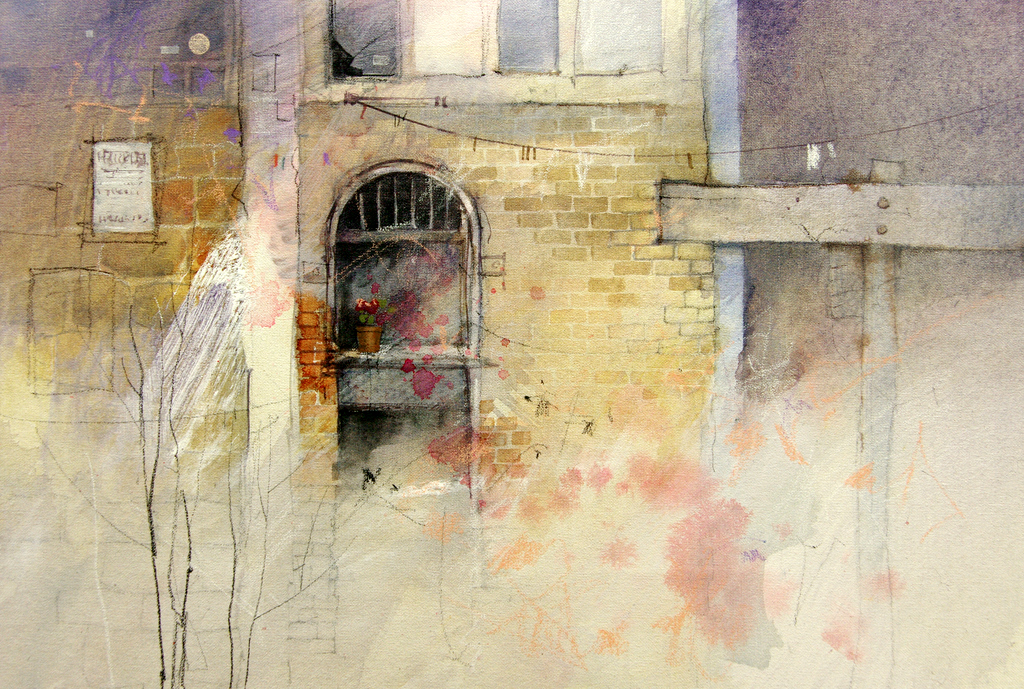
“Palermo Geraniums”
On a dusty window sill in the rundown center of Palermo, a small pot of geraniums are lovingly watered each day as the city slowly crumbles around them.

“Lovers Beach”
A small corner of Southern Italy where the day to day life of traditional fishermen mix with the opulent lifestyle of a five star Hotel. Walking along the beach before sunrise reveals fresh graffiti, religious icons and a discarded pair of red stilettos – all the ingredients for another tall tale.

“Dreams of The Open Sea”

(480×530 watercolor on Arches 300gsm paper)  In a tiny sea side village a Sicilian fisherman lovingly coaxes life back into a small wooden boat.
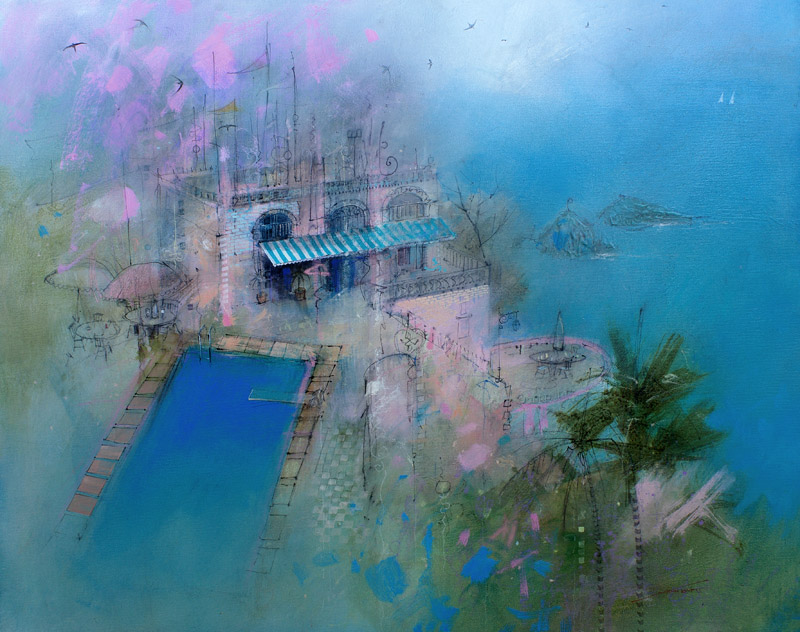
“Rain birds Whirl”
The spiraling arcs of rain birds echo the ornate flourishes of opulent Italian pre war architecture.

“Notes On a Door”

The Sicilian village of Taormina has some beautiful old buildings. This doorway to an ancient church was pinned with hand written notes, all scribbled in Italian. I could have deciphered them with the phrase book, but that may have ruined the tale that they were the guilty confessions of many strayed parishioners.
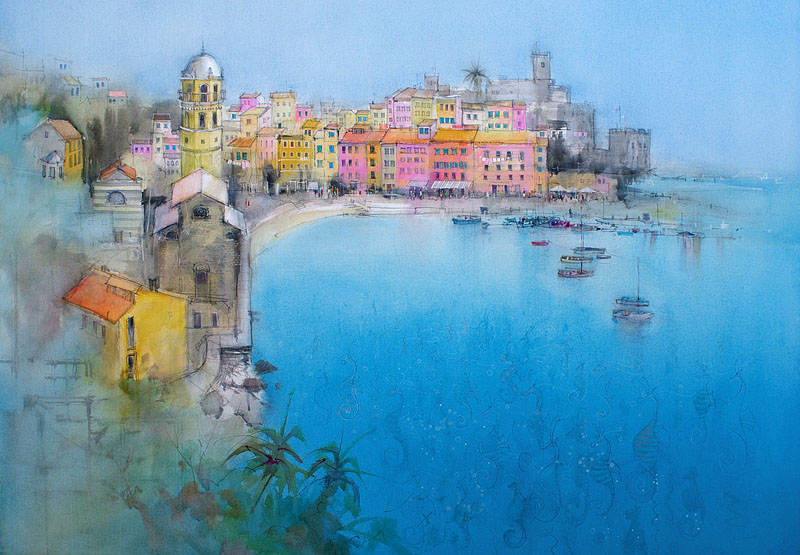
“Creatures in the Bay”

(900×1200 mixed media on watercolor canvas) The quaint and picturesque villages of the Cinque Terre attract crowds of magnificently decorated visitors.

“Under Gina’s Window”
Life goes on in Palermo, a city whose colourful history doesn’t seem to affect the daily life of its inhabitants. Pigeons are fed and an unlocked bike defies the history of theft, murder and corruption.
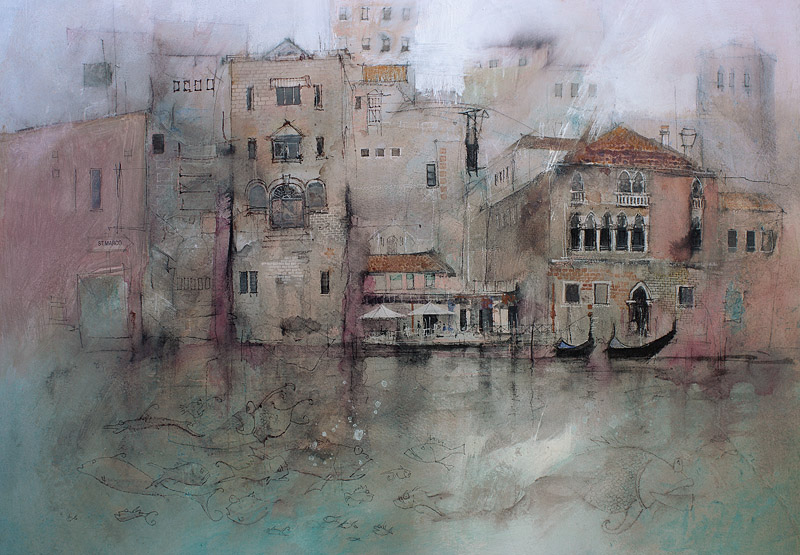
“Canal Life”

(530×760 mixed media on 600gsm paper) Tiny glimpses of life in the milky backwaters of Venice. This painting was done on heavy paper and mounted down on a gesso primed board using acrylic medium. It was finished with a satin acrylic varnish
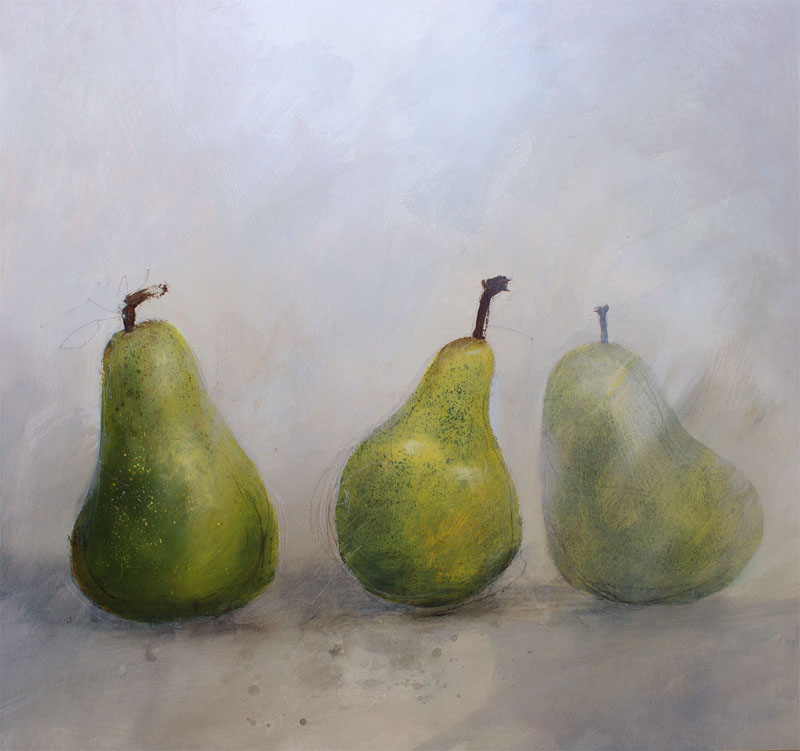
“Stolen Fruit”

(590×630 mixed media on board) The risk of jumping the orchard fence makes even the greenest pears taste good.
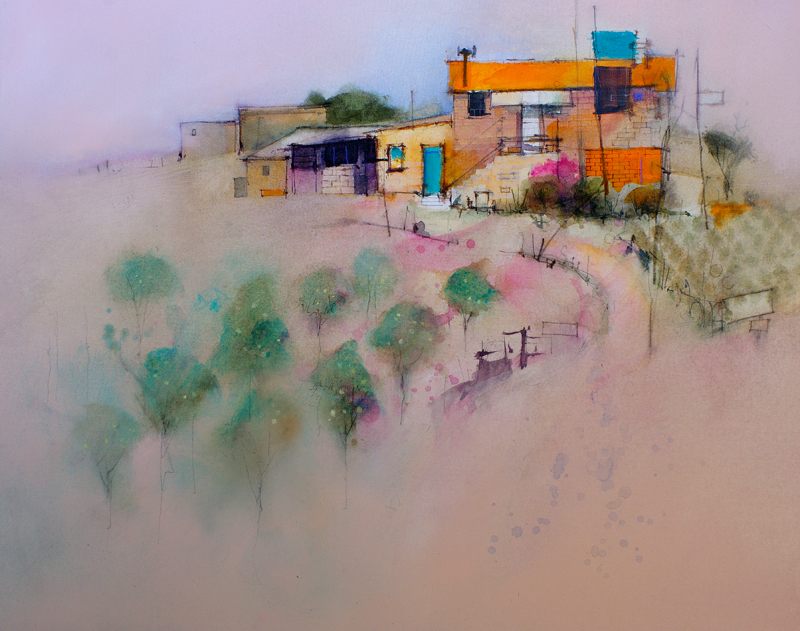
“On a Dry Sicilian Hill”

(600×760 Watercolor and mixed media on watercolor canvas) A Sicilian farmer coaxes lemons, olives and cabbages from a dry dusty hillside.
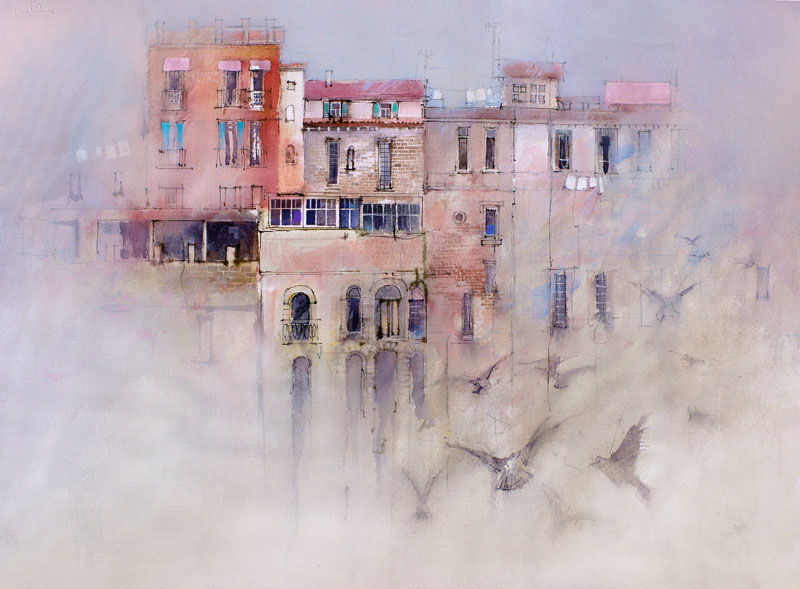
“Pigeons in a square”

(530×760 watercolor, ink, charcoal and Gesso on textured paper) A flock of pigeons cut spiraling arcs against the formal, geometric facades of ancient buildings.

If you happen to be in Sydney on Friday 29 October 2010, drop in to the Moulton Gallery (777 Military Rd, Mosman)  for a glass of wine and a chat.

SWELL

This time each year the annual SWELL sculpture festival takes over Currumbin Beach. It officially opens this weekend, but this morning most of the works were in place . An awesome spectacle –  the sculptures relate to the local environment and look fantastic set against the ocean in the early morning light.

LEONARDO VIA IPHONE

Back in the early 1500’s Leonardo Da Vinci was busy filling notebook after notebook with all his accumulated knowledge on painting, anatomy, mechanics, hydraulics and pretty well everything he observed.  One of the greatest thinkers of the renaissance, Leonardo probably never imagined his notes would be translated, digitized and made freely available to artists in the 21st Century. Yesterday I downloaded iBooks to my iPhone, and there for free, in the iBooks download section, was “The Notebooks of Leonardo Da Vinci – Complete” thanks to the efforts of Project Gutenberg.

It makes fascinating reading and is packed with practical methods and techniques used by Da Vinci’s in his paintings and drawings.

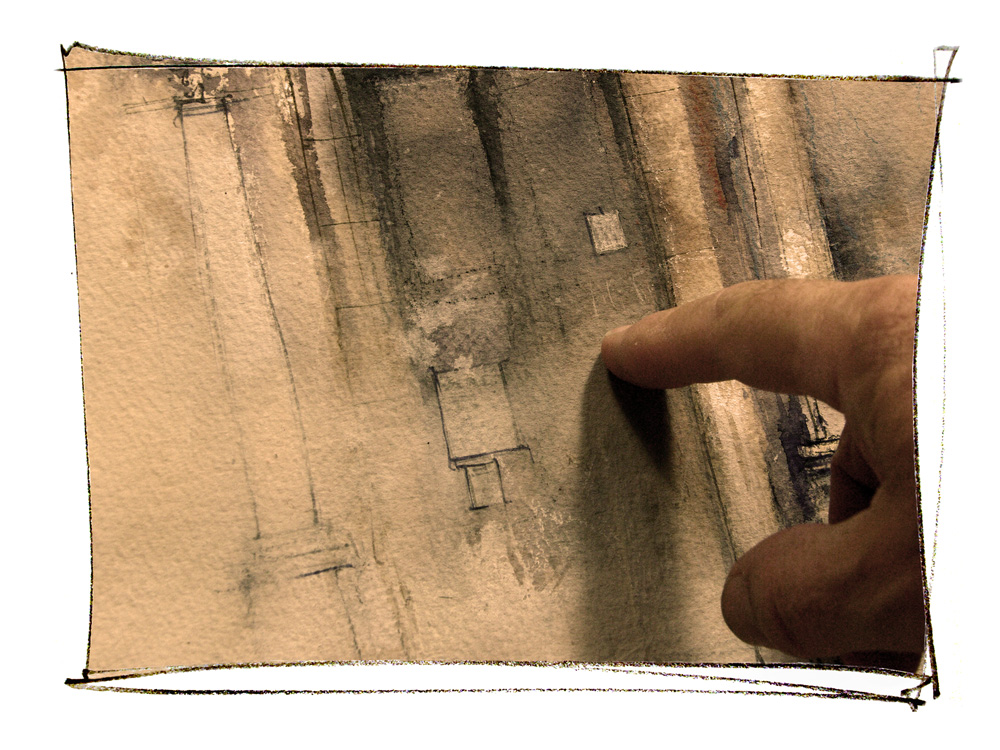
Here is his technique for checking that a painted shadow is the right color.

“When you draw a figure and you wish to see whether the shadow is the proper complement to the light, and neither redder nor yellower than is the nature of the colour you wish to represent in shade, proceed thus. Cast a shadow with your finger on the illuminated portion, and if the accidental shadow that you have made is like the natural shadow cast by your finger on your work, well and good; and by putting your finger nearer or farther off, you can make darker or lighter shadows, which you must compare with your own.”

The complete Notebooks of Leonardo Da Vinci are freely available through the Project Gutenberg website.  Downloadable in a number of formats all under 1.5MB

WATERCOLOR CANVAS

While we were in Italy one of the artists in our group, Lety Herrera, from Mexico, asked if I had ever tried Watercolor Canvas. I hadn’t, and she suggested I should, so when I arrived home I picked up a pad of small sheets. I was amazed how good it was to work on and how well the washes reacted to the primed surface. I did a couple of small paintings then ordered a roll of the canvas.

It needs to be stretched or mounted securely to a board before you paint on it or it will buckle and twist badly, making it impossible to work on. The paint tends to sit more on the surface than it does on paper, and can easily be washed back to clean canvas. This may sound like a problem, but you soon get use to gently working over underlying washes so as not to disturb them. Eventually, the ability to easily lift off pigment becomes an advantage, allowing tones to be adjusted and whites to be retrieved at any stage.

You may wonder why work on watercolor canvas when there are so many excellent watercolor papers. For me, the big advantage is not having to place the finished painting under glass plus the option to work on a larger surface. Once finished the paintings need to be treated with a suitable varnish.

Palermo Geraniums

.

.

Sorrento Breeze –  Marina Grande

I still love the feeling of painting on watercolor paper but this watercolor canvas offers a new way of working and different way to present your work. I see it as an extension to the traditional format of watercolor on paper. Acrylic, ink and pastel can also be incorporated into these paintings.

Fredrix Watercolor canvas is acid free, 100% cotton canvas, primed with a patent pending, specially formulated Gesso for all water based paints. It is available in pads, boards and in a 58″x 3 yard roll.

PAINT RECYCLING

Do you have a collection of dried up paint tubes you just can’t bring yourself to throwing out?

Here is a way to bring the paint back to life.  I found a small pestle and mortar hidden in the back of a kitchen cupboard. It turned out to be the perfect device for grinding the contents of all those dried out tubes into a fine powder, ready to be brought back to life.

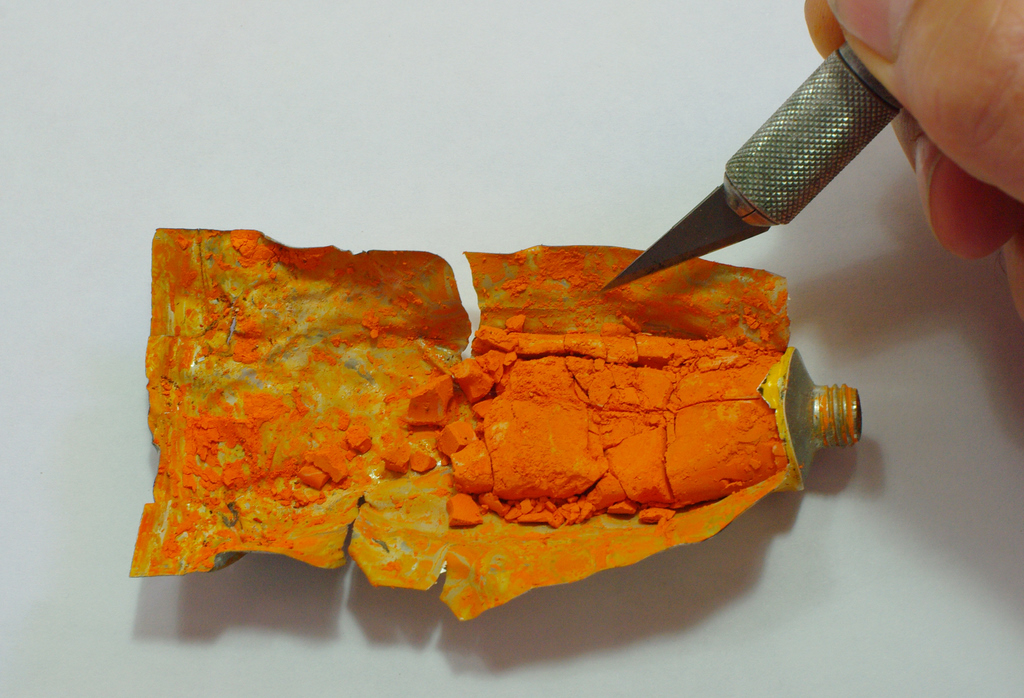
The first thing to do is cut open the tube and empty the dry lumps of pigment into the motar

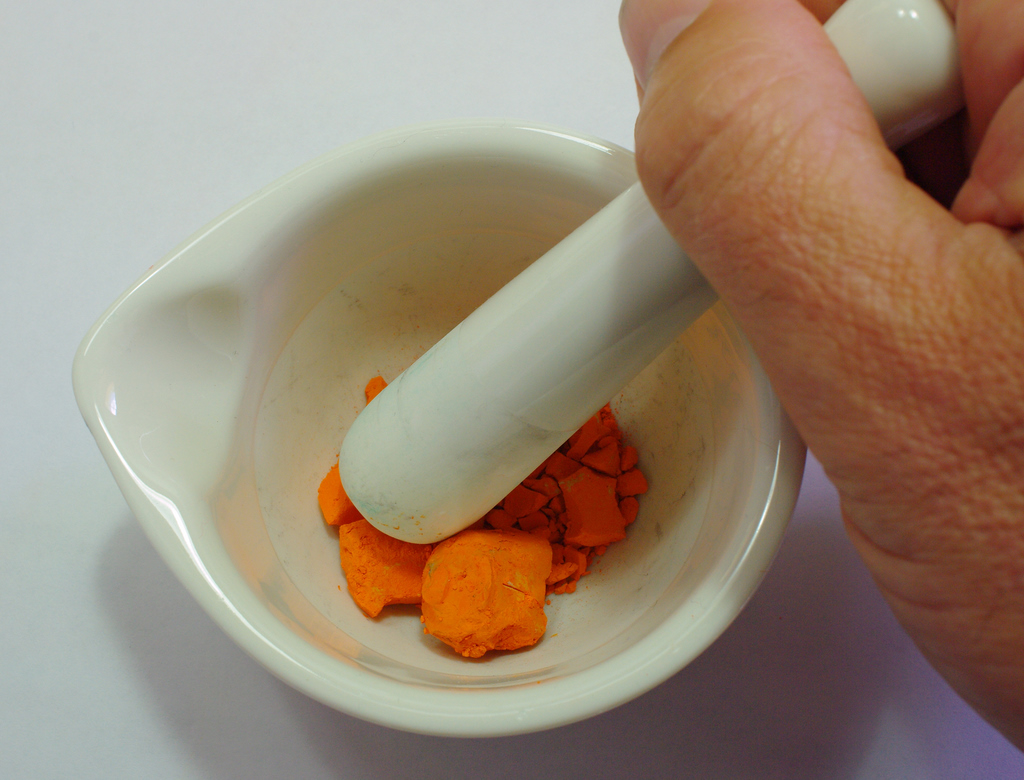
Next step is to grind them to a fine powder. The pigment sticks to the pestle, so a metal palette knife is handy to scrape and loosen the pigment.

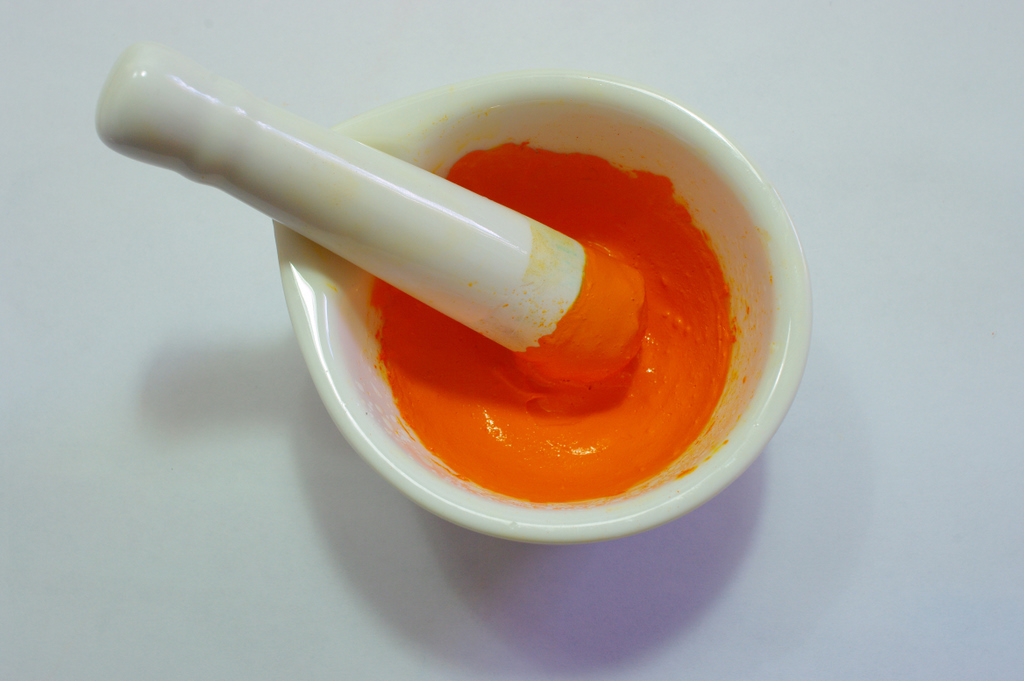
Once the pigment is a fine even powder, slowly stir in some water. Just enough to make a thick, creamy consistency. Keep grinding the paste for a few minutes to make sure there are no small, unbroken lumps left.

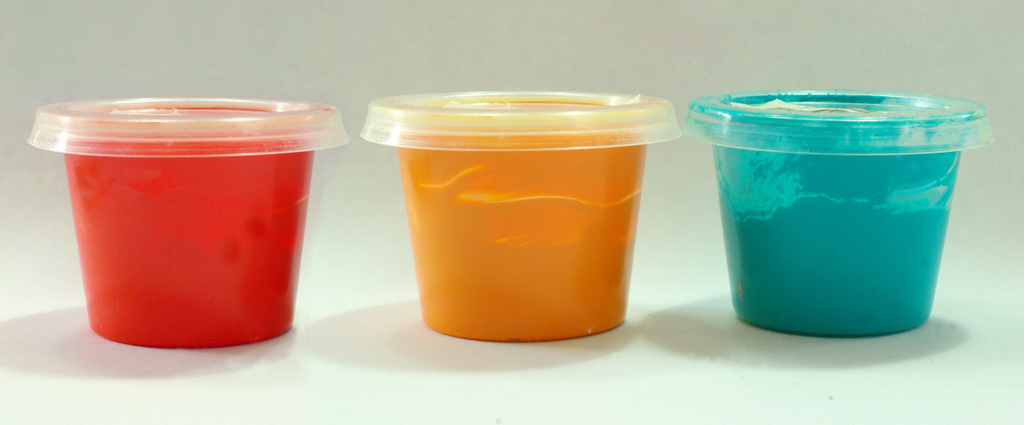
The final step is to scoop the recycled paint into a container. These little plastic sauce containers come from the local Thai restaurant – a couple of dollars for a plastic bag full. A piece of masking tape with details identifying the brand and color is a good idea before you throw away the empty tube.

WARNING

Some pigments contain heavy metals such as Cobalt and Cadmium (check the warnings on the tube). Be careful not to breathe in or swallow the dust off these. Wear a suitable mask if in doubt.

.

SMALL DREAMS

After a few months of editing, adjusting and tweaking, I have finally got this project off the ground.

It is a collection of photographs woven into a tale describing the thoughts and dreams of a dozen kids growing up in a rundown mining town on the fringe of a desert in outback Australia.

Hope you enjoy it.

COLOR TEST

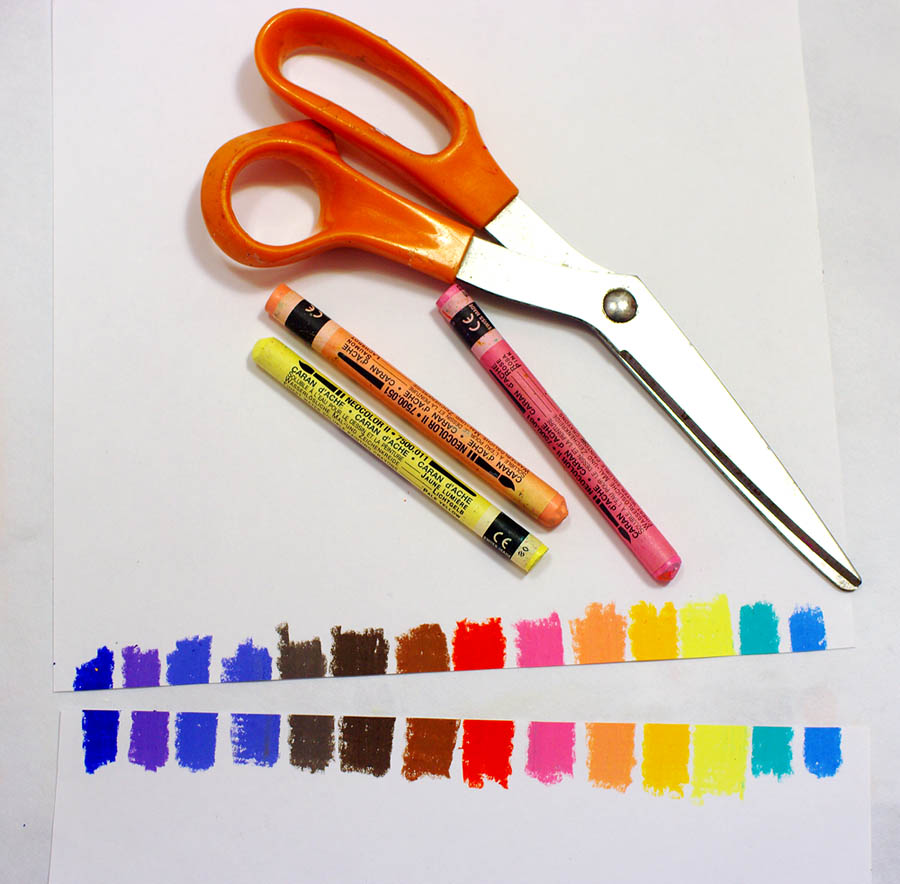
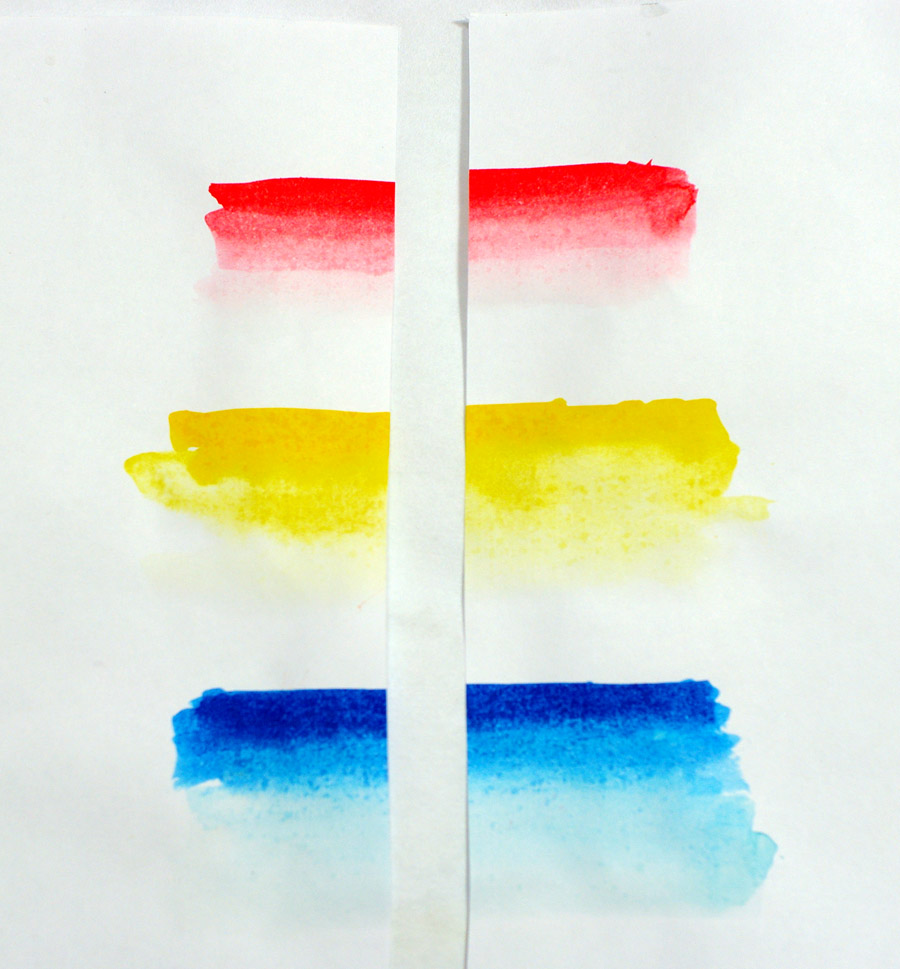
After the excitement of playing with a pile of new art materials dies down, the important job of testing for light fastness must be done. It is a simple task, but takes a couple of months to yield a result. The test involves putting a mark of all the new materials onto a piece of paper. Cutting the paper so that the marks are cut in half, then placing one half behind glass, on a window sill or ledge exposed to the sun and the other half in a book or dark draw.  After 2 – 3 months compare the two halves and don’t use any of the products that show signs of fading or color shift.

With the ink marks, a graded dilution with clean water will also show the permanence of thin washes.

Many manufacturers provide light-fastness and permanence ratings on their products, but, for the small effort involved, it is worthwhile checking for yourself.