THE PILBARA

www.johnlovett.com

pilmap

The Pilbara region in the northern half of WA  not only contains some of the countrys most beautiful scenery, but also generates the bulk of Australias foreign income. Tens of millions of dollars worth of iron ore, oil, gas and salt are shipped out of this area every day. The major towns of Port Hedland, Dampier, Karratha, and the mining towns of Tom Price and Newman are prosperous and incredibly busy.

Newman mines run 24 hours a day, the average wage of a mine worker is around $150,000/ year. They work a 12 hour shift, night shift one week, day shift the next week then the third week off. Food, accommodation, work clothes and equipment is all provided by the company.

IMGP9974

Huge trains, over 2 kilometers long , run constantly back and forth between the coast and the mines.

IMGP9983

Catching one of these trains at a crossing sure gives you plenty of time to stop and take a photograph.
IMGP9901

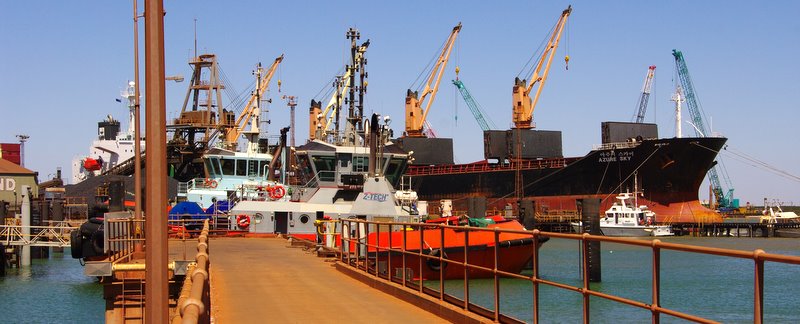
The little town of Port Hedland has an incredibly busy port, with a constant string of ships waiting at sea to come in and load.

IMGP9906

The whole town is coated in a fine red dust from the iron ore loading. Even the concrete shipping tower, high above the town, is stained iron ore red.

IMGP9896

It was disappointing to learn that the mountains of salt shipped out of Dampier and Port Hedland don’t find their way into little paper sachets to sprinkle on fish and chips.

Dampier Salt (owned by Rio Tinto) is the largest salt exporter in the world, selling mainly to the industrial chemical markets in Asia. It’s hard to imagine 5 million tons of salt being shipped across to Asia each year. It’s even harder to believe it has nothing to do with the salty taste of Asian food.

IMGP9912

A fine piece of installation art on the salt flats outside Dampier.
IMGP9995

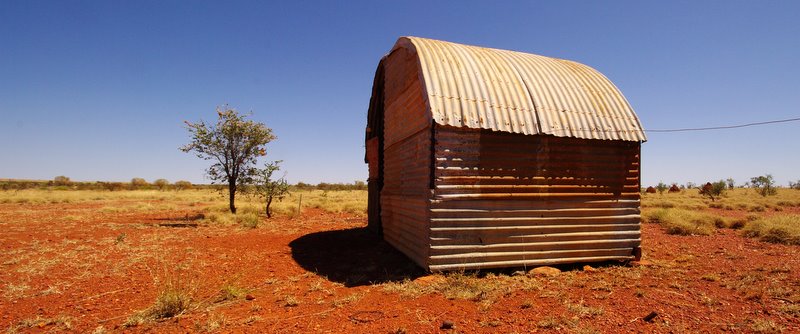
Remains of old sheep station out camp near Wittenoom – corrugated iron at its best
NORTHERN TERRITORY ARCHITECTURE

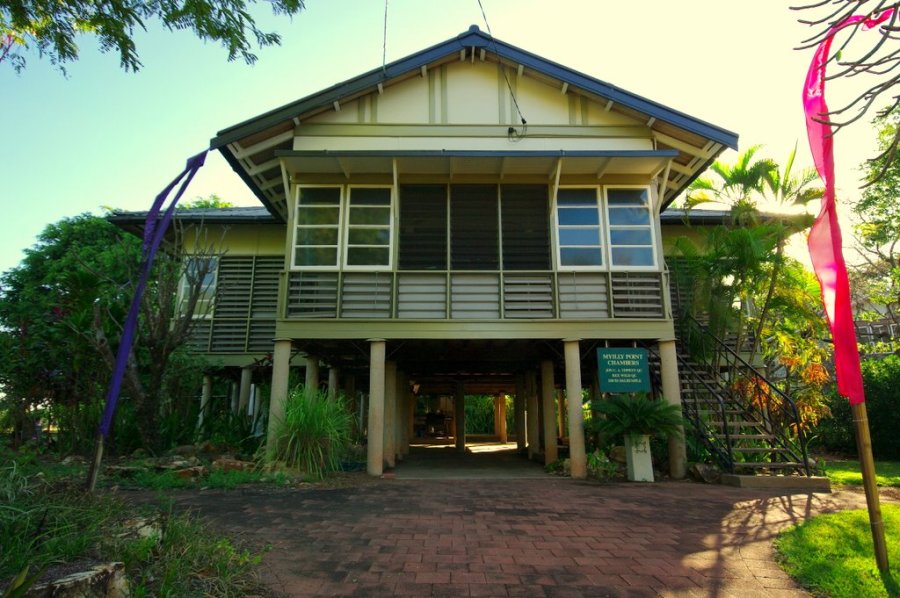
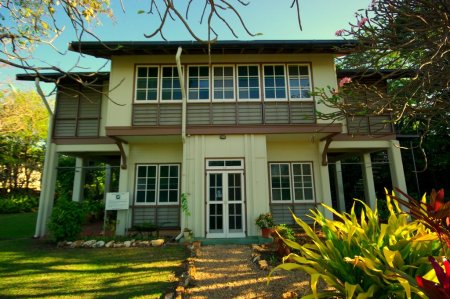
The Northern Territory has its own unique style of architecture created to cope with  the hot tropical climate. Some of the most important examples of pre WWII N T architecture are the Burnett Houses.

Beni Burnett was born in Mongolia, raised in China and worked in Singapore, Japan and China. His Northern Territory buildings are influenced by the Colonial architecture of Malaysia and Singapore.

He employed a system of screened asbestos cement louvers to allow for cross ventilation, no matter which way the breeze was blowing. Open eaves, ventilated roof ridging and open topped internal walls provided easy evacuation of warm air. Steep pitched roofs and two story construction also aid in keeping the building cool.

IMGP5602

“K Type” Burnett House – 1939

IMGP5605

“E Type”  Burnett House – 1939

IMGP5372

Parliament house in Darwin echoes the colonial windows and louvers of the traditional Burnett House

IMGP5448

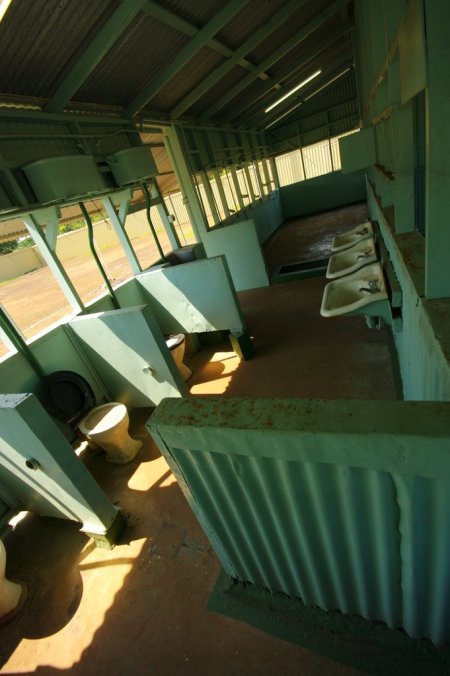
This is the toilet block at the old Fanny Bay Gaol  Darwin. From waist height, external walls are timber stud frame with fly wire mesh attached. The internal walls also stop at waist height. Great for ventilation, not so good for privacy. I have a sneaking suspicion that this may have had an influence on Burnett’s designs. I’d like to think so. The Burnett houses were originally designed for high ranking public servants. I’d like to think they lived in houses influenced by a prison toilet block.

.

.

SKETCHES

materials2

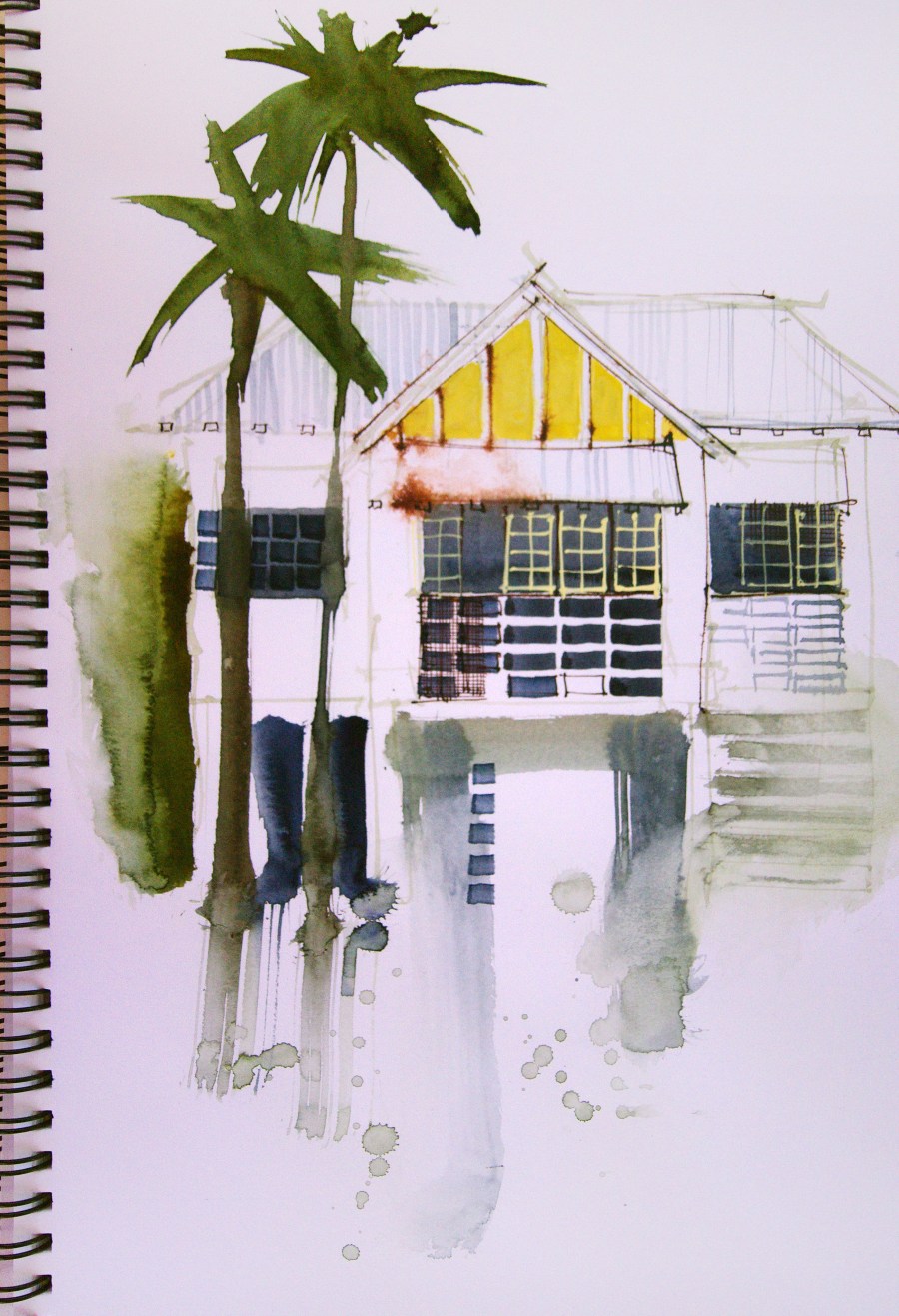
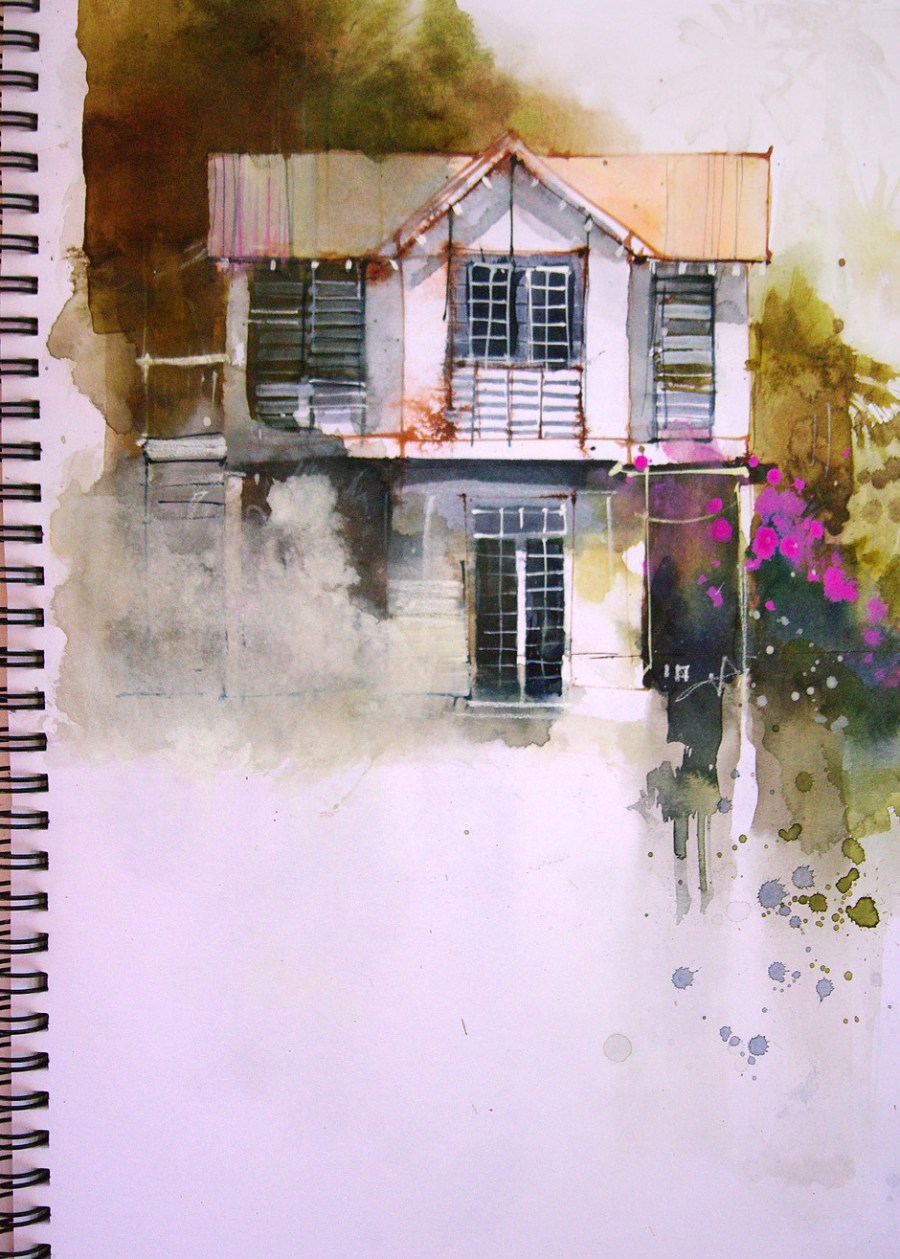
Embroidery mesh was used to press geometric squares into the colonial windows. White Gouache was also used in the sketches.

burnett 2

burnett house

burnett 1

.

.

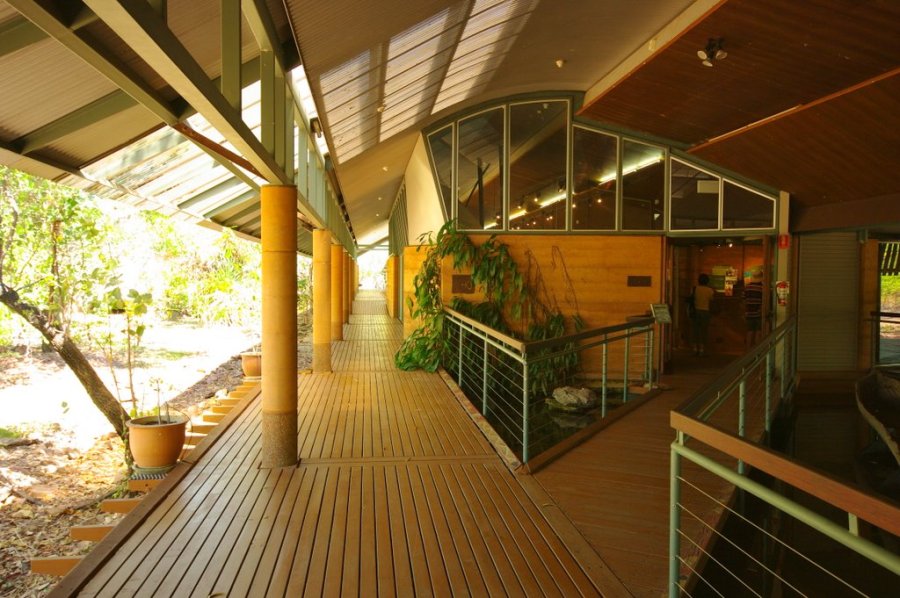
One of my favourite examples of NT architecture is the Glenn Murcutt “Bowali Visitors Centre” in Kakadu National Park. Built of  formed, tinted concrete, corrugated iron, steel and timber. Its colours and textures look to have come directly from the ground it sits on. The building feels big and open and natural, inspired by one of the rock art galleries in the Park

IMGP5677

IMGP5665

IMGP5680

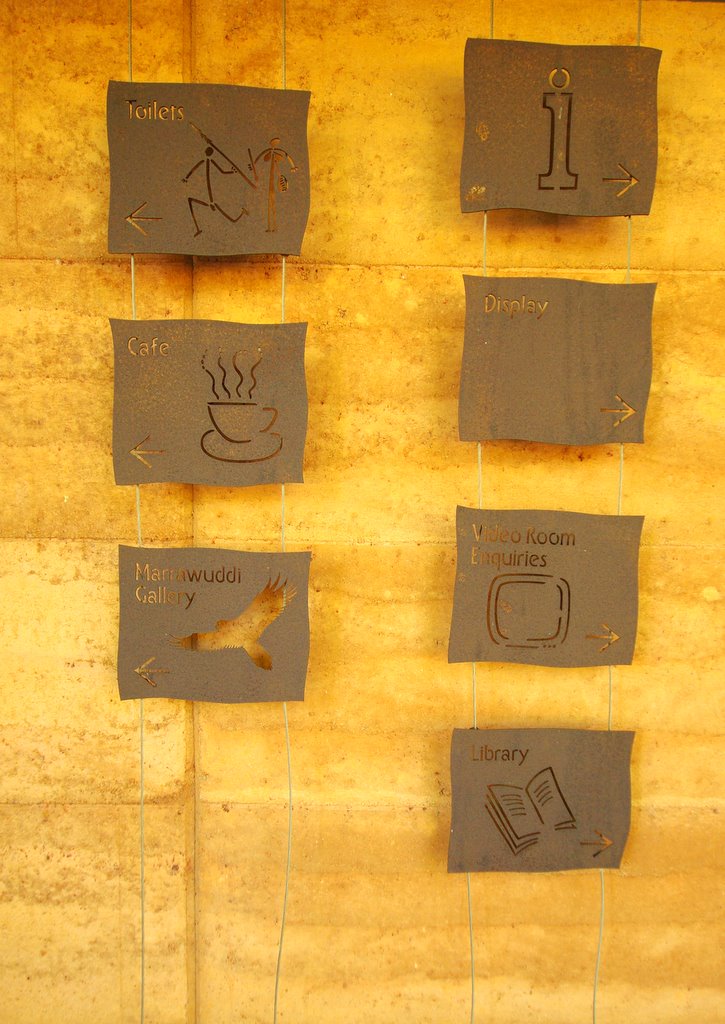
Information signs are made of 1/4″ steel plate, laser cut and left to rust. Here they are suspended by wire in front of an off the form concrete wall panel Tinted with natural ochre.