WATERFALLS

Jourama Falls

Jourama Falls

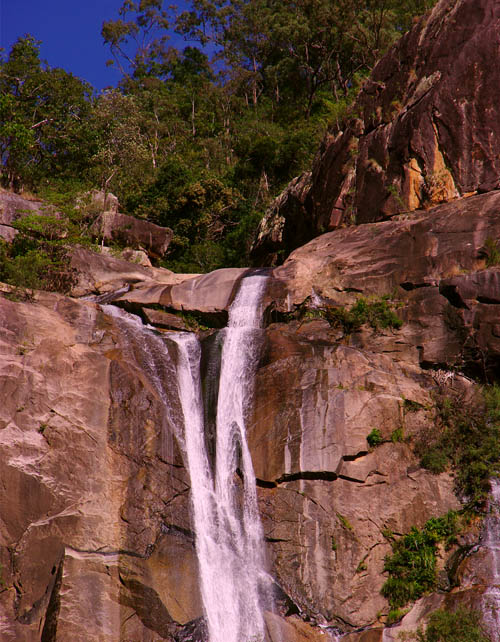
Up in the mountains, between Ingham and Townsville, are some great waterfalls. Some of them spill into pretty spectacular rainforest, protected by National Park. Jourama Falls is a series of half a dozen waterfalls, dropping from the mountain top to the boulder strewn Jourama Creek below.
Jourama Creek

Jourama Creek

Strangler Fig - Jourama Creek

Strangler Fig - Jourama Creek

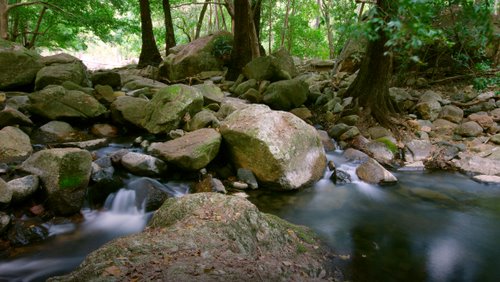
The water level in Jourama Creek can change quickly.  The rocks are worn smooth and some coated with a slippery algae that makes staying upright difficult. There are some great swimming holes (if you dont mind numbingly cold water) and camping in the National Parks is excellent.

Dangerous wildlife photography

Dangerous wildlife photography

Birdlife in these rainforests is great, although photographing them from directly underneath is not a real good idea.
Murray Falls

Murray Falls

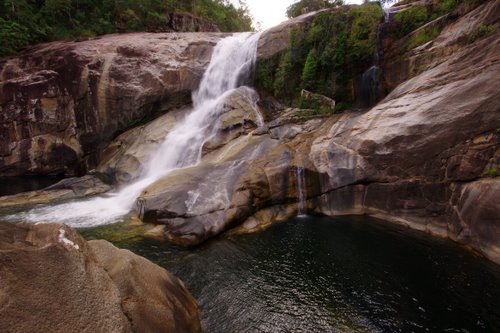
Further north are Murray Falls,  set in a similar pocket of rainforest with a couple of short access walks. The falls are surrounded by deceptively slippery rocks which have claimed a number of lives. This has prompted National Parks to restrict access to the immediate area. However, their boardwalks and viewing platforms  provide excellent access without having to crawl over the rocks.

Murray Falls Boardwalk

Murray Falls Boardwalk

Strangler Fig - Murray Falls

Strangler Fig - Murray Falls

Wandering around in these rainforests with a 10mm lens is a lot of fun. All sorts of weird shapes and lines, and great colours to play around with.

Strangler fig roots

Strangler fig roots

Weird granite slab

Weird granite slab

We discovered this massive granite slab perched on a collection of small rocks – obviously the work of aliens. Or maybe the trees did it?

Strangler fig holding rock

Strangler fig holding rock

Further up Murray creek we found this big rock being gripped by a strangler fig, probably intending to balance it somewhere precarious to entertain humans

Defencive Green Ant

Defensive Green Ant

These little guys join leaves into a fist sized ball to build their nest. If the nest is threatened they all stand up in this aggressive pose to scare off the predator. Funny thing is, they don’t seem to bite. Aboriginal kids bite off and eat the green bulbous tail.
tree stump

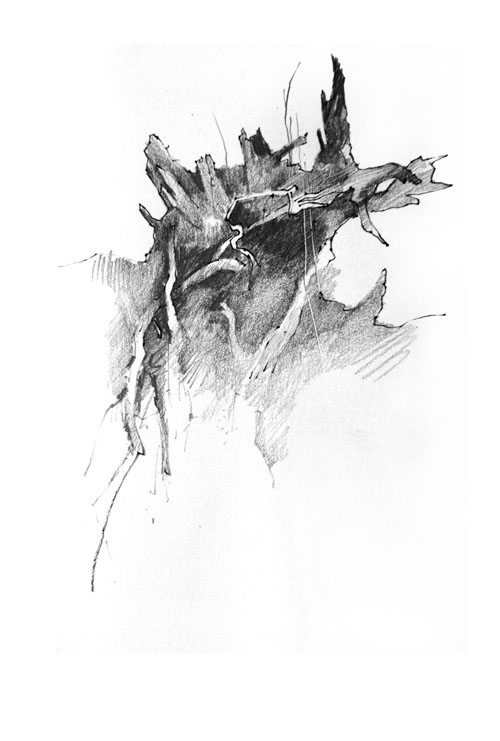
Winds, following a recent cyclone, have brought down a number of trees along the edge of the rainforest. The broken roots and tangled vines make interesting drawing subjects.

Rainforest Mushrooms

Rainforest Mushrooms

More weird rainforest stuff. These mushrooms pop up in clusters through the undergrowth. They seem to emerge from a shell like case that opens like petals. As appetising as they look, we resisted the temptation to barbecue them with our steak.

MIDGE POINT – where everyone owns a tractor

midge point

Big wet sky – Midge Point. We stayed with my cousin Brad and his wife Kimm for a few days. We caught fish in the creek, explored the beaches and headlands and met some of Brad and Kimm’s friends.

Midge Point is still a sleepy little holiday/fishing village. Everyone has a boat and tractor and the local tavern is the hub of social activity. The village is pretty well unspoiled. Most of the houses have no fences and less than half of them are permanently occupied.

midge point tractor

Everyone in Midge Point has a tractor to cart their boat across the sand to the water. Most of them are fairly ancient. Occasionally they break down and, after a few days, sink beneath the sand – never to be seen again.

midge point bike

I found this old motorbike under the mangroves up the northern end of the beach. It looked like someone parked it there, went fishing and never came back.

brad and dianne

Brad and Dianne on the beach near the crocodile hole

blue wing

Great birdlife at Midge Point. These Blue Winged Kookaburras are the first bird you hear in the morning and the last in the evening. They have a weird broken laugh – like a normal Kookaburra that never quiet learned to do it properly.

In the middle of the night Curlews stalk the town. They have a mournful, whaling cry, stopping just before daylight. The locals call them murder birds

centurian

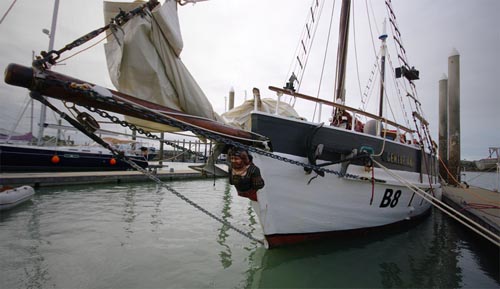
Brad’s mate Lee restored this fantastic old pearling lugger – “Centurion”. Built in Broome in 1955. 30 ton of solid, double planked Jarrah.

on board

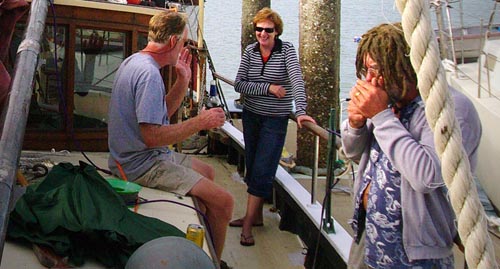
Lee, Dianne and Brad onboard Centurion. What a boat to be floating around the Whitsunday’s on!

from mt midge

Climbing Mt. Midge on the southern end of the beach was a bit of a task – no track and very steep. The view from the top was fantastic. I found out later there was a track leading up from the gentler sloping western side.

elliotcreek

After saying goodbye to Brad and Kimm, we headed north, setting up camp on the Elliot River. I had an article to finish writing for International Artist Magazine and this was the perfect place to do it – quiet and isolated, with  few distractions (although a strange place to be finishing a painting of an Italian waterfront!)

swamp

After finishing the article we continued north towards Townsville. We managed to find a swamp to camp in. It was infested with mosquitoes and sandflies and was a popular spot for the local midnight pig shooters – not a place we would rush back to.

diannebike

Dianne enjoyed the challenging corrugations of the swamp roads to hone her cycling skills.

bites

Not so good were the sandfly bites

CAPE HILLSBOROUGH

beach

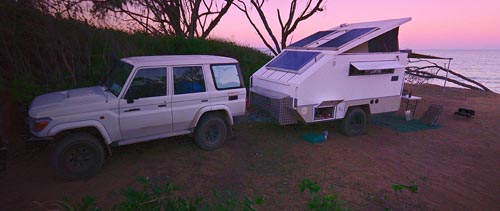
Cape Hillsborough is a small National Park at the southern end of the Whitsunday Islands. The main “resort” has camping,  cabins and a caravan park. It is right on the beach and has some great walks.

Smalleys Beach is also part of the national park and has more pleasant, bush camping with fewer facilities and few people.

beach rocks

Weird rocks on Cape Hillsborough Beach

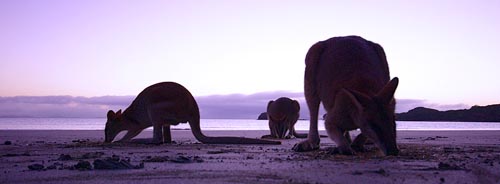
beach roos

Weird animals on Cape Hillsborough Beach

cane harvester

This time of year in North Queensland is cane harvest time. These huge trailers haul the cut cane by road to the nearest rail siding. There it’s dumped into bins and pulled by train to the closest sugar mill. It seems, along all the back roads, you are either stuck behind a huge tractor or waiting for a half  kilometre cane train to cross the road. Fortunately, the sugar that doesn’t find it’s way into little paper sachets for coffee shops, finds it’s way to Bundaburg to be turned into rum.

CARMILA BEACH

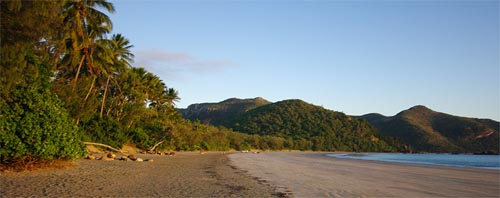
Carmila beach has a long stretch of unspoiled bush accessed by maze of sandy tracks. There is no surf due to the reef, but good fishing according to people lucky enough to catch them

Carmila Beach

Sand Ripples Carmila Beach Queensland

The tidal drop of around 6 metres, across a fairly flat beach, leaves some interesting patterns as the water runs out.

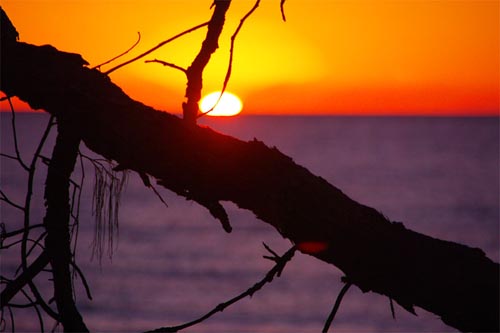
sunrise Carmila Beach Queensland

Sunrise through sheoaks. Recent big seas had washed many large sheoaks into the water. We made a fire with the dry wood and were surprised to find it burned very well.

FIRST DAY – Coolum Beach

Crawelled our way up the coast with peak hour hordes streaming out of Brisbane. Arrived in Coolum just on dark, so decided a meal and beer in the surf club would be a good idea.

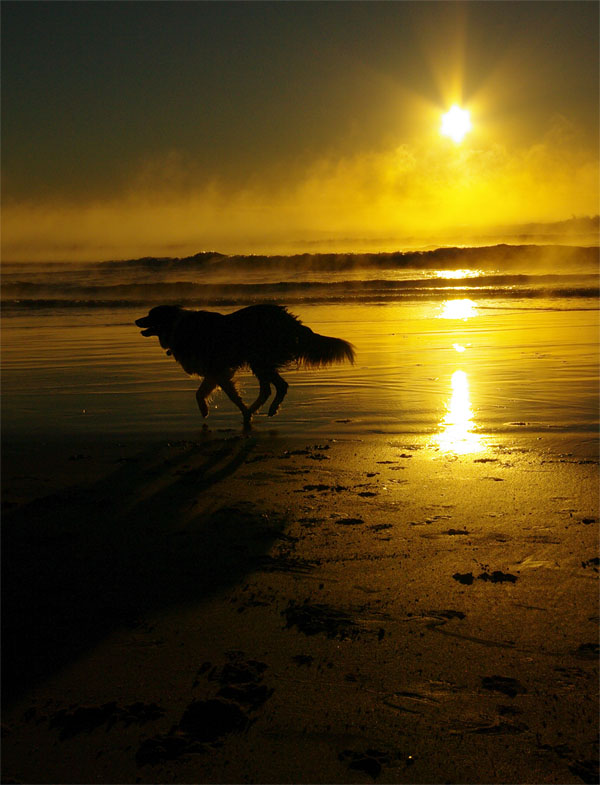
Dog at sunrise

Got up early to take some photos on the beach. There were lots of dogs and humans playing with tennis balls and sticks.

Two Legged Dog

Even a strange two legged spaniel

We left Coolum and headed away from the coast.  Taking the back roads on the western side of the mountains to avoid the traffic. All was well until we set up camp and the temperature dropped to around minus seven degrees.

We did, however, find where the wheel was invented. Not in ancient Greece or Rome, but in a paddock out the back of Gayndah, Queensland

Wooden Wheel

I think the tyre was a later refinement.